
TL;DR: The most effective way to prevent further hair loss is to start FDA-approved treatments early: topical or oral minoxidil for men and women, finasteride for men (and off-label for women in some cases), and fixing any underlying causes like nutritional deficiency or chronic stress. Nothing regrows a dead follicle, so early action is the whole game.
Why acting early is the only real strategy
Hair follicles don't come back from the dead. Once a follicle has miniaturized all the way and stopped producing hair entirely, no pill, shampoo, or laser will revive it. That's the uncomfortable truth most hair-loss content buries in paragraph twelve.
The practical implication is simple: prevention is far more effective than restoration. A follicle that's thinning but still alive responds to treatment. A follicle that's been gone for years doesn't. This is why two people with the same genetic pattern can end up with very different outcomes depending entirely on when they started paying attention.
If you've noticed your part widening, your hairline shifting, or more hair in the drain than usual, that's the window. It won't stay open forever. The treatments covered in this article work best when follicles are still producing something, even if that something is a thin, short hair.
For a broader look at what's driving your specific shedding, what causes hair loss is a good place to start before picking a treatment.
What are the most effective treatments to prevent hair loss?
Two treatments have the strongest evidence: minoxidil and finasteride. Everything else sits somewhere between modestly helpful and genuinely unproven.
Minoxidil is FDA-approved for hair loss in both men and women [1]. The 2% solution is approved for women; the 5% solution and foam are approved for men, though many dermatologists use 5% off-label in women too. It works by extending the anagen (growth) phase of the hair cycle and increasing blood flow to the follicle. Topical minoxidil applied once or twice daily is the standard starting point for almost everyone. A 2021 review in the Journal of the American Academy of Dermatology found that oral minoxidil at low doses (0.25 mg to 2.5 mg daily) produces comparable or better results than topical use for some patients, with a manageable side-effect profile [2]. If topical gave you compliance trouble or scalp irritation, oral minoxidil is worth discussing with a dermatologist.
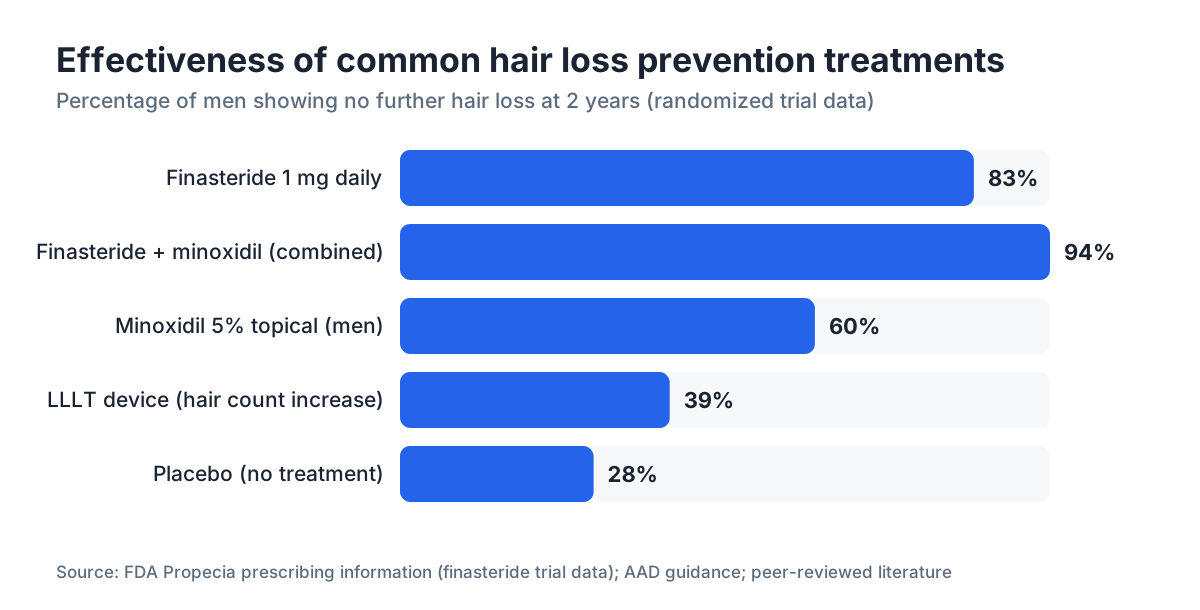
Finasteride (1 mg daily, brand name Propecia) is FDA-approved for male pattern hair loss. It blocks the conversion of testosterone to dihydrotestosterone (DHT), the hormone mostly responsible for follicle miniaturization in genetically predisposed men [3]. In the two-year trial that got it approved, 83% of men taking finasteride had no further hair loss versus 28% on placebo, and 66% showed actual regrowth [3]. Those numbers are meaningful. For a full breakdown of how it works and what the real side-effect risk looks like, see finasteride.
Using both together is the most effective medical approach. A study in the Journal of Dermatology found combination therapy produced significantly greater improvements in hair count and thickness than either treatment alone [4]. Details on running them together are at finasteride and minoxidil.
| Treatment | FDA-approved for | Evidence level | Typical cost/month |
|---|---|---|---|
| Topical minoxidil 5% | Men | High (RCTs) | $15-$30 |
| Topical minoxidil 2% | Women | High (RCTs) | $10-$25 |
| Oral minoxidil | Off-label both | Moderate-High | $10-$40 |
| Finasteride 1 mg | Men | High (RCTs) | $15-$50 |
| Low-level laser therapy | Men and women | Moderate | $200-$3,000 device |
| Ketoconazole shampoo | Adjunct | Low-Moderate | $10-$20 |
| Biotin supplements | Deficient only | Low | $5-$15 |
How to prevent hair loss in men
Male pattern baldness (androgenetic alopecia) is the most common cause of hair loss in men, affecting roughly 50% of men by age 50 [5]. It follows the predictable progression mapped by the Norwood scale, and it's driven almost entirely by DHT sensitivity in genetically predisposed follicles. DHT-driven loss responds to treatment better than most other types.
For men, the prevention hierarchy looks like this:
First line: Finasteride 1 mg daily. This is the most powerful tool available for men because it attacks the root hormonal cause rather than just prodding the follicle. Start here if you're seeing a receding hairline or crown thinning and you're comfortable with the small risk of sexual side effects (which affect roughly 2-4% of users in trials and resolve in most who stop the drug [3]).
Add-on: Topical minoxidil. Most dermatologists recommend using both. The mechanisms are different, so they complement each other. The 5% foam applied once daily tends to have better compliance than the twice-daily liquid.
Adjunct options: Ketoconazole 2% shampoo (used 2-3 times per week) has some evidence for modest anti-androgenic effects at the scalp level, making it a reasonable low-cost add-on [6]. DHT-blocking shampoos and supplements make bigger claims than the evidence supports. If you want the ingredient science, dht blocker covers it honestly.
Men consistently underestimate the timeline. Finasteride and minoxidil take 6-12 months to show meaningful results, and the first 3 months often look like things are getting worse (a temporary shedding phase called telogen effluvium). Stopping at month two because you're shedding more is the most common mistake. If you're seeing unusual early shedding, telogen effluvium explains what's happening and what to expect.
How to prevent female hair loss
Hair loss in women is more varied than in men. The most common type is female pattern hair loss (FPHL), which causes diffuse thinning across the crown and part rather than a receding frontal hairline [5]. Women are also more prone to temporary shedding from hormonal changes, nutritional deficiencies, thyroid problems, and high physical or emotional stress. Treating the wrong thing doesn't help.
Before starting any treatment, get a blood panel checking ferritin, thyroid-stimulating hormone, zinc, and vitamin D. Ferritin below 30-40 ng/mL is consistently linked to increased shedding in women, even when hemoglobin is normal [7]. Correcting a low ferritin level doesn't require a prescription and can make a real difference if that's the driver.
For FPHL specifically, the evidence-backed options for women are:
Topical minoxidil 2% or 5%. The 2% solution is FDA-approved for women; many dermatologists now use 5% off-label, and studies suggest it's more effective without meaningfully higher risk of facial hair (which affects a minority of users) [1].
Oral minoxidil. Very low doses (0.25 mg to 1 mg daily) are increasingly used for women and skip the scalp-application hassle. Side effects at these doses are usually limited to mild fluid retention or unwanted body hair in some women [2].
Finasteride and spironolactone. Finasteride is not FDA-approved for women, and it's contraindicated in women who are or could become pregnant because of the risk of feminizing a male fetus. Some dermatologists still use it off-label in post-menopausal women. Spironolactone (50-200 mg daily) is commonly prescribed off-label for FPHL; it's an anti-androgen with a long track record and a reasonable safety profile in pre-menopausal women who use contraception [5].
For women hit with sudden diffuse shedding after pregnancy, illness, surgery, or a crash diet, the cause is almost certainly telogen effluvium, which is temporary. Most cases resolve within 3-6 months once the trigger is removed. Aggressive treatment usually isn't needed, but iron and protein intake matter a lot during recovery.
Not sure which category your hair loss falls into? A free AI scan at MyHairline can help you identify the pattern before you talk to a dermatologist.
Does diet and nutrition affect hair loss?
Yes, but mostly when you have a deficiency. Hair is metabolically expensive to produce, and follicles are among the first things the body deprioritizes when micronutrients run short.
The nutrients with the clearest link to hair shedding are:
Iron (ferritin). Low ferritin is one of the most common correctable causes of excess shedding in women and gets ignored in men [7]. Getting ferritin above 40-70 ng/mL is the usual dermatological target, well above the laboratory reference floor, which can sit as low as 12 ng/mL.
Protein. Hair is made of keratin, which needs adequate protein intake. Crash diets and very low calorie intakes trigger telogen effluvium within 2-3 months. Aim for at least 1.2-1.6 g of protein per kg of body weight if you're dealing with hair loss.
Zinc. Deficiency causes diffuse shedding. But excess zinc supplementation also causes hair loss by blocking copper absorption, so supplementing without testing isn't smart.
Vitamin D. Receptors for vitamin D show up throughout the hair follicle, and low levels have been linked to several hair loss conditions, though causality is less established than for iron [8].
Biotin. Almost universally recommended by supplement companies, almost never actually deficient in people eating a normal diet. Biotin deficiency is rare, and supplementing when you're not deficient does nothing for hair. At high doses it also interferes with several thyroid and cardiac lab tests [9]. The supplement industry has done an excellent job marketing biotin. The evidence hasn't kept up.
To sort through what the supplement evidence actually shows, hair loss supplements covers the data without the marketing spin.
Can scalp care and hair practices prevent hair loss?
For most people with genetic or hormonal hair loss, scalp care won't stop the progression. But some practices genuinely accelerate loss, and stopping them matters.
Traction alopecia is real. Tight ponytails, braids, extensions, and weaves worn repeatedly over time cause mechanical damage to follicles that can become permanent [5]. The American Academy of Dermatology warns specifically against hairstyles that pull tightly at the root. This is a big issue for women who wear their hair pulled back daily.
Chemical and heat damage doesn't cause genetic hair loss, but it does cause breakage that looks like thinning and worsens existing fragility.
Scalp inflammation. Seborrheic dermatitis and scalp psoriasis create an inflammatory environment that compounds androgenetic loss. Treating these with the right shampoos (ketoconazole, zinc pyrithione, or prescription options) keeps the scalp in better shape for whatever treatments you're applying.
Scalp massage. A small 2016 study published in ePlasty found that standardized scalp massage for 4 minutes daily over 24 weeks produced measurable increases in hair thickness in a group of nine Japanese men [10]. The sample is tiny and the study is preliminary, but the proposed mechanism (stretching dermal papilla cells) is plausible, and the cost is zero. Not a replacement for medical treatment, but a reasonable habit.
Washing hair frequently does not cause hair loss. This is a stubborn myth. Shampoo removes dead hairs that were already in telogen phase; it doesn't pull out growing hairs.
Does stress cause hair loss, and can reducing it help?
Significant physical or emotional stress triggers telogen effluvium, where a large share of growing hairs suddenly shift into the resting and shedding phase [5]. The shedding usually starts 2-3 months after the stressor and peaks around month 3-4. It's alarming but usually temporary.
Chronic psychological stress is harder to study, but there's evidence it raises cortisol levels that can affect hair cycle signaling. Practically speaking, if you're under sustained, severe stress and noticing diffuse thinning, stress reduction is a real part of the treatment picture, well beyond generic wellness advice.
Here's the honest caveat: if you have androgenetic alopecia, reducing stress won't stop your genetic hair loss. Stress can speed up shedding and unmask an underlying pattern sooner, but it's not the root cause. Don't let the idea that stress causes hair loss delay you from treating a genetic pattern.
What about low-level laser therapy (LLLT)?
Low-level laser therapy (LLLT) devices, sold under names like HairMax and Capillus, are FDA-cleared (not FDA-approved, which is a meaningful distinction) for hair growth. FDA clearance through the 510(k) pathway means the device is substantially equivalent to a previously cleared device, not that it passed drug-level efficacy trials.
The evidence is real but modest. A 2014 randomized controlled trial in Lasers in Surgery and Medicine found that a 12-beam LLLT device produced a 39% increase in hair count compared to a sham device over 26 weeks [11]. That sounds impressive, but actual regrowth and cosmetic impact varied a lot by individual.
The catch is cost and commitment. Devices range from around $200 to over $3,000, and you need to use them consistently for 20-30 minutes, three times per week, indefinitely. Stop, and any gains reverse. For most people, the evidence-to-cost ratio makes LLLT a reasonable third-line option if medications haven't worked or can't be tolerated. It's not a first move.
When should you consider a hair transplant?
A hair transplant is a restoration tool, not a prevention tool. It moves existing follicles from the donor area (typically the back and sides of the scalp) to areas that have already thinned. It cannot prevent the ongoing loss of non-transplanted hairs.
This distinction matters because many young men with early-stage loss want to jump straight to a transplant. The problem is that hair loss keeps going after surgery. If you haven't stabilized your loss with medications first, you may need more procedures over time as the native hair behind and around the transplant keeps thinning.
The general dermatological consensus is to stabilize with medical treatment for at least a year before pursuing a transplant, and to keep taking medication after surgery to protect the remaining native hair. Transplants are expensive ($4,000-$15,000 in the US depending on graft count and technique), and they produce excellent cosmetic results for good candidates. They work best in people who've already used everything else first.
If you're early in the process and wondering what's actually happening to your hairline, a free AI scan at MyHairline gives you a baseline to track from.
Are there things commonly sold for hair loss that don't work?
Yes. Quite a few.
Saw palmetto. Sold as a natural DHT blocker and endlessly marketed for hair loss. Reviews find insufficient evidence to recommend it for androgenetic alopecia, though one small study showed a modest effect [12]. It's not dangerous, but don't expect finasteride-level results from it.
Caffeine shampoos. Some in vitro research shows caffeine can counteract DHT effects on hair follicle cells in a lab dish. Whether rinsing a shampoo over your scalp for 90 seconds delivers enough caffeine to the follicle to matter is a very different question. The clinical evidence is thin.
Rosemary oil. One small 2015 study (50 patients) compared rosemary oil to 2% minoxidil and found comparable results at 6 months [12]. The study was underpowered and used a low minoxidil concentration, but the finding got enormous press. Worth trying as a zero-cost adjunct if you want, but don't swap it in for proven treatments.
Collagen supplements. No good evidence they reach the scalp follicle in meaningful amounts.
One question that comes up a lot: does creatine cause hair loss? There's one study from 2009 suggesting creatine supplementation raised DHT levels, but it was small, hasn't been replicated reliably, and creatine isn't classified as a cause of hair loss. The honest answer is at does creatine cause hair loss.
What's the realistic timeline for preventing further hair loss?
This is the question most people don't ask until they're frustrated three months in.
For finasteride: expect 6-12 months before you can judge whether it's working. The drug is mostly a stabilizer. The win is that the loss stops, which doesn't feel dramatic but is the whole point. Some men see regrowth, especially in the crown, at 12 months.
For minoxidil: expect initial shedding in the first 4-6 weeks as resting hairs get pushed out to make room for new growth cycles. At 3-4 months, some fine regrowth may appear. Real cosmetic improvement typically shows at 6-12 months. The drug only works while you use it. Stopping means losing whatever you gained within 3-6 months.
For dietary changes: if you were iron-deficient, you might see improvement in shedding within 3-4 months of correcting it, with hair density recovering over 6-12 months.
The hardest part of hair loss treatment is that success looks like nothing happening. Your photos look the same. Your drain still has hair in it (because losing 50-100 hairs daily is normal [5]). The urge to quit because "it's not working" is the main reason people cycle through products without results. Commit to a 12-month trial before evaluating.
For men specifically, the side-effect worries around finasteride are real but often overstated by online communities. The actual incidence of persistent sexual side effects is estimated at roughly 2-4% in clinical trials [3]. If you're risk-averse, topical finasteride (applied to the scalp) drops systemic DHT less than oral finasteride and may offer a middle path, though the evidence for topical is still catching up to the oral form.
Sources
- FDA, Minoxidil label and approval history
- Randolph M, Tosti A. Oral minoxidil treatment for hair loss. J Am Acad Dermatol. 2021
- FDA, Propecia (finasteride) prescribing information
- Hu R et al. Combined treatment with oral finasteride and topical minoxidil in male androgenetic alopecia: a randomized and comparative study. J Dermatol. 2015
- American Academy of Dermatology, Hair loss: who gets and causes
- Piérard-Franchimont C et al. Ketoconazole shampoo: effect of long-term use in androgenic alopecia. Dermatology. 1998
- Trost LB et al. The diagnosis and treatment of iron deficiency and its potential relationship to hair loss. J Am Acad Dermatol. 2006
- Rasheed H et al. Serum ferritin and vitamin D in female hair loss. J Clin Endocrinol Metab. 2013
- FDA, Safety Communication on biotin interference with lab tests
- Koyama T et al. Standardized scalp massage results in increased hair thickness. ePlasty. 2016
- Lanzafame RJ et al. The growth of human scalp hair using visible red light laser and LED sources. Lasers Surg Med. 2014
- Panahi Y et al. Rosemary oil vs 2% minoxidil in androgenetic alopecia. Skinmed. 2015