
TL;DR: You can slow or stop a receding hairline in most men, but you can't reverse genetics without treatment. Finasteride is the most proven option, holding the line in roughly 83% of men over five years. Minoxidil is a strong second. Lifestyle changes help at the margins. Starting early matters far more than which product you pick.
Why does a hairline recede in the first place?
Before you can prevent something, you need to know what's driving it. For the overwhelming majority of men, a receding hairline is androgenetic alopecia, also called male pattern baldness. The trigger is dihydrotestosterone (DHT), a hormone made when testosterone gets converted by an enzyme called 5-alpha reductase. DHT binds to receptors in genetically sensitive follicles, shrinks them over successive cycles, and eventually the hair those follicles produce gets so thin it's invisible. [1]
Genetics loads the gun. DHT pulls the trigger. Both are required, which is why not every man with high testosterone goes bald, and why identical twins with the same genes can end up with slightly different hairlines if one has higher local 5-alpha reductase activity.
Sometimes a receding hairline isn't androgenetic at all. Sudden diffuse shedding can be telogen effluvium, set off by illness, crash dieting, surgery, or extreme stress. Traction alopecia from tight hairstyles, and scarring conditions like lichen planopilaris, look different and need different treatment. If your hairline is retreating quickly and symmetrically over weeks rather than years, see a dermatologist before buying anything.
Understanding what causes hair loss at a mechanistic level also explains why so many "natural" remedies do very little: if they don't touch DHT or follicle miniaturization, they're not aimed at the actual problem.
How early should you start trying to prevent hairline recession?
The single biggest factor in how much hairline you keep is when you start. Finasteride and minoxidil can maintain what you have and, in a minority of cases, partially recover recently lost ground. They cannot revive follicles that have been inactive for years. Dermatologists generally consider a follicle recoverable for roughly two to five years after visible thinning begins, though the honest answer is nobody has a precise cutoff backed by large trials.
If you're reading this because your temples look a little higher than they did two years ago, that's the moment to act. Not after the M-shape is obvious.
A receding hairline at Norwood II or early III is a much easier target than Norwood V. The follicles are still alive and still producing hair, just thinner hair. That's the window where medication delivers its best results.
Here's the practical version. If you have a father or maternal grandfather who went significantly bald and you're in your 20s or 30s, you don't need to wait until you're visibly thinning. Talking to a dermatologist about early treatment is a legitimate option, and some do recommend it.
Does finasteride actually prevent a receding hairline?
Yes. Finasteride is the most effective medical option for stopping further hairline recession in men. It blocks 5-alpha reductase type II, which cuts scalp DHT by roughly 60 to 70%. [2]
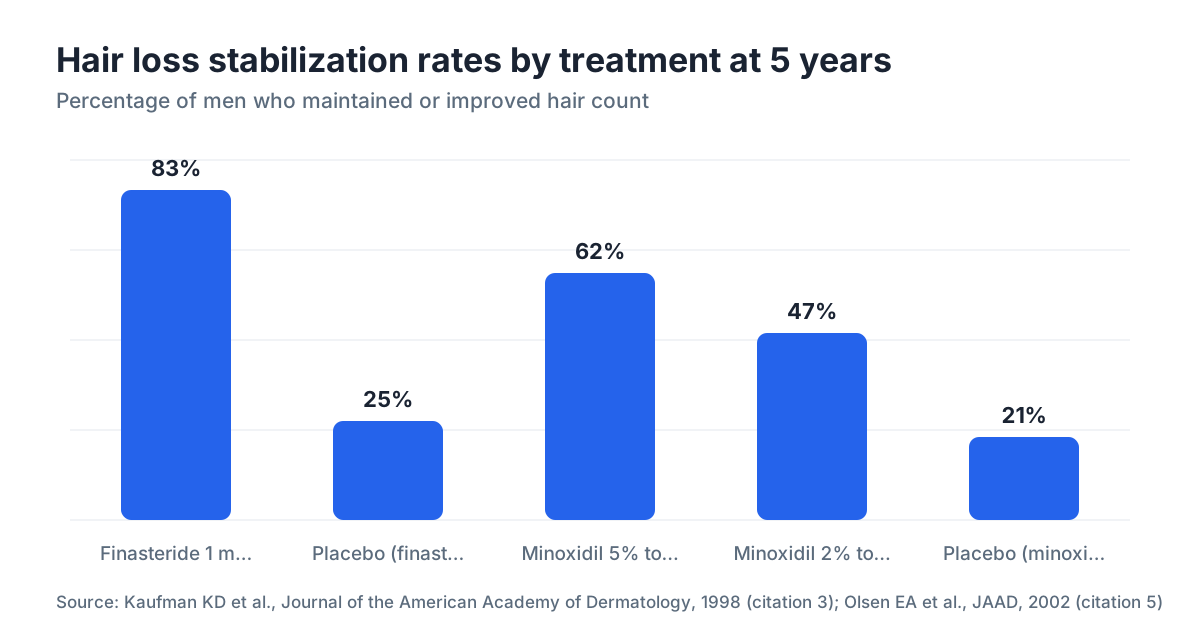
The five-year trial published in the Journal of the American Academy of Dermatology in 1998 found that 48% of men on 1 mg daily finasteride showed hair count improvement, and 83% showed no further loss, compared with continued progression in 75% of men on placebo. [3] That's the number to remember: roughly 83% of men on finasteride held their line.
Finasteride is FDA-approved for male pattern hair loss at 1 mg daily (brand name Propecia; generic versions are widely available). [4] It needs a prescription. It takes three to six months before you see results, and you have to keep taking it, because the DHT-blocking effect reverses within months once you stop and shedding resumes.
The side effect that gets the most attention is sexual dysfunction: lower libido, erectile dysfunction, reduced ejaculate volume. The FDA label reports these in 1.8 to 3.8% of men in clinical trials, usually resolving after stopping the drug. [4] A smaller number of men report symptoms that persist after stopping, a condition researchers call post-finasteride syndrome. The evidence base for it is still contested and under study, but it's a real concern worth raising with a doctor before you start.
See the full breakdown at finasteride. If you're thinking about pairing it with minoxidil, finasteride and minoxidil together have additive evidence behind them.
Does minoxidil help prevent hairline recession?
Minoxidil is FDA-approved for androgenetic alopecia and is the other pillar of evidence-based prevention. It works differently from finasteride. It's a vasodilator that prolongs the anagen (growth) phase and widens the follicle. It doesn't block DHT, so it treats a symptom rather than a cause, but in practice it keeps follicles producing.
For hairline recession specifically, topical minoxidil (2% or 5% solution, or 5% foam) applied twice daily has a real track record. A 48-week multicenter trial found 5% topical minoxidil significantly outperformed 2% and placebo on total hair count in men with androgenetic alopecia. [5]
The evidence for oral minoxidil at low doses (0.625 mg to 2.5 mg daily for men) is growing fast. A 2021 Dermatology and Therapy review found low-dose oral minoxidil effective and generally well-tolerated, with the most common side effect being facial hypertrichosis (unwanted hair growth in other areas). [6] It's off-label, needs a prescription, and isn't FDA-approved in the oral form for hair loss, so it's a conversation to have with a dermatologist. Read more at oral minoxidil.
Topical minoxidil is available over the counter, which makes it the easiest starting point for people not ready to see a doctor yet. Full details, including who it works best for, are at minoxidil for men. If you want to know what can go wrong before you start, read minoxidil side effects.
How well do finasteride and minoxidil compare to each other?
| Treatment | Mechanism | Approval status | Efficacy (stabilization) | Key risk |
|---|---|---|---|---|
| Finasteride 1 mg oral | Blocks DHT production (~60-70% reduction) | FDA-approved (prescription) | ~83% maintain or improve [3] | Sexual side effects in ~2-4% [4] |
| Topical minoxidil 5% | Prolongs anagen, vasodilation | FDA-approved (OTC) | Meaningful improvement vs. placebo [5] | Scalp irritation, shedding at start |
| Low-dose oral minoxidil | Prolongs anagen, systemic | Off-label | Comparable or better vs. topical in some studies [6] | Facial hair growth, fluid retention |
| Finasteride + minoxidil | Dual mechanism | Both approved separately | Additive benefit in trials | Combined side effect profiles |
If I had to pick one starting point for a 28-year-old with a Norwood II hairline and no contraindications, I'd say finasteride. It targets the cause. Minoxidil is the right call if you want OTC access first, have concerns about finasteride's side effects, or your doctor advises against 5-alpha reductase inhibitors. Running both together has the best evidence if you're okay managing two treatments.
What lifestyle changes can slow hairline recession?
Lifestyle changes won't override genetics and DHT, but a few have real mechanistic backing.
Protein intake matters. Hair is roughly 95% keratin, a protein. Severe protein deficiency can trigger telogen effluvium and pile onto any androgenetic loss. The recommended dietary allowance for protein is 0.8 g per kilogram of body weight for adults, but most people worried about hair loss aren't protein deficient. If you're eating a reasonable diet, adding protein powder won't regrow your hairline.
Iron deficiency is one of the most common correctable causes of diffuse shedding, particularly in women but also in men who donate blood often, have GI issues, or follow a restrictive diet. A serum ferritin below 40 ng/mL has been linked to hair loss in some studies, though there's no universally accepted threshold. [7] Get labs before supplementing iron, because too much iron is harmful.
Chronic stress raises cortisol and can push follicles into telogen prematurely. This is real, well-documented physiology. But stress management is not a substitute for DHT blockers if you're genetically predisposed to pattern loss.
Smoking is tied to worse androgenetic alopecia in several epidemiological studies. A cross-sectional study in Archives of Dermatology found current smokers had a statistically higher prevalence of moderate to severe male pattern baldness. [8] The suspected mechanism is reduced blood flow to the follicle.
Scalp massage gets a lot of attention online. One small 2016 Japanese study (nine participants) found standardized scalp massage increased hair thickness. [9] Nine people. Don't reorganize your morning around it, but it costs nothing if you want to try.
Tight hairstyles (braids, ponytails, cornrows kept tight for years) cause traction alopecia, which is real and preventable. If your loss is mostly at the temples and you wear a tight style regularly, that's worth changing.
Are DHT-blocking supplements worth buying?
This category is mostly noise with a few genuinely interesting ingredients buried in it.
Saw palmetto is the most studied "natural" DHT blocker. It inhibits 5-alpha reductase, just like finasteride, but far more weakly and with no consistent clinical trial data at the level of FDA-approved drugs. A 2020 systematic review in Dermatology and Therapy found some suggestive evidence but concluded the data was insufficient to recommend saw palmetto as a standalone treatment for androgenetic alopecia. [10] It probably does something. Nobody knows whether that something is enough to matter at hairline scale.
Biotin is marketed relentlessly for hair. If you have a biotin deficiency (rare in people eating normally), correcting it helps. If you don't have a deficiency, extra biotin does nothing for hair growth. It does interfere with certain thyroid and troponin lab tests at high doses, which is worth knowing if you're getting bloodwork. [11]
The full picture on what's actually evidence-backed versus marketing is at hair loss supplements and DHT blockers.
Ketoconazole shampoo (1% OTC, 2% prescription) has some evidence as an adjunct, not a standalone treatment. A 1998 trial in Dermatology found ketoconazole shampoo used three to four times per week produced modest increases in hair density comparable to 2% minoxidil, though this was a small study that hasn't been reliably replicated. [12] It's cheap enough that using it alongside a real treatment program makes sense. Don't use it as your only intervention.
Does diet affect hairline recession?
Diet changes the conditions hair follicles work in. It does not override the genetic program that makes follicles sensitive to DHT.
Zinc, vitamin D, and omega-3 fatty acids all have biological roles in hair follicle cycling. Deficiencies in any of them correlate with more shedding in observational studies. Vitamin D receptors are expressed in hair follicles, and low vitamin D is linked to several forms of alopecia across multiple studies, though causation is harder to pin down than correlation. [13]
A Mediterranean-style diet, heavy on vegetables, fish, legumes, and healthy fats, was tied to lower risk of androgenetic alopecia progression in a 2017 cross-sectional study, though the effect size was modest and cross-sectional studies can't prove cause and effect. [14]
The practical takeaway. Eat a balanced diet with enough protein, get your iron and vitamin D checked if you're worried about shedding, and correct any deficiency you find. Don't spend money on "hair growth" meal plans or exotic superfoods marketed for hairline recession. The evidence isn't there.
Can you prevent hairline recession without medication?
Honestly, for most men with genetic androgenetic alopecia, medication-free approaches slow things marginally at best. The science is clear that DHT is the main driver, and without addressing DHT (through finasteride, dutasteride, or to some degree saw palmetto), you're working around the edges of the problem.
That said, people choose medication-free paths for real reasons: side effect concerns, cost, personal preference, wanting to try lifestyle changes first. Those are legitimate choices. The realistic expectation is that you slow progression modestly, not stop it.
If you're set on avoiding oral medications, the highest-yield combination is topical minoxidil (it doesn't affect DHT systemically), a ketoconazole shampoo, fixing any nutritional deficiencies, avoiding tight hairstyles, and cutting smoking and chronic stress. Topical finasteride (available through some compounding pharmacies and online prescribers) lowers systemic DHT less than oral finasteride, with potentially fewer systemic side effects, though the evidence base is smaller.
At some point, if loss has progressed a lot despite conservative measures, a hair transplant moves from "last resort" to "most practical option." Transplants don't prevent further loss in non-transplanted areas, so most surgeons want patients to stay on finasteride afterward.
What's a realistic prevention plan to follow starting today?
Step one is figuring out where you are. If your hairline has moved but you're not sure how much, take photos in consistent lighting and compare them to photos from two to three years ago. A free AI hair analysis at MyHairline can give you a Norwood stage assessment to work from, which helps you and any doctor you see start from a concrete baseline instead of vague descriptions.
Step two is talking to a dermatologist or your primary care physician. This isn't gatekeeping. It's because getting labs (ferritin, thyroid, vitamin D) rules out reversible causes before you start a years-long medication. If you're going on finasteride, a doctor is required anyway.
Step three is choosing your treatment based on your situation:
- Early Norwood I-II, willing to take a prescription: finasteride 1 mg daily is first-line.
- Early Norwood I-II, want OTC only first: 5% topical minoxidil twice daily.
- Willing to do both: finasteride plus topical minoxidil has the strongest combined evidence.
- Not ready for medication: topical minoxidil plus ketoconazole shampoo plus lifestyle fixes.
Step four is patience. Hair cycles run 90 days at minimum. Most dermatologists say give any intervention at least six months before judging it. The mistake most people make is quitting at month two because they don't see a difference yet, which is far too early to know anything.
Step five is annual reassessment. Photograph your hairline every three to four months. If you're on finasteride and still losing ground noticeably after a year, that's a conversation about adding minoxidil, checking DHT levels, or considering a stronger option like dutasteride (off-label, stronger DHT blockade).
One honest caveat. No treatment prevents hairline recession with 100% certainty in everyone. If a product page claims otherwise, that's a red flag.
Are there any new or emerging treatments for preventing hairline loss?
A few things are worth watching without overstating where the evidence sits.
Platelet-rich plasma (PRP) injections involve drawing your own blood, spinning it to concentrate growth factors, and injecting it into the scalp. Multiple small trials show increased hair density, but the studies vary widely and there's no standardized protocol. The American Academy of Dermatology describes PRP as a promising adjunct while noting the evidence quality is still limited. [15] Cost runs roughly $1,500 to $3,500 per treatment course and isn't covered by insurance.
Low-level laser therapy (LLLT) devices, including combs and helmets, are FDA-cleared (not FDA-approved for efficacy, a meaningful distinction) as medical devices for hair loss. A handful of randomized controlled trials show modest gains in hair density. The effect is real but small. These devices cost $200 to $900 depending on the form factor.
Topical JAK inhibitors are showing strong results for alopecia areata (an autoimmune form of hair loss) and have sparked interest in applying them to androgenetic alopecia, but the mechanism for pattern loss is different and the trial data there is very early.
The short version. PRP and LLLT are reasonable adjuncts for someone who has already addressed DHT. Neither is a standalone replacement for finasteride or minoxidil if you have androgenetic alopecia.
Sources
- American Academy of Dermatology, Hair loss types: Androgenetic alopecia
- Kaufman KD et al., Journal of the American Academy of Dermatology, 1998; 39(4):578-89
- Olsen EA et al., Journal of the American Academy of Dermatology, 2002; 47(3):377-385
- Randolph M, Tosti A, Dermatology and Therapy, 2021; 11(1):1-15
- Trost LB et al., Journal of the American Academy of Dermatology, 2006; 54(5):824-44
- Su LH, Chen TH, Archives of Dermatology, 2007; 143(11):1401-6
- Koyama T et al., ePlasty, 2016; 16:e10
- Evron E et al., Dermatology and Therapy, 2020; 10(2):343-361
- Pierard-Franchimont C et al., Dermatology, 1998; 196(4):474-7
- Rasheed H et al., Journal of the American Academy of Dermatology, 2013; 68(4):609-16
- Panagiotou OA et al., reported in La Clinica Terapeutica, 2017