
TL;DR: Female hair loss is usually treatable, not reversible to zero, but you can slow it meaningfully. Topical minoxidil 2% is the only FDA-approved over-the-counter treatment for women. Fixing nutritional deficiencies, managing thyroid and hormonal conditions, and seeing a dermatologist early all improve outcomes. Most women see results after 4 to 6 months of consistent treatment.
Why do women lose hair, and does the cause change the fix?
Yes, the cause matters enormously. Treating androgenetic alopecia (pattern hair loss) is completely different from treating telogen effluvium triggered by a crash diet or a difficult pregnancy. Get this wrong and you spend months on a treatment that was never going to help you.
The most common cause in women is female-pattern hair loss (FPHL), which affects roughly 40% of women by age 50 [1]. It shows up as widening of the part and diffuse thinning at the crown, not the receding hairline you see in men. The mechanism involves sensitivity to androgens at the follicle level, though most women with FPHL have completely normal androgen blood levels.
Telogen effluvium is the second most common cause. This is a temporary, diffuse shed triggered by physical or emotional stress: rapid weight loss, surgery, childbirth, thyroid dysfunction, or iron deficiency. It typically starts two to four months after the trigger event and resolves on its own once the trigger is gone. The problem is that it looks alarming and gets misread as permanent pattern loss.
Other causes include traction alopecia (from tight hairstyles), alopecia areata (an autoimmune condition causing patchy loss), and medication side effects from drugs like anticoagulants, retinoids, or certain antidepressants. Each has a different treatment path, which is exactly why a diagnosis from a dermatologist before you start buying products is not optional if your shedding is significant. What causes hair loss covers the full spectrum in more detail.
What doctor do you see for female hair loss?
A board-certified dermatologist is your first call. Dermatologists specialize in hair, skin, and nails, and most see hair loss patients regularly. The American Academy of Dermatology recommends dermatologists as the primary specialists for diagnosing and treating hair loss disorders [2].
If your dermatologist suspects a hormonal or thyroid component, they will likely refer you to an endocrinologist. If PCOS (polycystic ovary syndrome) is in the picture, a gynecologist or reproductive endocrinologist joins the team. But dermatologist first.
Your primary care physician can order baseline labs (thyroid panel, ferritin, CBC, DHEA-S, free and total testosterone), which is genuinely useful before your dermatology appointment. Those results give the dermatologist a running start. What your PCP probably cannot do well is interpret a scalp biopsy, distinguish FPHL from chronic telogen effluvium on clinical exam, or prescribe off-label treatments with the same confidence a dermatologist brings.
Some women see OB-GYNs for hair loss related to menopause or postpartum shedding. That is reasonable for hormonal management, but the OB-GYN is not typically doing trichoscopy or scalp biopsies. For anything beyond a straightforward postpartum shed, get a dermatologist in the loop.
When you search for a doctor, look for someone who lists hair loss or trichology as a specific interest on their profile. Hair loss is a subspecialty within dermatology, and not every dermatologist sees it in depth.
Which blood tests should women with hair loss get?
Before any treatment, rule out the fixable causes. The standard workup most dermatologists order includes:
- Ferritin (more than hemoglobin). Iron deficiency is one of the most under-diagnosed contributors to female hair loss. Many labs flag ferritin as "normal" at levels above 10 to 15 ng/mL, but some researchers and clinicians argue ferritin below 30 ng/mL may impair hair cycling [3]. The debate is ongoing, but getting ferritin above 70 ng/mL is a reasonable target if you are losing hair and your level is low.
- TSH and free T4. Hypothyroidism and hyperthyroidism both cause diffuse shedding. Treating the thyroid condition often resolves the hair loss without any additional intervention.
- Free and total testosterone, DHEA-S, SHBG. These help identify androgen excess, relevant if you also have acne, irregular periods, or hirsutism.
- Prolactin, if menstrual irregularity is present.
- ANA (antinuclear antibody) if scarring alopecia or autoimmune disease is suspected.
These tests are more than a formality. A woman whose hair loss is driven by hypothyroidism does not need minoxidil. She needs levothyroxine. Getting labs first saves months of wasted effort.
Does minoxidil work for women, and which form is best?
Minoxidil is the most evidence-backed treatment available to women without a prescription. The FDA approved 2% topical minoxidil for women in 1991 for female-pattern hair loss [4]. The 5% foam is approved for men, but dermatologists routinely recommend it off-label for women who need a stronger effect, though it carries a higher risk of facial hair growth.
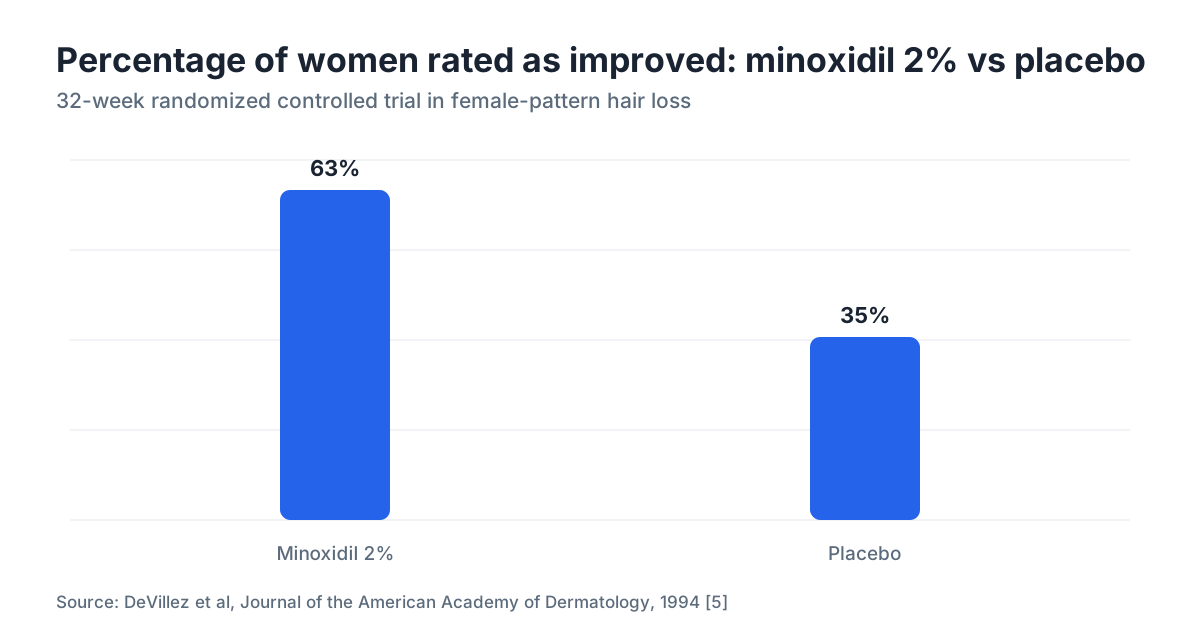
In a 32-week randomized controlled trial published in the Journal of the American Academy of Dermatology, women using 2% topical minoxidil had significantly more nonvellus hairs than those using placebo, with 63% of minoxidil users rated as improved versus 35% of placebo users [5]. Those numbers sound modest. For a diffuse shed, that difference is visible in the mirror.
How it works: minoxidil prolongs the anagen (growth) phase of the hair cycle and increases follicle size. It does not block androgens. It does not cure the underlying condition. If you stop using it, the benefit reverses within three to six months.
Application: apply 1 mL of the solution (or half a capful of foam) directly to the dry scalp at the crown once or twice daily. The solution has propylene glycol, which irritates some women's scalps. The foam avoids that but is harder to apply precisely. Give it a full four to six months before judging whether it is working.
The most important thing to understand about starting minoxidil: you will likely see increased shedding in the first four to eight weeks. This is the minoxidil shed. It happens because the drug pushes old telogen hairs out to make room for new anagen hairs. It is temporary. Many women quit right at this point, which is the worst time to quit.
For the full side effect profile, see our minoxidil side effects guide. If your dermatologist suggests the pill form, our oral minoxidil article covers the evidence and risks there.
Can finasteride or spironolactone help women?
Neither finasteride nor spironolactone is FDA-approved for female hair loss, but both are widely prescribed off-label by dermatologists.
Finasteride (Propecia, generic) blocks the enzyme 5-alpha reductase, which converts testosterone to DHT. DHT is the androgen most responsible for miniaturizing hair follicles. The standard dose for men is 1 mg daily. For women, some dermatologists prescribe 1 to 2.5 mg daily, though the evidence base is smaller than it is for men. Finasteride is absolutely contraindicated in women who are pregnant or may become pregnant because it causes birth defects [6]. Postmenopausal women are the most common candidates. See our finasteride article for a full breakdown.
Spironolactone is an androgen receptor blocker originally developed as a blood pressure medication. Doses of 100 to 200 mg daily are used for FPHL, particularly in women with signs of androgen excess. A 2015 retrospective study in JAMA Dermatology found that 74.6% of women with FPHL treated with spironolactone had either stabilization or improvement [7]. It requires monitoring of potassium and blood pressure. Women of childbearing age need reliable contraception while taking it because it can feminize a male fetus.
For women interested in the DHT blocker angle more broadly, that article covers both prescription and over-the-counter options.
Have the prescription conversation with your dermatologist before you spend money on supplements. Spironolactone and finasteride have actual clinical data. Most supplements do not.
What nutritional deficiencies cause hair loss in women?
Iron deficiency is the most common and most fixable nutritional driver of female hair loss. As noted above, ferritin below 30 ng/mL is associated with increased shedding in some research, though the exact threshold is debated [3]. Women who menstruate heavily, follow vegetarian or vegan diets, or have had bariatric surgery carry the highest risk.
Vitamin D deficiency has been linked to alopecia areata and possibly telogen effluvium. A 2013 study in Skin Pharmacology and Physiology found significantly lower vitamin D levels in women with telogen effluvium and alopecia areata compared to controls, though causation is not proven [8].
Zinc deficiency causes diffuse shedding. Biotin deficiency causes hair loss too, but true biotin deficiency is rare in people eating a normal diet. The supplement industry has leaned hard into biotin, and there is no good evidence that biotin supplementation helps women with normal biotin levels. The AAD explicitly states that biotin supplements have not been proven to cause hair growth [2].
Protein intake matters too. Hair is mostly keratin. Women eating less than about 50 grams of protein per day, especially during weight loss, can trigger a telogen shed.
Before buying any hair loss supplements, get your labs. Supplementing iron when you are not deficient does not help and can harm you. Supplementing biotin when you are not deficient does nothing. Fix what is actually low.
Does diet or lifestyle change actually reduce female hair loss?
For some causes, yes, directly. For androgenetic alopecia, the effect is indirect and modest.
Rapid weight loss is one of the clearest lifestyle triggers for telogen effluvium. Losing more than about 1 to 1.5 pounds per week, or dropping calories below roughly 1,200 per day for extended periods, can trigger a significant shed two to four months later. If you have done this recently, your hair loss may be entirely explained by the diet change, and slowing the weight loss rate may be all the intervention you need.
Chronically high psychological stress raises cortisol, which can disrupt the hair cycle, though the direct causal chain in humans is less clean than the mouse studies suggest. Managing stress helps beyond hair, and if your shed started during or after a high-stress period, addressing sleep, exercise, and mental load is worth doing alongside any medical treatment.
Some research points to the Mediterranean diet as modestly protective against hair loss. A 2017 cross-sectional study in Archives of Dermatology Research found higher adherence to the Mediterranean diet was associated with lower risk of FPHL, particularly in women under 50 [9]. The mechanism is thought to involve antioxidant and anti-inflammatory effects, more than nutrient adequacy.
Small-scale evidence suggests that tight hairstyles (braids, extensions, high ponytails worn daily) contribute to traction alopecia, which can eventually cause permanent follicle damage at the hairline and temples. The fix is genuinely simple: vary your styles and avoid tension on wet hair.
Are there clinical treatments beyond medication worth considering?
A few, depending on your diagnosis and how far the loss has progressed.
Platelet-rich plasma (PRP) involves drawing your own blood, centrifuging it to concentrate growth factors, and injecting the plasma into the scalp. The evidence for PRP in female-pattern hair loss is promising but not yet definitive. A 2019 meta-analysis in Aesthetic Plastic Surgery found PRP significantly increased hair density and thickness compared to placebo across multiple randomized controlled trials, though study quality varied [10]. Sessions typically cost $600 to $1,500 each, and most protocols call for three sessions plus maintenance every six to twelve months. There is no FDA approval for PRP in hair loss, meaning the device used for centrifugation is cleared, but the procedure itself is off-label.
Low-level laser therapy (LLLT) devices (combs, helmets, caps) are FDA-cleared for both men and women with androgenetic alopecia. "Cleared" means the FDA determined the device is substantially equivalent to a predicate device, not that it proved efficacy the way a drug approval does. The evidence suggests modest benefit with consistent use, but the effect size is smaller than minoxidil.
Hair transplants are a real option for women with stable pattern hair loss who have not responded adequately to medical treatment. Female transplant candidates get evaluated differently than men because women often have diffuse thinning rather than discrete bald zones, and donor hair density matters. Read our hair transplant guide before deciding whether you are a candidate.
Not every woman needs to go that far. Many get meaningful results from minoxidil plus treating any underlying deficiency.
How long does it take to see results from hair loss treatments?
This is where a lot of women give up too early.
Minoxidil requires four to six months of consistent daily use before you can judge whether it is working. The hair cycle has three phases: anagen (growth), catagen (transition), and telogen (resting/shedding). Minoxidil needs to push enough follicles through a full cycle before the net result is visible. Quitting at two months because you did not see results means you never actually ran the experiment.
Spironolactone and finasteride have similar timelines. Most dermatologists tell patients to commit to six to twelve months before making a call on efficacy.
If an underlying deficiency was causing the shed, correcting it (say, getting ferritin from 12 ng/mL to 80 ng/mL through supplementation) takes two to four months to normalize blood levels, then another three to six months for the hair to visibly reflect that correction.
PRP sessions are spaced four to six weeks apart, and results are typically assessed three months after the final session.
The honest answer: hair loss treatment is a 6-to-12-month commitment before you know if something is working. That is frustrating, but it is the biology. The follicle cycle does not speed up because you want it to.
What should you actually do first, in order?
Here is the sequence that makes clinical and financial sense:
-
See a dermatologist (or have your PCP order baseline labs first if there is a wait). Do not self-diagnose or buy products until you know what type of hair loss you have.
-
Get ferritin, TSH, free T4, and androgens checked. Fix anything that is out of range. This step alone resolves the hair loss for a meaningful number of women.
-
If the diagnosis is FPHL, start topical 2% minoxidil (or 5% foam if your dermatologist agrees). Apply it consistently. Set a six-month reminder to evaluate.
-
If you want to photograph your progress or track density changes between appointments, a tool like the free AI hair analysis at MyHairline can help you document change objectively, which is useful when talking to your doctor about whether to escalate treatment.
-
If minoxidil alone is not enough after six months, discuss spironolactone or finasteride with your dermatologist, depending on your age and reproductive status.
-
If topical minoxidil causes scalp irritation, ask about the foam formulation or discuss oral minoxidil (low-dose, 0.25 to 1 mg daily), which some women tolerate better.
-
For stubborn cases that do not respond to medication, explore PRP or consult a hair restoration surgeon about transplant candidacy.
Do not start at step 7. Most women never need to get there.
What products and remedies are not worth your money?
A lot of things get sold aggressively to women worried about hair loss. Most have weak or no evidence.
Biotin megadoses. Unless you are actually biotin-deficient (rare in normally eating adults), supplementing biotin does not cause hair growth. High-dose biotin also interferes with thyroid and troponin lab tests, which can cause dangerous diagnostic errors [11].
Keratin "hair growth" shampoos. Shampoos sit on the scalp for a minute or two before being rinsed off. No shampoo has been shown in rigorous trials to regrow hair. A gentle shampoo that does not strip the scalp is fine, but it is not a treatment.
Essential oils (rosemary, peppermint). A small 2015 study found rosemary oil comparable to 2% minoxidil at six months, but the sample size was 100 patients and the methodology has been criticized. The AAD does not list rosemary oil among its recommended treatments [2]. It is unlikely to hurt, but equally unlikely to match a proven medication.
Derma rollers (microneedling). Some small studies show benefit when used alongside minoxidil, but the evidence for derma rolling alone is thin. If you do try it, device hygiene matters. Shared or poorly cleaned rollers can introduce infection.
Hair loss "vitamins" marketed specifically for women. Most are biotin-heavy formulations with small amounts of other nutrients. Check what you are actually paying per nutrient versus buying those nutrients individually. The markup is usually steep and the evidence is usually absent. Our hair loss supplements article ranks what has actual data behind it.
How is female hair loss different from male hair loss?
The pattern, the genetics, and the available treatments all differ.
Men develop the classic Norwood pattern: receding temples, then crown baldness that can progress to complete top-of-head loss. Women with FPHL typically keep their frontal hairline and lose density diffusely at the crown, which is classified using the Ludwig scale (I, II, III) or the Sinclair scale [1]. Total baldness from FPHL alone is uncommon in women.
Hormonally, men's hair loss is more directly driven by DHT. Women's FPHL often involves the same mechanism but with lower androgen levels, and many women with FPHL have lab values entirely within the normal range. The follicles themselves appear more sensitive.
On the treatment side, the 1 mg finasteride dose approved for men does not have FDA approval for women, and the 5 mg finasteride used for prostate conditions is sometimes prescribed off-label for postmenopausal women at lower doses. Men do not typically get spironolactone for hair loss because of its feminizing effects. Men can use 5% minoxidil foam and have a larger body of evidence for it. Women are officially approved for 2% only, though most dermatologists will discuss 5% for appropriate candidates.
If you are curious about the men's side for comparison, our minoxidil for men piece covers that treatment landscape in depth.
When should you be worried enough to see a doctor urgently?
Most hair loss is gradual and leaves time for a routine dermatology appointment. A few scenarios warrant faster action.
If you are losing patches (not diffuse thinning), especially patches with complete hair absence, that raises the possibility of alopecia areata or a scarring alopecia like lichen planopilaris. Scarring alopecias cause permanent follicle destruction if left untreated. Months of delay matter.
If hair loss comes with scalp pain, burning, or redness, that also points toward scarring alopecia or an inflammatory condition needing prompt treatment.
If you are losing hair along with other symptoms (significant fatigue, weight change, irregular periods, new acne, excessive body hair growth), get a full workup quickly. These combinations suggest a systemic hormonal or autoimmune issue where the hair loss is the visible sign of something larger.
If hair is shedding in large visible clumps daily (well beyond a few extra hairs in the shower drain), that degree of acute telogen effluvium warrants evaluation sooner rather than later to identify and remove the trigger.
For most women, a moderate increase in shedding with no systemic symptoms can wait for a scheduled appointment. But scheduled, not indefinitely postponed.
Sources
- American Academy of Dermatology, Hair Loss Types: Alopecia Areata Overview
- American Academy of Dermatology, Hair Loss: Tips for Managing
- Rushton DH, Nutritional factors and hair loss, Clinical and Experimental Dermatology, 2002
- U.S. Food and Drug Administration, Minoxidil Topical Solution 2% Label
- DeVillez RL et al, Androgenetic alopecia in the female, Journal of the American Academy of Dermatology, 1994
- U.S. FDA, Propecia (finasteride) Prescribing Information
- Sinclair R et al, Treatment of female pattern hair loss with oral antiandrogens, JAMA Dermatology, 2015
- Rasheed H et al, Serum ferritin and vitamin D in female hair loss: do they play a role? Skin Pharmacology and Physiology, 2013
- Panagiotou A et al, Mediterranean diet and female hair loss, Archives of Dermatology Research, 2017
- Stevens J, Khetarpal S, Platelet-rich plasma for androgenetic alopecia: A review of the literature and proposed treatment protocol, Aesthetic Plastic Surgery, 2019
- U.S. FDA, The Danger of Biotin Supplements: FDA Safety Communication