
TL;DR: You can slow a receding hairline naturally and, in some cases, partially regrow it, but only if loss is early, mild, or driven by a reversible cause like stress or deficiency. Proven natural options include scalp massage, low-level laser therapy, and fixing nutritional gaps. For androgenetic alopecia, natural approaches alone rarely reverse significant loss. Minoxidil and finasteride have far stronger evidence.
What does 'natural' regrowth actually mean for a receding hairline?
Before you spend money on rosemary oil or a dermaroller, understand one thing: the word 'natural' is doing a lot of work here, and the outcomes swing wildly depending on what's actually causing your loss.
A receding hairline has a cause. If that cause is androgenetic alopecia (male or female pattern hair loss), the follicles are being miniaturized by dihydrotestosterone (DHT). Miniaturized follicles can, in early stages, be coaxed back to health. But once a follicle is dead and replaced by scar tissue, nothing grows there. Natural or otherwise.
If your recession comes from something reversible, like a stretch of severe stress, a crash diet, thyroid dysfunction, or iron deficiency, then fixing the root cause can produce real regrowth. That is genuinely natural and genuinely effective. The follicles were never damaged; they just went dormant.
So the honest answer: natural regrowth is possible, but only in the right situation. Understanding what causes hair loss in your specific case is step one, and skipping that step is why most people waste months on products that can't help them. A doctor visit and a basic blood panel (ferritin, TSH, B12, zinc) costs far less than a year of supplements that won't move the needle.
Which types of hair loss can regrow without medication?
Not all receding hairlines are equal. Some respond well to natural interventions. Others need medical treatment before anything changes.
Telogen effluvium is the type most likely to resolve on its own. It happens when a physical or emotional shock, surgery, childbirth, extreme dieting, or prolonged illness pushes a large share of hairs into the resting (telogen) phase at once. Hair sheds in clumps two to four months after the trigger. The good news: once the trigger is removed, regrowth typically begins within three to six months [1]. You may not need to do anything except fix the underlying cause. Read more about telogen effluvium if that sounds like your situation.
Nutritional deficiencies, particularly iron (ferritin below 30 ng/mL is associated with hair loss in some studies), zinc, vitamin D, and biotin, can cause diffuse shedding that is almost entirely reversible once levels are corrected [2].
Androgenetic alopecia (AGA) is the hardest case. This is the genetic, hormone-driven pattern behind a classic receding hairline. It does not resolve on its own, and purely natural approaches have limited evidence here. Rosemary oil, scalp massage, and diet changes may slow progression or support modest regrowth in early stages, but they are unlikely to produce the kind of hairline restoration people picture when they search for this.
Alopecia areata, a patchy autoimmune type, sometimes resolves spontaneously but often needs treatment. It is not covered here in depth because it is a different disease mechanism.
Does scalp massage actually help regrow hair?
Yes, and the evidence is better than most people expect.
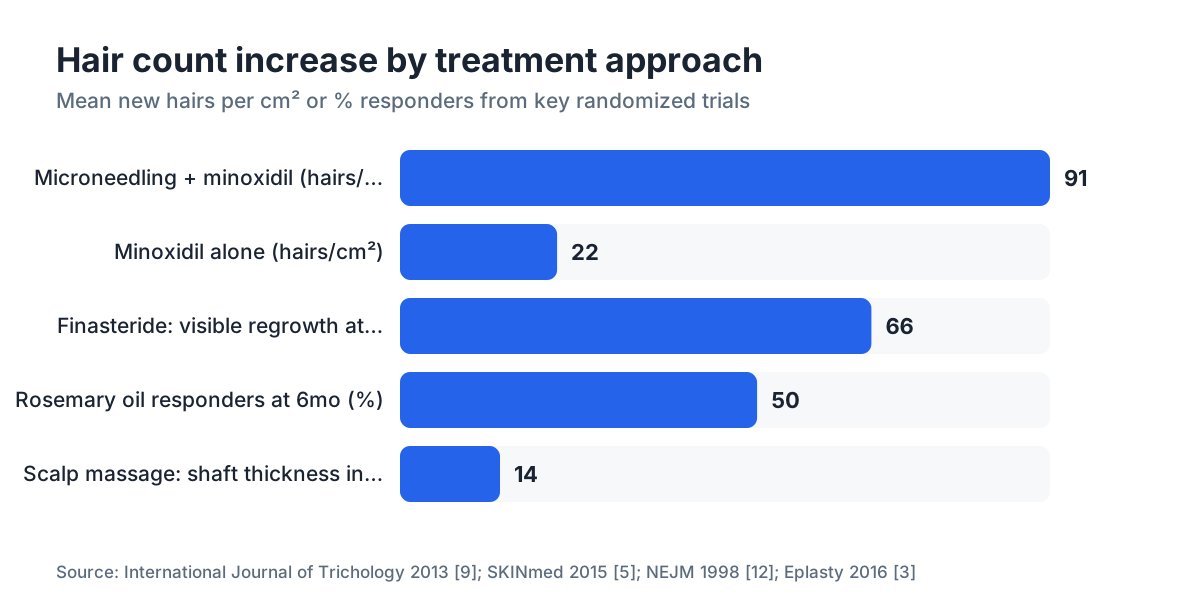
A 2016 study published in Eplasty had nine men perform standardized scalp massages for 24 weeks, four minutes per day. At the end, researchers measured hair shaft thickness and found a statistically significant increase [3]. The proposed mechanism is mechanical stretching of dermal papilla cells, which may stimulate hair cycle activity.
A 2019 survey-based study in Dermatology and Therapy looked at 340 men performing daily scalp massage and found that 68.9% reported stabilization or regrowth after about six months [4].
Real numbers from real studies, but small ones with real limits. Nobody has run a large randomized controlled trial on scalp massage alone versus a control group for hairline recession. Here's the honest read: it costs nothing, takes four minutes a day, and the worst realistic outcome is no change. Use your fingertips, not your nails, applying firm circular pressure across the scalp. A vibrating scalp massager gives you similar mechanical stimulation.
Don't expect dramatic results. Scalp massage is a supporting player, not a lead.
Does rosemary oil regrow hair? What does the evidence actually say?
Rosemary oil is the best-studied 'natural' topical for hair loss, and the evidence is surprisingly solid for early androgenetic alopecia.
A 2015 randomized controlled trial published in SKINmed compared rosemary oil to 2% minoxidil in 100 participants with androgenetic alopecia. After six months, both groups had a similar increase in hair count, and rosemary caused significantly less scalp itching than minoxidil [5]. The researchers suggested rosemary works partly by inhibiting 5-alpha reductase, the same enzyme finasteride targets, though at a much weaker level.
That's a real finding. It needs context. The comparison was to 2% minoxidil, which is weaker than the 5% solution most men use today. And the study had only 100 participants with no placebo arm, which means some of the results could reflect natural hair cycle fluctuation.
How to use it: mix two to three drops of rosemary essential oil into a tablespoon of a carrier oil (jojoba or coconut oil work), massage into the scalp, leave for at least 30 minutes or overnight, then wash out. Do this three to four times per week. You can also buy pre-formulated rosemary serums that skip the mixing step.
It's not a replacement for minoxidil or finasteride in moderate-to-severe AGA. But for someone who wants to avoid medications entirely and is catching things early, it's the most evidence-backed natural topical you can buy right now.
Can diet and nutrition reverse a receding hairline?
Diet can absolutely cause hair loss, and fixing a bad diet can produce real regrowth. But eating better will not override the genetics driving androgenetic alopecia.
The most well-established link is iron deficiency. Ferritin (stored iron) below 30 ng/mL is associated with hair shedding in women; some dermatologists use 70 ng/mL as an optimal target for hair health, though the evidence for that higher threshold is less definitive [2]. If your ferritin is low, supplementing it can produce meaningful regrowth over three to six months. Get tested before supplementing, because excess iron is toxic.
Zinc deficiency is also linked to hair loss. A 2013 study in Annals of Dermatology found significantly lower serum zinc in patients with alopecia areata and telogen effluvium compared to controls [6].
Protein matters too. Hair is made of keratin. Chronic low protein intake, common in very low calorie diets, starves the amino acids needed to build hair shafts. Aim for at least 0.8 grams of protein per kilogram of body weight; many dermatologists suggest 1.0 to 1.2 g/kg for people with active hair loss.
Vitamin D deficiency has a weaker but real association with alopecia [2]. Most adults in the US are insufficient. A supplement of 1,000 to 2,000 IU daily is low-risk and cheap.
What won't do much: random 'superfood' diets with no deficiency to fix, biotin supplements if you're not already deficient (biotin deficiency is rare in people eating normally), and crash-diet elimination of entire food groups. If you want to explore the supplement angle more, see our breakdown of hair loss supplements.
Does low-level laser therapy (LLLT) work for a receding hairline?
Low-level laser therapy (LLLT), sold as laser combs, helmets, and caps, has more regulatory weight behind it than most people realize.
The FDA has cleared several LLLT devices for hair loss, meaning they passed the safety and efficacy bar for 510(k) clearance as a medical device. That's not the same as full FDA drug approval, but it is a meaningful bar. The iRestore, Capillus, and HairMax LaserBand devices all hold FDA clearances [7].
A 2013 randomized, double-blind, sham device-controlled trial in the American Journal of Clinical Dermatology found that a 9-beam laser comb used three times weekly for 26 weeks significantly increased terminal hair density compared to sham treatment in men and women with androgenetic alopecia [8].
The mechanism is thought to involve photobiomodulation, where light at specific wavelengths (typically 650 to 670 nm) stimulates mitochondrial activity in follicle cells, shifting hairs from telogen back into anagen.
The catch: LLLT devices are expensive. A capable laser cap costs $500 to $3,000. Results are modest next to minoxidil, and they require consistent long-term use (typically three sessions per week indefinitely). Some people see real improvement; others see almost nothing.
If budget allows and you want an FDA-cleared non-drug option, LLLT is a legitimate choice. If you're already on minoxidil, adding LLLT may produce additive benefit, though the head-to-head combination data is thin.
Does microneedling or dermarolling help regrow a receding hairline?
Microneedling, using a dermaroller or a Dermapen device over the scalp, has become one of the more interesting natural-adjacent approaches of the past decade.
A 2013 randomized controlled trial in the International Journal of Trichology compared microneedling plus minoxidil to minoxidil alone in 100 men with AGA. After 12 weeks, the microneedling group had a mean hair count increase of 91.4 hairs per square centimeter versus 22.2 in the minoxidil-only group. That's a large gap, and the study has been cited widely [9].
Microneedling is thought to work through a few mechanisms: it creates micro-injuries that trigger wound healing and growth factor release, it may turn up hair growth factors like Wnt/beta-catenin pathway proteins, and when used before topical treatments it increases penetration of minoxidil or rosemary oil into the scalp.
For home use, a 0.5mm to 1.0mm dermaroller once a week is a reasonable starting point. Roll gently in multiple directions across thinning areas, then apply your topical treatment. Do not use it on an actively irritated or infected scalp.
Want a stronger version? In-office microneedling (with 1.5mm or longer needles and platelet-rich plasma, known as PRP) is a medical procedure with stronger evidence but a much higher cost, typically $600 to $1,500 per session with multiple sessions required.
Home dermarolling is cheap, and the combination evidence with minoxidil is genuinely compelling.
What lifestyle changes help slow a receding hairline?
No lifestyle change is going to reverse moderate-to-severe AGA. But lifestyle factors absolutely influence the rate of shedding and the health of the follicles you still have, so take them seriously.
Sleep. Chronic sleep deprivation raises cortisol, and elevated cortisol is associated with increased hair shedding and disrupted hair cycles [10]. Seven to nine hours is the standard adult recommendation. Basic, yes. A lot of people ignore it while buying expensive serums.
Stress management. Chronic psychological stress drives telogen effluvium. The mechanism is well established: stress hormones push follicles into the resting phase. You can't meditate your hairline back, but sustained high-stress living will speed up whatever loss is already underway. Exercise, real sleep, and genuine recovery time between work periods all help.
Smoking. A 2020 cross-sectional study in Skin Appendage Disorders found a significant association between smoking and severity of AGA [10]. Smoking likely accelerates follicle miniaturization through oxidative stress and reduced scalp blood flow. Quitting is the highest-leverage lifestyle change for your overall health anyway.
Heat and styling. Frequent high-heat styling, tight hairstyles (buns, braids under tension), and harsh chemical treatments don't cause genetic hair loss, but they can cause traction alopecia and breakage that make a receding hairline look worse. Ease up on tension and heat while you work on regrowth.
Scalp hygiene. A healthy scalp environment matters. Seborrheic dermatitis (dandruff) and scalp inflammation may worsen AGA, and there's some evidence that ketoconazole shampoo (available over the counter) has mild anti-androgenic properties and may support hair density [10]. Using it two to three times a week is a low-effort, low-cost addition.
How do natural approaches compare to minoxidil and finasteride?
Here's where honesty matters most, because the gap between natural approaches and proven medications is large.
Minoxidil, applied topically, has been FDA-approved for hair loss since 1988 [11]. The 5% topical solution produces clinically meaningful increases in hair count and density in roughly 40 to 60% of men with AGA. Oral minoxidil at low doses (0.25 to 1.25 mg/day) is showing even stronger results in emerging evidence, with some dermatologists now preferring it. See the details in our minoxidil for men and oral minoxidil guides.
Finasteride 1 mg/day, FDA-approved for AGA in men since 1997, blocks the conversion of testosterone to DHT. Clinical trials showed it stopped progression in 83% of men and produced visible regrowth in 66% over two years [12]. That's a completely different effect size than anything in the natural category. Our finasteride guide has the full breakdown, including side effect rates.
Using both together? The combination of finasteride and minoxidil outperforms either alone. A 2021 randomized trial found the combination produced significantly greater hair count increases than either monotherapy [13]. More detail at finasteride and minoxidil.
Natural approaches are not fraudulent. They just have smaller effect sizes. Scalp massage, rosemary oil, LLLT, and microneedling can all support regrowth, especially in early AGA or alongside medications. But if you've been losing ground for two or more years and have visible recession, natural-only approaches are unlikely to restore what's already gone. They may slow further loss, which has real value, but that's a different promise than regrowth.
How long does it take to see natural regrowth results?
Hair grows slowly. The one step most people skip is understanding the timeline before they declare something a failure.
The average hair growth rate is about half an inch (1.25 cm) per month. The anagen (growth) phase for scalp hair lasts two to six years. When a follicle shifts from telogen back to anagen, the new hair has to physically grow out from the scalp, so visible results take time.
For telogen effluvium: initial regrowth typically starts within three months of removing the trigger, but density takes six to twelve months to return. Short, fuzzy new hairs at the temples are the first sign.
For rosemary oil: the 2015 RCT saw results at six months. Expect to wait at least that long before you judge it [5].
For scalp massage: the 2016 study ran 24 weeks before measuring results [3].
For LLLT: most trials run 26 weeks [8].
For microneedling: results were visible at 12 weeks in the key RCT, but meaningful hair count changes took the full study period [9].
The practical advice: commit to any approach for at least six months before judging it. Take consistent photos in identical lighting every four weeks. The naked eye in a mirror is a terrible judge of slow, gradual change; side-by-side photos from the same angle tell a far more accurate story.
If you want a baseline assessment and an objective way to track change, a tool like the MyHairline AI scan (/scan) can analyze your hairline from photos and give you a Norwood stage estimate and comparison baseline, without a clinic visit.
When should you stop relying on natural approaches and see a dermatologist?
Natural approaches have a role. They also have limits. Knowing when to cross into medical treatment is the decision that actually determines whether you keep your hair long-term.
See a dermatologist if: your recession is progressing faster than your natural approach is helping over a six-month window; you're past Norwood stage 2 with visible temple recession or a thinning crown; you're under 30 and losing ground quickly (early-onset AGA tends to be more aggressive); or you have patches of complete loss rather than diffuse thinning (which may point to alopecia areata rather than AGA).
A board-certified dermatologist can run a dermoscopy (scalp exam with a specialized magnifier), assess follicle miniaturization, rule out scalp conditions, and match treatments to what you actually have. The American Academy of Dermatology has a find-a-dermatologist tool and publishes evidence-based guidelines on AGA treatment [14].
The opportunity cost of waiting is real. Dead follicles cannot regrow. A follicle still producing a thin, miniaturized hair can, in many cases, be rescued with finasteride or minoxidil. One that's been gone for years cannot. Early action, even if you start with natural approaches, leaves you the most to work with.
For people who have already lost significant ground and want to know what a hair transplant involves, that's a separate path worth understanding, though it's typically not the first line unless significant loss has already occurred.
Still in the early stages? Reading about receding hairline staging and DHT blockers will give you a much cleaner picture of what you're dealing with.
Sources
- National Institutes of Health, Office of Dietary Supplements, Iron Fact Sheet for Health Professionals
- Eplasty, 2016: Standardized Scalp Massage Results in Increased Hair Thickness by Inducing Stretching Forces to Dermal Papilla Cells
- Dermatology and Therapy, 2019: Self-Assessments of Standardized Scalp Massages for Androgenic Alopecia
- SKINmed, 2015: Rosemary oil vs. minoxidil 2% for the treatment of androgenetic alopecia: a randomized comparative trial
- Annals of Dermatology, 2013: The Role of Zinc in the Treatment of Alopecia
- U.S. FDA, 510(k) Premarket Notification Database
- American Journal of Clinical Dermatology, 2014: A randomized, double-blind clinical trial of a laser comb for androgenetic alopecia
- International Journal of Trichology, 2013: A Randomized Evaluator Blinded Study of Effect of Microneedling in Androgenetic Alopecia
- Skin Appendage Disorders, 2020: Smoking and Androgenetic Alopecia: A Cross-Sectional Study
- U.S. FDA, Drugs@FDA Approval Database
- New England Journal of Medicine, 1998: Finasteride in the Treatment of Men with Androgenetic Alopecia
- JAMA Dermatology, 2021: Combination Minoxidil and Finasteride vs Either Alone for Androgenetic Alopecia
- American Academy of Dermatology, Hair loss: Diagnosis and treatment