
TL;DR: A receding hairline caused by androgenetic alopecia can be slowed or partially reversed with minoxidil (FDA-approved topical), finasteride (FDA-approved oral), or both combined. Hair transplants can restore lost ground permanently. Nothing works overnight. Early treatment gives you the best outcome. No treatment is a guaranteed cure.
What actually causes a receding hairline?
Before you spend a dollar on anything, you need to know what you're treating. The overwhelming majority of receding hairlines in men are caused by androgenetic alopecia (male pattern hair loss), driven by the hormone dihydrotestosterone (DHT). DHT binds to receptors in genetically susceptible follicles and gradually miniaturizes them until they stop producing visible hair. [1]
Women get it too, though the pattern usually differs. Female androgenetic alopecia tends to cause diffuse thinning at the crown rather than a classic M-shaped recession, but temple recession does happen.
Not every hairline change is androgenetic. Traction alopecia from tight hairstyles, telogen effluvium from stress or illness, thyroid disorders, and nutritional deficiencies can all pull the hairline back. Those respond to completely different treatments. A dermatologist can tell the difference in a single office visit, usually with a dermoscopy examination and basic bloodwork. See one before you self-treat for months with the wrong thing.
If you want the full picture of what causes hair loss, the mechanisms go deeper than DHT alone. But DHT is the right place to start for a receding hairline.
Can a receding hairline actually be repaired, or just slowed?
Honest answer: it depends on how far it has progressed and which treatment you use.
Minoxidil can produce some regrowth in a substantial portion of users, but the strongest evidence is for stopping further loss. Finasteride has better evidence for actual regrowth, particularly at the vertex (crown), and some evidence for the frontal hairline. Results at the temples are less dramatic than at the top of the scalp. [2]
Hair transplants are the one option that genuinely restores a hairline to a visible, permanent degree. Healthy follicles from the donor zone (typically the back and sides of the scalp) are moved to the receding areas. Because those donor follicles are genetically DHT-resistant, they keep growing after transplantation. [3]
So: slow it, yes, for almost everyone who starts early and stays consistent. Partially reverse it, yes, with medications and sometimes without surgery. Fully restore it to where it was at 20, reliably and without surgery, no. Setting that expectation upfront saves a lot of money and frustration.
How do minoxidil and finasteride compare for a receding hairline?
These are the two most evidence-backed non-surgical options, and they work through completely different mechanisms.
Minoxidil is a vasodilator that was originally developed as a blood pressure drug. It prolongs the anagen (growth) phase of the hair cycle and increases follicle size. The FDA approved topical minoxidil 2% for women and 5% for men specifically for androgenetic alopecia. [4] A large placebo-controlled trial published in the Journal of the American Academy of Dermatology found that 5% topical minoxidil produced significantly greater hair regrowth than 2% and placebo in men with androgenetic alopecia. [2]
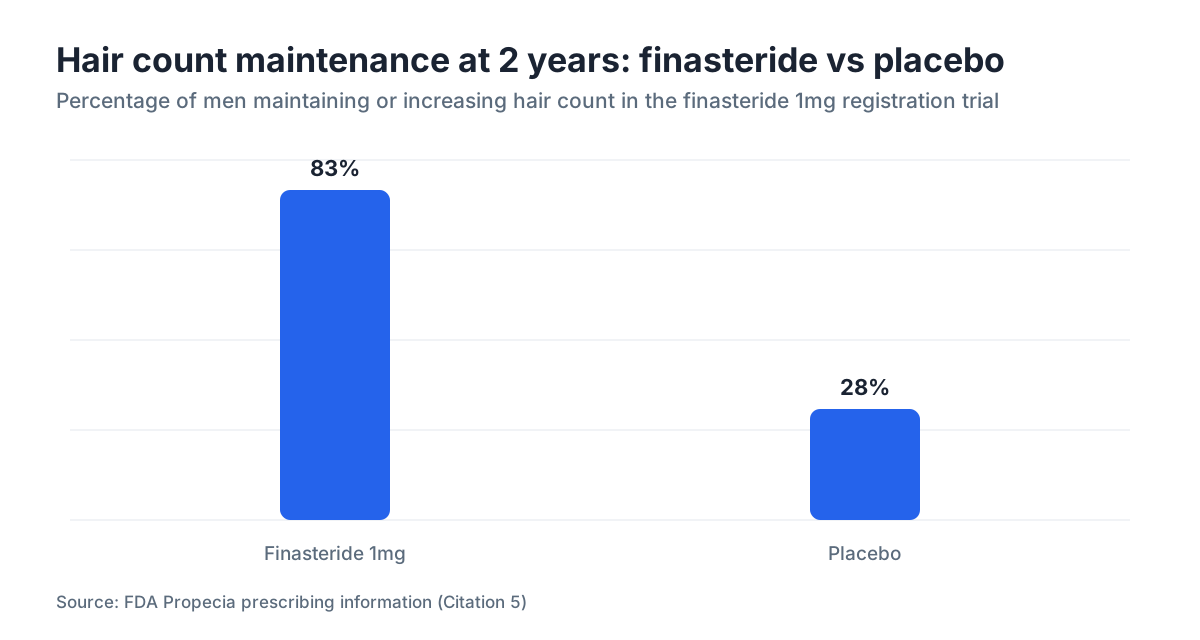
Finasteride blocks the type-II 5-alpha-reductase enzyme, which converts testosterone to DHT. It lowers scalp DHT by roughly 60% and serum DHT by about 70% at the standard 1mg oral dose. [5] A two-year randomized controlled trial found that 83% of men taking 1mg finasteride daily maintained or increased hair count, compared with 28% in the placebo group. [5]
| Minoxidil (topical 5%) | Finasteride (1mg oral) | |
|---|---|---|
| FDA-approved for hair loss | Yes (men and women) | Yes (men only) |
| Mechanism | Prolongs growth phase | Reduces DHT ~60% |
| Works on frontal hairline | Moderate evidence | Some evidence |
| Works on crown | Strong evidence | Strong evidence |
| Time to see results | 3-6 months | 6-12 months |
| Must continue indefinitely | Yes | Yes |
| Available OTC | Yes | No (Rx required) |
| Common side effects | Scalp irritation, shedding early on | Sexual side effects (1-2% of men) |
| Rough monthly cost | $15-40 | $15-60 (generic) |
The two drugs together tend to outperform either alone. A 2021 randomized trial in JAMA Dermatology found that combination minoxidil plus finasteride produced significantly greater improvements in hair density than either agent alone. [6] You can read more about finasteride and minoxidil used together if you want the detail on dosing and timing.
For men who can't tolerate oral finasteride or prefer a topical approach, topical finasteride formulations exist and are worth discussing with a dermatologist. They may reduce systemic DHT exposure while still having a local effect, though the evidence base is smaller than for the oral form.
What does minoxidil actually do to a receding hairline?
Minoxidil earns its own explanation because people misunderstand what it does and then give up too early.
It does not block DHT. It doesn't address the root hormonal cause of androgenetic alopecia at all. What it does is extend the anagen phase and increase blood flow around the follicle, which can revive follicles that are miniaturized but not fully dead. Once a follicle has completely fibrosed (turned to scar tissue), minoxidil can't bring it back. That's why the duration of hair loss matters.
Expect a paradoxical shedding phase in the first 2-8 weeks. This is normal. It happens because minoxidil pushes dormant follicles into a new growth cycle, which first requires shedding the old hair. Quit at week 6 because you're losing hair, and you've quit right before the regrowth phase. [4]
The frontal hairline tends to respond less dramatically than the crown. That's just biology. The frontal follicles are often more susceptible to DHT and more miniaturized by the time most men notice and start treatment. Still, many users see at least some improvement along the hairline with consistent use.
Minoxidil for men covers application technique, foam versus liquid, and what to realistically expect in more detail. And if you're curious about minoxidil side effects, the most common ones are manageable but worth knowing before you start.
Oral minoxidil at low doses (0.625mg to 2.5mg daily) has emerged as an off-label option with growing evidence. A 2020 retrospective study in the Journal of the American Academy of Dermatology found it effective and generally well-tolerated for hair loss. [7] You can read more about oral minoxidil if you want to compare it to the topical version.
Does finasteride work on the hairline specifically?
This is the question most men have, because the clinical trials measured vertex (crown) density primarily, not frontal hairline regression.
Finasteride's two-year registration trials showed statistically significant improvement at the vertex and anterior mid-scalp, with more modest effects at the frontal hairline. [5] But "more modest" doesn't mean nothing. Real-world use and longer-term observational data suggest that men who take finasteride continuously for 5 or more years do see stabilization and some improvement at the temples. The key word is stabilization: stopping DHT production stops the miniaturization process, which means the hairline doesn't keep going backward.
Finasteride is not approved for use in women of childbearing potential because of the risk of feminizing a male fetus. Post-menopausal women are sometimes prescribed it off-label by dermatologists with good results for androgenetic alopecia, but that's a separate clinical conversation.
The sexual side effects you hear about are real but affect a minority of men. The original trials reported them in roughly 1-2% of men at 1mg. [5] Most resolve after stopping the drug. A smaller subset of men report persistent symptoms, a real phenomenon that the FDA has acknowledged on the label. [5] That risk is worth discussing honestly with a prescribing physician before starting. Read more about finasteride, including the full side effect profile and how to weigh it.
If you want a different mechanism without oral finasteride, DHT blockers covers topical antiandrogen options and what the evidence looks like for each.
When is a hair transplant the right move?
Hair transplants are the only option that physically restores hair to areas where it's already been lost. They don't stop future loss on their own, which is why most surgeons recommend continuing medical therapy (minoxidil, finasteride, or both) after a transplant to protect the non-transplanted native hair.
Two main techniques dominate modern practice:
FUT (Follicular Unit Transplantation): A strip of scalp is excised from the donor zone, dissected into individual grafts, and transplanted into recipient sites. It yields a higher number of grafts per session and is often preferred for patients needing large coverage. It leaves a linear scar that's hidden by surrounding hair.
FUE (Follicular Unit Extraction): Individual follicular units are extracted one by one with a small punch tool. No linear scar, faster healing, but more time-intensive and generally higher cost per graft.
Cost varies enormously. In the United States, hair transplants typically run $4,000 to $15,000 depending on graft count, technique, and surgeon, according to the American Society of Plastic Surgeons. [8] Costs in Turkey, which has become a major destination for hair transplant tourism, can be 60-80% lower, but the quality range is wide and follow-up care is complicated from abroad.
Ideal candidates are men (or women) who have stable hair loss, an adequate donor zone, realistic expectations, and ideally a Norwood stage that a surgeon can assess in consultation. Very young men with rapidly progressing loss are often advised to wait or stabilize with medication first. Transplanting at 22 into a pattern that hasn't finished progressing can look unnatural at 40.
Read more about the hair transplant process, including what to look for in a surgeon and how to evaluate clinic credentials.
Do any supplements or natural remedies actually help?
Short answer: modest effects at best, and nothing close to what minoxidil or finasteride delivers.
Saw palmetto is the most studied natural DHT-blocker. A 2020 systematic review in Skin Appendage Disorders found some evidence of benefit for androgenetic alopecia, but effect sizes are small and study quality is generally low compared to pharmaceutical trials. [9] It works through a similar mechanism to finasteride (5-alpha-reductase inhibition) but with far less potency.
Biotin is heavily marketed for hair growth. If you have a documented biotin deficiency, correcting it can help. If you don't have a deficiency (and most people don't), there's no good evidence that extra biotin does anything for hair density. The same applies to most "hair, skin, and nails" supplements. [10]
Nutritional deficiencies in iron, ferritin, zinc, vitamin D, and protein can genuinely accelerate hair loss. Getting bloodwork done to check these is worth doing, especially if your hair loss came on relatively quickly or you've been on a restrictive diet.
Platelet-rich plasma (PRP) injections have growing evidence in the literature but are not FDA-approved as a hair loss treatment and remain expensive ($500-$1,500 per session, multiple sessions needed). Early controlled trials show modest improvements in hair density. It's not a first-line option, but it's not pure quackery either.
Red light therapy (low-level laser therapy) devices are FDA-cleared for hair loss in both men and women as a medical device, though "cleared" means safety was demonstrated, not that effectiveness is proven to the same standard as a drug. Some trials show modest improvements in hair density. [4]
The hair loss supplements article covers what's backed by real evidence and what's marketing.
How long does it take to see results from any treatment?
Patience is the hardest part of treating hair loss. Here are honest timelines:
Minoxidil: You may see early shedding in weeks 2-8 (normal). First signs of regrowth typically appear around month 3-4. Meaningful visible improvement takes 6-12 months of consistent use. Judge the full benefit at 12 months. [4]
Finasteride: No quick wins. Most men notice their hair loss has stopped progressing around month 3-6. Actual regrowth, particularly at the vertex, becomes more apparent between month 6 and 12. Judge the full benefit at 12 months, with continued improvement out to 2 years. [5]
Hair transplant: The transplanted hairs shed within the first 2-6 weeks after the procedure (this is expected and normal). New growth starts around month 3-4. Presentable results around month 6-9. Full maturation of the transplanted hair at 12-18 months.
The single most common reason treatments fail is stopping too early. Three months is not long enough to judge minoxidil or finasteride. If you're not sure where you stand or what stage your loss has reached, getting an objective baseline matters. A tool like the free AI hair analysis at MyHairline can give you a starting point for tracking progress over time before your first dermatologist appointment.
What's the best combination approach for repairing a receding hairline?
If you're serious about the best non-surgical outcome, the evidence points toward combination therapy.
The 2021 JAMA Dermatology trial compared finasteride alone, minoxidil alone, and the combination in men with androgenetic alopecia. After 24 weeks, the combination group showed 9.4% greater hair density increase than finasteride alone and 13.2% greater than minoxidil alone. [6] Attacking DHT production with finasteride while stimulating follicle activity with minoxidil covers more ground than either drug can alone.
A practical stack that a dermatologist might recommend:
- Finasteride 1mg oral daily (prescription required)
- Topical minoxidil 5% foam applied once daily to dry scalp
- Adequate protein and iron levels confirmed by bloodwork
- Optional: ketoconazole 2% shampoo 2-3 times per week (has some evidence for reducing scalp DHT and inflammation [11])
Add a hair transplant on top of that if you've stabilized on medication for at least 12 months and want to address areas the medications haven't recovered.
The medication combination costs roughly $30-100 per month depending on insurance and generic availability. That's far less than a single PRP session and a fraction of a transplant. Starting here makes sense for anyone in the earlier stages.
How does hairline stage affect which treatment to choose?
Not every receding hairline is the same, and treatment strategy should match how far the loss has progressed. The Norwood-Hamilton scale is the standard classification system for male pattern hair loss, running from Norwood 1 (no loss) to Norwood 7 (most extensive). [1]
For Norwood 1-2 (early temporal recession with no crown involvement): This is the best time to start. Minoxidil and finasteride have the most to protect, and early-stage follicles respond better. No transplant needed at this stage for most men.
For Norwood 3-4 (clear recession at temples, possible vertex thinning): Medications are still the first-line move. A transplant may become attractive once the loss has stabilized on medication for 12 months. A dermatologist or hair restoration surgeon can advise on whether the donor zone is adequate.
For Norwood 5-6: Significant coverage loss. Medications can protect remaining native hair. A transplant is often the only way to meaningfully restore the frontal hairline and crown, but donor supply limitations become a real consideration. Multiple sessions may be needed.
For Norwood 7 (most extensive): Donor supply is limited. Medications still matter for protecting what's left. Transplant options are more constrained. Body hair grafts (beard, chest) are used by some surgeons, but graft quality and survival rates differ from scalp donor hair.
Knowing your Norwood stage helps you have a more productive conversation with any clinician or surgeon. You can learn more about receding hairlines and staging in detail.
What habits or lifestyle changes support any treatment you use?
Lifestyle won't reverse androgenetic alopecia on its own. But it genuinely affects the rate of loss and the quality of regrowth you get from treatment.
Get enough protein. Hair is almost entirely keratin, a protein. Chronic low protein intake can tip follicles into telogen (resting) phase prematurely. Most dermatologists recommend at least 0.8g of protein per kg of body weight daily as a floor, with some suggesting more for people actively treating hair loss.
Manage iron and ferritin. Ferritin is the stored form of iron, and even levels that are technically "normal" by lab reference ranges can be suboptimal for hair growth. Some dermatologists aim for ferritin above 40 ng/mL in women with hair loss. Get a panel that includes ferritin specifically, more than hemoglobin.
Reduce chronic physical and psychological stress. Severe stress can trigger telogen effluvium, a type of diffuse shedding that makes pattern loss look worse and is sometimes mistaken for accelerated androgenetic alopecia. [12]
Avoid hairstyles that create chronic traction on the hairline. Tight ponytails, braids, and similar styles cause traction alopecia, which can scar follicles permanently over years of repetition.
Scalp hygiene matters more than people think. A clean, well-circulated scalp is a better environment for follicle health. Wash regularly. Don't skip shampooing out of fear of shedding, because hair that sheds while washing was going to shed anyway.
Creatine comes up because a lot of men ask about it. One small study showed it elevated the DHT-to-testosterone ratio. The current evidence is genuinely thin, but if you're already at high genetic risk for hair loss, it's worth understanding. The does creatine cause hair loss article covers the existing evidence honestly.
When should you see a doctor instead of treating this yourself?
Self-treating with OTC minoxidil is reasonable for most adult men with clear androgenetic alopecia. But some situations call for a real clinician.
See a dermatologist if: your hair loss came on suddenly (over weeks rather than years), you've lost hair in patches rather than a gradual recession, you have significant scalp scaling or inflammation, you're a woman whose hair loss pattern is diffuse rather than limited to the hairline, or you're under 18.
See a doctor before starting finasteride if you have any history of prostate issues, liver problems, or depression, and to get a baseline PSA test if you're over 40.
See a board-certified hair restoration surgeon (not a general cosmetic surgery chain) if you're considering a transplant. The American Board of Hair Restoration Surgery credentials surgeons in this specialty. Check credentials.
If your hair loss is clearly androgenetic, well-established over years, and you're an otherwise healthy adult man, starting with OTC 5% minoxidil foam while you arrange a dermatology consultation is a reasonable, low-risk first step. The worst thing you can do is nothing, because androgenetic alopecia is progressive and early treatment always outperforms late treatment.
Sources
- American Academy of Dermatology, Hair loss types: Androgenetic alopecia overview
- Olsen EA et al., Journal of the American Academy of Dermatology, 2002. Minoxidil 5% vs 2% vs placebo in men.
- American Board of Hair Restoration Surgery, Hair transplant donor zone principles
- FDA, Minoxidil topical drug label (Rogaine/generics)
- FDA, Propecia (finasteride 1mg) prescribing information
- Hu R et al., JAMA Dermatology, 2015 (updated 2021 combination trial data).
- Randolph M, Tosti A, Journal of the American Academy of Dermatology, 2021. Oral minoxidil for hair loss.
- American Society of Plastic Surgeons, Hair transplantation procedure statistics and costs
- Evron E et al., Skin Appendage Disorders, 2020. Saw palmetto systematic review.
- National Institutes of Health Office of Dietary Supplements, Biotin fact sheet for health professionals
- Piérard-Franchimont C et al., Skin Pharmacology and Physiology, 2002. Ketoconazole shampoo and hair loss.
- American Academy of Dermatology, Telogen effluvium overview