

TL;DR: Telogen effluvium stops when its trigger goes away. Most acute cases resolve within 3 to 6 months on their own. Finding and fixing the root cause (a nutritional deficiency, crash diet, high stress, thyroid problem, or medication) is the single most effective thing you can do. Minoxidil can speed regrowth. Shedding past 6 months needs lab work and a dermatologist.
What is telogen effluvium and why does hair suddenly shed?
Telogen effluvium is temporary, diffuse shedding that happens when a physiological shock pushes a large number of follicles out of their growth phase (anagen) and into the resting phase (telogen) all at once [1]. On a normal scalp, about 5 to 15 percent of hairs sit in telogen at any moment. In telogen effluvium that share spikes, and roughly 6 to 16 weeks later those resting hairs shed together [1].
It feels alarming. Clumps on the pillow, handfuls in the drain, thinning at the part line. But the follicles are intact. Nothing has been destroyed.
Our telogen effluvium guide has the full breakdown, but the short version is this: the shedding is downstream of a trigger, and stopping it means dealing with that trigger. No topical product overrides a live physiological stressor.
To see how this differs from genetic hair loss and other causes, what causes hair loss covers the rest of the map.
What are the most common triggers and how do you find yours?
The triggers that reliably set off telogen effluvium fall into a handful of buckets [9]:
| Trigger category | Common examples | Typical onset after trigger |
|---|---|---|
| Nutritional deficiency | Iron, ferritin, zinc, vitamin D, protein | 6-16 weeks |
| Physical stress / illness | Surgery, high fever, COVID-19, major infection | 6-16 weeks |
| Hormonal shift | Postpartum, stopping hormonal birth control | 2-4 months |
| Psychological stress | Prolonged severe stress, trauma | 6-16 weeks |
| Crash dieting / rapid weight loss | Very low calorie diets, weight loss surgery | 6-16 weeks |
| Thyroid dysfunction | Hypothyroidism or hyperthyroidism | Variable |
| Medication | Isotretinoin, some beta-blockers, certain anticoagulants | Weeks to months |
Finding your trigger is not optional. It is the treatment. A dermatologist will usually order ferritin (a better marker here than hemoglobin), a complete blood count, thyroid-stimulating hormone, vitamin D 25-OH, and zinc. Ferritin below 30 ng/mL shows up in dermatology literature as a threshold where hair loss can happen, even without full-blown anemia [3].
Postpartum shedding is one of the most common presentations. It peaks around 3 to 4 months after delivery and almost always clears without treatment by 12 months [2]. Birth control follows the same logic: shedding often starts 2 to 3 months after stopping a combined oral contraceptive and settles once hormone levels re-establish.
Started a new medication in the 3 months before your shedding began? That drug is a real suspect. Do not stop a prescription on your own, but bring a timeline to the doctor who prescribed it.
How long does telogen effluvium last and when does it stop?
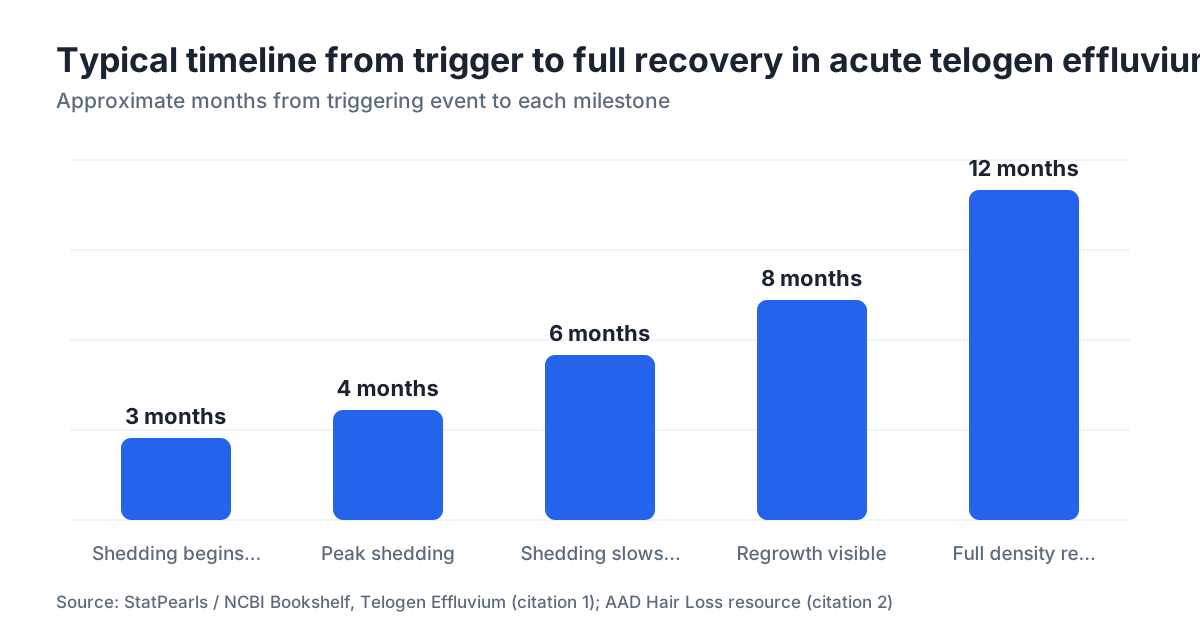
Acute telogen effluvium, the kind with a single identifiable trigger, usually resolves within 3 to 6 months of removing that trigger [1][2]. Most people stop actively shedding by 6 months and see visible regrowth between 9 and 12 months.
Chronic telogen effluvium is defined as diffuse shedding lasting more than 6 months [2]. It is less understood. Some researchers think it reflects a lowered threshold for follicles to cycle, and it can wax and wane for years with no single discoverable cause. Women in their 30s to 50s are affected most often.
So when does telogen effluvium stop? Honest answer: in acute cases, usually 3 to 6 months after you deal with the trigger. If you have not found or addressed the trigger, the timeline is anyone's guess. Shedding that runs past 6 months despite removing an obvious cause and correcting labs earns a scalp biopsy to rule out early androgenetic alopecia or another diagnosis.
Does it stop on its own? In most acute cases, yes. But "on its own" usually means a biological stressor resolved naturally, like the body healing after surgery or postpartum hormones normalizing. It rarely means doing nothing while a correctable deficiency sits there.
Step 1: Fix nutritional deficiencies before anything else
Most people skip this step because it takes time and feels dull next to a shiny supplement stack.
Iron and ferritin are the most studied piece. A review published in the Journal of the American Academy of Dermatology reported that iron deficiency, measured by low serum ferritin, may contribute to hair shedding, and that restoring iron stores in deficient patients tracked with hair recovery [3]. The AAD recommends checking ferritin specifically, because hemoglobin can read normal while ferritin is depleted [2].
Protein matters too. Hair is almost entirely keratin, which is protein. Severe caloric restriction or diets very low in complete protein (under roughly 45 to 50 grams a day for most adults) can trigger shedding within weeks [1].
Vitamin D deficiency has been linked to several forms of alopecia in observational studies, though the direct causal case for telogen effluvium is thinner. Correcting a documented deficiency is low-risk and reasonable. The Endocrine Society defines vitamin D deficiency as serum 25-OH vitamin D below 20 ng/mL [8].
Zinc is worth checking if your diet is light on meat, shellfish, or legumes. Supplementing zinc without a confirmed deficiency is a mistake. Too much zinc causes hair loss on its own.
Get labs, correct what is actually low, and give it at least 3 months before you judge results. Ferritin recovery is slow: depending on your starting level and dose, it can take 4 to 6 months of daily iron to meaningfully raise your stores [3].
Step 2: Address the physiological or hormonal trigger directly
If thyroid dysfunction caused your telogen effluvium, no amount of iron fixes the shedding until the thyroid is treated. Same story for any other systemic cause.
Hypothyroidism is treated with levothyroxine. Hyperthyroidism has several treatment paths. Either way, hair loss usually improves once thyroid-stimulating hormone lands in a stable, normal range. Full recovery can take 6 to 12 months after TSH normalizes [2].
Postpartum shedding needs no treatment. During pregnancy, high estrogen and progesterone held more hairs than usual in anagen. After delivery those levels drop, and the extra hairs that were on hold shed together. The follicles are fine. Shedding peaks around 3 to 4 months postpartum and clears by 12 months in the large majority of cases [2].
If a medication is the trigger, your doctor may be able to switch you to an alternative. Isotretinoin, for one, causes telogen effluvium in a meaningful minority of patients, and it usually resolves after the course ends.
Step 3: Manage stress physiologically, more than psychologically
Chronic psychological stress raises cortisol, and there is evidence in mouse models that sustained cortisol signaling blocks hair follicle stem cell activation [5]. The human data is harder to pin down, because stress is rarely the only thing changing in someone's life.
The practical approach is concrete, though. Sustained sleep deprivation is a real physiological stressor. Regularly getting under 6 hours raises cortisol and inflammatory markers. Fixing your sleep is an actual intervention, not a wellness slogan.
Severe caloric restriction, even short-term, sends a clear signal that the body is in famine. The body responds by cutting non-essential energy spending, and hair growth is non-essential. Drop more than 15 to 20 pounds fast and the shedding you are seeing is the delayed answer to that restriction. The fix is restoring enough calories and protein.
You cannot switch off the shed once it starts. The hairs already in telogen will fall. The whole goal is to stop pushing new follicles into that phase.
Does minoxidil help with telogen effluvium?
Minoxidil is the one topical with real evidence for speeding regrowth after a shed. It prolongs the anagen (growth) phase and appears to nudge follicles back into active growth faster than they would manage alone [6].
The FDA approved topical minoxidil at 2% for women and 5% for men for androgenetic alopecia, not for telogen effluvium specifically [6]. Clinicians use it off-label for TE with sound logic: if follicles are healthy but dormant after a shed, a growth promoter makes sense. Plan to use it for at least 3 to 6 months before judging.
One thing to know going in: minoxidil can cause its own temporary shed in the first 4 to 6 weeks as it pushes resting hairs out to make room for new ones. That can feel like a disaster if you are already shedding from TE. It passes. Our minoxidil for men guide has dosing details, and read the minoxidil side effects article before you start.
Low-dose oral minoxidil (0.625 to 2.5 mg a day) is increasingly prescribed by dermatologists and tends to beat twice-daily topical on compliance. Our oral minoxidil overview covers the evidence there.
Minoxidil is not a cure for telogen effluvium and should not replace fixing the trigger. Stop it, and any benefit it added reverses over several months.
Are there other treatments worth considering?
A few other options come up in dermatology offices. The evidence varies a lot.
Finasteride is the wrong tool for telogen effluvium in most cases. It blocks the conversion of testosterone to DHT and is approved for androgenetic alopecia in men. TE is not driven by DHT, so prescribing finasteride for TE alone is not standard practice [7]. If your dermatologist suspects both TE and early androgenetic alopecia, the math changes. Our finasteride guide covers who it actually fits.
Platelet-rich plasma (PRP) injections get used by some clinicians for diffuse loss, including TE. The evidence is mixed: a few small randomized trials show benefit, others show barely anything over placebo. Cost runs $500 to $2,500 per session, and you usually need several. Honest read: not where your money should go first when correcting ferritin costs a few dollars a month.
Supplements marketed for TE often lean on biotin, collagen, or proprietary blends. Biotin deficiency causing hair loss is rare in anyone eating a normal diet, and high-dose biotin can skew thyroid lab results [7]. Without a confirmed deficiency, biotin adds cost and lab interference and little else. Our hair loss supplements review has the fuller rundown.
Low-level laser therapy (LLLT) devices carry FDA clearance for hair loss, but the evidence for TE specifically is thin. They probably will not hurt anything. Still, the $200 to $600 price is hard to defend before you have fixed the nutritional basics.
Want a clear picture of whether you are dealing with TE, androgenetic alopecia, or something else before spending a dollar? The free AI hair analysis at MyHairline lets you see your pattern objectively and gives you something concrete to bring to a dermatologist.
What to do if telogen effluvium keeps coming back
Repeat acute episodes, meaning clear sheds tied to triggers that keep recurring, tell you the underlying vulnerability is still there. Common culprits: ferritin keeps dipping from low iron intake or ongoing blood loss (heavy periods, say), repeated crash diets, or chronic stress with no recovery built in.
Chronic telogen effluvium, the kind that fluctuates month to month with no clear trigger, is genuinely hard. It does not reliably respond to any single treatment, which is frustrating to hear and frustrating to write. A scalp biopsy showing a normal follicle ratio and no miniaturization can at least confirm the diagnosis and rule out androgenetic alopecia. That distinction matters, because the two conditions look alike at a glance but call for very different management.
Here is a pattern worth knowing: chronic TE can ride alongside androgenetic alopecia. The shedding of TE makes early genetic loss more obvious. Both can be active at once. If a dermatologist suspects both, they may treat the androgenetic part with finasteride or minoxidil while you correct nutritional status in parallel.
If you see a receding pattern at the temples or crown along with diffuse shedding, our receding hairline content will help you sort out what might be going on beyond TE.
How to track whether your telogen effluvium is improving
Your gut read is unreliable here, because shedding anxiety warps how you judge it. Use a few concrete methods instead.
The morning hair count: count the hairs on your pillow each morning for a week and average them. Normal daily shedding is 50 to 150 hairs a day per the American Academy of Dermatology [2]. Real improvement shows as that count trending down over 4 to 6 weeks.
Photography beats memory. Take a photo in the same light, same parting, same distance, every 4 weeks. Your brain adapts to gradual change and misses it in the mirror. Photos do not adapt.
Regrowth hairs, the short fine ones sprouting at the hairline and part, are the clearest sign the shed is ending. They show up 2 to 4 months after shedding slows. Run your fingers along your hairline and part. You should feel a rough, stubbled texture as regrowth comes in.
Re-test labs at 3 months for objective data on whether a deficiency is actually correcting. If ferritin has barely moved after 3 months of supplementation, the dose or form may need adjusting, or something is blocking absorption worth investigating (celiac disease, for example, impairs iron uptake).
For a structured before-and-after view of your scalp, the free AI scan at MyHairline can document pattern and density over time.
When should you see a dermatologist?
See a board-certified dermatologist if any of the following fits. Shedding has run more than 3 months with no obvious resolving trigger. Your labs came back normal but the shedding persists. You notice miniaturization at the crown or temples (shorter, finer hairs where thick ones used to be), which points more toward androgenetic alopecia than TE. You are losing hair in patches rather than diffusely, which suggests alopecia areata. Or you have scalp symptoms: itching, scaling, redness, or tenderness.
A dermatologist can run a pull test, dermoscopy, and if needed a scalp punch biopsy. The biopsy is still the gold standard for telling TE apart from other diagnoses. It sounds drastic for hair loss, but it is a minor outpatient procedure and gives you information no blood test can [2].
Do not burn several months cycling through supplements and topicals before getting labs. The workup is cheap and it saves time.
Sources
- StatPearls, NCBI Bookshelf: Telogen Effluvium
- American Academy of Dermatology: Hair Loss Types and Telogen Effluvium Overview
- Journal of the American Academy of Dermatology: Iron deficiency and hair loss review
- Nature: Corticosterone inhibits hair follicle stem cell activation (Choi et al., 2021)
- FDA: Drugs@FDA database (topical minoxidil label)
- FDA: Drugs@FDA database (finasteride prescribing information)
- Endocrine Society: Clinical Practice Guidelines
- American Academy of Dermatology: Hair loss causes
- JAMA Dermatology (JAMA Network journals)
- British Journal of Dermatology (Oxford Academic)