

TL;DR: You can slow or stop a receding hairline, but you cannot fully reverse it without a transplant. Finasteride (a prescription DHT blocker) halts progression in roughly 87% of men. Minoxidil helps regrow some density but doesn't block the underlying hormone. Used together, they're the strongest non-surgical option most dermatologists recommend.
Do I actually have a receding hairline?
Before you spend anything, confirm what you're dealing with. A receding hairline follows a predictable pattern: the temples thin first, usually forming an M-shape, then the frontal hairline pulls back toward the crown. Dermatologists classify this using the Norwood Scale, which runs from Type I (no recession) to Type VII (a thin horseshoe of hair around the sides and back). [1]
Here's the confusion. Some hairline change is normal. Men's hairlines often mature between ages 17 and 30, moving slightly higher without progressing further. That's a maturing hairline, not androgenetic alopecia. The difference is whether the recession is symmetrical and slow (maturing) or progressive and increasingly M-shaped (androgenetic). If you're unsure, compare photos taken six to twelve months apart under the same lighting. Movement you can measure is the real signal.
Women get receding hairlines too, though it usually shows up as diffuse thinning across the top with the frontal edge partly preserved. If you're a woman with a pulling-back hairline at the temples, the causes and treatments differ enough that a dermatologist visit is worth the time before self-treating. See what causes hair loss for the full breakdown by cause and sex.
Want a quick baseline before booking an appointment? The free AI scan at MyHairline (/scan) lets you upload a photo and get a Norwood-style estimate in under two minutes.
Can you actually stop a receding hairline?
Yes, usually, if you catch it early and commit to treatment. That's the honest answer. Androgenetic alopecia (male or female pattern hair loss) is driven mostly by dihydrotestosterone (DHT), a hormone that miniaturizes susceptible follicles over years. [2] The follicles don't die immediately. They shrink and produce finer, shorter hairs before eventually going dormant. That window, sometimes years wide, is when intervention works best.
What treatment cannot do is restore follicles that have been dormant for a long time. That's why "stop" is the more realistic goal than "reverse." Most men on finasteride report that their hairline holds rather than dramatically fills in. Some regrowth happens at the hairline, but the bulk of the benefit is halting further loss.
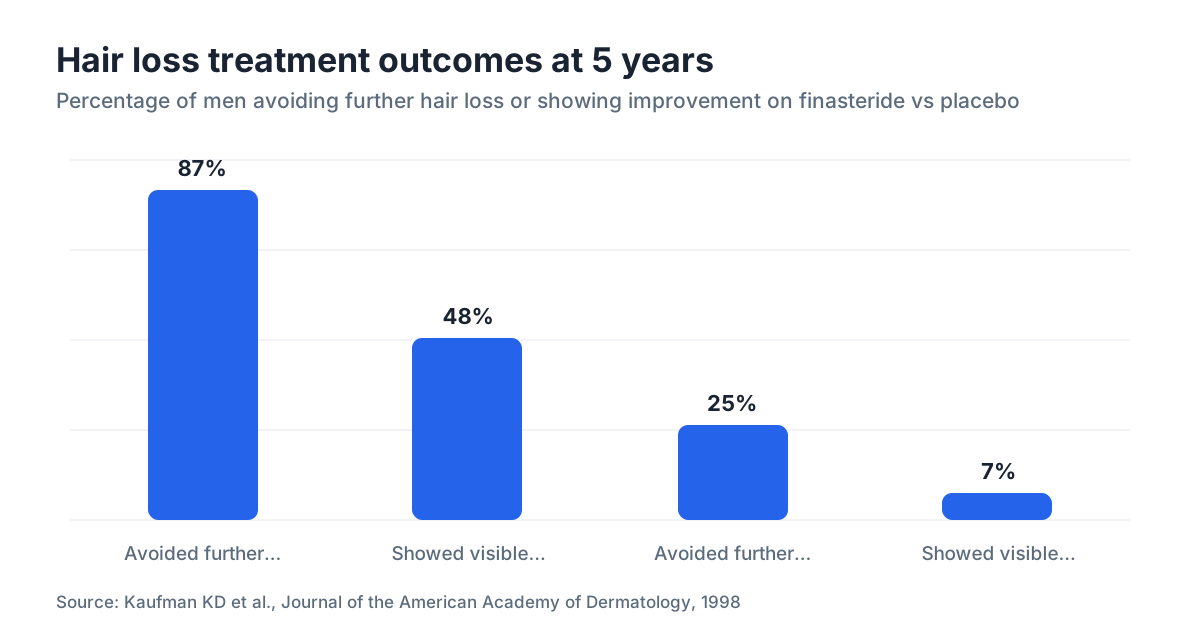
Does a receding hairline stop on its own? Almost never. Without intervention, androgenetic alopecia is progressive. The rate varies wildly between individuals, mostly because of genetics, but the direction is almost always the same. A 5-year finasteride trial showed that untreated men kept progressing while men on the drug largely maintained or improved. [3]
What treatments can stop a hairline from receding?
Four approaches have real evidence behind them. Everything else sits in a much weaker category.
Finasteride (oral or topical) Finasteride is a 5-alpha-reductase inhibitor. It blocks the enzyme that converts testosterone to DHT, cutting scalp DHT levels by roughly 60-70%. [4] The 5-year trial published in the Journal of the American Academy of Dermatology found that 48% of men on 1 mg/day finasteride showed visible improvement at year two, and 87% avoided further loss over five years, compared to continued decline in the placebo group. [3] The FDA approved oral finasteride 1 mg (Propecia) for androgenetic alopecia in men in 1997. [4] It requires a prescription.
Topical finasteride is newer. Early data suggest it produces meaningful DHT suppression at the scalp with lower systemic absorption, which matters for men worried about sexual side effects. A 2021 study in JAMA Dermatology found topical finasteride 0.25% was non-inferior to oral 1 mg for hair count outcomes at 24 weeks. [5]
Minoxidil (topical or oral) Minoxidil is a vasodilator. It's the only FDA-approved topical treatment for hair loss. It extends the growth phase of hair follicles and widens the blood vessels around them. It doesn't block DHT, which is why it works better for density than for stopping recession at the temples. Still, it's the most accessible option: 2% and 5% solutions are over the counter. [6] The 5% foam generally beats 2% solution for men. Results take four to six months to assess, and gains reverse within a few months of stopping. See minoxidil for men for dosing and application details.
Finasteride plus minoxidil combined The combination beats either alone. A 2015 trial in Dermatology and Therapy found that men using both agents had significantly greater hair count improvements than those on finasteride or minoxidil alone. [7] Most hair loss dermatologists treat this as the first-line medical regimen for men with early to moderate androgenetic alopecia. Read the full breakdown at finasteride and minoxidil.
Hair transplant surgery A follicular unit extraction (FUE) or follicular unit transplantation (FUT) transplant moves DHT-resistant follicles from the back and sides to the receding areas. It's the only option that mechanically replaces lost hair. It doesn't stop ongoing loss in the untransplanted areas, which is why most surgeons recommend starting on finasteride before or alongside a transplant. Costs in the U.S. range from roughly $4,000 to $15,000 or more depending on graft count and clinic. [8] See hair transplant for a full cost and method comparison.
| Treatment | FDA approved | Stops progression | Regrows hair | Rx needed | Avg monthly cost |
|---|---|---|---|---|---|
| Oral finasteride 1 mg | Yes (1997) | ~87% of men | Modest | Yes | $15-$50 |
| Topical minoxidil 5% | Yes | Partial | Moderate | No | $10-$30 |
| Topical finasteride | No (compounded) | Strong evidence | Modest | Yes | $30-$80 |
| Oral minoxidil | No (off-label) | Partial | Moderate | Yes | $10-$40 |
| FUE/FUT transplant | No | No (medical tx still needed) | Yes (transplanted areas) | Yes (surgery) | $4,000-$15,000+ one-time |
How does DHT cause a receding hairline and why does blocking it work?
DHT binds to androgen receptors in genetically sensitive follicles and triggers a process called miniaturization. The follicle's growth phase (anagen) shortens with each cycle. Hair grows thinner, shorter, and more slowly until the follicle stops producing a visible shaft. Follicles at the temples and crown carry more androgen receptors than follicles at the back and sides, which is why those areas thin first and why the back and sides are used for transplants. [2]
Blocking DHT doesn't wake up dormant follicles. What it does is give healthy but threatened follicles a chance to keep normal growth cycles going. That's why starting early matters so much, and why results on finasteride look like "staying the same" more than "growing back."
Want a non-prescription supplement approach? Saw palmetto has some evidence as a mild 5-alpha-reductase inhibitor, but the effect size is far smaller than pharmaceutical finasteride. A 2019 review in Dermatology and Therapy called saw palmetto "potentially beneficial" while noting the studies were small and short. [9] It's not a replacement for finasteride in most cases. For a broader look at what supplements do and don't do, see hair loss supplements and dht blocker.
How long does it take to stop a receding hairline with treatment?
Finasteride takes time. Most men don't see stabilization confirmed until month six, and the 5-year trial data shows benefits keep accumulating through year two. [3] The first three to four months can actually look worse, because finasteride briefly speeds up shedding of hairs in transition. This is a known, temporary effect, not treatment failure.
Minoxidil works on a similar timeline for density changes. Four to six months is the minimum before you can judge whether it's working. Stopping too early is the most common reason people decide these treatments "don't work."
For a transplant, grafts shed in the first few weeks after surgery, then regrow over four to twelve months. Final results are typically assessed at twelve to eighteen months.
Patience is genuinely the hardest part of treating hair loss. Set a twelve-month trial window for medication and take reference photos monthly under consistent light.
Are there any risks or side effects I need to know about?
Finasteride's most talked-about side effects are sexual: lower libido, erectile dysfunction, and ejaculatory changes. In the original approval trials, these happened in roughly 3.8% of men on 1 mg/day versus 2.1% on placebo, and most resolved after stopping the drug. [4] A small number of men report persistent side effects after discontinuation, a syndrome sometimes called post-finasteride syndrome. The evidence on this is contested and not well quantified; the FDA added a label update in 2012 acknowledging reports of persistent sexual dysfunction. [4] This deserves a real conversation with a prescribing doctor, not something to skip over.
Oral minoxidil at low doses (0.25-2.5 mg/day) is increasingly used off-label for hair loss with good tolerability data, but side effects include fluid retention, faster heart rate, and unwanted facial hair growth. It's not appropriate for people with cardiovascular conditions without physician oversight. Details at oral minoxidil and minoxidil side effects.
Topical minoxidil's most common issue is scalp irritation or contact dermatitis, often from the propylene glycol in solutions (foam formulations avoid this). Systemic absorption from topical use is low.
What doesn't work for a receding hairline?
Biotin supplementation is popular and mostly pointless. There is no published evidence that biotin improves hair density in people who aren't biotin-deficient, and biotin deficiency is rare in adults eating a reasonably varied diet. [9] A lot of "hair vitamins" are basically biotin with a markup.
Shampoos marketed for hair loss are a mostly ineffective category. Ketoconazole 2% shampoo has some weak evidence as a DHT-reducing add-on, not a standalone treatment, but the effect size in trials is small. [10] No shampoo can penetrate deeply enough to change follicle biology in any meaningful way.
Laser combs and red light devices (LLLT) have FDA clearance as medical devices for hair loss, which is a lower bar than FDA approval and doesn't imply the same level of efficacy evidence. A few small trials show modest density improvements, but the data isn't strong enough for most hair loss specialists to recommend LLLT as a primary treatment.
Scalp massage has some early evidence for increasing hair thickness through mechanical stretching of follicle cells, based on a small Japanese study. It's harmless and free. It's also not going to stop genetic hair loss.
Creatine deserves a separate mention because of all the online worry. The evidence linking it to hair loss is thin. One small study found it raised DHT-to-testosterone ratios in rugby players, but no study has directly shown creatine causes measurable hair loss in humans. See does creatine cause hair loss for the full breakdown.
Does hair loss from stress or illness cause a receding hairline?
Not exactly. Telogen effluvium, the diffuse shedding that follows major physical or emotional stress, illness, surgery, or rapid weight loss, causes widespread thinning rather than a patterned recession. It typically starts two to three months after the triggering event and resolves on its own within six to nine months once the stressor is gone. [11] It doesn't follow the temple-first pattern of androgenetic alopecia.
That said, if you carry the genetic predisposition, a telogen effluvium episode can make an early receding hairline suddenly much more visible. The two can coexist. If your shedding started abruptly after a clear stressful event and is more diffuse than patterned, read about telogen effluvium before assuming you need finasteride.
Thyroid disease, iron deficiency, and crash dieting are other medical causes of diffuse hair loss that look different from a receding hairline. A blood panel (TSH, ferritin, CBC) is worth getting before committing to long-term medication if the cause isn't obvious.
How can I tell if my receding hairline is still progressing?
Consistent, timestamped photos are the single most reliable tool. Take them in the same spot, with the same light, at the same angle, every four to eight weeks. Compare hairline position against a fixed reference point, like the distance from your hairline to your eyebrows.
A hair pull test helps too. Grasp 40 to 60 hairs between your fingers and pull with moderate tension. Losing more than 6 hairs is considered a positive pull test, which suggests active shedding. [12] It's not definitive, but it's a rough real-time signal.
A dermatologist can do a trichoscopy (dermoscopy of the scalp) to look for hair miniaturization at the hairline, which predicts future loss before you can see it with the naked eye. If you want a non-clinical starting point, MyHairline's free AI scan (/scan) can track photos over time and flag changes in hairline position.
Here's the blunt version. If you're asking whether your hairline is moving, it probably is. The question is how fast, and that determines how urgently you need to act.
What's the most effective step-by-step plan to stop a receding hairline?
Here's what the evidence supports, ordered by what to do first.
Step 1: Confirm the cause. Rule out telogen effluvium, thyroid issues, and iron deficiency with a quick blood panel. If those are fine and you have a classic M-shape recession, you're almost certainly dealing with androgenetic alopecia.
Step 2: Talk to a dermatologist or hair loss specialist. Finasteride requires a prescription. A physician can confirm the diagnosis, stage your loss on the Norwood scale, and prescribe appropriately. Telehealth platforms make this faster and cheaper than it used to be, often under $50 for a first visit.
Step 3: Start finasteride 1 mg/day if you're a man with androgenetic alopecia. This is the highest-evidence step for stopping recession. Discuss side effects honestly before starting. Most men tolerate it without issue. [3][4]
Step 4: Add topical minoxidil 5%. Apply once or twice daily to the hairline and thinning areas. The combination of finasteride and minoxidil beats either alone. [7] Be consistent. Skipping applications undermines results.
Step 5: Give it twelve months. Set a calendar reminder. Take monthly reference photos. Don't judge results at three months.
Step 6: Reassess. If medical treatment has stabilized loss but you want more density, consult a transplant surgeon. Most surgeons want to see at least twelve months of stable loss before transplanting.
Step 7: Maintain. Hair loss treatment is ongoing, not a course you finish. Stopping finasteride means DHT levels return and loss resumes, usually within six to twelve months. Build it into a routine like any other daily medication.
That's the full plan. Nothing glamorous, nothing expensive at the start. One prescription, one over-the-counter product, consistency, and realistic expectations.
Sources
- American Academy of Dermatology, Hair Loss Types: Alopecia Areata Overview
- National Institutes of Health, MedlinePlus: Androgenetic Alopecia
- Kaufman KD et al., Journal of the American Academy of Dermatology, 1998: Finasteride 5-year efficacy trial
- U.S. Food and Drug Administration, Propecia (finasteride) prescribing information and label history
- Piraccini BM et al., JAMA Dermatology, 2021: Topical finasteride 0.25% vs oral finasteride 1 mg
- U.S. National Library of Medicine, MedlinePlus: Minoxidil Topical
- Hu R et al., Dermatology and Therapy, 2015: Combination finasteride and minoxidil vs monotherapy
- American Society of Plastic Surgeons, Hair Transplant Surgery Costs
- Almohanna HM et al., Dermatology and Therapy, 2019: The role of vitamins and minerals in hair loss
- Piérard-Franchimont C et al., International Journal of Cosmetic Science, 1998: Ketoconazole shampoo effect on hair loss
- NIH National Library of Medicine, StatPearls: Telogen Effluvium
- American Academy of Dermatology, Hair Loss Diagnosis and Treatment