
TL;DR: An itchy scalp and hair loss can share one cause, but they don't always. Seborrheic dermatitis, scalp psoriasis, androgenetic alopecia, and lichen planopilaris can each produce both symptoms. Some causes reverse with treatment. Others scar and destroy follicles permanently if you wait too long. Getting the right diagnosis early is the single most useful thing you can do.
Does an itchy scalp actually cause hair loss?
Sometimes. Usually not directly. The direction of causation matters more than most people expect.
In most cases the itch and the shedding aren't one causing the other. They're both symptoms of the same underlying problem, whether that's a fungal infection, an inflammatory skin disease, or an autoimmune process. The scalp gets inflamed, the skin barrier breaks down, and hair follicles get caught in the crossfire.
That said, hard chronic scratching can traumatize follicles and cause what dermatologists call excoriation-related shedding. Scratch hard enough to break skin or raise scabs and you've added a mechanical injury on top of whatever is inflaming the scalp. That combination can push hair loss past what the underlying condition alone would do.
Here's the reassuring part: most causes of itchy scalp with hair loss are treatable. Here's the frustrating part: you can't treat what you haven't diagnosed. A red, flaky, itchy scalp that's also thinning looks nearly identical across half a dozen conditions, and the treatments are not interchangeable. Antifungal shampoo clears seborrheic dermatitis and does nothing for lichen planopilaris. Guessing wrong burns months and lets scarring conditions march forward.
What conditions cause both an itchy scalp and hair loss?
Several distinct conditions produce both. Here's a plain breakdown of the common ones.
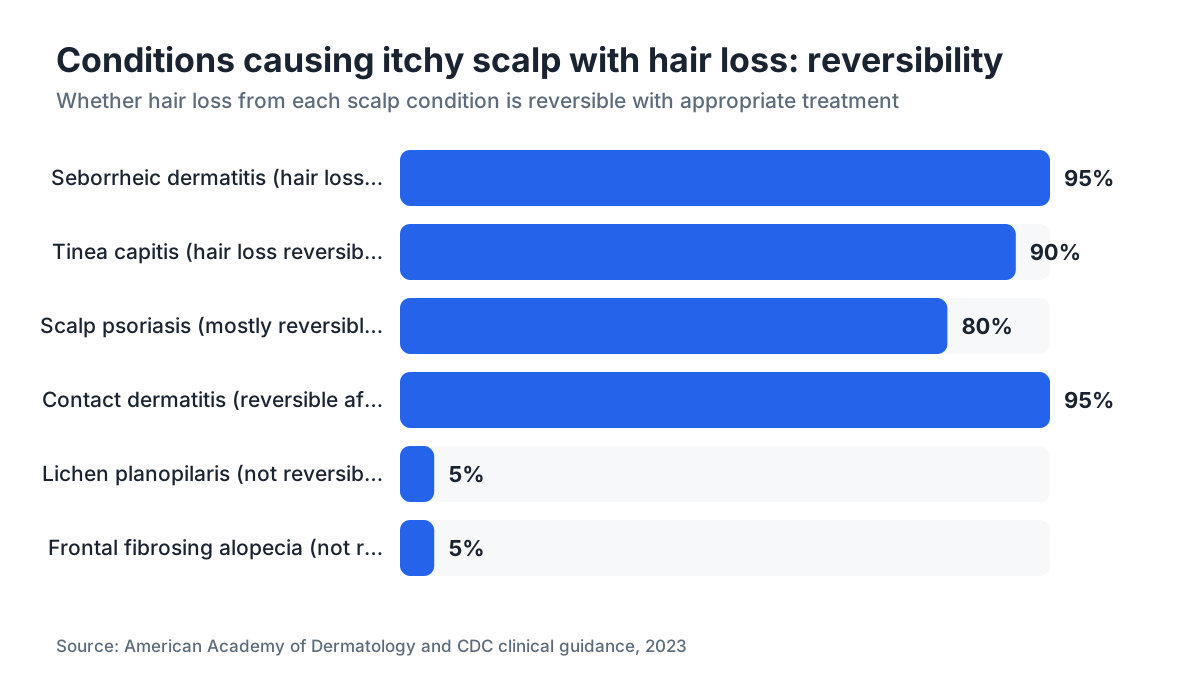
Seborrheic dermatitis is probably the most common cause of a chronically itchy, flaking scalp. An overgrowth of Malassezia yeast triggers an inflammatory response. Hair loss from it is usually diffuse and mild, and it reverses once inflammation is under control [1]. The American Academy of Dermatology puts its reach at up to 3% of the general population, plus a milder infant form called cradle cap [1].
Scalp psoriasis produces thick, silvery-white plaques and hard itch. The inflammation around active plaques disrupts the hair cycle and drives telogen effluvium-type shedding. Hair regrows after flares settle, but repeated severe flares can leave longer-term thinning [2].
Tinea capitis (scalp ringworm) is a fungal infection, more common in children but seen in adults too. It causes patchy hair loss with scaling, black dots where hairs snapped off, and heavy itch. It needs oral antifungal therapy. Topical antifungals alone don't reach the hair shaft [3].
Lichen planopilaris (LPP) and its variant frontal fibrosing alopecia are autoimmune scarring alopecias. They destroy follicles permanently. Early signs include scalp redness, perifollicular scaling, and a burning or tender itch around the hairline and part line. There's no undoing them, so catching them early is the whole game [4].
Alopecia areata occasionally brings mild scalp sensitivity or tingling before patches appear, though classic alopecia areata is usually silent.
Androgenetic alopecia (male and female pattern hair loss) isn't itchy on its own. But plenty of people with it also develop seborrheic dermatitis, and the pairing produces itching plus patterned thinning. It's easy to blame the itch for the loss when both are running in parallel.
Contact dermatitis from hair dye, shampoo ingredients, or topical minoxidil can leave the scalp intensely itchy and inflamed with some reactive shedding. If you started a new product and the itch followed, look there first. For more on minoxidil-related scalp reactions, see minoxidil side effects.
| Condition | Itch level | Hair loss type | Reversible? | Needs prescription? |
|---|---|---|---|---|
| Seborrheic dermatitis | Moderate | Diffuse, mild | Yes | Sometimes |
| Scalp psoriasis | Moderate-severe | Diffuse, episodic | Mostly | Usually |
| Tinea capitis | Moderate-severe | Patchy | Yes | Yes (oral) |
| Lichen planopilaris | Mild-burning | Scarring, permanent | No | Yes |
| Frontal fibrosing alopecia | Mild-burning | Hairline recession | No | Yes |
| Androgenetic alopecia + seb derm | Moderate | Patterned + diffuse | Partial | Sometimes |
| Contact dermatitis | Severe | Diffuse, reactive | Yes | Rarely |
Why is itchy scalp and hair loss more common in women?
Women report the combination more often than men, and the reasons stack.
First, women are more likely to develop seborrheic dermatitis with hormonal shifts, particularly around perimenopause when estrogen drops. Estrogen helps protect the scalp's lipid barrier. As levels fall, the scalp gets more prone to both dryness and fungal overgrowth [5].
Second, frontal fibrosing alopecia, which recedes the hairline alongside perifollicular itch and scalp tenderness, hits postmenopausal women at far higher rates than men. Why isn't fully worked out, but it's one of the fastest-rising diagnoses in dermatology clinics, up sharply since the 1990s [4].
Third, there's trichodynia, a recognized symptom cluster where the scalp is painful or tender to the touch, often alongside hair loss. A 2003 study in the Journal of the European Academy of Dermatology and Venereology found trichodynia in about 33% of patients with androgenetic alopecia and telogen effluvium [6]. The mechanism may involve neurogenic inflammation around follicles that are miniaturizing or stuck in prolonged telogen.
Women also use hair dye and chemical treatments more often, raising contact dermatitis risk on a scalp that's already reactive. And because female hair loss looks different from male pattern loss (more diffuse, a widening central part rather than a clean receding line), it often goes unaddressed longer, which gives secondary conditions more time to set in. If your hair loss looks like telogen effluvium rather than pattern thinning, that's worth working out separately.
How do you know if your itchy scalp is a scarring alopecia?
This is the question that matters most, because scarring alopecias (also called cicatricial alopecias) destroy follicles. Once a follicle is gone, that hair doesn't come back.
The signs that push a case toward scarring territory: itch or burning located specifically around the hairline or part line rather than spread across the scalp; perifollicular erythema (redness right at the follicle opening); scaling that rings individual hairs; and a hairline that keeps creeping backward steadily instead of fluctuating.
Frontal fibrosing alopecia, a form of lichen planopilaris, often starts with a faint band of pale skin at the hairline before any obvious hair loss shows. Eyebrows may thin at the same time. Many patients say the area felt irritated or itchy long before they noticed recession.
Dermoscopy (scalp exam under a dermatoscope) changes everything in this differential. Under magnification, a dermatologist can spot the perifollicular fibrosis and white halos around follicles that flag scarring well before it's visible to the naked eye. If there's any chance of a scarring alopecia, this is not something to manage at home with drugstore products while you wait and see. A biopsy is often needed for a firm diagnosis [4].
Most causes of itchy scalp with hair loss are not scarring, and that's the reassuring side. But the downside of missing a scarring alopecia is permanent follicle destruction, and that asymmetry justifies seeing a dermatologist fairly quickly if the itch is localized near the hairline or part line, and especially if it burns rather than simply itches.
Can dandruff cause hair loss?
Plain dandruff (mild Malassezia-driven flaking with little inflammation) is not a real cause of hair loss. Flaking alone doesn't damage follicles.
But the line between dandruff and seborrheic dermatitis is blurry, and the inflammatory part of seborrheic dermatitis is what matters for hair. When inflammation runs high enough, it stretches out the telogen (resting) phase of the hair cycle, so more hairs sit dormant instead of growing. The shed rate climbs and density slowly drops [1].
A 2019 review in Skin Appendage Disorders found the link between Malassezia and androgenetic alopecia may also run through the yeast producing reactive oxygen species that damage the follicular environment, potentially speeding up the DHT-driven miniaturization already underway in people who are genetically predisposed [7].
So: basic dandruff, low risk. Persistent, inflamed seborrheic dermatitis, real but usually mild and reversible risk. Treating the seborrheic dermatitis with antifungal shampoos (ketoconazole 2%, ciclopirox, or selenium sulfide) usually reverses the associated thinning within a few months, though results vary person to person.
Zoom out to what causes hair loss and seborrheic dermatitis sits well below androgenetic alopecia in magnitude. It's a contributor and an accelerant, not usually the main driver.
What does trichodynia mean, and is scalp pain linked to hair loss?
Trichodynia means pain, tenderness, or burning on the scalp, often described as a sensitivity when hair moves or gets touched. People with it sometimes say their hair hurts.
It's more common than most people realize. The 2003 study in the Journal of the European Academy of Dermatology and Venereology found trichodynia in roughly 33% of patients presenting with androgenetic alopecia or telogen effluvium, versus 0% in controls without hair loss [6]. That's a real association.
The proposed mechanism is neurogenic inflammation. Follicles that are miniaturizing or stuck in extended telogen may trigger local release of substance P and other neuropeptides, which sensitize the surrounding skin and produce pain signals with no obvious lesion on the surface. You feel it, but you can't see it.
Trichodynia isn't a standalone entry in the ICD coding system, and it's under-researched. Nobody has good data on whether treating the trichodynia itself changes hair loss outcomes. Most dermatologists treat the underlying condition and the scalp sensitivity tends to fade as a side effect.
The practical takeaway: if your scalp is genuinely tender, especially if touching or washing your hair hurts, say so plainly to your dermatologist. It's a clue in the differential, and it points away from purely cosmetic thinning toward something inflammatory.
How is the cause of itchy scalp hair loss diagnosed?
Getting the diagnosis right runs through a few layers, and most of the useful information comes from clinical exam, not at-home observation.
A dermatologist usually starts with a detailed history: when the itch started, whether it came before or after the hair loss, what products you use, any recent illnesses, medications, hormone changes, or family history. Then a visual and dermoscopic exam of the scalp. Dermoscopy is the single most useful tool for separating inflammatory, fungal, and scarring causes before biopsy.
Blood work often follows to rule out thyroid disease (TSH, free T4), iron deficiency (ferritin, not hemoglobin), and autoimmune markers if there's clinical suspicion. Ferritin below 30 ng/mL is commonly tied to telogen effluvium, and the threshold many trichologists treat toward is below 70 ng/mL, though the evidence for the higher number is debated [8].
A scalp biopsy is the reference standard for diagnosing scarring alopecias. Two 4mm punch biopsies, one for vertical and one for horizontal sectioning, give the most information. If a dermatologist recommends a biopsy, that's the right call, not something to turn down because it sounds invasive.
For fungal infections, a KOH prep (a scraping examined under the microscope after potassium hydroxide treatment) can confirm tinea capitis, though culture takes longer and is more definitive [3].
Home assessment tools like AI-based scalp scanning can be a reasonable first step to organize your observations and see patterns over time. MyHairline's free AI scan at /scan gives you a structured way to document what you're seeing before and after a clinical visit. That's genuinely useful, because dermatologists respond well to longitudinal photos.
This is not a situation where waiting several months to see if it clears up on its own is a smart move, not if the itch is significant or you're watching a hairline recede.
What treatments actually work for itchy scalp with hair loss?
Treatment depends entirely on cause, so here's how the options map to their specific targets.
For seborrheic dermatitis: Ketoconazole 2% shampoo is the best-studied topical antifungal for the scalp. A 2002 randomized controlled trial found it cut scalp Malassezia counts and clinical scores well beyond placebo [1]. Ciclopirox 1% shampoo is an alternative with antifungal and anti-inflammatory action. Selenium sulfide 2.5% is available over the counter and works. These shampoos do best left on 3 to 5 minutes before rinsing. Maintenance use once or twice weekly after clearing a flare is usually needed, because the condition comes back.
For scalp psoriasis: Prescription-strength topical corticosteroids are first-line. Calcipotriene/betamethasone dipropionate foam (Enstilar) has good evidence for scalp plaques. Biologics like IL-17 inhibitors come in for moderate-to-severe cases. Dermatologist supervision matters here, because potent steroids used indefinitely on the scalp carry their own side effects.
For tinea capitis: Oral griseofulvin has been the standard for decades. Oral terbinafine is increasingly used and runs shorter courses (4 to 6 weeks versus 8 to 12 weeks for griseofulvin with some species) [3]. A doctor has to prescribe these. Topical antifungals alone won't cut it.
For lichen planopilaris and frontal fibrosing alopecia: There's no FDA-approved treatment for either. Off-label options include hydroxychloroquine, topical or intralesional corticosteroids, pioglitazone, and JAK inhibitors. The aim is to stop progression, not regrow what's lost. Most of these treatments rest on modest evidence from small studies.
For androgenetic alopecia with secondary itch: Treat the androgenetic alopecia itself with minoxidil for men or finasteride while managing whatever secondary condition is driving the itch. That combination gives the best outcomes. If you're taking a DHT blocker like finasteride alongside an antifungal shampoo, the two work on completely different pathways and don't step on each other.
For contact dermatitis: Stop the offending product. Patch testing by a dermatologist pins down the specific allergen. Common culprits are paraphenylenediamine (PPD) in hair dye and propylene glycol, an ingredient in some minoxidil formulations and a well-documented source of scalp reactions.
One thing worth saying plainly: corticosteroid shampoos and topicals cut inflammation and itch no matter the cause, which means they can make a serious condition feel better without touching it. Masking symptoms in a scarring alopecia while the follicles die off is worse than knowing the condition is active.
Can minoxidil or finasteride cause an itchy scalp?
Yes, both can.
Topical minoxidil solutions often carry propylene glycol as a vehicle, and propylene glycol is a skin sensitizer. It causes contact dermatitis in a meaningful share of users, producing redness, itch, and flaking that can look a lot like seborrheic dermatitis. The foam formulation (Rogaine 5% foam) uses a different carrier and is often better tolerated by people who react to the solution. FDA labeling for topical minoxidil lists scalp irritation as a known adverse effect [9].
If scalp itch showed up after you started topical minoxidil, switching to foam or to oral minoxidil is worth raising with a prescriber. See minoxidil side effects for a full breakdown of what to expect.
Finasteride is less often tied to direct scalp symptoms, but it can cause a temporary shedding bump in the first few months (a sign follicles are shifting from telogen back to anagen), and in rare cases scalp hypersensitivity has been reported. The mechanism isn't well understood.
The broader point: if you started any new hair loss treatment and itch followed, don't assume the underlying condition got worse. Pin the new symptom on the new treatment first, then investigate from there.
If you're thinking about combining treatments, finasteride and minoxidil together is the most evidence-backed pairing for androgenetic alopecia, but a reactive scalp may mean adjusting the formulation before you layer both.
When should you see a dermatologist vs. try over-the-counter first?
Over-the-counter first is reasonable if you have mild dandruff-type flaking with occasional itch, no visible thinning, no scalp redness beyond a bit of irritation, and symptoms under about 4 to 6 weeks old. A medicated shampoo trial (ketoconazole, selenium sulfide, or pyrithione zinc) for 4 to 6 weeks is a fair first move.
See a dermatologist sooner if any of these apply. The itch or burning sits near the hairline or part line. There's visible hair loss or a widening part. The scalp is clearly red or carries thick scale. You have patches of loss rather than diffuse thinning. You've used OTC treatments longer than 6 to 8 weeks with no improvement. There's any scalp pain or tenderness. You have a personal or family history of autoimmune disease. You've been through significant physical or emotional stress, surgery, or illness in the past 6 months (any of these can trigger telogen effluvium).
A general practitioner can diagnose and treat seborrheic dermatitis and prescribe ketoconazole. For anything more complex, a board-certified dermatologist, ideally one focused on hair loss (trichology), is the right referral. In the U.S., the American Academy of Dermatology runs a find-a-dermatologist tool at aad.org [10].
There's a pattern I see over and over: people spend 12 to 18 months cycling through OTC products on a scalp condition that needed a prescription and a diagnosis back at month two. The delay doesn't just waste time. In scarring conditions, it costs follicles.
Are there home habits that help with itchy scalp and hair loss?
Yes, and a few have real evidence. Others are popular online with little to back them up.
Washing frequency: For seborrheic dermatitis, washing more often (daily or every other day with a gentle or medicated shampoo) keeps Malassezia down better than washing rarely. The advice to wash less because washing causes hair loss is backward for anyone with an actively inflamed scalp.
Water temperature: Hot water widens scalp blood vessels and can worsen itch and inflammation in already-reactive skin. Lukewarm or cool rinses genuinely help.
Skip the fingernails: Use fingertip pads to work shampoo in. Nails break skin, drag in bacteria, and traumatize follicles. It's not a major driver of hair loss, but it's a habit worth building.
Ease off mechanical stress: Tight hairstyles pulling on an inflamed scalp make things worse. Loose styles during treatment help.
Diet: The evidence for specific dietary fixes on scalp inflammation is thin. Omega-3 fatty acids are broadly anti-inflammatory, and a few small studies hint they may reduce scalp inflammation, but the effect is modest. Iron, zinc, vitamin D, and biotin deficiencies all carry associations with shedding. If you're supplementing, correct documented deficiencies rather than piling on every hair loss supplement on the shelf.
Stress management: Psychological stress triggers telogen effluvium and also flares seborrheic dermatitis and psoriasis. Nobody wants to hear this while already stressed, but the cortisol pathway is real [11].
What probably doesn't help: essential oils as a primary treatment for real scalp disease, apple cider vinegar rinses (the acid can worsen a compromised barrier), and DIY hot oil treatments on an inflamed scalp.
What should you track before your dermatology appointment?
Show up with good documentation and the appointment gets far more productive.
Track when the itch started versus when the hair loss started. These timelines are diagnostic. If itch came months before hair loss, that points toward an inflammatory or infectious driver. If hair loss came first and itch showed up later, that's a different pattern.
Photograph your hairline and part line in consistent lighting (overhead bathroom light is fine) every 2 to 4 weeks. Parted photos showing scalp are more useful than loose-hair photos. Changes that look gradual to your eye often jump out in a time-lapse comparison.
List every product touching your scalp: shampoo, conditioner, styling products, any topical treatments. Bring the labels, or the products themselves if you can.
Note any major life stressors, illnesses, surgeries, dietary changes, or medication changes in the past 12 months. A lot of telogen effluvium and reactive scalp conditions lag 3 to 6 months behind the trigger, so something from half a year ago still counts.
Bring this organized and the dermatologist spends less time reconstructing your history and more on diagnosis and treatment.
For a preliminary look before you book, MyHairline's free AI scan at /scan can help you spot patterns in your hairline and flag areas of concern, giving you clearer language to describe what you're seeing.
Sources
- American Academy of Dermatology, Seborrheic Dermatitis overview
- CDC, Ringworm (Tinea capitis) clinical overview
- National Institutes of Health, Estrogen and skin barrier function review
- Journal of the European Academy of Dermatology and Venereology, Trichodynia (Hoss & Sander, 2003)
- Skin Appendage Disorders, Malassezia and androgenetic alopecia review (2019)
- Journal of Investigative Dermatology, Serum ferritin and hair loss (Trost et al.)
- FDA, Minoxidil Topical Solution label (DailyMed)
- American Academy of Dermatology, Find a Dermatologist
- National Institutes of Health, Stress and skin disease review
- American Academy of Dermatology, Hair loss types overview