
TL;DR: Falling estrogen during perimenopause exposes hair follicles to the full pull of androgens, and DHT-sensitive follicles start to shrink. The result is diffuse thinning across the crown and part, with the hairline usually spared. Up to 50 percent of women notice it by menopause. Minoxidil has the most evidence. Hormone therapy helps some women but carries its own risks.
What is perimenopause hair loss and how common is it?
Perimenopause is the transition before a woman's final period, usually running four to ten years. Estrogen and progesterone swing hard and then fall. Hair follicles read those hormones closely, and when the levels drop, the scalp shows it.
The pattern most women get has a name: female pattern hair loss (FPHL), also called androgenetic alopecia. It looks nothing like male balding. Instead of a receding hairline, women see a widening part, thinning across the crown and the top of the scalp, and less volume overall. The front hairline usually holds. That's one reason so many women shrug it off for months before they ask anyone about it.
About 40 to 50 percent of women notice hair loss by the time they reach menopause, according to the American Academy of Dermatology [1]. It's one of the most common skin complaints in midlife women. It's also one of the most undertreated, partly because appointments get eaten up by hot flashes and sleep problems, partly because women feel awkward bringing it up.
Some women get a second thing on top: telogen effluvium, a sudden diffuse shed set off by hormonal disruption, stress, or a nutritional gap. It can stack on FPHL. That's why some women panic at a dramatic shed first, then realize the underlying density had already been slipping for a while. Figuring out what causes hair loss in your specific case matters, because the fixes are different.
Why does estrogen loss cause hair to thin?
Estrogen protects hair. It stretches out the anagen (growth) phase, partly blocks the conversion of testosterone to DHT, and keeps follicles growing longer than they otherwise would. When estrogen falls, DHT gets a freer hand.
DHT is made from testosterone by an enzyme called 5-alpha reductase. It binds androgen receptors in the dermal papilla cells at the base of the follicle, and in genetically susceptible follicles it slowly miniaturizes them. Each hair the follicle grows comes back thinner, shorter, and lighter than the last. Eventually the follicle may stop making a visible hair at all. This is the same process DHT blocker treatments target in men.
Here's what actually changes in perimenopause. DHT doesn't spike. The estrogen buffer disappears. Testosterone in women even declines with age, but the ratio of androgens to estrogens tilts sharply toward androgens. Follicles that carry a genetic sensitivity to DHT, and many women carry it without ever knowing, now get more androgen signaling than before.
A 2021 review in the International Journal of Women's Dermatology put it plainly: miniaturization in FPHL comes from the shift in the estrogen-to-androgen ratio, not from an absolute androgen excess, which is why most women with FPHL have normal testosterone on a blood test [2]. That's a useful fact to carry into a doctor's office. Normal lab values do not rule out hormonal hair loss.
How is perimenopause hair loss different from other types?
Get the diagnosis right before you spend a dollar on treatment. Several things thin hair in midlife, and they respond to different things.
| Pattern | Appearance | Typical cause | Reversible? |
|---|---|---|---|
| FPHL (androgenetic) | Widening part, crown thinning, hairline preserved | Genetic sensitivity + androgen exposure | Partial with treatment |
| Telogen effluvium | Diffuse all-over shed, often sudden | Hormonal shift, stress, illness, low ferritin | Often yes, 6-12 months |
| Alopecia areata | Patchy, well-defined round bald spots | Autoimmune | Variable |
| Thyroid-related | Diffuse thinning, coarse dry hair | Hypothyroidism or hyperthyroidism | Yes, with thyroid treatment |
| Traction alopecia | Hairline recession where tension is applied | Tight hairstyles over time | Partial, if caught early |
Rule out thyroid disease and low ferritin first. Both are common in this age group and both are directly treatable. A basic panel should include TSH, free T4, serum ferritin, and CBC, plus total and free testosterone and DHEAS if there's any sign of androgen excess (acne, irregular cycles, hirsutism). The American Academy of Dermatology recommends this workup for women presenting with hair loss [1].
Widening part, intact hairline, normal labs? FPHL is the likely answer. A dermatologist can confirm with a pull test, dermoscopy, or a scalp biopsy if the picture is muddy. Don't skip this step if you can avoid it. Treating the wrong thing is expensive and demoralizing.
Which treatments actually have evidence for perimenopausal hair loss?
Here's the honest ranking. Minoxidil has the most evidence. Low-level laser therapy has decent evidence for a modest effect. Almost everything else sold to women for hair loss is marketing with thin or no trial data behind it.
Minoxidil (topical)
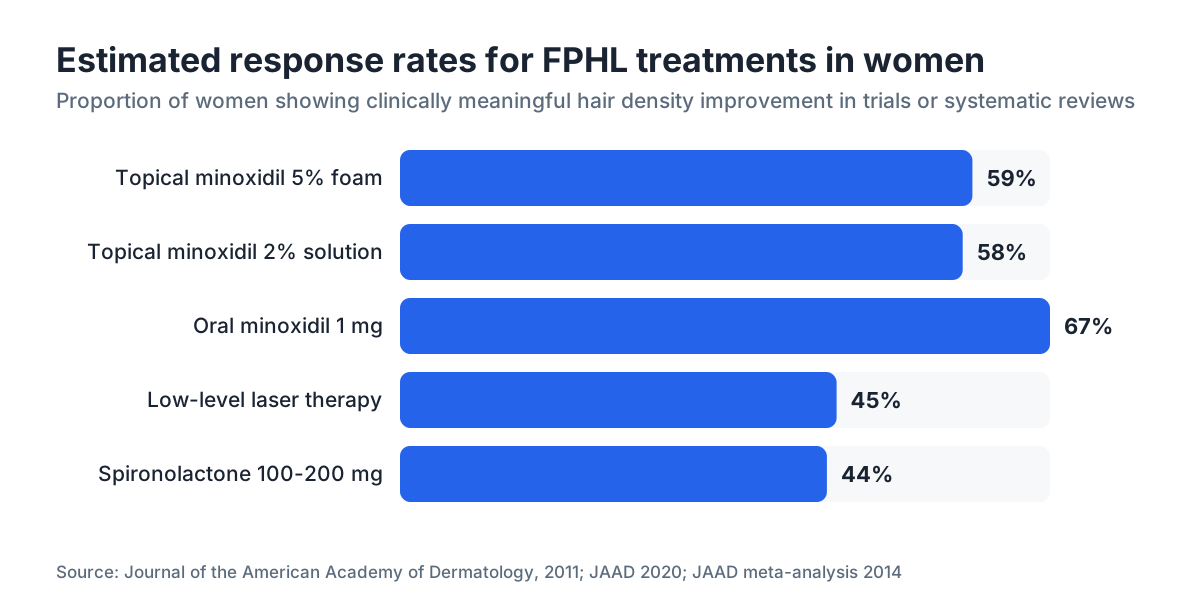
The FDA approved 2% topical minoxidil for women with androgenetic alopecia in 1991 [3]. The 5% foam came later and gets used off-label in women, often preferred because once-daily dosing is easier to stick with. A randomized controlled trial in the Journal of the American Academy of Dermatology found 5% foam once daily was as effective as 2% solution twice daily in women, with a similar side-effect profile [4].
Minoxidil stretches out the growth phase and increases blood flow to the follicle. It does not block DHT, so it handles part of the problem. Give it four to six months before you judge it. Shedding in the first two to eight weeks is normal and does not mean it's failing. Stop using it and the gains reverse. That's the biggest practical catch.
Want the full side-effect picture before you start? The minoxidil side effects guide covers unwanted facial hair, scalp irritation, and the early shed that trips people up.
Oral minoxidil
Oral minoxidil at low doses (0.25 mg to 2.5 mg per day) gets used off-label in women more and more, and the evidence base is growing. A 2020 retrospective study in the Journal of the American Academy of Dermatology found meaningful gains in hair density in women taking 1 mg daily, with fluid retention and unwanted body hair as the main side effects at higher doses [5]. It's not FDA-approved for hair loss, so it needs a prescription and monitoring.
Antiandrogens
Spironolactone is the most-prescribed antiandrogen for women's hair loss in the US. It blocks androgen receptors at the follicle and cuts adrenal androgen production. Doses run 50 to 200 mg daily. The evidence is mostly observational but fairly consistent. It's off the table for women who are or might become pregnant, because it can feminize a male fetus [6].
Finasteride, the 5-alpha reductase inhibitor used widely in men (see finasteride for the full breakdown), gets used off-label in postmenopausal women. The evidence in premenopausal women is weaker, and it's flatly contraindicated in women who could become pregnant because of fetal harm. A 2012 randomized trial found no significant benefit in postmenopausal women at 1 mg, though some studies using higher doses (2.5 to 5 mg) show modest improvement [7].
Low-level laser therapy
FDA-cleared, not approved, for both men and women. Cleared is a lower bar than approved. A meta-analysis in the Journal of the American Academy of Dermatology found a statistically significant rise in hair density versus sham devices [8]. The effect is real and modest. Home devices cost $200 to $900, sessions run 15 to 30 minutes every other day, and the benefit fades when you stop.
Biotin is the one most women reach for first. Unless you have a documented biotin deficiency, and those are rare, it does nothing for hair density. The FDA has warned that high biotin doses can throw off thyroid and cardiac lab tests [9]. Nutrafol and its cousins contain a few ingredients (ashwagandha, tocotrienols) with early evidence but no large RCTs. They're a low-risk thing to try if you want to try something. They won't reverse significant FPHL.
Can hormone therapy help hair loss during perimenopause?
This is the question most women actually want answered. The honest reply: probably yes for some women, and it's complicated.
Menopausal hormone therapy (MHT, once called HRT) replaces falling estrogen and, when the uterus is present, adds progesterone to protect the uterine lining. Because estrogen stretches the growth phase and partly opposes androgens at the follicle, restoring it through MHT can slow or partly reverse FPHL in some women. There are no large randomized trials built specifically to measure MHT's effect on hair density as a primary outcome. That's a real gap.
The type of progestogen matters. Synthetic progestins with androgenic activity, especially levonorgestrel and norgestrel, can make hair loss worse because they bind androgen receptors. Progesterone itself and dydrogesterone are considered neutral or mildly protective. If hair is a concern, say so out loud when your prescriber picks a formulation.
MHT decisions carry risks that go well past hair. The Women's Health Initiative raised concerns about breast cancer and cardiovascular risk with certain formulations, though the picture has softened since then, especially for younger women in early menopause [10]. The Menopause Society's guidance recommends individualizing MHT decisions on a woman's full risk profile, not on hair loss alone. Treat MHT as a real option to raise with your gynecologist or a menopause specialist. It is not a hair treatment you bolt on without weighing the rest.
What does a perimenopause hair loss treatment plan actually look like?
Most dermatologists treating perimenopausal FPHL layer their approach, because no single treatment covers the whole mechanism.
A reasonable start for most women: topical or oral minoxidil to push the follicles directly, plus an antiandrogen (usually spironolactone) to handle the androgen side. If you're already talking MHT with your gynecologist, a progestogen-neutral formulation can address several symptoms at once.
Want to know whether treatment is working? Take baseline photos under consistent lighting before you start, part-width shots specifically. Four to six months is the minimum before a meaningful response shows. Dermatologists sometimes run a phototrichogram or trichoscopy at baseline and follow-up to measure density objectively, which helps when you can't tell if you're responding.
For women who've already lost real density and aren't responding to medication, a hair transplant is an option, with a catch: women aren't always good candidates. FPHL involves diffuse miniaturization across the donor area at the back of the scalp, so the donor hair itself may not be stable. A good surgeon checks donor quality before recommending a transplant in a woman with FPHL.
If you're early in figuring this out, the free AI scan at MyHairline gives you a baseline read on your pattern and stage before your dermatology appointment, so you walk in with sharper questions.
How quickly can you expect to see results from treatment?
Slow. That's the honest answer, and people underestimate it constantly.
Minoxidil: the FDA label says use it for at least four months before expecting regrowth [3]. Most dermatologists call six months a more realistic floor, and a full year gives you the best read on your response.
Spironolactone: most practitioners see real improvement at six to twelve months on adequate doses.
Oral minoxidil: a timeline like topical, with some studies hinting results show up a bit faster.
Hormone therapy: if it helps, shedding usually stabilizes within three to six months, and density improves gradually over twelve to eighteen.
The most common reason treatment fails is that women quit too early. The initial minoxidil shed (it pushes telogen hairs out to make room for anagen hairs) convinces people it's making things worse. It isn't. Ride it out through month three before you draw any conclusions.
Set one expectation up front. You're more likely to slow further loss and partly thicken the hair you have than to fully restore your pre-perimenopause density. That's not pessimism. That's what the trial data shows, and being straight about it makes you more likely to stay on treatment long enough to see the real benefit.
Are there lifestyle and nutritional factors that make perimenopause hair loss worse?
Yes, and a few of them you can actually change.
Low ferritin is probably the most underrated driver of hair loss in women. The exact ferritin level where hair suffers is debated, but many dermatologists aim for above 40 to 70 ng/mL in women with hair concerns, even though the usual lower limit of normal is 12 to 15 ng/mL. Heavy perimenopausal bleeding, which is common, drains iron stores fast. If your ferritin is low-normal, fix that with diet or supplements before you conclude you need a prescription.
Protein intake matters more than most women realize. Hair is keratin, a protein. Restrictive diets and the accidental calorie cuts common in midlife (eating less without tracking it) push more follicles into telogen. Aim for steady protein across the day, not a pile of it at dinner.
Crash dieting is a reliable way to set off telogen effluvium. The steep restriction of very-low-calorie diets or aggressive GLP-1 regimens can cause a shed two to three months after you start. This doesn't mean don't lose weight. It means sudden, hard restriction is rougher on hair than a gradual deficit.
Chronic stress raises cortisol, which disrupts follicle cycling. Perimenopause is stressful on its own, and the mix of broken sleep, mood shifts, and midlife circumstances keeps the stress axis running hot. Handling sleep and stress isn't a magic hair cure, but it removes a real aggravator.
Scalp care deserves one line: keep it clean. Product buildup and sebum don't cause FPHL, but they make a worse environment for follicles trying to grow.
What's a waste of money for perimenopause hair loss?
A few things stand out as poor value.
PRP (platelet-rich plasma) injections get heavy marketing and heavy prices ($1,500 to $3,000 per course, often needing repeat sessions). The evidence is mixed. A 2019 systematic review in Dermatologic Surgery found inconsistent results across studies, with wide differences in protocols that make firm conclusions hard [11]. It's not clearly useless. But at that price and that uncertainty, it sits low next to proven options like minoxidil.
Hair growth shampoos with peptides, caffeine, or DHT-blocking botanicals. A shampoo sits on your scalp for one to two minutes. No ingredient at any concentration changes follicle behavior in that contact time. Ketoconazole shampoo is the partial exception, with some evidence for cutting scalp DHT, but it's an add-on to real treatment, not a standalone.
Biotin supplements when you're not deficient. Worth repeating: they won't work, and they can foul up your blood tests.
Laser combs under $100. The FDA-cleared devices in the research use specific energy fluences and treatment times. Cheap combs don't reliably hit those. Buy a validated device or skip it.
When should you see a dermatologist vs. managing this on your own?
See a dermatologist if your shedding is rapid or patchy (patchy points to alopecia areata, not FPHL), if you have other signs of androgen excess like hirsutism or acne, if you've used OTC minoxidil for six months with no improvement, or if you're thinking about prescription treatments like spironolactone or oral minoxidil.
If the thinning is gradual, the pattern fits FPHL (widening part, thinning crown), your recent labs are normal, and you're comfortable starting topical minoxidil, then managing it yourself at first is reasonable. Minoxidil 2% is over the counter. Some primary care physicians will prescribe spironolactone without a dermatology referral.
A trichologist is another option where dermatology waitlists run long. Trichologists specialize in hair and scalp health and can walk you through a plan, though they can't prescribe medication.
Myhairline.ai's AI scan helps you identify your pattern and gives you structured information to bring to a physician's visit. Use it as a starting point for the conversation, not a substitute for clinical evaluation.
If you're eyeing more aggressive treatment down the line, reading about finasteride and minoxidil together shows you what combination therapy looks like and what to ask about.
Sources
- American Academy of Dermatology, Hair Loss in Women
- International Journal of Women's Dermatology, 2021 review on FPHL hormonal mechanisms
- FDA, Drugs@FDA database (Rogaine minoxidil 2% label for women)
- Journal of the American Academy of Dermatology, 2011 RCT comparing 5% minoxidil foam vs 2% solution in women
- Journal of the American Academy of Dermatology, 2020 retrospective study on low-dose oral minoxidil in women
- FDA, Drugs@FDA database (Spironolactone/Aldactone prescribing information)
- British Journal of Dermatology, 2012 RCT of finasteride 1 mg in postmenopausal women with FPHL
- Journal of the American Academy of Dermatology, meta-analysis on low-level laser therapy for hair loss
- FDA, safety communication on biotin interference with lab tests
- National Heart, Lung, and Blood Institute, Women's Health Initiative
- Dermatologic Surgery, 2019 systematic review of PRP for androgenetic alopecia