
TL;DR: After a hair transplant, grafts shed at weeks 2-4 (shock loss), new growth starts around month 3, and final density shows by month 12-18. Aftercare in the first 14 days protects graft survival. Most men need a DHT blocker like finasteride to keep native hair from thinning around the new grafts.
What happens to your scalp in the first 24 hours?
The procedure is over, the local anesthetic is wearing off, and your scalp looks nothing like you expected. That's normal. You'll have hundreds to several thousand tiny recipient sites, each holding a graft of one to four hairs. The donor strip (FUT) or punch sites (FUE) are raw, and both areas ooze a small amount of serum and blood for the first several hours.
Swelling is the thing nobody warns you about strongly enough. Fluid from the tumescent anesthetic injected during surgery migrates downward with gravity over the next 24-48 hours. By day 2 or 3, many patients have a puffy forehead or swollen eyes. It looks alarming. It clears on its own, usually by day 5 [1].
Your surgeon sends you home with an antiseptic spray or saline mist, oral antibiotics (commonly amoxicillin-clavulanate or cephalexin for 5-7 days), and a short course of prednisolone or methylprednisolone to cut the swelling. Follow those instructions exactly. Sleep with your head elevated at 30-45 degrees for at least the first 3 nights to slow the downward fluid migration.
Don't touch the grafts. Don't pull anything over your head. Don't drive if you took sedation. That's the entire first day.
What is the week-by-week recovery timeline?
Here's an honest week-by-week breakdown. Individual variation is real, so treat these as the typical experience, not a guarantee.
Days 1-4: The recipient area looks red and dotted with tiny scabs forming around each graft. The FUE donor area looks like a field of small red circles. A FUT strip site is sutured. Swelling peaks around day 2-3.
Days 5-7: Scabs harden and consolidate. Most surgeons start gentle saline rinses or a diluted baby-shampoo wash on day 4 or 5 so the crusting stays soft. The goal is soft scabs, not forced removal. Grafts anchored below the epidermis are safer by day 7, but they're still not secure.
Days 7-14: Scabs fall off on their own. Redness fades in the recipient zone. FUE donor dots fade a lot. FUT sutures come out around day 10-14. Many patients return to desk work by day 7-10, though some redness can hang on.
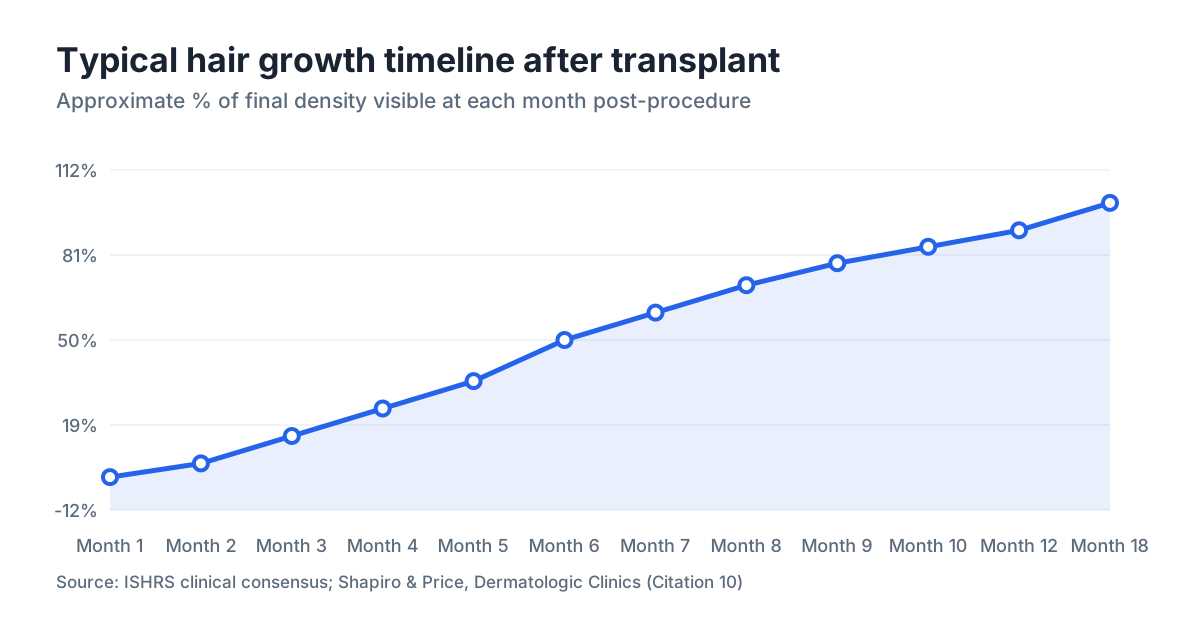
Weeks 2-4: The transplanted hairs shed. This is shock loss, or more precisely, the grafts entering a telogen phase after the trauma of transplantation. It's normal. You're not losing the follicles. You're losing the hair shafts, and new growth comes from those same follicles. Knowing this in advance matters, because it feels like the procedure failed. It hasn't [2].
Months 1-3: The scalp looks bare, sometimes barer than before surgery because native hair can shock too. Follicles are dormant. Nothing to do here except stay consistent with aftercare and, if prescribed, your medical therapy.
Months 3-6: New hair breaks through. It's fine, soft, and often curly at first. Growth is uneven across the scalp. This is when patients start to feel hopeful again. Scalp hair grows roughly 1 cm a month [3].
Months 6-12: Real visible improvement. Hair thickens, gains pigment, and lies flatter. Most patients look notably better by month 9.
Months 12-18: Final result. Texture normalizes fully. The 18-month mark is where most surgeons decide whether a touch-up session is worth it.
How do you wash your hair safely after a transplant?
Washing technique in the first two weeks matters more than almost any other aftercare decision. Grafts sit in recipient punches held in place initially by fibrin clot and tissue swelling. Aggressive rubbing can physically dislodge a graft before it has neovascularized into the surrounding tissue.
Most clinics follow a protocol roughly like this. From day 4 or 5, dilute a gentle, sulfate-free or baby shampoo in water until it's barely soapy. Pour it over the scalp with a cup or soft-spray bottle. Let it sit for a minute, then rinse with low-pressure, lukewarm water. Pat dry with a soft towel or let it air dry. Never rub. Repeat daily.
By day 10-14 the grafts are anchored well enough that normal shampooing pressure is safe, though most surgeons suggest skipping vigorous scrubbing for 3 weeks just to be safe.
Hair dryers on a low-heat, low-speed setting are fine after day 7 at most clinics. Hot air directly on the scalp before day 7 can dry out fragile tissue. Avoid it.
One thing trips people up. The scabs itch, and there's a strong urge to scratch. Resist it. Gentle washing is the right answer to itching, not fingernails.
What is shock loss and will your transplanted hair grow back?
Shock loss after a hair transplant is close to universal to some degree, and it hits both transplanted hairs and sometimes native hairs near the recipient area. The transplanted follicles survive the procedure, but the hair shafts they held go into telogen and shed, usually between 2 and 6 weeks post-op. The follicles stay alive below the skin and cycle back into anagen (active growth) within 3-4 months.
Native hair near the recipient zone can shock temporarily from the local trauma and vascular disruption. This usually recovers too, though it's harder to predict in patients with advanced thinning where those native hairs were already miniaturized.
The technical term is telogen effluvium triggered by surgical trauma. If you want the physiology, the biology is explained in more depth in the article on telogen effluvium.
Here's the number that matters. A well-executed transplant from an experienced surgeon achieves 80-95% graft survival [4]. That means 80-95% of transplanted follicles will eventually produce new terminal hairs. Anything below 70% is a suboptimal result and may warrant a conversation about revision.
The hair that grows back is permanent, because it came from DHT-resistant donor follicles on the back and sides of the scalp. Those follicles keep their genetic identity after transplantation.
Do you need finasteride or minoxidil after a hair transplant?
This is the question most clinics underemphasize, and it's a real gap in patient education. A hair transplant moves DHT-resistant follicles to a thinning area. It does nothing to stop DHT from continuing to miniaturize the native follicles you still have. If you were a Norwood 3 at the time of surgery, you have a reasonable chance of progressing to a Norwood 4 or 5 in the following years without treatment. The transplanted hairs stay, but the surrounding native hairs thin, which creates an odd isolated-island look.
Finasteride 1 mg daily reduces scalp DHT by roughly 60% and has good evidence for holding onto existing hair [5]. Many surgeons now treat it as standard adjunct therapy for men who had a transplant for androgenetic alopecia. The decision weighs the sexual side-effect profile, which is real but affects a minority of users, against the likely cosmetic benefit. The full picture is in the article on finasteride.
Minoxidil, topical 5% or oral low-dose, speeds up the anagen phase and may improve graft survival when started before or shortly after surgery, though the evidence here is thinner than for finasteride [6]. Some surgeons recommend starting minoxidil 2-4 weeks after the procedure once the scalp has healed, then running it for at least 12 months. The article on minoxidil for men covers dosing and expectations.
Using both together is an option with additive evidence. The combination is covered at finasteride and minoxidil.
If you're a man who had a transplant for pattern hair loss, my honest read of the literature is that finasteride makes your long-term result meaningfully better. If you don't want to take it, at least understand the trajectory of your native hair before you decide.
What activities and behaviors should you avoid after a transplant?
The first 2 weeks carry the most restriction, because that's when grafts are physically vulnerable and the scalp is still healing.
High-impact exercise raises blood pressure and scalp perfusion, which increases the risk of bleeding and graft dislodgement. Most surgeons say avoid anything strenuous (gym, running, cycling, heavy lifting) for the first 7-14 days. Light walking is fine after day 3.
Direct sunlight on the healing scalp can cause hyperpigmentation in the recipient zone and damage healing tissue. Avoid direct sun for the first 4 weeks. A loose hat (not a tight cap that presses on grafts) is fine after day 5-7 at most clinics.
Alcohol widens blood vessels and raises bleeding risk. Most surgeons say avoid it for at least the first week, ideally two.
Smoking is the bigger problem. Nicotine causes vasoconstriction and cuts blood supply to healing follicles. The evidence is consistent that smoking impairs wound healing broadly [7]. If you smoke, stopping for at least 4 weeks before and after surgery gives your grafts a real edge.
Sexual activity falls under the exercise restriction because of the elevated heart rate and blood pressure. Most clinics say wait 5-7 days.
Swimming (pools, ocean, lakes) should wait 4 weeks minimum. Chlorine and bacteria are both risks during the open-wound phase.
Steam rooms and saunas: wait at least 4 weeks. Heat and humidity work against the dry-healing process and can encourage bacterial growth.
Scratching or picking at scabs: just don't. Every scab you knock off before it falls naturally is a graft you might have disrupted.
What does a normal healing scalp look like at each stage?
Patients panic because their scalp doesn't look like the "after" photos clinics post at month 12. Here's what normal actually looks like.
Week 1: Red, dotted, crusty. Looks like a bad rash. Perfectly normal.
Week 2-4: The transplanted hairs have shed. The scalp looks thin, possibly thinner than before surgery. This is the low point. Expected.
Month 2-3: Sparse stubble appears. Fine, colorless or lightly pigmented baby hairs. Density looks patchy and uneven.
Month 4-6: More hairs coming in and gaining pigment. Still looks incomplete. Nobody would call it a successful transplant yet.
Month 7-9: Genuine visible improvement. Density climbing. Hair lying more naturally.
Month 10-12: Most of the final result is visible. Some patients are done. Others keep improving through month 18.
Redness in the recipient zone can last 3-6 months in some patients, especially fair-skinned individuals or those with aggressive techniques. This isn't failure. It's vascular remodeling. Camouflage products (like tinted dry shampoo) are safe once the scalp has fully healed, usually by week 3-4.
A transplanted hairline often looks slightly boxy or geometric in the early months before the hairs grow in and soften the line. Don't judge the aesthetics until month 12.
When should you be concerned and call your surgeon?
Most post-transplant experiences are uneventful. But some signs mean you call the clinic instead of waiting.
Infection is the main serious risk. Warning signs: spreading redness beyond the normal recipient zone, warmth, pus, increasing pain after day 3 (pain should be dropping, not climbing), fever above 38 degrees C (100.4 degrees F). Folliculitis (small pimples on the scalp) is a common minor complication in the weeks to months after a transplant and usually clears with topical or oral antibiotics [8]. It's different from frank infection and generally not serious.
Cyst formation can happen when a graft gets buried slightly too deep. Small epidermal cysts usually resolve on their own or with minor drainage by your surgeon.
Poor graft survival is worth a formal consultation, meaning if at 9-12 months you're seeing density far below what your surgical plan discussed. Some yield loss is expected. A major shortfall may reflect technique issues, inadequate blood supply, or other factors.
Numbness in the donor or recipient area is common and almost always temporary, resolving over 3-6 months as nerves regrow. Numbness that persists past 6 months should be discussed with your surgeon.
Hiccups. This sounds odd, but persistent hiccups after a procedure are a documented rare complication, thought to relate to the local anesthesia irritating the phrenic nerve. Usually self-limiting, but annoying.
How do FUT and FUE recoveries differ?
Recipient area recovery is basically identical between the two techniques. The donor area is where the difference lives.
FUE removes individual follicular units with small punches (typically 0.8-1.0 mm diameter). The result is hundreds to thousands of tiny round scars scattered across the donor zone. They heal as small white dots that are mostly invisible at most hair lengths. Recovery is faster: no stitches, less linear tension, and most patients get back to work in 5-7 days.
FUT removes a linear strip of scalp from the donor zone and closes it with sutures or staples. That leaves a linear scar that can show with very short hair. Recovery runs a bit longer: suture removal at day 10-14, some tightness in the back of the scalp for several weeks, and more discomfort in the immediate post-op period. The upside is that FUT allows a higher graft count per session and preserves more donor zone for future sessions.
For active patients who wear their hair very short, FUE is the better choice for donor-area cosmetics. For patients planning multiple sessions over a lifetime who don't buzz their hair, FUT remains a valid option with its own advantages.
The article on hair transplant covers the comparison in more depth, including cost differences.
How can you tell if your transplant is progressing normally?
Progress tracking helps with both anxiety and catching genuine problems early. A few practical approaches.
Photo documentation under consistent lighting every 4 weeks from the same angle. This sounds tedious, but it's the only way to objectively see slow incremental change. The difference between month 3 and month 6 looks dramatic in photos and is nearly invisible day to day.
Hair density analysis at your clinic using trichoscopy or dermoscopy can measure follicular density per cm2 at follow-ups, giving you a real number instead of a subjective impression.
If you're not sure your growth timeline is normal, the free AI hair analysis at MyHairline can give you a baseline picture of current density and help you track change over time, though nothing replaces your surgeon's in-person assessment for clinical decisions.
The most honest framing: patience is the single most useful thing you can do in the first 12 months. Anxiety peaks around months 2-4, when shedding is done and growth hasn't started. Almost every patient in that window believes the procedure failed. Almost none of them were right.
What is the long-term maintenance plan after a hair transplant?
A hair transplant is not a one-time fix for life in most cases. Here's what a realistic long-term plan looks like.
Medical therapy (finasteride and/or minoxidil) should continue indefinitely once started, because stopping restarts the progression it paused. This is the part patients often underestimate. The transplanted hairs are permanent, but ongoing DHT exposure keeps thinning native hair.
If you want the bigger picture on why your hair is thinning, the article on what causes hair loss explains why pattern hair loss is progressive and why transplants alone don't touch the underlying biology.
More sessions may be needed as hair loss progresses, especially if you had the transplant young (under 30). Donor supply is finite. A good surgeon plans conservatively at the first session to protect that supply for later.
DHT blockers beyond finasteride, including dutasteride and topical DHT blockers, may become relevant as the evidence grows. There's an overview at dht blocker.
Scalp health, hydration, avoiding harsh chemical treatments, and eating enough protein (hair is roughly 80-85% keratin, a protein) all matter at the margins. They won't offset a high-DHT environment, but they remove unnecessary headwinds.
If you're tracking your hairline and wondering whether you're near a threshold where another session or adjusted medical therapy makes sense, a baseline density measurement helps. The free AI scan at MyHairline takes under two minutes and gives you a Norwood-stage estimate and density picture to bring to your next consultation.
Final honest take: the patients who get the best long-term outcomes are the ones who treated the transplant as one part of a broader maintenance plan, not the finish line.
Sources
- American Academy of Dermatology (AAD) - Hair transplant overview
- International Society of Hair Restoration Surgery (ISHRS) - Practice standards
- Physiology of the Hair Follicle, StatPearls (NCBI/NIH)
- Bernstein RM, Rassman WR. Follicular transplantation, referenced via NCBI PubMed
- FDA Drug Label - Propecia (finasteride 1 mg), via DailyMed
- Suchonwanit P et al., 'Minoxidil and its use in hair disorders', Drug Design, Development and Therapy, NCBI PMC
- U.S. National Library of Medicine MedlinePlus - Smoking and surgery
- Tosti A et al., Folliculitis after hair transplantation, Dermatologic Therapy, referenced via NCBI PubMed
- FDA - Minoxidil topical drug information
- Shapiro J, Price VH. Hair Regrowth, Dermatologic Clinics, referenced via NCBI PubMed
- NIH National Institute of Arthritis and Musculoskeletal and Skin Diseases - Hair loss overview