
TL;DR: Post finasteride syndrome (PFS) refers to persistent sexual dysfunction, depression, cognitive fog, and other symptoms that some men report after stopping finasteride. Its existence is recognized by the FDA and in peer-reviewed literature, but its prevalence, biological mechanism, and treatments remain genuinely contested. No proven cure exists. Estimated prevalence ranges from under 1% to about 3% in clinical studies, though patient registries report higher figures.
What is post finasteride syndrome?
Post finasteride syndrome is a cluster of symptoms, most often sexual dysfunction, mood changes, and cognitive difficulty, that persist or emerge after a man stops taking finasteride and do not resolve on their own. The name was formalized by the Post-Finasteride Syndrome Foundation, but the condition has been discussed in urology and dermatology literature since the early 2000s.
Finasteride blocks 5-alpha reductase, the enzyme that converts testosterone into dihydrotestosterone (DHT). DHT is the androgen behind male-pattern hair loss, and it is also active in neural tissue, the prostate, and the testes. Suppressing DHT is how the drug works. In most men it does this without lasting consequence. In a smaller group, something goes wrong after stopping, and the normal hormonal recovery either does not happen or happens but leaves symptoms behind.
The FDA updated finasteride's label in 2012 to add sexual side effects that may persist after discontinuation [1]. That change was not a declaration that PFS is common or well understood. It was an acknowledgment that reports existed and that prescribers should know about them. The science has moved slowly since.
For a full picture of how finasteride works before you worry about what happens when you stop, see our finasteride overview.
What are the symptoms of post finasteride syndrome?
The symptom list is wide, which is part of what makes PFS hard to study. The core cluster, reported most consistently across patient surveys and clinical case series, breaks down like this:
| Symptom category | Specific complaints most often reported |
|---|---|
| Sexual | Erectile dysfunction, reduced libido, genital numbness, penile shrinkage, difficulty orgasming |
| Psychiatric / mood | Depression, anhedonia, anxiety, suicidal ideation |
| Cognitive | Brain fog, memory problems, difficulty concentrating |
| Physical | Fatigue, muscle weakness, joint pain, gynecomastia |
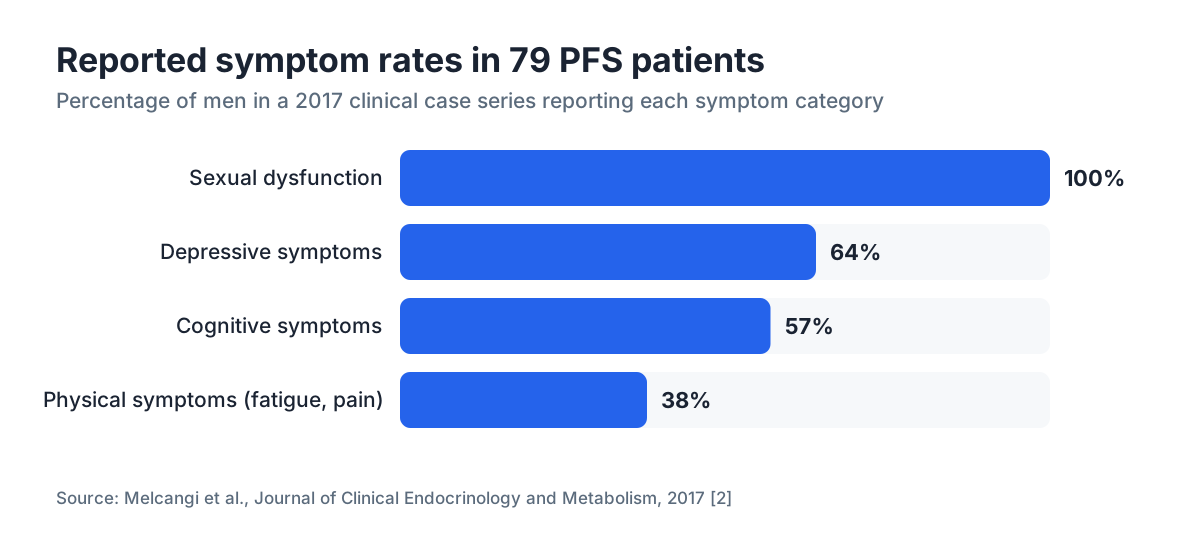
A 2017 case series in the Journal of Clinical Endocrinology and Metabolism examined 79 men who reported PFS. Sexual symptoms were present in all 79. Cognitive symptoms appeared in about 57%, depressive symptoms in roughly 64% [2]. That study had real limits: it relied on patient self-report with no control group, and men who seek out PFS researchers are not a random sample of finasteride users.
Some men report symptoms beginning while still on the drug. Others notice them only after stopping. The timing matters for understanding the mechanism, and right now the mechanism is genuinely unknown.
Symptoms that overlap with telogen effluvium or general stress-related shedding sometimes push men to start and then abruptly stop finasteride, which muddies the picture further.
How common is post finasteride syndrome?
The numbers diverge sharply depending on who you ask and how they measured.
The 2-year clinical trial that won finasteride FDA approval for androgenetic alopecia (1 mg dose, sold as Propecia) reported sexual side effects in about 3.8% of men on the drug versus 2.1% on placebo, and said these effects resolved in most men who stopped [3]. That trial was not built to track persistent post-discontinuation symptoms, so its ability to estimate PFS prevalence is limited.
A 2017 study by Irwig in Prostaglandins, Leukotrienes and Essential Fatty Acids surveyed men who used finasteride for male-pattern hair loss and found that among those who reported sexual side effects, a meaningful proportion described persistence lasting more than 3 months after stopping [4]. Irwig's earlier work (2012) found persistent sexual dysfunction in 94% of a self-selected sample of men who contacted him reporting side effects, but that sample was not population-based.
Population-level estimates from prescription database studies generally put persistent sexual dysfunction attributable to finasteride at well under 1% to roughly 1.4% of users [5]. The honest answer: no large, prospective, controlled study has tracked a random sample of finasteride users through discontinuation specifically to measure PFS rates. The number you see cited depends almost entirely on how the study was designed and who volunteered for it.
One figure worth knowing: the Post-Finasteride Syndrome Foundation's patient registry had enrolled over 2,000 men as of 2023, which tells you the community is large, but a self-selected registry cannot give you a prevalence rate.
What causes post finasteride syndrome, and why does it persist?
Nobody has a confirmed answer. That is not a comfortable thing to say, but it is the honest one.
The leading hypotheses in the current literature fall into a few buckets.
First is epigenetic change. Finasteride suppresses DHT throughout the body, and DHT influences gene expression in neural tissue. Some researchers propose that chronic suppression causes lasting epigenetic changes that alter androgen receptor sensitivity even after DHT levels recover. A 2019 paper in Epigenetics by Melcangi and colleagues found altered gene methylation patterns in the cerebrospinal fluid of PFS patients compared to controls, though the sample was tiny (16 subjects) [6]. Interesting line of research, far from established.
Second is neuroactive steroid disruption. DHT is a precursor to neurosteroids like allopregnanolone, which modulates GABA receptors and has antidepressant and anxiolytic effects. Chronic finasteride use may alter the baseline production of these neurosteroids in a way that persists after stopping. Animal studies support this mechanism. Human data is thinner.
Third is a psychological component. Some researchers argue that a nocebo effect, harm caused by the expectation of harm, accounts for a portion of reported cases, especially those that emerge after men read about side effects online. This is not a dismissal. Nocebo effects are real and physiologically measurable. The problem is that this explanation does not cover cases where symptoms preceded any knowledge of PFS, or objective findings like altered hormone metabolite profiles.
The most likely truth is that severe PFS is probably not one thing. It may be a mixed group of men with different sensitivities to DHT suppression, different genetic profiles, and different psychological vulnerabilities, all showing up with overlapping complaints.
Does finasteride cause depression or suicidal thoughts?
The FDA added a warning about depression and suicidal ideation to finasteride's label in 2022 [1]. This was a real regulatory action based on accumulating case reports and pharmacovigilance data, not a theoretical worry.
A Swedish pharmacoepidemiology study published in JAMA Internal Medicine in 2021, using national registry data on 5,922 men, found that men who received finasteride for androgenetic alopecia had a higher rate of depression diagnosis and self-harm in the first year of treatment compared to men treated with topical minoxidil [7]. The absolute risk increase was small, the effect was concentrated in the first year, and the study could not fully separate finasteride's pharmacological effect from the distress of hair loss itself, since both groups had hair loss.
The honest read: depression and suicidal ideation are real signals associated with finasteride, and they can persist after stopping in the subgroup with PFS. If you are on finasteride and having depressive symptoms or thoughts of self-harm, stop the drug and talk to a doctor. That is not a borderline call.
For how finasteride compares to other hair loss interventions and their side effect profiles, the finasteride and minoxidil comparison is worth reading.
How is post finasteride syndrome diagnosed?
There is no diagnostic test for PFS. No blood panel, no imaging study, no genetic marker has been validated to confirm or rule it out. Diagnosis is clinical: a doctor documents symptom onset relative to finasteride use, rules out other causes, and concludes that the timing and pattern fit PFS.
Hormone panels (total testosterone, free testosterone, LH, FSH, DHT, estradiol) are routinely ordered but usually come back normal or near-normal in PFS patients. That is part of what makes the condition puzzling. If testosterone had simply crashed and stayed low, treatment would be more straightforward. The fact that hormone levels often normalize while symptoms persist points toward receptor-level or neurosteroid-level dysfunction rather than simple androgen deficiency.
A 2014 consensus paper in the Journal of Sexual Medicine proposed working diagnostic criteria for PFS: finasteride use for at least 6 months, onset of sexual, psychiatric, or physical symptoms during or after use, symptoms persisting for at least 3 months after discontinuation, and absence of a pre-existing condition that explains them [8]. These criteria are not universally accepted, but they give clinicians a framework.
Finding a physician who takes PFS seriously can be hard. Urologists and endocrinologists with experience in androgen disorders are the most likely to have useful knowledge. Many dermatologists who prescribe finasteride for hair loss have limited exposure to the condition.
What treatments exist for post finasteride syndrome?
No treatment has been tested in a randomized controlled trial specifically for PFS and shown to work. That sentence needs saying plainly, because the internet is full of unverified protocols.
Here is what is being tried, and what the evidence looks like.
Androgen therapy: Some clinicians attempt testosterone replacement or topical DHT cream on the theory that PFS involves androgen receptor downregulation or neurosteroid depletion. Case reports document both improvement and worsening. No controlled trial exists.
SSRI or SNRI antidepressants: For the psychiatric symptoms, antidepressants are sometimes used. The catch is that SSRIs themselves can cause sexual dysfunction, so in a man whose main complaint is sexual, they may do net harm.
Allopregnanolone-related approaches: Given the neuroactive steroid hypothesis, there is theoretical interest in treatments that restore GABA-modulating neurosteroid levels. Brexanolone, an allopregnanolone analog, is approved for postpartum depression, and some researchers watch that science for transferable insights. Nothing is approved or established for PFS specifically.
Clomiphene: Some physicians try clomiphene citrate to stimulate endogenous testosterone via LH/FSH elevation. Results are anecdotal.
The Post-Finasteride Syndrome Foundation has funded research at Baylor College of Medicine and the University of Milan. A clinical trial registered at ClinicalTrials.gov (NCT05535322) is studying neuroactive steroid levels in PFS patients, but it is an observational study, not an intervention trial [9].
The practical advice: work with an endocrinologist or urologist who takes the condition seriously, document your symptoms carefully, and be skeptical of anyone promising a cure. The field does not have one yet.
If you are rethinking your hair loss options entirely, comparing hair transplant outcomes or reviewing minoxidil side effects may help you weigh the alternatives.
Does post finasteride syndrome go away on its own?
For some men, yes. For others, no, and this is where the data is genuinely thin.
The clinical trial data for Propecia shows that most men who quit finasteride due to sexual side effects during the trial saw those effects resolve within a few months. But those were side effects that emerged during treatment, not the persistent post-discontinuation syndrome that PFS describes.
For men who meet the clinical definition of PFS, meaning symptoms lasting more than 3 months after stopping, spontaneous resolution is less common. A survey-based study by Irwig found that among men averaging about 14 months of finasteride use, sexual symptoms persisted on average for 40 months after stopping in his sample, though that sample was heavily skewed toward severe and persistent cases [4].
Some men do improve over 1 to 3 years without intervention. Others report symptoms lasting a decade or more. Nobody can tell you in advance which trajectory you will follow. That uncertainty is one of the hardest things about PFS for the men living with it.
Is post finasteride syndrome recognized by the medical community?
Yes and no, and the nuance matters.
The FDA recognizes the reported symptoms. The 2012 label update and the 2022 addition of depression and suicidal ideation warnings are regulatory acknowledgments that these reports were credible enough to require disclosure [1]. The FDA's MedWatch system has received thousands of reports of persistent sexual dysfunction and psychiatric effects associated with finasteride [11].
Peer-reviewed journals have published case series, survey studies, and mechanistic research on PFS. The Journal of Sexual Medicine, Endocrine, and the Journal of Clinical Endocrinology and Metabolism have all carried PFS-related work. Researchers at major academic centers, including the University of Milan, Boston University, and Baylor College of Medicine, have published on the subject.
What is not settled is the mechanistic explanation and the prevalence. Some physicians remain skeptical that PFS is a distinct pharmacological syndrome rather than a collection of unrelated conditions and nocebo effects converging around finasteride use. That skepticism is not entirely unreasonable given the methodological limits of most PFS research, but dismissing every patient report because of those limits is its own error.
The American Urological Association's guidelines on male sexual dysfunction acknowledge finasteride-associated sexual side effects, though a dedicated PFS guideline has not been published as of 2024 [10].
The healthiest frame for a patient: PFS is real enough to deserve a proper medical evaluation, and murky enough that you should distrust anyone selling a definitive cure.
Who is most at risk of developing post finasteride syndrome?
Honest answer: researchers do not have a reliable risk profile yet.
Some patterns show up in the literature. Men who had sexual side effects while still on finasteride seem to be at higher risk of persistent symptoms after stopping, compared to men who tolerated the drug without on-treatment side effects. That makes biological sense. If the drug already disrupted your androgen signaling in a way you felt, you are probably more sensitive to that disruption.
Genetic studies are preliminary. A 2019 analysis suggested that certain androgen receptor gene variants may be associated with PFS susceptibility, but the sample sizes were too small to draw clinical conclusions [6].
Age at first use may matter. There is some evidence that younger men who start finasteride while their neurosteroid systems are still sensitive to androgen fluctuations may be at higher risk, but this is speculative.
Psychiatric history complicates everything. Men with pre-existing depression or anxiety are harder to assess because their baseline already involves mood dysregulation. That does not mean they cannot get PFS. It means their case is harder to evaluate.
If you are trying to understand your overall hair loss picture before starting any medication, the what causes hair loss article and a look at DHT blockers in general are reasonable places to get oriented.
Should you stop taking finasteride if you are worried about PFS?
This is a decision for you and your prescribing physician. Here is the honest framework.
For most men, finasteride for androgenetic alopecia works well, the sexual side effect rate during treatment is real but modest (roughly 3 to 4% above placebo in clinical trials), and persistent post-discontinuation syndromes are uncommon [3]. Stopping a drug that is working because of a low-probability complication is a real trade-off, not a simple win.
At the same time, if you are already having side effects on finasteride, the calculation changes. On-treatment sexual dysfunction is the strongest predictor of post-treatment issues. Continuing through side effects in the hope they will fade is not a strategy backed by good evidence.
For men considering finasteride who have not started, knowing that PFS exists and that the risk, while low, is not zero is relevant informed-consent information. The FDA requires prescribers to convey this. Reading the full drug label before starting is a reasonable thing to do [1].
If you stop finasteride and want to keep treating hair loss, minoxidil for men is the main alternative, with a completely different mechanism and a much shorter side effect list. A hair transplant is a surgical option that eliminates medication exposure entirely, though it carries its own considerations and costs.
Tracking your hair loss before and after any medication change is genuinely useful. MyHairline's free AI hair scan at /scan gives you a documented baseline to compare against, so you are not trying to remember what your hairline looked like six months ago.
What does the FDA label actually say about post finasteride syndrome?
The FDA's prescribing information for finasteride 1 mg (Propecia) is a public document, and reading the actual language beats reading paraphrases of it.
Under Post-Marketing Experience, the label states that "sexual adverse experiences have been reported in men taking PROPECIA. In some of these cases, these adverse experiences have continued after stopping the drug." The 2022 update added, in the Warnings and Precautions section, that "symptoms of depression, including depressed mood, depression, and less commonly, suicidal ideation, have been reported in patients taking PROPECIA." [1]
That language is careful and deliberate. It says these things have been reported. It does not say how often, or whether the drug definitively caused them in every case. That is how drug labels work. They reflect accumulated reports, not proven causation at the individual level.
The label also notes that "the relationship between long-term use of finasteride and male breast neoplasia is currently unknown." This is a separate concern from PFS but worth knowing.
You can read the current label at the FDA's drug database (DailyMed), which the National Library of Medicine maintains [1].
Sources
- FDA DailyMed, Propecia (finasteride 1 mg) prescribing information
- Melcangi RC et al., Journal of Clinical Endocrinology and Metabolism, 2017
- Kaufman KD et al., Journal of the American Academy of Dermatology, 1998 (Propecia trial)
- Irwig MS, Prostaglandins Leukotrienes and Essential Fatty Acids, 2012 and 2017 follow-up
- Traish AM, Sexual Medicine Reviews, 2020
- Melcangi RC et al., Epigenetics, 2019
- Welk B et al., JAMA Internal Medicine, 2021
- Khera M et al., Journal of Sexual Medicine, 2014 (PFS working diagnostic criteria)
- ClinicalTrials.gov, NIH National Library of Medicine, NCT05535322
- American Urological Association, Male Sexual Dysfunction Guidelines
- FDA MedWatch Drug Safety Reporting Program
- Post-Finasteride Syndrome Foundation, Patient Registry Data