

TL;DR: The earliest signs of hair loss include a widening part, a receding hairline at the temples, more hair on your pillow or in the shower drain, and a ponytail that feels thinner. Losing up to 100 hairs a day is normal. Losing more, or noticing scalp showing through, means shedding is outpacing regrowth and warrants a dermatologist visit.
What are the first signs of hair loss?
The first sign most people notice is not a bald patch. It's a subtle shift: your part looks a little wider in the mirror, or your ponytail elastic wraps an extra loop. Hair loss rarely announces itself loudly at the start.
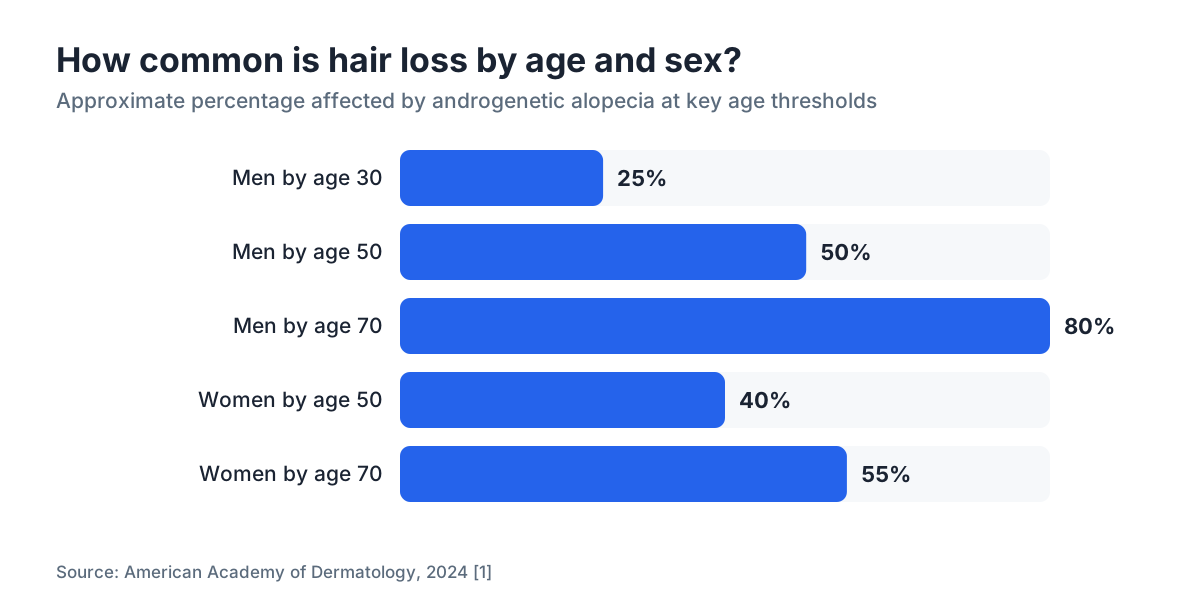
For men, the temples are usually the canary in the coal mine. The hairline pulls back in an M-shape, slowly at first, so slowly that a lot of guys don't register it until friends point it out in old photos. The American Academy of Dermatology notes that male-pattern hair loss affects roughly 80 million Americans and typically begins at the hairline or crown [1].
For women, a widening center part is the classic early tell. The top of the scalp thins diffusely rather than in a defined receding line, which is why female pattern hair loss often gets dismissed as "fine hair" for years before anyone treats it.
A few concrete things to watch for:
- More hair than usual on your pillow in the morning
- A clump of hair (more than a few strands) left in the shower drain after washing
- Hair that feels noticeably lighter or thinner when you pull it into a ponytail
- Scalp visible through wet hair that wasn't visible before
- A hairline that has moved back from where it was in photos taken two or three years ago
None of these alone confirms pathological hair loss. All of them together, persisting for more than two or three months, is reason to pay attention.
How much hair loss per day is normal?
The number you'll see everywhere is 50 to 100 hairs per day, and that range comes from well-established scalp biology. A healthy scalp has roughly 100,000 hairs, and at any given moment about 10 to 15 percent of them are in the telogen (resting and shedding) phase of the growth cycle [2]. Simple math puts normal daily loss between 50 and 150 hairs depending on your total count, hair density, and how often you wash.
The day you wash your hair you'll see more because washing dislodges hairs that have already detached from the follicle but are still sitting in the scalp. That can look alarming. It isn't, unless you're losing large clumps or the total count stays high even on days you don't wash.
A rough self-test: after a day without washing, run your fingers through a section of hair from the scalp outward with mild tension. If you pull more than three to five hairs with one pass, and that happens repeatedly across the scalp, the shedding rate is elevated. Dermatologists call this the "pull test" and use it clinically [1].
Shedding that spikes suddenly, drops your hair volume noticeably within two or three months, and then gradually eases off is usually telogen effluvium: a temporary shed triggered by stress, illness, surgery, or a crash diet, not permanent pattern hair loss. If the shedding never eases off, that matters more.
What does a receding hairline look like in the early stages?
Early hairline recession is easy to miss because it happens at the corners, not straight across the front. The temples thin first, creating a slight widow's peak or M-shape even in men who had a straight juvenile hairline. The change between Norwood Stage 1 (no recession) and Norwood Stage 2 (slight temple recession) is often just a centimeter or two.
Standing under direct overhead light and looking straight at a mirror with a second mirror behind you shows it most clearly. Photos taken from above in good light, compared year over year, are probably the most honest record most people have.
Scalp miniaturization is the early cellular sign: the hairs themselves get thinner in diameter and shorter before they disappear. A strand at the temple that used to be terminal (pigmented, thick) becomes vellus (thin, pale, barely visible). If you look closely at your temples and the hairs there are noticeably finer than the hairs behind them, that's miniaturization happening.
For a detailed breakdown of how hairline recession progresses stage by stage, the receding hairline explainer covers the Norwood classification with specifics on what each stage looks like and when intervention tends to work best.
Are there different signs of hair loss in women versus men?
Yes, and the difference matters enough that misreading the pattern leads to the wrong treatment.
Men typically lose hair in a defined geometric pattern: temples recede, crown thins, and those two areas eventually merge. The Ludwig and Norwood scales were built to describe these patterns. Men are also more likely to experience a sharply defined hairline recession rather than diffuse thinning.
Women with female pattern hair loss (androgenetic alopecia) rarely get a receding hairline. Instead, the part widens. The hair on top of the scalp thins diffusely while the frontal hairline generally stays intact, which is why the Ludwig scale uses part width and crown visibility rather than frontal recession [3]. The American Academy of Dermatology reports that female pattern hair loss affects more than 50 percent of women over the age of 50 [1].
Women are also more likely than men to experience telogen effluvium: diffuse shedding triggered by hormonal shifts (postpartum, perimenopause, thyroid changes), iron deficiency, or rapid weight loss. That type of shedding looks like hair everywhere, more than in a pattern. The two can occur simultaneously, which makes diagnosis harder.
One more distinction. Women often describe the problem as hair that "doesn't grow as long as it used to." That's because miniaturized hairs cycle faster and shed before they reach length, so the hair simply seems to stop growing past a certain point.
Can female hair loss be a sign of cancer or another serious illness?
Hair loss by itself is almost never a sign of cancer. But the question comes up enough to deserve a direct answer.
Some cancers and their treatments cause hair loss. Chemotherapy drugs that target rapidly dividing cells affect hair follicles, causing the acute, often dramatic shedding called anagen effluvium. Radiation to the scalp causes localized loss. In both cases the cancer is already diagnosed and being treated. You won't discover a cancer because you noticed your hair thinning.
Hodgkin's lymphoma and a few other lymphomas can cause systemic symptoms that include hair changes, but hair loss in those cases comes with night sweats, unexplained weight loss, fever, and swollen lymph nodes, more than shedding. Isolated hair loss, with no other symptoms, is not a recognized early warning sign of any cancer [4].
What female hair loss signals, more often, is an internal imbalance worth investigating: iron deficiency anemia, hypothyroidism, polycystic ovary syndrome (PCOS), or an autoimmune condition like lupus or alopecia areata. A dermatologist evaluating hair loss will typically order a blood panel that includes ferritin, thyroid function (TSH, free T4), CBC, and often androgen levels. Correcting one of those root causes can reverse the shedding.
So the honest answer: see a doctor if you're losing hair rapidly or diffusely, not because it might be cancer, but because there may be a treatable medical cause that's easy to miss if you just buy a bottle of shampoo and wait.
What do the signs of different types of hair loss look like?
Not all hair loss looks alike, and the pattern tells you a lot about the cause.
| Type | Pattern | Who gets it | Reversible? |
|---|---|---|---|
| Androgenetic alopecia (pattern baldness) | Temples + crown (men); widening part (women) | ~50% of men by 50; ~50% of women by 60 | Slows with treatment; rarely fully reverses |
| Telogen effluvium | Diffuse all-over shedding | Anyone after stress, illness, postpartum | Usually yes, in 3-6 months |
| Alopecia areata | Smooth round patches, sudden onset | Any age, autoimmune trigger | Often yes; unpredictable |
| Traction alopecia | Hairline edges, temples from tight styles | Common in Black women, gymnasts | Yes if caught early |
| Trichotillomania | Irregular patches from pulling | Usually younger women | Yes with behavioral treatment |
| Scarring alopecias (lichen planopilaris, etc.) | Patchy, with scalp inflammation, scaling | Adults, more common in women | No (follicle destroyed) |
| Anagen effluvium (chemo) | Rapid, diffuse, within weeks of trigger | Chemotherapy patients | Yes after treatment ends |
Androgenetic alopecia and telogen effluvium are by far the most common. Scarring alopecias are rare but worth knowing because they are the one category where waiting makes the outcome permanently worse.
Alopecia areata shows up as one or more perfectly smooth, coin-shaped patches with no scaling or inflammation on the scalp surface. It can progress to alopecia totalis (full scalp) or alopecia universalis (full body), though most cases stay limited. The National Alopecia Areata Foundation notes the condition affects about 2 percent of the global population at some point in their life [5].
If you're unsure which pattern you're seeing, a free AI scan from MyHairline can help you understand what your hairline and scalp look like relative to the standard classification scales, though a confirmed diagnosis still needs a dermatologist.
What causes the signs you're seeing? The biology behind hair loss
Most hair loss comes down to three overlapping mechanisms: hormones, immune attack, and physical insult.
Androgenetic alopecia runs on dihydrotestosterone (DHT), a potent androgen converted from testosterone by the enzyme 5-alpha reductase. In genetically susceptible follicles, DHT gradually shrinks the follicle over successive growth cycles until it produces only vellus hair or stops producing hair entirely. This is why finasteride, which blocks 5-alpha reductase, works for pattern hair loss but not for other types. For more on how DHT drives follicle miniaturization, the DHT blocker article goes deeper.
Telogen effluvium is different. A shock to the system, whether that's a fever, major surgery, childbirth, a severe calorie deficit, or a significant emotional trauma, forces an abnormally high percentage of hairs into the telogen (resting) phase simultaneously. Two to four months later, they all shed at once. The scalp looks far worse than the underlying follicle count actually is. The detailed telogen effluvium explainer covers timelines, triggers, and recovery.
For a full breakdown of the causes across all hair loss types, including nutritional deficiencies, medications, and scalp conditions, what causes hair loss is the place to go.
The immune mechanism in alopecia areata is distinct again: the immune system mistakenly attacks the hair follicle's "immune privilege," treating it as foreign. Treatments target the immune pathway, not DHT. This is why minoxidil might help mildly but finasteride does nothing for alopecia areata.
How do you tell the difference between normal shedding and early hair loss?
This is the question most people actually want answered, and there are a few practical tests.
First, look at the hairs you're shedding. A shed hair from the root has a small white or translucent bulb at the end. That's normal. A hair that breaks mid-shaft, leaving a sharp clean end, points to breakage from heat damage, bleach, or mechanical stress, not hair loss in the medical sense. Breakage and shedding look similar in a drain but have different causes and different solutions.
Second, look at your scalp, more than your hair. Visible scalp through hair you're not intentionally parting is the clearest sign that density has dropped. Hair density is measured in follicular units per square centimeter; normal is roughly 65 to 85 follicular units per cm² [6]. You can't measure that at home, but you can notice whether scalp shows through wet hair on the top of your head.
Third, track duration. A shed that starts, peaks, and clearly begins to slow after two to three months is probably telogen effluvium. A gradual, persistent thinning over more than six months that never reverses is pattern hair loss until proven otherwise.
Fourth, ask someone who sees you regularly. Changes in hair density are notoriously hard to self-assess because you adapt to what you see in the mirror every day. A barber, hairdresser, or close friend often notices before you do.
When should you see a doctor about signs of hair loss?
See a dermatologist sooner rather than later. That's a genuine opinion, not a disclaimer.
Here's why. The treatments that work best for pattern hair loss, finasteride and minoxidil, slow the rate of follicle miniaturization and keep existing follicles active. They do not reliably regrow hair from follicles that have been inactive for years. Waiting is not neutral. Every year of untreated androgenetic alopecia is another year of miniaturization.
See a doctor promptly if:
- Patches of smooth scalp appear suddenly, especially if they're well-defined and you have no obvious trigger
- You notice redness, flaking, scaling, or any pain or itching at the hairline or in thinning areas (these suggest a scarring or inflammatory process)
- Shedding is heavy and sudden, especially if you've been through a major illness or hospitalization in the past two to four months
- You're losing hair from eyebrows, eyelashes, or body hair along with scalp hair
- You're a woman with hair loss plus irregular periods, unexplained weight changes, or significant acne (possible PCOS or thyroid issue)
For most men noticing a slowly receding hairline or thinning crown, a same-day emergency isn't required, but a dermatology appointment within one to three months is reasonable. The finasteride and minoxidil combination is currently the most evidence-backed medical approach for pattern hair loss, and a doctor can confirm whether that's appropriate for your case.
What treatments actually work once you've confirmed the signs?
Two medications have the most clinical evidence behind them for androgenetic alopecia. Everything else is either adjunctive or unproven.
Minoxidil, a topical or oral vasodilator, was the first FDA-approved treatment for hair loss [7]. Topical minoxidil (2% for women, 5% for men and women) goes on the scalp once or twice daily. It extends the anagen (growth) phase of the hair cycle and increases blood flow to follicles. Results take three to six months to show. The minoxidil for men article covers dosing, application, and what to expect in detail. Before starting, read the minoxidil side effects page: initial shedding in the first six to eight weeks is common and doesn't mean it's failing.
Finasteride (1 mg/day oral) blocks the conversion of testosterone to DHT and is FDA-approved for male pattern hair loss [8]. Clinical trials showed it stopped progression in about 83 percent of men and produced visible regrowth in about 66 percent over two years [8]. It is not FDA-approved for women of childbearing potential due to teratogenicity risk.
For those who have already lost significant ground, hair transplant surgery, specifically follicular unit extraction (FUE) or follicular unit transplantation (FUT), moves permanent follicles from the donor area to thinning regions. Results are permanent but the cost is steep, typically $4,000 to $15,000 depending on the number of grafts and the clinic [9].
Supplements like biotin, saw palmetto, and various proprietary blends are widely marketed. The evidence for most is thin. The honest breakdown is in hair loss supplements. Saw palmetto has weak evidence as a mild DHT blocker; biotin helps only if you're actually deficient. Neither competes with finasteride or minoxidil for pattern hair loss.
If you're not sure where you are in the hair loss spectrum, the free AI scan at MyHairline can give you a baseline Norwood or Ludwig classification before your dermatologist appointment.
Are there signs that hair loss is getting worse or improving?
Tracking progress matters more than most people realize, because hair change is slow and easy to misread.
Signs it's getting worse:
- The part is visibly wider than it was six months ago in comparison photos
- The pull test keeps yielding more than three to five hairs per pass, month after month
- Hairs along the hairline are shorter and finer than they used to be (ongoing miniaturization)
- Your scalp is visible in photos or in overhead light in areas that were previously covered
Signs it's stabilizing or improving:
- Shedding rate has dropped and stayed lower for two to three months
- Short, fine "baby hairs" appear along the hairline or in previously thinning areas (regrowth)
- The part looks the same in photos taken three months apart
- Hair volume feels fuller with the same styling routine
One caveat that trips people up. The first four to eight weeks on minoxidil typically produce more shedding, not less, as the drug forces older telogen hairs out to make room for new anagen growth. People often quit at this point thinking it's making things worse. It almost certainly isn't. Give it at least four to six months before you judge.
Photography is your best friend here. Take photos in the same light, same location, same camera angle, same wet-or-dry state, every four to six weeks. Subjective memory is unreliable for gradual change.
Sources
- American Academy of Dermatology (AAD): Hair Loss overview
- StatPearls (NCBI Bookshelf): Physiology, Hair
- AAD: Female pattern hair loss clinical overview
- National Cancer Institute (NCI): Hair Loss and Cancer Treatment
- National Alopecia Areata Foundation: About Alopecia Areata
- Journal of Investigative Dermatology: Follicular density measurements
- FDA: Minoxidil (Rogaine) Drug Approval Information
- FDA: Finasteride (Propecia) prescribing information
- American Society of Plastic Surgeons: Hair Transplant Cost Statistics
- Journal of the International Society of Sports Nutrition: Creatine and DHT study (2009)
- Dermatology Practical and Conceptual: Ferritin and telogen effluvium in women