
TL;DR: Simple Revival DHT Blocker is an over-the-counter supplement sold to slow androgenetic alopecia by lowering dihydrotestosterone (DHT). It contains saw palmetto, biotin, and other botanicals. None of these ingredients have the clinical trial record of finasteride, the only FDA-approved oral DHT blocker for hair loss. Supplements are not regulated like drugs, so efficacy claims go unverified.
What is Simple Revival DHT Blocker?
Simple Revival DHT Blocker is a dietary supplement sold online, mostly through Amazon and the brand's own website. It is marketed at people with androgenetic alopecia, the pattern hair loss driven by DHT sensitivity in the follicles. It comes in capsule form and sells itself as a natural alternative to prescription DHT blockers.
The brand is small. You will not find it in pharmacies or dermatology clinics, and you will not see it recommended in the American Academy of Dermatology's guidelines or listed in any FDA hair loss treatment database [1][2]. That alone does not disqualify a product. But it means you are relying on the company's own marketing and third-party customer reviews rather than independent clinical evidence.
One framing note before anything else: "DHT blocker" is a marketing category, not a regulatory one. The FDA does not classify supplements as DHT blockers. The label just means the product contains ingredients that some studies suggest may inhibit 5-alpha reductase, the enzyme that converts testosterone into DHT [3]. The distance between "may inhibit" in a small study and "will stop your hair loss" is enormous, and most supplements never cross it.
What ingredients are in Simple Revival DHT Blocker?
Based on the product label listed on Amazon, Simple Revival DHT Blocker contains a proprietary blend that usually includes saw palmetto extract, biotin, fo-ti (he shou wu), nettle root extract, pumpkin seed oil, zinc, and several B vitamins. Formulas can change without notice, because the FDA does not require pre-market approval for supplement formulas [4].
Here is how the main ingredients hold up against the evidence:
| Ingredient | Proposed mechanism | Strength of hair-loss evidence |
|---|---|---|
| Saw palmetto | 5-alpha reductase inhibition | Low to moderate (small RCTs only) |
| Biotin | Keratin infrastructure support | Very low (only helps in rare deficiencies) |
| Nettle root | May reduce DHT binding | Preclinical; minimal human trial data |
| Pumpkin seed oil | Possible 5-AR inhibition | One small 2014 RCT showed modest effect [5] |
| Zinc | Cofactor in hair cycling | Benefit mainly in zinc-deficient people |
| Fo-ti (he shou wu) | Traditional use, unclear mechanism | No credible RCTs; liver injury cases reported [6] |
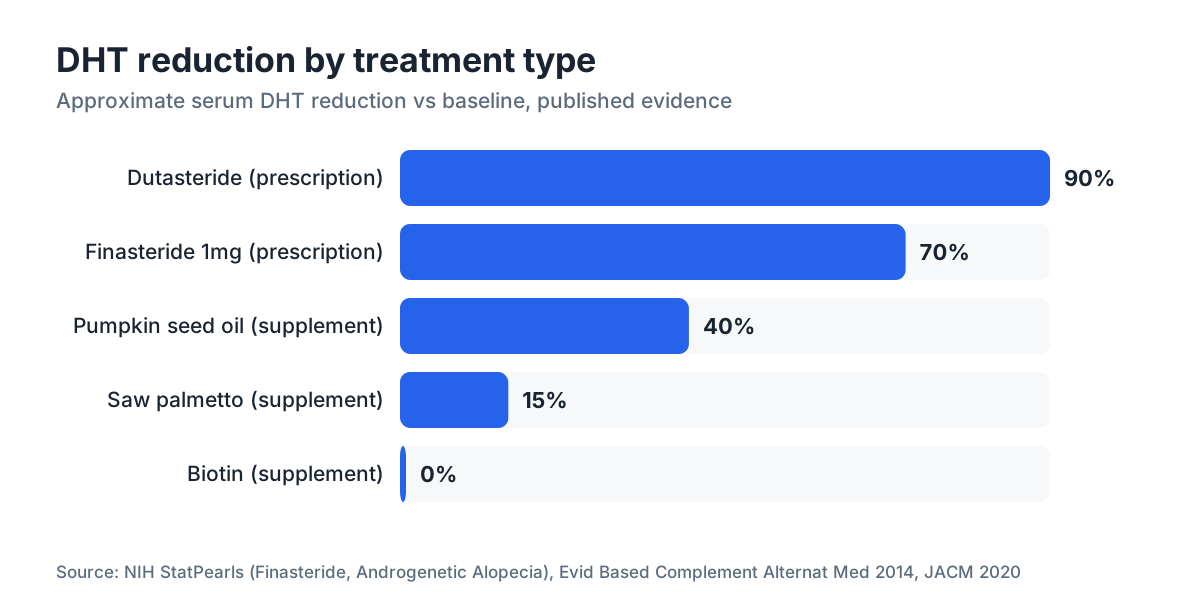
Saw palmetto is the most studied ingredient here. A 2020 systematic review in the Journal of Alternative and Complementary Medicine found saw palmetto helped in androgenetic alopecia across several small trials, but concluded the evidence is too thin to recommend it over finasteride [7]. Pumpkin seed oil has one published randomized controlled trial from 2014 in 76 men: hair count rose about 40% in the treatment group versus 10% in placebo over 24 weeks, but the trial was small and industry-adjacent [5].
Biotin is the ingredient most aggressively marketed in hair supplements across every brand, more than this one. The science is blunt. Biotin deficiency causes hair loss, but true deficiency is rare in healthy adults eating a normal diet. The FDA has issued a safety communication warning that high biotin in the blood can throw off lab test results [4]. Taking more biotin than you need does not grow more hair.
Fo-ti deserves a direct warning. The FDA and the National Institutes of Health's LiverTox database have documented cases of liver injury tied to he shou wu (fo-ti) preparations [6]. If you have any liver concerns, flag this with your doctor before taking a product that contains it.
How does DHT actually cause hair loss?
DHT is a hormone made from testosterone by the enzyme 5-alpha reductase. In people genetically prone to androgenetic alopecia, scalp follicles are sensitive to it. When DHT binds the androgen receptors in those follicles, it shortens the anagen (growth) phase over successive cycles, and the follicles miniaturize, producing thinner, shorter hairs until they stop making visible hair at all [3].
This biology is well understood, and it explains why the two FDA-approved oral treatments for male pattern baldness, finasteride and dutasteride, work by blocking 5-alpha reductase directly. Finasteride cuts serum DHT by roughly 70%. Dutasteride cuts it by up to 90%, based on the pharmacokinetic data in FDA approval submissions [2][10].
Supplements that claim to block DHT act on the same enzyme in theory. They just do it far less potently and far less consistently. The gap between a pharmaceutical-grade 5-AR inhibitor and saw palmetto extract is not only one of degree. It is also one of bioavailability, standardization, and dose certainty. Every batch of a supplement can carry different concentrations of active compounds.
For a deeper look at what causes follicle miniaturization and which treatments have real evidence, the what causes hair loss explainer covers the biology in more detail.
What do Simple Revival DHT Blocker reviews actually say?
Simple Revival DHT Blocker reviews on Amazon look positive at the surface, with ratings usually between 3.8 and 4.2 out of 5 at the time of writing. The common positive themes are less shedding after 2 to 3 months of use and tolerating the capsules without obvious side effects.
Negative reviews cluster around a few complaints: no visible regrowth after 6 months, upset stomach, and a price that feels high for uncertain results. Several reviewers say they switched to prescription finasteride after seeing little change.
Those reviews need context. Amazon reviews for supplements are notoriously unreliable as evidence. A 2020 study in JAMA Internal Medicine found that a large share of supplement reviews on major retail platforms showed signs of manipulation [8]. Hair loss is also highly variable, and placebo effects are real and measurable in hair loss trials (control groups in finasteride trials saw about 0 to 5% hair count improvement just from taking a pill [2]). Most people reviewing a product online have no baseline hair count to compare against.
Read Simple Revival DHT Blocker reviews as consumer sentiment, not clinical data. That is fine for a coffee maker. For something you are taking to treat a medical condition, it is not enough.
How does Simple Revival compare to FDA-approved DHT blockers?
This is the comparison that matters most, because it decides whether you are spending money on something with a real chance of working at the level you need.
Finasteride (Propecia, generic) is the FDA-approved oral 5-alpha reductase inhibitor for male pattern hair loss. In the trials submitted for FDA approval, finasteride 1mg daily stopped progression in 83% of men and increased hair count in 66% over two years versus placebo [2]. Those were large, multicenter, placebo-controlled trials. You can read the FDA drug label directly [2].
Minoxidil is the other FDA-approved option, sold topically over the counter and orally by prescription. It does not block DHT. It prolongs the anagen phase and increases blood supply to the follicle. Different mechanism, comparable evidence quality.
Simple Revival has no published randomized controlled trial. None. Its ingredients have small studies at best. That does not mean it helps nobody. It means you cannot know in advance whether it will help you, and it almost certainly will not match finasteride in someone with moderate to significant androgenetic alopecia.
Cost is worth a look too. Simple Revival DHT Blocker usually runs about $25 to $35 for a one-month supply. Generic finasteride costs as little as $10 to $20 a month through most mail-order pharmacies, sometimes less with GoodRx. The supplement is not even cheaper.
For a full breakdown of what finasteride does, how it is dosed, and what the side effect picture looks like, that article covers it. If you are already thinking about combining approaches, finasteride and minoxidil together is the combination with the strongest clinical evidence.
If your hair loss is more advanced, it helps to know where you fall on the Norwood scale for a receding hairline assessment, since that shapes which options are even on the table.
Are there any real risks to taking Simple Revival DHT Blocker?
For most healthy adults, the risk is probably low for most of the ingredients. Saw palmetto at typical supplement doses (320mg/day) is generally well tolerated. Zinc in moderate amounts is fine. B vitamins are water-soluble and mostly excreted if you take more than you need.
The serious concern is fo-ti. The NIH's LiverTox database lists he shou wu as a cause of drug-induced liver injury, with case reports of hepatitis requiring hospitalization [6]. The FDA has received adverse event reports on fo-ti-containing products. If Simple Revival's formula includes fo-ti, anyone with existing liver conditions, anyone who drinks alcohol regularly, or anyone on hepatically metabolized medications should talk to a doctor before starting.
A subtler risk is opportunity cost. People who spend months on an unproven supplement while their androgenetic alopecia progresses lose hair they may never get back. Follicle miniaturization eventually becomes permanent. Starting an effective treatment earlier produces better outcomes, and that is not a supplement selling point. It is basic trichology.
Supplements interact with medications too. If you are already on finasteride, adding a saw palmetto supplement is unlikely to hurt anything, but the extra benefit over finasteride's 70% DHT reduction is probably negligible. If you are on anticoagulants, saw palmetto has mild antiplatelet properties worth mentioning to your prescriber [7].
Who might actually get something out of a DHT-blocking supplement?
Honest answer: people who cannot or will not take finasteride and who have very early, very mild thinning.
Finasteride carries a real (though low-frequency) side effect profile, including sexual side effects in roughly 2% to 4% of men in controlled trials [10]. Some men are not candidates. Some do not want a daily prescription drug indefinitely. For those people, a saw-palmetto-based supplement is a reasonable low-risk hedge, as long as you understand it is unlikely to match finasteride's results.
Women are another group worth mentioning. Finasteride is not FDA-approved for women and is contraindicated in women who are or may become pregnant. Some evidence supports saw palmetto for female pattern hair loss, though it is thin. Spironolactone and minoxidil are the usual recommendations for women, but a supplement here is not unreasonable as an add-on.
If you are trying to figure out whether your hair loss is even the DHT-driven kind (versus telogen effluvium, which is shedding from stress or illness and does not respond to DHT blockers at all), get a proper assessment before spending anything. The free AI hair analysis at MyHairline.ai gives you a starting point for understanding your pattern before you decide what to buy.
For men weighing all their non-prescription options together, hair loss supplements has a broader comparison of what the evidence says category by category.
How long would you need to take it to know if it's working?
Hair runs on a slow clock. The anagen phase for scalp hair lasts 2 to 6 years, and a full cycle takes months. Any intervention for androgenetic alopecia, prescription or supplement, needs at least 3 months before you should expect less shedding, and 6 to 12 months before you can judge whether regrowth is happening [1].
The instructions for Simple Revival suggest a similar window. Most honest reviewers who report good experiences mention 2 to 3 months before noticing less shedding and 4 to 6 months before their hair felt thicker.
Self-assessing progress is the hard part. Hair loss is gradual and tough to measure by feel or mirror. Before-and-after photos under consistent lighting beat trying to feel your scalp. Dermatologists use trichoscopy and standardized hair count photography to measure change objectively. Without a baseline, you cannot actually tell whether a supplement is working or whether your hair loss simply plateaued for a stretch.
Spend 6 months on a supplement and see no difference? That is useful information. Most dermatologists would say the same thing: try an evidence-based treatment next.
What do dermatologists recommend instead of supplement DHT blockers?
The American Academy of Dermatology's clinical guidelines for androgenetic alopecia recommend finasteride and minoxidil as first-line treatments [1]. They do not recommend any supplement, including saw palmetto, as a primary treatment. Saw palmetto sometimes shows up as a complementary option for patients who decline medication, but it is not a standalone recommendation in the guidelines.
For minoxidil for men, the OTC 5% topical foam or solution applied daily has a large evidence base and is FDA-approved. Oral minoxidil at low doses (0.625mg to 2.5mg) is increasingly used off-label and shows strong results in small trials. The oral minoxidil article covers that option if you want to compare.
For advanced androgenetic alopecia where medication has not been enough, hair transplant surgery becomes the conversation. It is not for everyone, but it is the only intervention that can genuinely restore coverage where follicles have already gone dormant.
Nobody has great data on whether saw palmetto plus minoxidil produce combined effects. The closest evidence is one small 2020 trial that put saw palmetto head-to-head against finasteride and found finasteride was more effective at increasing hair density after 24 weeks, though saw palmetto did beat placebo [7]. That is a fair summary of where things stand.
Is Simple Revival FDA-approved or regulated?
No. Simple Revival DHT Blocker is a dietary supplement. In the United States, supplements fall under the Dietary Supplement Health and Education Act (DSHEA) of 1994, which means manufacturers do not need to prove safety or efficacy before selling [4]. The FDA steps in only after a product is on the market, if it gets adverse event reports or finds labeling violations.
The FDA is explicit. Its guidance states that manufacturers and distributors of dietary supplements "are not required to obtain approval from FDA before marketing dietary supplements" [4].
That matters for Simple Revival because it means the DHT-blocking claims on the label have never been reviewed or verified by any government agency. The company is required to hold substantiation for its claims in theory, but the bar is low and enforcement is limited.
FDA-approved treatments for hair loss at the time of writing are minoxidil (topical, OTC) and finasteride 1mg (oral, prescription, men only) [3]. (Litfulo/ritlecitinib, approved in 2022, is for alopecia areata, not androgenetic alopecia, so do not confuse the two.)
If you see a supplement claiming to be "FDA-approved," that is either a misrepresentation or a reference to the manufacturing facility, not the product itself. The distinction matters.
What's the bottom line on Simple Revival DHT Blocker?
Simple Revival DHT Blocker is unlikely to harm most people who try it, and it might give mild benefit, mostly through saw palmetto and pumpkin seed oil, for people in the very early stages of androgenetic alopecia. That is a cautious, hedged endorsement of a narrow use case.
It is not a substitute for finasteride if you have meaningful hair loss and no reason you cannot take that drug. The evidence gap between "may weakly inhibit 5-alpha reductase" and "proven to stop pattern hair loss progression in large RCTs" is wide enough to drive a truck through.
The fo-ti in some formulations is a genuine concern. Check the current label before buying, because formulas change.
My honest take: if you are not ready for a prescription drug, start with topical minoxidil OTC and see a dermatologist or trichologist. That beats this supplement as a first step. If you want to use a saw palmetto supplement alongside proven treatments, the interaction risk is low, and the placebo effect alone may not be nothing. But do not let a $30 supplement stall you from a $10-a-month generic drug that has 30 years of trial data behind it.
If you are unsure what type of hair loss you have or which treatments fit your pattern, MyHairline.ai's free AI hair scan can analyze your hairline and give you a personalized starting point before you commit to any product. Knowing your Norwood stage or pattern matters before you spend a dollar.
For how supplements like this stack up against other non-prescription options across the board, the DHT blocker overview is a solid next read.
Sources
- American Academy of Dermatology, Hair Loss: Diagnosis and Treatment
- FDA, Propecia (finasteride) prescribing information
- NIH National Library of Medicine, StatPearls: Androgenetic Alopecia
- FDA, Dietary Supplements: What You Need to Know
- Evid Based Complement Alternat Med, 2014 RCT: Pumpkin Seed Oil and Hair Growth
- NIH LiverTox, He Shou Wu (Fo-Ti)
- Journal of Alternative and Complementary Medicine, 2020 systematic review: Saw Palmetto for Androgenetic Alopecia
- JAMA Internal Medicine, 2020: Supplement review manipulation on retail platforms
- NIH National Library of Medicine, StatPearls: Finasteride