

TL;DR: Thyroid disorders cause diffuse shedding across the whole scalp in women, not a receding hairline. Both an underactive and an overactive thyroid push follicles into the resting phase at once. Hair usually regrows 3 to 6 months after thyroid levels normalize, though some women need extra treatment. A TSH blood test is the first step.
What does thyroid hair loss actually look like in women?
Thyroid hair loss looks like even thinning across the whole scalp, not a widow's peak and not patches. You notice it in three places: a wider part line, more scalp showing under overhead light, and hair coming out in handfuls in the shower when it never used to.
Unlike androgenetic alopecia (female-pattern hair loss), thyroid shedding doesn't hit the crown or temples first. The loss spreads out. That's why women describe a ponytail that feels thinner all over rather than in one spot.
One sign gets missed a lot: the outer third of the eyebrows can thin, especially in hypothyroidism. The same follicle disruption reaches body hair too. Losing hair from your head while your brows go sparse at the outer edges is a combination worth flagging to your doctor.
The hair that falls in thyroid shedding has a white bulb at the root end. That white bulb is the telogen (resting-phase) root, and it means the hair finished its cycle and let go normally rather than snapping off. This is the signature of telogen effluvium, the mechanism behind most thyroid-driven hair loss. [1]
Shedding numbers help. The average person loses about 50 to 100 hairs a day [2]. Thyroid shedding can push that past 200 on a bad day, though counting every strand isn't realistic. Try this instead: run your fingers through dry, unwashed hair and count what comes out. More than 5 or 6 strands in one pass is worth noting.
What causes thyroid-related hair loss in women?
Both an underactive thyroid (hypothyroidism) and an overactive one (hyperthyroidism) cause hair loss, which surprises people who assume it only goes one way.
Thyroid hormones, especially T3 (triiodothyronine), run the anagen (growth) phase of the hair cycle. When T3 is too low or too high, follicles get a garbled signal and drop early into the telogen (resting and shedding) phase. A systemic hormonal event can push most of the scalp's follicles into that phase together, so the shedding shows up as a wave 2 to 4 months later. That lag is why so many women can't connect the hair loss to the thyroid problem. [3]
Hypothyroidism runs far more common in women than men. The American Thyroid Association estimates thyroid disorders affect roughly 20 million Americans, and women are 5 to 8 times more likely to develop them. [4] Hashimoto's thyroiditis, an autoimmune condition, is the leading cause of hypothyroidism in the United States. The immune attack on the thyroid disrupts hormone production, and that disruption triggers the follicle problem.
Hyperthyroidism (often from Graves' disease, another autoimmune condition) drives a different metabolic storm but the same follicle-phase disruption. The two look nearly identical on the scalp, which is why lab work is the only reliable way to tell them apart.
Iron deficiency often rides along with thyroid disease in women and makes the shedding worse. A 2006 review in the Journal of the American Academy of Dermatology by Trost and colleagues found ferritin below 30 ng/mL is linked to hair shedding independent of thyroid status, and the two together beat you up harder than either alone. [5] If your doctor is checking your thyroid, ask them to add a ferritin test.
How is thyroid hair loss different from other types of female hair loss?
Getting this right matters, because the treatments have nothing in common.
| Type | Pattern | Onset | Scalp visible | Eyebrows affected | Reversible |
|---|---|---|---|---|---|
| Thyroid hair loss | Diffuse, whole scalp | Weeks to months after thyroid disruption | Mild to moderate overall | Often yes (outer third) | Usually, once thyroid is treated |
| Female-pattern (androgenetic) alopecia | Crown and part-line, front preserved | Gradual, years | Crown / top | Rarely | Partial, requires ongoing treatment |
| Alopecia areata | Patchy, coin-sized bald spots | Rapid, weeks | Yes, in patches | Possible (in patches) | Variable |
| Telogen effluvium (non-thyroid) | Diffuse, whole scalp | 2-4 months after trigger | Mild to moderate | Rarely | Yes, once trigger resolves |
Female-pattern hair loss lands on the crown and widens the part but almost always keeps the front hairline. If your front hairline is intact but your scalp shows everywhere else, that points more to thyroid loss or general telogen effluvium than to androgenetic alopecia. Our page on what causes hair loss breaks down the whole map.
Alopecia areata makes smooth, round bald patches that look nothing like diffuse thyroid thinning. It can hit the scalp, beard, eyebrows, and eyelashes, and the patches have a sharp, clean edge.
The hardest one to tell from thyroid loss by eye is plain telogen effluvium from other triggers: crash dieting, childbirth, major surgery, severe stress. The hair loss looks the same. Labs separate them. A normal TSH and normal ferritin in a woman who just gave birth points hard to postpartum telogen effluvium rather than thyroid disease.
Which lab tests actually diagnose thyroid hair loss?
TSH (thyroid-stimulating hormone) is where you start. It's the most sensitive screening test for both an underactive and an overactive thyroid. The normal range in most labs runs about 0.4 to 4.0 mIU/L, though some endocrinologists argue the top should sit closer to 2.5 mIU/L for symptomatic patients. [4]
If your TSH is off, your doctor will usually add Free T4 and sometimes Free T3 to see what's actually circulating. Thyroid antibodies (anti-TPO and anti-thyroglobulin) can confirm Hashimoto's or Graves' disease when the diagnosis is uncertain.
Beyond the thyroid panel, ask for these at the same visit:
- Ferritin (stored iron), more than hemoglobin or total iron. The standard anemia panel often misses the functional iron deficiency that affects hair. Ferritin is the most sensitive marker of iron stores. [11]
- Complete blood count
- Vitamin D (25-OH)
- Zinc
None of those are exotic or expensive, and a shortfall in any of them can pile onto thyroid shedding. A dermatologist working up female hair loss would order most of these alongside a TSH. [5]
Trichoscopy or a scalp biopsy comes into play when the pattern is ambiguous. Under magnification, telogen effluvium (the mechanism of thyroid hair loss) shows a higher-than-normal share of telogen hairs (above roughly 25%), and miniaturized follicles look less prominent than in androgenetic alopecia. That helps split the two when the clinical picture is muddy.
Want a starting point before your appointment? The free AI scan at MyHairline documents your current hair density and pattern, so you walk in with something concrete to show your dermatologist or GP.
Does treating thyroid disease actually regrow hair?
For most women, yes, with real caveats about timing and how complete the recovery is.
Once thyroid levels normalize, through levothyroxine for hypothyroidism or antithyroid medication for hyperthyroidism, the follicles head back into the anagen (growth) phase. New hair starts within a few months, but it takes 6 to 12 months to see meaningful regrowth, because each new hair has to physically grow out from the root. [3]
Here's the cruel part. Shedding often continues or even ramps up for the first 4 to 8 weeks after starting treatment. Correcting the hormone levels prods the follicles that were stuck in a long rest to release their telogen hairs all at once before they cycle back into growth. It looks worse before it looks better.
Not every woman gets full regrowth. A few reasons recovery comes up short:
- Androgenetic alopecia that was already there but hidden underneath. Thyroid treatment clears the telogen shedding layer, but doesn't touch genetic miniaturization.
- Thyroid disease left untreated for years, which can damage follicles. Uncommon, but documented.
- Nutritional gaps (especially ferritin below 30 ng/mL) that never got corrected alongside the thyroid.
If your TSH is in range but you're still shedding at 6 months, that's the point to see a dermatologist rather than only your GP. A dermatologist can judge whether androgenetic alopecia is also in the mix and whether something like topical minoxidil makes sense. Read up on minoxidil side effects before you start.
How long does it take for thyroid hair loss to stop and regrow?
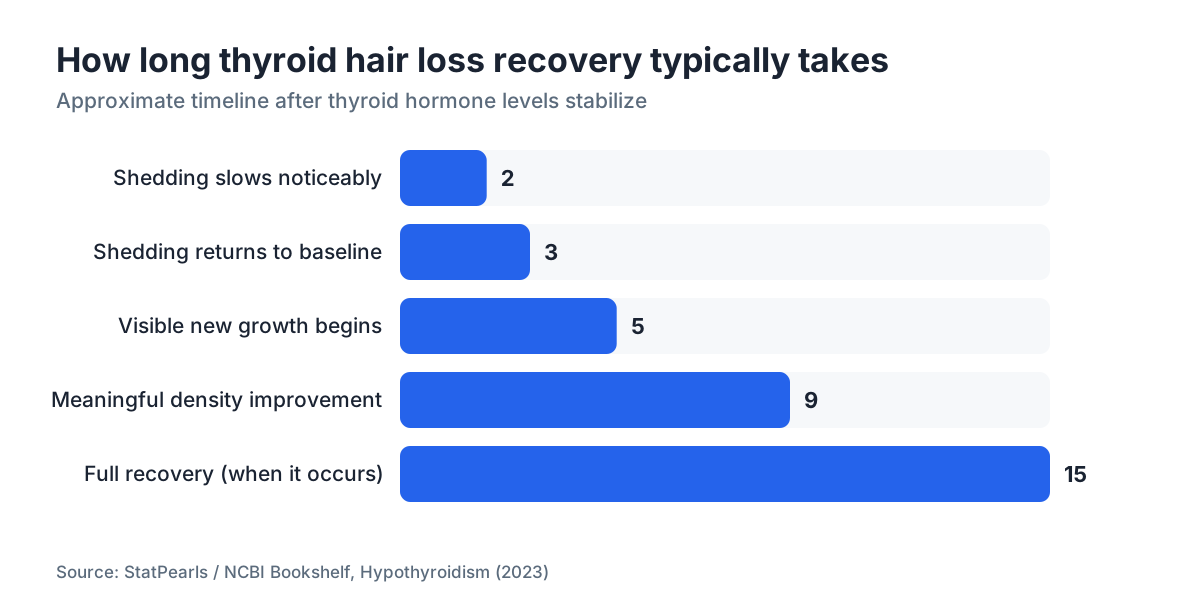
The timeline runs fairly predictable once thyroid levels are controlled. Shedding slows within 1 to 3 months of stable levels. Visible regrowth, meaning short new hairs you can actually see, usually shows around the 3 to 6 month mark. A return to your old density, if you get full recovery, takes 12 to 18 months from when treatment stabilized. [3]
The delay wears people down because the labs read normal but the mirror still looks wrong. That's just physiology. Hair grows about half an inch a month, so even after every follicle is back in anagen, you're waiting on length.
A few things speed the process or improve the odds:
- Getting ferritin above 70 ng/mL (some dermatologists use this target rather than the lower lab reference). [5]
- Enough protein. Hair is mostly keratin, and crash diets during recovery drag out the shed.
- Dodging fresh triggers: extreme calorie restriction, crash diets, elective surgery scheduled mid-recovery, other drugs known to cause shedding.
Patience is the main requirement. The women who do worst tend to throw aggressive treatments at the problem before thyroid levels are stable, which makes it impossible to tell what's actually working.
Can hypothyroidism and hyperthyroidism both cause the same hair loss pattern?
Yes. This is one of the more counterintuitive facts about thyroid hair loss.
Both conditions disrupt the hair cycle at the follicle, just through different hormonal routes. Hypothyroidism slows cellular metabolism across the body, follicles included, and pushes them into rest. Hyperthyroidism speeds metabolic turnover in a chaotic way that also cuts the anagen phase short.
By eye, the resulting hair loss is nearly impossible to tell apart. Both give you diffuse shedding, possible eyebrow thinning, and the look of less hair everywhere with no clear pattern.
The systemic symptoms are where they split hard. Hypothyroidism brings fatigue, weight gain, feeling cold, constipation, and a slower heart rate. Hyperthyroidism brings the opposite: anxiety, heat intolerance, a racing heart, weight loss despite normal eating, and sometimes eye changes (particularly in Graves' disease).
If you have hair loss without strong systemic symptoms, the labs diagnose you, not the symptom checklist. Subclinical hypothyroidism, where TSH is up but T4 stays normal, can cause shedding with almost no other symptoms in some women. Whether to treat subclinical hypothyroidism just for hair loss is a judgment call between you and your doctor, and the evidence for benefit is modest. [4]
What treatments help with thyroid-related hair loss beyond fixing the thyroid itself?
Treating the thyroid disorder is the first step. Skip that, and nothing else works well or for long.
Once levels are controlled and nutritional gaps are fixed, if hair still hasn't recovered enough after 6 to 12 months, here are the options:
Topical minoxidil (2% or 5%) has the most evidence behind it for women with lingering thinning after a thyroid event. The FDA approved 2% minoxidil specifically for women with androgenetic alopecia, and it's used off-label for telogen effluvium that won't resolve on its own. [6] It works by stretching out the anagen (growth) phase at the follicle. The 5% foam gets used in women too, though the FDA-approved label is for 2%. minoxidil side effects include an initial shed and, rarely, unwanted facial hair at higher strengths.
Oral minoxidil at low doses (0.625 to 2.5 mg/day in women) has drawn real attention lately. A 2021 review in the Journal of the American Academy of Dermatology by Randolph and Tosti found it effective for several forms of hair loss in women with a reasonable safety profile at these doses. [7] It needs a prescription and regular blood pressure checks. More in our piece on oral minoxidil.
Finasteride isn't a first choice for women of reproductive age and is contraindicated in pregnancy because of birth-defect risk. Post-menopausal women are sometimes prescribed it off-label for androgenetic alopecia sitting alongside thyroid recovery. finasteride covers the risk considerations women need.
Iron supplementation, when ferritin is low, is cheap and often genuinely helpful. A ferritin target of 40 to 70 ng/mL is reasonable. Don't take iron without a lab showing you're deficient, though, because iron overload carries its own risks.
DHT-blocking supplements get marketed hard but have thin evidence for thyroid-related hair loss specifically. dht blocker has more on what the data actually says. The hair loss supplements page walks through biotin and the other popular options.
A hair transplant isn't appropriate until shedding has stopped for at least a year and thyroid levels have held steady. Transplanting into an actively shedding scalp wastes the procedure. hair transplant covers who qualifies.
What does thyroid hair loss look like at different stages of severity?
There's no standard staging system for thyroid-related diffuse hair loss the way there is for androgenetic alopecia (the Norwood scale for men, the Ludwig scale for women). In practice, think in three rough stages.
Early: more shedding in the shower, on the brush, on the pillow. The part line looks the same in photos but a bit wider in person. Hair ties slip more. Nobody else notices yet.
Moderate: the part is visibly wider. Under bright overhead light you can see scalp through the hair. The ponytail is clearly thinner. Some eyebrow thinning at the outer edges. Photos from a year ago look different. This is the stage most women finally book the doctor.
Severe: real scalp visibility across the whole top of the head. Thinning creeping into the sides and back too. Eyebrow loss more obvious. Some women also notice loss of body hair, pubic hair, or armpit hair in longstanding untreated hypothyroidism. This level is less common and usually means the thyroid went untreated a long time or there's a second condition in play.
Here's the good news. Even moderate and severe thyroid hair loss often recovers well once the thyroid is treated, while the same severity from androgenetic alopecia would be far harder to fully reverse. The biology is different: telogen effluvium boots resting follicles out temporarily, while androgenetic alopecia shrinks follicles for good over time.
Could something other than thyroid disease be causing diffuse hair loss in women?
Yes, and ruling out the other causes is exactly why a lab panel earns its keep.
The common non-thyroid causes of diffuse hair loss in women:
Postpartum telogen effluvium. Estrogen surges in pregnancy hold hair in anagen longer, so a big batch sheds together 2 to 4 months after delivery. This is the top cause of dramatic hair loss in women in their 20s and 30s. It almost always clears on its own within 12 months. [1]
Crash dieting or severe calorie restriction. A steep deficit (often below 1,000 to 1,200 kcal/day) triggers telogen effluvium through protein deprivation and metabolic stress. Common after rapid weight loss.
Iron deficiency without anemia. Ferritin can sit low enough to hurt hair while hemoglobin still reads normal. This blindsides a lot of women whose doctor said their bloodwork was "fine" based on a basic CBC.
Polycystic ovary syndrome (PCOS). High androgens in PCOS drive a more androgenetic pattern (crown and temples) but can overlap with diffuse loss.
Medications. Beta-blockers, some antidepressants, anticoagulants, retinoids, and hormonal contraceptives (starting or stopping) all link to telogen effluvium. Many carry hair loss as a listed side effect. [8]
Autoimmune conditions beyond the thyroid. Lupus, for one, causes both scarring and non-scarring hair loss and often runs alongside autoimmune thyroid disease.
Stress. A big psychological or physical hit (major surgery, serious illness) triggers telogen effluvium 2 to 4 months later. Same mechanism as thyroid loss; different trigger.
If you're sorting through this, what causes hair loss covers the full landscape, and the telogen effluvium article goes deep on the mechanism behind most of these.
When should a woman with thyroid-related hair loss see a dermatologist vs. just her GP?
Your GP or endocrinologist handles the thyroid diagnosis and treatment. Start there. For many women, fixing the thyroid is the whole story.
See a dermatologist when:
- Hair loss keeps going or gets worse after 6 months of stable thyroid levels
- The pattern isn't purely diffuse (concentrated crown loss, patches, or a clearly receding hairline points to a different or extra diagnosis)
- You want trichoscopy or a scalp biopsy to separate telogen effluvium from coexisting androgenetic alopecia
- You want to start minoxidil and need guidance on strength and formulation for your pattern
- There's eyebrow, eyelash, or body hair loss that hints at alopecia areata
The American Academy of Dermatology advises seeing a board-certified dermatologist for hair loss that doesn't resolve within a few months of treating the underlying cause. [9] A dermatologist can also run handheld dermoscopy in the office to check follicle miniaturization you can't see with the naked eye.
Before the appointment, document the loss with consistent photos: same lighting, same position, wet or dry (pick one). Part your hair in three places, take overhead and close-up shots, and date them. That gives any doctor a real baseline to measure against. The free AI scan at MyHairline does the same in a structured way if you want a documented starting point.
Sources
- StatPearls (NCBI Bookshelf) - Telogen Effluvium
- American Academy of Dermatology - Hair loss: Who gets and causes
- StatPearls (NCBI Bookshelf) - Hypothyroidism
- American Thyroid Association - General Information/Press Room
- Journal of the American Academy of Dermatology - Trost LB et al. 'The diagnosis and treatment of iron deficiency and its potential relationship to hair loss' (2006)
- FDA - Minoxidil labeling (DailyMed)
- Journal of the American Academy of Dermatology - Randolph M and Tosti A. 'Oral minoxidil treatment for hair loss' (2021)
- FDA MedWatch - Safety Communications
- American Academy of Dermatology - Hair loss: Diagnosis and treatment
- NIH Office of Dietary Supplements - Iron Fact Sheet for Health Professionals