TL;DR: Ketoconazole shampoo (1% OTC or 2% prescription) has the best clinical evidence for hair loss, with a 1998 trial showing results similar to minoxidil 2%. Zinc pyrithione and caffeine shampoos have weaker but real data. Most 'hair growth' shampoos are marketing. No shampoo regrows hair the way minoxidil or finasteride does.
What can a shampoo actually do for hair loss?
Shampoo is a rinse-off product. It sits on your scalp for two to four minutes, then it's gone down the drain. That single fact caps how much any ingredient inside it can do, no matter what the front of the bottle promises.
So be honest with yourself before you buy. A good shampoo can lower scalp inflammation. It can cut levels of the fungus Malassezia that drives dandruff and may nudge androgenetic alopecia along. It can strip product buildup off the scalp. And it can leave a thin film of active ingredient behind that lingers for a little while after you rinse. None of that is nothing. None of it reverses real hair loss on its own either.
Here's the honest frame. Shampoo is a support tool, the thing you do while you wait for your minoxidil for men or finasteride to do the actual work. If your loss is meaningful, a bottle of shampoo is not your answer. If your loss is mild, or you're trying to hold ground, the right shampoo can help a little at the margins. That's the whole story.
Which shampoo ingredient has the best evidence for hair loss?
Ketoconazole wins, and it's not close. It's an antifungal with mild anti-androgenic activity, meaning it interferes a bit with dihydrotestosterone (DHT) binding at the follicle. DHT drives most male and female pattern hair loss, so that mechanism actually matters here. For how DHT does its damage, see our guide on dht blocker options.
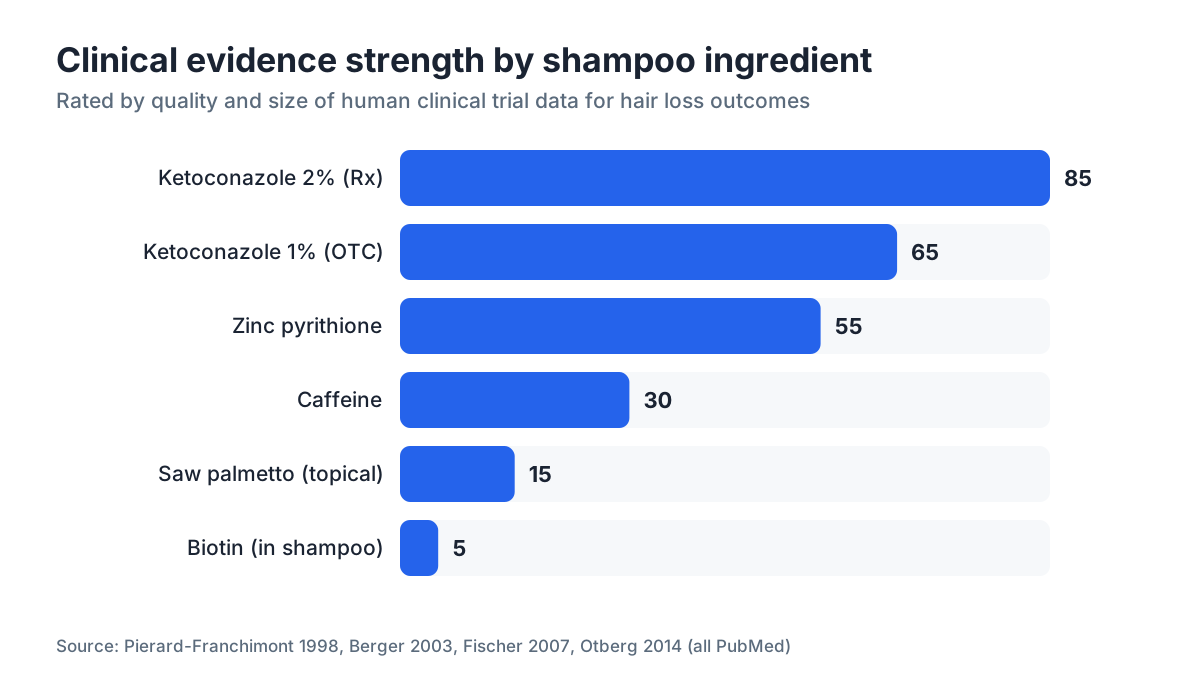
A 1998 randomized controlled trial in Dermatology compared ketoconazole 2% shampoo (used every 2 to 4 days) against minoxidil 2% solution (used daily) in men with androgenetic alopecia. After 6 months, both groups showed similar gains in hair density and shaft size. That's a striking result for something you wash out. The study was small, with 39 men, and nobody has replicated it at scale, so treat it as promising rather than settled [1]. Still, no other shampoo ingredient comes anywhere near that kind of data.
Ketoconazole 1% sells over the counter in the US. Nizoral is the name-brand version, but generics are identical. Ketoconazole 2% needs a prescription, and 2% is the strength the 1998 trial used. Want OTC convenience? 1% is fine. Already working with a dermatologist? Ask about 2%.
One practical note. Use it every 2 to 4 days, not daily, because overuse dries and irritates the scalp. Leave it on 2 to 3 minutes before you rinse.
What about zinc pyrithione and caffeine shampoos?
Zinc pyrithione is the active in Head & Shoulders and most dandruff shampoos. It works as an antifungal and antibacterial. A 2003 study in the British Journal of Dermatology found a zinc pyrithione shampoo used daily for 26 weeks raised hair density in men with androgenetic alopecia versus placebo [2]. The effect was small, but it was real and statistically significant.
The theory tracks with ketoconazole: knock down Malassezia, cut the inflammation that speeds follicle miniaturization. Zinc pyrithione shampoos are cheap and everywhere. If you're not ready to commit to prescription treatment, swapping your usual shampoo for one with zinc pyrithione costs almost nothing and has at least some evidence behind it.
Caffeine shampoos have generated a surprising pile of research, most of it from a German lab tied to Alpecin (the brand and its parent funded much of that work, which you should factor in). In vitro studies show caffeine can get into the follicle and counter testosterone-driven suppression of hair growth [3]. The catch is that a lab dish and a scalp in your shower are different worlds. How much caffeine a rinse-off shampoo actually delivers to the follicle is uncertain. A 2014 study in Skin Pharmacology and Physiology did measure caffeine penetration after 2 minutes of application, which is encouraging [4]. Whether that becomes visible regrowth over months in real people isn't established. Call caffeine a reasonable ingredient to have along for the ride, not a reason to pay extra.
Are there any FDA-approved shampoos for hair loss?
Read the labels carefully, because this is where marketing gets slippery. The FDA has approved topical minoxidil (2% and 5%) for hair regrowth, and it has approved ketoconazole as an antifungal drug [5]. But no shampoo carries an FDA hair-regrowth indication the way minoxidil solution or foam does.
When a shampoo says it'll 'support hair growth' or 'reduce hair loss,' that's a cosmetic claim, not a drug claim. The FDA regulates the two categories differently. A shampoo can't legally claim to regrow hair, because that's a drug claim that would require clinical proof and formal approval. So brands reach for softer words like 'thickening,' 'volumizing,' or 'reduces breakage,' which need far less backing.
Here's the takeaway. Dramatic regrowth claims on a shampoo label are a red flag, not a feature. Evidence-based shampoos tend to stay conservative in their language. If you're spending real money, the FDA's guidance on the cosmetic-versus-drug line is worth reading first [5].
How do hair loss shampoos compare to each other?
This table sorts the main options by how much human evidence actually stands behind them.
| Ingredient | Evidence level | Mechanism | OTC available? | Best use case |
|---|---|---|---|---|
| Ketoconazole 2% | Strongest (RCT vs. minoxidil) | Antifungal + anti-DHT | Rx only (2%); 1% OTC | Androgenetic alopecia, seborrheic dermatitis |
| Ketoconazole 1% | Good, extrapolated from 2% data | Same as above | Yes | OTC alternative to Rx |
| Zinc pyrithione | Moderate (small RCT) | Antifungal, anti-inflammatory | Yes | Dandruff-associated shedding |
| Caffeine | Preliminary (in vitro, penetration studies) | Adenosine receptor modulation | Yes | Mild loss, adjunct use |
| Biotin (in shampoo) | Very weak, rinse-off limits delivery | Keratin support | Yes | Probably not worth paying extra for |
| Saw palmetto (topical) | Very limited | Weak DHT inhibition | Yes | Uncertain benefit |
| 'Thickening' peptides | Cosmetic effect only | Coat shaft, not follicle | Yes | Appearance, not regrowth |
Biotin in shampoo deserves a callout. Oral biotin fixes hair loss only if you're genuinely deficient, and deficiency is rare on a normal diet [6]. Biotin in a rinse-off shampoo has no credible path to the follicle in useful amounts. You're paying for the word on the label. If you want to look at supplements that hold up, the hair loss supplements guide covers what has evidence and what doesn't.
Does shampoo help with telogen effluvium or is it different from pattern loss?
For telogen effluvium, shampoo does almost nothing, and that's the honest answer. Telogen effluvium (TE) is diffuse shedding set off by a stressor: illness, surgery, crash dieting, postpartum hormone shifts, or a serious nutritional gap. It's a different animal from androgenetic alopecia. In TE the follicles are mostly healthy; they've just been shocked into a resting phase all at once. Most cases clear on their own in 3 to 6 months once the trigger is gone [7]. Our telogen effluvium article walks through the full picture.
Your job in TE is to find and fix the trigger, not to hunt for the right bottle. A gentle, sulfate-free shampoo makes sense during a shed, because aggressive lathering and scalp friction can make the shedding look worse (you're just dislodging hairs already on their way out). But no shampoo ingredient speeds TE recovery.
The real value of shampoo here is keeping the scalp clean, calm, and free of dandruff so a second problem doesn't stack on top of an already stressful one.
What ingredients should you avoid in shampoo if you have hair loss?
No shampoo ingredient is proven to cause pattern hair loss. What some ingredients can do is irritate an already touchy scalp or add mechanical and chemical stress that makes existing loss look worse.
Sulfates (sodium lauryl sulfate, sodium laureth sulfate) are strong detergents. Great at cleaning, but they strip natural oils and can leave the scalp dry and irritated, especially with daily use. If your scalp is already inflamed, or you're on a medicated shampoo, easing off sulfates is sensible. Gentle sulfate-free options are everywhere and they're cheap.
Fragrances and dyes sometimes trigger contact dermatitis. If your scalp itches or flakes and dandruff isn't the cause, a fragrance sensitivity is worth considering. A dermatologist can patch test for it.
Silicones coat the shaft and build up over time, weighing strands down and making shedding more obvious. They don't cause hair loss. But if your hair is already thin, heavy silicone conditioners don't do the look any favors.
The evidence tying any specific shampoo chemical to hair loss is thin. You're far more likely to lose ground by skipping a proven treatment than by picking the wrong shampoo.
How often should you wash your hair if you're losing it?
Washing your hair does not cause hair loss, full stop. The hairs you see in the drain were already in the telogen (shed) phase. Washing didn't yank them early. Skip a few days and those same hairs pile up, then shed all at once, which looks alarming but adds up to the identical total loss.
The American Academy of Dermatology ties washing frequency to your scalp's oil production and your lifestyle, not to a fixed calendar [8]. On a medicated shampoo like ketoconazole, every 2 to 4 days is the standard. Without scalp issues, wash whenever your scalp feels clean and comfortable.
Under-washing carries its own risk: product buildup, excess sebum, and Malassezia overgrowth, all of which inflame the scalp and make follicle conditions worse. Keeping your scalp clean with regular, appropriate washing is one of the cheapest, most evidence-consistent things you can do for it.
When should you move beyond shampoo to actual hair loss treatments?
Once you see clear thinning at the crown, a hairline that's crept back more than a centimeter, or hair that's plainly miniaturizing (finer and shorter each cycle), shampoo is the wrong tool. That's androgenetic alopecia doing what genetics and DHT tell it to, and it needs treatments with real evidence.
Minoxidil is the first-line OTC option. It's FDA-approved, backed by decades of data, and comes in 2% and 5% topical forms for men and women plus an oral version. Our minoxidil for men piece covers how to use it, what results look like, and the timeline. Oral minoxidil is a lower-dose systemic route some dermatologists now prefer. Finasteride is the single most effective treatment for male pattern loss, cutting scalp DHT by roughly 60 to 70% [9]. Running both together is common; see finasteride and minoxidil for the combined approach. If you're further along, it's worth understanding what a hair transplant involves.
Not sure how much you've lost, or whether it's pattern loss versus something else? The free AI scan at MyHairline (/scan) gives you a baseline read from your photos before you commit to anything.
If you're early and want to understand what causes hair loss before you pick a path, start there. And a dermatologist is always worth seeing when you can, especially if the loss is fast, patchy, or you're a woman with diffuse thinning.
What is the best shampoo for hair loss for women specifically?
For women, the shampoo evidence is the same as for men: ketoconazole and zinc pyrithione have the best clinical backing, sex regardless. What differs is the loss itself. Female pattern hair loss shows up as diffuse thinning across the crown rather than a receding hairline, and women hit TE more often thanks to pregnancy, postpartum hormone shifts, thyroid changes, and iron deficiency. Sorting pattern loss from trigger loss changes what you should actually do.
Women sometimes respond well to ketoconazole because of its mild anti-androgenic activity, even though DHT plays a smaller role in female pattern loss than in men. A 2005 study in the Journal of Dermatology reported measurable gains in hair density in women with androgenetic alopecia using ketoconazole shampoo [10].
Women who want minoxidil should start with the 2% topical (FDA-approved for women) or talk to a physician about 5% or an oral version [11]. Finasteride is off the table for women of childbearing potential because of teratogenicity risk. Those details shape what you layer on top of any shampoo routine.
What do dermatologists actually recommend?
Hair-focused dermatologists land in a consistent spot: ketoconazole shampoo is worth using as an add-on for androgenetic alopecia, especially if you've got scalp scaling or dandruff. It's low risk, low cost, and it has the best evidence in the entire shampoo category.
The American Academy of Dermatology's own hair loss guidance centers on FDA-approved treatments (topical minoxidil, finasteride for men, and low-level laser therapy in certain cases), not shampoos [8]. Shampoo doesn't appear in their primary recommendations, which tells you exactly where it sits in the pecking order.
Many dermatologists suggest ketoconazole once or twice a week as a companion to a primary treatment. Nobody in mainstream evidence-based dermatology treats shampoo as a standalone fix for meaningful pattern loss.
The MyHairline AI scan (/scan) can flag your Norwood stage or thinning pattern before a dermatologist visit, so you show up with a baseline instead of a blank page. It won't replace a diagnosis, but it focuses the conversation.
If you're dealing with a receding hairline specifically, the hierarchy is even clearer: shampoo buys you very little, and you're better off looking hard at finasteride and minoxidil sooner rather than later.
Sources
- Pierard-Franchimont C et al., Dermatology, 1998
- Berger RS et al., British Journal of Dermatology, 2003
- Fischer TW et al., International Journal of Dermatology, 2007
- Otberg N et al., Skin Pharmacology and Physiology, 2014
- U.S. FDA, Is It a Cosmetic, a Drug, or Both?
- National Institutes of Health Office of Dietary Supplements, Biotin Fact Sheet
- American Academy of Dermatology, Hair Loss
- American Academy of Dermatology, Hair Loss Diagnosis and Treatment
- Kaufman KD et al., Journal of the American Academy of Dermatology, 1998
- Naldi L et al., Journal of Dermatology / dermatology literature on ketoconazole in women, 2005
- U.S. FDA, Drugs