

TL;DR: A receding hairline is almost always male or female pattern hair loss driven by DHT, and it keeps going without treatment. Two options have real FDA backing: minoxidil (topical or oral) and finasteride. Together they beat either alone. Transplants replace what's already gone. Biotin and laser helmets have thin evidence. Act early and you save more.
What is actually happening when your hairline recedes?
Your hairline pulls back because miniaturization is killing follicles one at a time. DHT, a potent androgen made from testosterone, binds to receptors in genetically sensitive follicles at your temples and crown. Each growth cycle, those follicles shrink a little more, making thinner and shorter hairs until they make nothing at all [1].
This is androgenetic alopecia. It affects roughly 50% of men by age 50 and up to 40% of women by menopause [2]. In men it usually starts at the temples and forms the classic M-shape. In women the hairline often stays intact while the part widens and density behind it thins.
The process is genetic and progressive. That second word matters. It does not plateau on its own. If you do nothing, most people keep losing ground, though the pace varies enormously. Some men drop two Norwood stages in their twenties. Others hold at a mild recession for decades. Nobody can predict your trajectory with certainty, which is one reason a baseline assessment early on is useful.
For a fuller picture of what drives this process, see our guide on what causes hair loss and the specifics of DHT blockers.
How do doctors classify a receding hairline?
The Norwood-Hamilton scale is what dermatologists use for men. It runs from Type I (essentially no recession) through Type VII (a horseshoe of hair around the sides and back, nothing on top). A receding hairline at the temples with the crown still intact is typically Norwood II or III. Once temple recession meets a thinning crown, you're at Type IV or V [3].
Why does the stage matter? It tells you what treatments can realistically accomplish. Finasteride and minoxidil can slow or pause progression at almost any stage, and they can partially regrow hair in recently miniaturized follicles. A follicle that has been dead for years does not come back. If you are already at Norwood VI or VII, your realistic options shift heavily toward transplant or camouflage.
For women, the Ludwig scale is more common, ranging from I to III. Women tend to see diffuse thinning rather than a retreating hairline, which changes both how you assess progress and which treatments help most.
See our detailed breakdown of receding hairline stages and what each one looks like in practice.
Which treatments actually work for a receding hairline?
Here is the honest landscape. Two treatments have strong clinical evidence and FDA approval for hair loss. One surgical option physically replaces lost hair. The rest range from mildly supportive to outright waste of money.
Minoxidil (topical or oral) Minoxidil is FDA-approved for hair loss: the topical 2% solution for women and the 5% solution or foam for men [4]. It works by prolonging the anagen (growth) phase and increasing blood flow to follicles. In randomized controlled trials, the 5% foam applied twice daily produced significantly more regrowth than placebo at 16 weeks [4]. Real-world results: most men see stabilization and some modest regrowth, especially at the crown. Hairline regrowth is less dramatic than crown regrowth, but it does happen in the earlier Norwood stages.
Oral minoxidil at low doses (0.625 mg to 2.5 mg daily) has become popular off-label and shows strong results in recent trials. A 2020 retrospective study in the Journal of the American Academy of Dermatology found that 82% of patients on low-dose oral minoxidil saw improvement [5]. It is not FDA-approved for this use, meaning your doctor is prescribing it off the approved label, which is legal and common. Read more in our oral minoxidil guide.
Finasteride Finasteride 1 mg daily is FDA-approved for androgenetic alopecia in men. It blocks the type II 5-alpha-reductase enzyme, cutting DHT levels in the scalp by roughly 60% [6]. In the approval trials, 86% of men taking finasteride had no further hair loss over two years, and 65% had visible regrowth. Those numbers held at five years in extension data [6].
Finasteride does not work overnight. Give it 12 months before judging results. And you have to keep taking it. Stop, and DHT recovers, and so does hair loss, usually within 6 to 12 months. For women who are not pregnant or planning to become pregnant, finasteride is used off-label. It should not be taken during pregnancy.
Side effects are real but statistically uncommon. The FDA label lists sexual side effects including decreased libido and erectile dysfunction in a small percentage of men [6]. A small subset of men report persistent symptoms after stopping. This is a real conversation to have with your doctor, not something to dismiss. See our full finasteride guide for the risk picture.
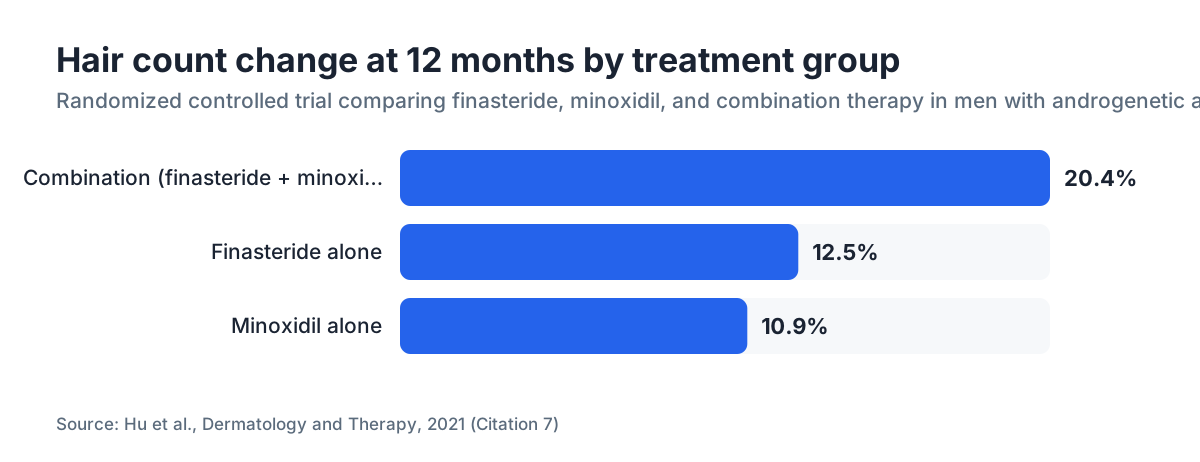
Combining finasteride and minoxidil This is what most hair loss specialists recommend for men with early to moderate recession. A 2021 randomized trial in Dermatology and Therapy found the combination produced significantly greater hair count increases than either drug alone [7]. If you are going to treat a receding hairline medically, combination therapy is the approach with the most evidence behind it. Details in our finasteride and minoxidil guide.
Hair transplants A transplant moves DHT-resistant follicles from the back and sides of your scalp to the recession zones. Done well by a skilled surgeon, the results are permanent because those follicles stay resistant to DHT in their new location. Costs typically run $4,000 to $15,000 or more depending on graft count and technique (FUE vs. FUT), location, and surgeon experience [8]. This is not a first-line option for early recession, because you keep losing hair for years, and a transplant done too early can look odd as natural hair thins around the grafted areas.
For more: our hair transplant guide covers techniques, costs, and how to vet a surgeon.
What is the evidence for finasteride and minoxidil together?
The short answer: better than either alone, and this is now the standard recommendation from most hair loss specialists.
The 2021 trial in Dermatology and Therapy by Hu et al. randomized men to finasteride alone, minoxidil alone, or combination therapy for 12 months. Total hair count rose by 12.5% in the finasteride group, 10.9% in the minoxidil group, and 20.4% in the combination group [7]. That difference is clinically meaningful, more than statistically significant.
Mechanistically this makes sense. Finasteride reduces DHT, which addresses the root hormonal driver. Minoxidil works through a separate pathway, extending the growth phase and possibly reactivating miniaturized follicles. They are not redundant. They are complementary.
The practical downside is cost and commitment. You are taking a daily pill and applying (or taking) a second medication indefinitely. If that feels like a lot, many people start with one and add the other, though starting both together gets you faster to the plateau of maximum benefit.
What treatments are mostly a waste of money?
Here I'll be direct, because the hair loss industry runs on desperate people and weak evidence.
Biotin supplements: Unless you have a documented biotin deficiency, which is genuinely rare, extra biotin does nothing for pattern hair loss. The American Academy of Dermatology states there is no evidence that biotin supplementation improves hair loss in people without a deficiency [9]. High-dose biotin can also interfere with thyroid and cardiac lab tests, producing false results.
Hair loss shampoos (most of them): Ketoconazole 2% shampoo has some real evidence as an adjunct. It reduces scalp DHT and, in small studies, improved hair density when used alongside minoxidil [10]. But the majority of thickening and volumizing shampoos on the market are cosmetic. They do not stop miniaturization.
Laser helmets and combs (LLLT): Low-level laser therapy devices are FDA-cleared (not approved, a meaningful distinction) as safe, not as proven effective. Some small trials show modest improvements in hair count. The evidence is nowhere near as strong as for minoxidil or finasteride, and these devices cost $200 to $800. They may work as an add-on for some people. They should not be anyone's primary treatment.
PRP (platelet-rich plasma): Injecting concentrated platelets into the scalp is a real procedure performed by dermatologists and clinics. The evidence is genuinely mixed. Some studies show improvement in hair count. Others show minimal effect over placebo. It is expensive (typically $1,000 to $3,000 per session, multiple sessions needed), not covered by insurance, and the protocols vary so much between providers that comparing results is difficult. I would not spend money here before exhausting FDA-approved options.
Supplements and "hair growth vitamins": Saw palmetto has weak evidence as a mild DHT inhibitor. A 2020 review in the Journal of Alternative and Complementary Medicine found some benefit in pattern hair loss, but effect sizes were small and study quality was low. Viviscal, Nutrafol, and similar products have some proprietary studies but no independent replication. See our hair loss supplements article for a closer look.
Creatine: There is one study from 2009 suggesting creatine supplementation raised DHT levels by 56% in college rugby players over 3 weeks. If you are already genetically susceptible, this could theoretically speed up recession. The evidence is thin and contested, but it is worth knowing about if you are a heavy creatine user. More at does creatine cause hair loss.
Can a receding hairline grow back without treatment?
Rarely, and only under specific circumstances.
If your hairline is receding from something other than androgenetic alopecia, like telogen effluvium after a crash diet, illness, surgery, or major stress, the hair can come back fully once the trigger resolves. Telogen effluvium usually causes diffuse shedding all over the scalp rather than a classic M-shape recession, and it tends to peak 2 to 3 months after the stressor. Most people recover within 6 to 12 months without any treatment.
Alopecia areata, an autoimmune condition, can also cause patches near the hairline that regrow on their own in mild cases. That is a different disease with different treatments.
But if your receding hairline fits the classic androgenetic pattern and you have a family history of baldness, spontaneous regrowth without treatment is not realistic. Those follicles are miniaturizing on a genetic schedule. The follicle is not dead early on, which is exactly why acting early with finasteride or minoxidil can make a real difference.
When should you actually see a doctor about a receding hairline?
Sooner than most men go. The typical man starts treatment years after he first noticed the problem, by which point more follicles have miniaturized permanently.
See a board-certified dermatologist (ideally one with a hair specialty) if: recession is progressing noticeably over 6 to 12 months, you are losing hair in patches rather than a gradual pattern, there is scalp itching, burning, or scaling with the loss, you are a woman with significant recession (hormonal and thyroid causes are more common and need ruling out), or you are under 25 and seeing rapid change.
A dermatologist will typically do a pull test, possibly dermoscopy to look at follicle health under magnification, and blood work to rule out thyroid disease, iron deficiency, and hormonal issues, especially in women. These are not exotic tests. They take one visit.
If you want a starting point before booking a dermatologist, the free AI scan at MyHairline can compare your hairline to standardized Norwood stages and give you a sense of where you stand. It does not replace a clinical exam, but it gets you oriented.
For men clearly in the androgenetic pattern who are otherwise healthy, many online prescription services now connect patients with licensed physicians for finasteride and minoxidil without an in-person visit. This is legitimate and convenient, though at least one in-person dermatologist evaluation at the start is still worthwhile.
What are realistic expectations for treatment results?
This is the part nobody in the hair loss industry likes to say loudly.
Minoxidil and finasteride are maintenance drugs more than restoration drugs. Their best outcome is that the hairline you have today is roughly the hairline you have in 10 years. That is genuinely valuable. Halting progression of a Norwood II for a decade is not nothing.
On top of stabilization, real regrowth does happen. In clinical trials, roughly 30 to 65% of men on finasteride or combination therapy see some measurable increase in hair count. "Measurable" is not the same as "back to 18." Expect the hairline to move slightly forward or fill in slightly at the temples, not to return to teenage density.
Timeline matters. Minoxidil takes 4 to 6 months to show clear results. Finasteride takes 6 to 12 months. Many men quit before seeing the benefit, which is why the evidence at 12 months looks so much better than real-world adherence rates.
The best predictor of your outcome is how long you have had the recession and how much DHT damage has already happened. Early Norwood II with good density: realistic expectation of stabilization and modest improvement. Norwood V with diffuse thinning throughout: stabilization is still worth it, but dramatic hairline restoration requires a transplant.
Photograph your hairline under the same light every 3 months. Hair changes are slow enough that your memory is a terrible judge of progress.
Is a hair transplant right for a receding hairline?
A transplant is the only option that physically restores hair to areas already lost. For the right candidate, it produces results that look entirely natural and last permanently in the transplanted grafts.
The right candidate is someone who is at least in their late 20s (ideally 30s), has a stable, predictable pattern that has not changed rapidly in the past year or two, has enough donor hair at the back and sides, and holds realistic expectations about what a transplant can do.
The two main techniques are FUT (follicular unit transplantation, which harvests a strip of scalp from the back) and FUE (follicular unit extraction, which removes individual follicles one by one). FUE leaves no linear scar and has a shorter recovery. FUT can transplant more grafts in one session and may preserve donor supply better for future procedures. A good surgeon will help you choose based on your specific situation, not on which technique carries a higher margin.
Cost: in the United States, expect roughly $4 to $8 per graft, with a typical hairline restoration needing 1,500 to 3,000 grafts, so $6,000 to $15,000 or more. Overseas options in Turkey and other countries are substantially cheaper but come with variability in surgeon quality and follow-up care.
Important: even after a transplant, you still lose native hairs behind the hairline if you are not on finasteride or minoxidil. Most hair loss doctors recommend continuing medical treatment post-transplant to protect the surrounding hair.
Our detailed hair transplant guide covers surgeon selection, what to expect during recovery, and how to evaluate before-and-after photos.
What can you do about a receding hairline without medication?
If you are not ready for medication, or your recession is mild and you want to buy time, there are some legitimate non-medical approaches, though none of them stop miniaturization.
Haircut and styling: This sounds trivial but it is not. The right haircut can dramatically reduce the visual impact of a receding hairline. Shorter sides with textured length on top, a skin fade, a buzz cut, or even shaving the head entirely all work better than the comb-over. A good barber who works with thinning hair is worth finding.
Scalp micropigmentation (SMP): This is a tattooing technique that creates the illusion of a shaved head with a defined hairline. It does not restore hair but it looks convincing when done well. It is a real option for men who want definition without surgery or medication.
Reducing modifiable risk factors: Chronic stress, severe calorie restriction, nutritional deficiencies (especially iron and vitamin D), and smoking have all been linked with faster hair loss. None of these cause androgenetic alopecia by themselves, but they can worsen the rate of loss. A 2020 review in Dermatology and Therapy found associations between smoking and accelerated androgenetic alopecia progression in men [11].
Ketoconazole shampoo: As mentioned, this has actual (if modest) evidence. Using a 2% ketoconazole shampoo 2 to 3 times per week costs very little, and the evidence, while not overwhelming, beats most non-prescription options [10].
None of this replaces FDA-approved treatment if your hairline is actively receding. But if medication is not on the table right now, these are at least honest options rather than expensive myths.
What should women do about a receding hairline?
Women's hairline recession gets less attention but is just as common and just as distressing. The approach differs enough to warrant its own section.
Work-up matters more in women. Female pattern hair loss can look identical to hair loss from thyroid disorders, iron deficiency anemia, PCOS, or hormonal changes from pregnancy or menopause. Before starting any treatment, a blood panel covering TSH, ferritin, complete blood count, and androgens is reasonable. Treating the underlying cause, if there is one, may be enough.
For female pattern hair loss specifically, topical minoxidil 2% is FDA-approved and 5% is widely used off-label with good results [4]. Oral low-dose minoxidil (0.625 mg to 1.25 mg daily) is increasingly used for women and appears well-tolerated in observational data, with the main side effects being fluid retention and unwanted facial hair in some women.
Finasteride and dutasteride are used off-label in postmenopausal women or women using reliable contraception, since these drugs are teratogenic (they cause birth defects if taken during pregnancy). Spironolactone, an anti-androgen with a longer track record in women, is another option some dermatologists prefer.
Female hairline transplants are performed but need careful candidate selection. Because women typically thin diffusely rather than in discrete bald zones, determining safe donor areas is more complex.
If your hair loss is sudden, patchy, or comes with other symptoms, see a dermatologist rather than self-treating. A consultation is the right first move.
How much does treating a receding hairline cost?
Here is a practical cost breakdown. These are real market ranges as of 2025. They vary by location and whether you go through a doctor's office or a telehealth service.
| Treatment | Typical monthly cost | FDA status |
|---|---|---|
| Topical minoxidil 5% (generic) | $10 to $25 | Approved (men) |
| Oral minoxidil (off-label) | $15 to $40 via Rx | Off-label |
| Finasteride 1 mg (generic) | $15 to $30 | Approved (men) |
| Combination (fin + min) | $25 to $60 | Both covered |
| Ketoconazole 2% shampoo | $10 to $20 per bottle | OTC/Rx |
| Laser helmet (LLLT device) | $200 to $800 one-time | Cleared (not approved) |
| PRP (per session) | $1,000 to $3,000 | Not FDA-approved |
| Hair transplant (FUE) | $6,000 to $15,000+ | Surgical procedure |
Generic finasteride and generic minoxidil together cost roughly $25 to $60 per month, which makes combination therapy one of the highest-evidence, lowest-cost interventions available for any chronic condition. The barrier is not price. It is committing to indefinite daily use.
Telehealth services have driven prescription prices down substantially in the past five years. Comparing pharmacy prices with a tool like GoodRx is worthwhile. Finasteride 1 mg at some pharmacies costs under $15 per month with a coupon.
If you want a formal assessment of where your hairline sits before spending anything, the MyHairline AI scan is free and takes under two minutes.
Insurance does not cover hair loss treatments in almost all cases, since they are classified as cosmetic. The one exception is alopecia areata, which sometimes gets coverage because it is an autoimmune disease.
Sources
- American Academy of Dermatology, Hair loss types: alopecia areata
- NIH National Library of Medicine, StatPearls: Androgenetic Alopecia
- NIH PubMed, Norwood classification review, Hamilton 1951 updated by Norwood 1975
- Journal of the American Academy of Dermatology, Randolph & Tosti 2020, oral minoxidil review
- Dermatology and Therapy, Hu et al. 2021, combination finasteride and minoxidil RCT
- International Society of Hair Restoration Surgery, Practice Census 2022
- PubMed, Piérard-Franchimont et al. 1998, ketoconazole and hair density
- Dermatology and Therapy, Yu et al. 2020, smoking and androgenetic alopecia review
- Journal of Investigative Dermatology, Rhodes et al. 2011, prevalence of hair loss in young men