

TL;DR: Dihydrotestosterone (DHT) is the primary hormone behind female hair loss, but it rarely acts alone. Falling estrogen and progesterone (common after menopause or postpartum), elevated androgens from PCOS, and thyroid hormone imbalances all contribute. Most women with noticeable thinning have more than one hormonal factor at work, which is why a single-cause answer usually misses the full picture.
Why hormones matter so much for female hair loss
Hair follicles are not passive structures. They respond to circulating hormones the same way skin, bone, and breast tissue do, because follicle cells carry hormone receptors. When the hormonal environment shifts, the follicle's growth cycle shifts with it.
The hair growth cycle has three phases: anagen (active growth, lasting 2 to 7 years), catagen (transition, about 2 weeks), and telogen (resting and shedding, about 3 months) [1]. Hormones control how long anagen lasts. When the wrong hormone signals dominate, follicles spend less time growing and more time resting, and hairs miniaturize over successive cycles until the follicle stops producing visible hair entirely.
Here's the part most articles skip. Female hair loss is almost never one hormone acting alone. It's a ratio problem: androgens versus estrogens, active versus inactive thyroid hormone, regulated versus dysregulated prolactin. Figuring out which hormone is off in your specific case is what decides whether a treatment has any chance of working.
For a broader look at what triggers shedding beyond hormones, see our guide on what causes hair loss.
What is DHT and why is it the main culprit?
Dihydrotestosterone, or DHT, is a potent androgen made when the enzyme 5-alpha reductase converts testosterone into a more biologically active form. In women, testosterone is produced in the ovaries, adrenal glands, and in peripheral tissues including the scalp itself, so DHT is present in every woman's body, just at lower concentrations than in men [2].
The problem is follicle sensitivity, not always DHT levels. Many women with androgenetic alopecia (female pattern hair loss) have DHT blood levels that fall within the normal range. Their scalp follicles simply carry more androgen receptors, or receptors that respond more aggressively to lower DHT concentrations. Research published in the Journal of Investigative Dermatology found that androgen receptor gene expression was significantly higher in balding scalp compared to non-balding scalp in both sexes [3].
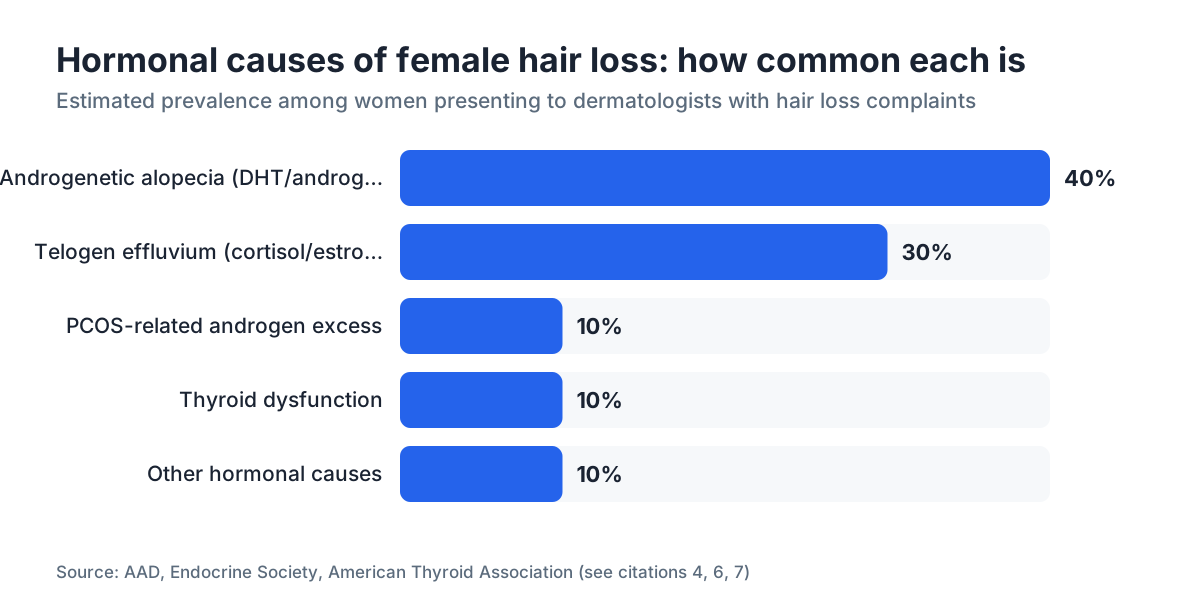
DHT binds to androgen receptors in the dermal papilla, the cluster of cells at the base of the follicle that controls growth. Once bound, DHT shortens the anagen phase and eventually causes the follicle to miniaturize, producing thinner, shorter, lighter hairs until it produces none at all. This is the core mechanism behind androgenetic alopecia, which the American Academy of Dermatology estimates affects roughly 30 million women in the United States [4].
Learning about DHT blockers is a logical next step if androgenetic alopecia looks like your pattern.
How does estrogen protect hair, and what happens when it drops?
Estrogen does something DHT does not: it extends the anagen phase. Higher circulating estrogen keeps follicles in active growth longer, which is why many women have thicker, faster-growing hair during pregnancy when estrogen levels are at their peak [5].
When estrogen falls, the relative influence of androgens rises even if androgen levels themselves haven't changed at all. This is the primary hormonal mechanism behind postmenopausal hair thinning. The estrogen cushion disappears, DHT's effect on follicles becomes more pronounced, and diffuse thinning across the crown and top of the scalp follows.
The drop doesn't have to be permanent to cause shedding. After childbirth, estrogen falls sharply from pregnancy highs back to baseline. The result is postpartum shedding, technically a form of telogen effluvium, that typically peaks around 3 to 4 months after delivery and resolves within 6 to 12 months for most women without treatment [5].
Progesterone drops alongside estrogen in these transitions, and progesterone has its own weak anti-androgenic effect. Losing it removes another layer of follicle protection. Whether progesterone supplementation reverses hair loss is not well established by randomized trial data; the evidence at this point is preliminary.
Does PCOS cause hair loss through hormones?
Yes, and it's one of the most common causes of androgenic hair loss in women under 40. Polycystic ovary syndrome involves elevated androgens (including testosterone and DHEA-S), insulin resistance, and disrupted ovulation. The elevated androgen state drives the same follicle miniaturization that DHT causes in pattern baldness, but it often presents earlier in life and can be more aggressive [6].
Hair loss in PCOS usually looks like female pattern hair loss: diffuse thinning at the crown with the frontal hairline preserved. But some women with PCOS develop a more male-pattern recession, which can include the temples. If you notice a receding hairline alongside irregular periods, excess facial hair, or acne, PCOS is worth ruling out with blood work before assuming the cause is ordinary genetics.
The Endocrine Society's clinical practice guideline on PCOS recommends measuring total and free testosterone, DHEA-S, and sex hormone-binding globulin (SHBG) in women presenting with hyperandrogenism [6]. Low SHBG matters because SHBG binds testosterone in the blood and renders it inactive. When SHBG is low, more free testosterone is available for conversion to DHT.
Treating the underlying insulin resistance (metformin, lifestyle changes) often improves androgen levels over time, which can slow hair loss even before specific hair treatments are added.
How does thyroid hormone affect hair loss in women?
Thyroid hormone controls the rate of nearly every metabolic process in the body, including the hair cycle. Both hypothyroidism (too little thyroid hormone) and hyperthyroidism (too much) can cause diffuse shedding across the entire scalp rather than the crown-focused thinning typical of androgenetic alopecia.
In hypothyroidism, the anagen phase shortens and more follicles enter telogen simultaneously. The hair that grows may also become coarser and brittle. Classic hypothyroid hair loss often presents with loss from the outer third of the eyebrows in addition to scalp thinning, a clinical sign worth mentioning to a doctor [7].
The American Thyroid Association estimates that about 20 million Americans have some form of thyroid disease, and women are 5 to 8 times more likely to develop it than men [7]. Hashimoto's thyroiditis (autoimmune hypothyroidism) is the most common cause, and it can be subclinical for years, meaning TSH is mildly elevated but symptoms are vague.
The good news: thyroid-related hair loss usually reverses once levels are adequately treated. It's not always fast, typically 6 to 12 months after thyroid levels normalize, but it does tend to recover, which sets it apart from androgenetic alopecia where follicle damage accumulates over time.
What role does cortisol (stress hormone) play?
Cortisol is the primary stress hormone, secreted by the adrenal glands in response to physical or psychological stress. Sustained high cortisol disrupts the hair cycle indirectly: it can suppress androgen-binding proteins, alter the timing of anagen-to-telogen transition, and impair the dermal papilla's normal signaling [8].
A 2021 study published in Nature found that sustained corticosterone (the rodent equivalent of cortisol) suppressed the production of GAS6, a growth factor that activates hair follicle stem cells. The researchers concluded that chronic stress delays hair follicle regeneration by inhibiting stem cell activation, which is a cleaner mechanistic explanation than most prior stress-and-hair-loss work [8].
In practical terms, this means severe or prolonged stress, whether from illness, surgery, extreme dieting, or emotional trauma, can trigger a telogen effluvium event where a large proportion of follicles shed at once. The shedding typically starts 2 to 3 months after the stressor and, if the stressor resolves, usually self-corrects within 6 months.
Cortisol-driven hair loss looks different from DHT-driven hair loss. It tends to be diffuse across the whole scalp, sudden in onset, and tied to a clear trigger event. Androgenetic alopecia is gradual and concentrated at the crown and part line.
How can you tell which hormone is causing your hair loss?
Pattern and timing give you the first clues. Diffuse, sudden shedding after a stressor or life event suggests telogen effluvium. Gradual thinning at the crown and center part that has worsened over years points more to androgenetic alopecia driven by DHT sensitivity. Thinning alongside irregular cycles, acne, or unwanted facial hair raises PCOS as a likely factor.
Blood work fills in what clinical observation cannot. A useful baseline panel for women with hair loss typically includes: free and total testosterone, DHEA-S, SHBG, TSH (and free T4 if TSH is abnormal), prolactin, ferritin (low iron is a major non-hormonal cofactor), and a complete blood count [4]. Some dermatologists also check estradiol and FSH in perimenopausal women to assess whether ovarian function is declining.
Scalp biopsy is the definitive diagnostic tool when blood work is inconclusive. It can distinguish androgenetic alopecia from alopecia areata, scarring alopecias, and chronic telogen effluvium with a precision that labs and clinical exam cannot match.
If you want a structured starting point before a dermatology appointment, the free AI scan at MyHairline (/scan) analyzes your hairline and scalp pattern using photos, which can help you describe your pattern more precisely to a clinician.
See also our overview of hair loss supplements if you want to understand which nutritional factors interact with hormonal hair loss.
What treatments actually work for hormonal hair loss in women?
Minoxidil is the only FDA-approved topical treatment for female pattern hair loss, approved at the 2% concentration in 1991 and effective at the 5% concentration as well, though the 5% formulation carries a label warning about unwanted facial hair [9]. It works by prolonging the anagen phase and improving blood flow to the follicle. It does not block DHT. A Cochrane systematic review found that 2% minoxidil solution was significantly more effective than placebo in increasing hair count in women with androgenetic alopecia [11]. It requires indefinite use; stopping reverses the benefit.
Oral minoxidil at low doses (0.25 mg to 1 mg daily) has growing evidence in women and avoids the scalp irritation some people get from topical application. For more on this option, see our oral minoxidil article. Be aware of the minoxidil side effects profile before starting either form.
Anti-androgens are a meaningful addition for women with confirmed elevated androgens or significant androgenetic alopecia. Spironolactone (25 to 200 mg/day, off-label) is the most commonly used; it blocks androgen receptors in the follicle and reduces adrenal androgen production. The evidence base is observational rather than from large randomized trials, but dermatologists use it widely because clinical results are consistent.
Finasteride (a 5-alpha reductase inhibitor that directly blocks DHT production) is FDA-approved for men and widely used off-label in postmenopausal women. It carries a strict pregnancy contraindication because DHT is required for normal male fetal development [10]. Our finasteride article covers the dosing evidence in women in more detail. The combination of finasteride and minoxidil is another option some clinicians use.
For women with thyroid-related loss, correcting the thyroid hormone level is the treatment. Topical or systemic hair treatments add little until thyroid function is stable.
Hair transplant surgery is an option for women with stable androgenetic alopecia who have not responded adequately to medical therapy, though patient selection is more complex than in men. Our hair transplant guide covers candidacy criteria in detail.
One honest note: no treatment currently available reverses follicle miniaturization that has already run its full course. The goal of all medical treatment is to slow or stop further loss and, in some cases, partially recover miniaturized (but not dead) follicles.
How do different hormonal causes of female hair loss compare?
The table below summarizes the main hormonal drivers, their typical presentation, and the quality of evidence for reversal with treatment.
| Hormonal cause | Pattern of hair loss | Key lab marker | Does treating the cause reverse loss? |
|---|---|---|---|
| DHT sensitivity (androgenetic alopecia) | Diffuse crown/part-line thinning | Free testosterone, SHBG | Partial; slows progression, limited regrowth |
| Estrogen/progesterone drop (menopause, postpartum) | Diffuse, may mimic androgenetic alopecia | Estradiol, FSH | Postpartum: usually yes. Menopause: partially with anti-androgens |
| PCOS (elevated androgens) | Crown thinning, possible temporal recession | Free testosterone, DHEA-S, SHBG | Partial with androgen reduction |
| Hypothyroidism | Diffuse across entire scalp, eyebrow loss | TSH, free T4 | Usually yes, over 6 to 12 months |
| Hyperthyroidism | Diffuse shedding | TSH (suppressed), free T4 | Usually yes once controlled |
| Elevated cortisol / telogen effluvium | Sudden diffuse shedding after stressor | Clinical history, ferritin | Yes if stressor resolves; self-limiting |
| Elevated prolactin | Diffuse, often with other symptoms | Prolactin | Yes with dopamine agonist treatment |
This table is a general guide. Individual cases vary, and most women presenting to a dermatologist have overlapping factors rather than a single clean diagnosis.
Can birth control pills cause or reverse hair loss?
Birth control pills affect hair in both directions depending on their formulation. Pills with high androgenic progestins (norgestrel, levonorgestrel) can accelerate hair loss in women who are genetically predisposed. Pills with low-androgenic or anti-androgenic progestins (drospirenone, norgestimate, desogestrel) may actually slow androgenetic alopecia because of their DHT-suppressing effect [4].
When a woman stops the pill, the abrupt loss of synthetic estrogen and progestin often triggers a telogen effluvium episode, with shedding starting about 3 months after discontinuation. This is frequently mistaken for a new hair loss condition when it is actually a hormonal withdrawal response.
If hair loss is a concern, it is worth discussing the androgenicity index of a current or planned contraceptive with a prescribing clinician. Switching formulations is sometimes enough to halt pill-related progression.
Are there lifestyle factors that amplify hormonal hair loss?
Hormones don't act in isolation. Several modifiable factors make hormonal hair loss worse, or better.
Iron deficiency is the most well-documented nutritional amplifier of hormonal hair loss in women. Ferritin below 30 ng/mL is associated with increased shedding, and some hair loss researchers recommend maintaining ferritin above 70 ng/mL in women with active loss, though the cutoff is debated [12]. Heavy menstrual periods are a common and underdiagnosed cause of chronically low iron in premenopausal women.
Extreme caloric restriction or protein deficiency puts follicles into a telogen state because the body prioritizes survival functions over hair growth. Crash dieting is a well-recognized trigger for telogen effluvium that compounds androgenetic alopecia.
Sleep quality affects cortisol rhythms. Chronic sleep disruption keeps cortisol elevated, which, as discussed earlier, inhibits follicle stem cell activation.
Scalp inflammation, often from seborrheic dermatitis or product buildup, doesn't cause hormonal hair loss but it can worsen follicle miniaturization by elevating local inflammatory cytokines. Keeping the scalp clean and treating dandruff if present is simple and low-risk.
Sources
- NIH National Library of Medicine, StatPearls: Hair Follicle Anatomy
- NIH National Library of Medicine: Androgens in Women
- Journal of Investigative Dermatology: Androgen receptor expression in balding scalp
- American Academy of Dermatology: Female Pattern Hair Loss
- NIH National Library of Medicine: Postpartum Hair Loss
- Endocrine Society: Clinical Practice Guideline on PCOS
- American Thyroid Association: General Information / Thyroid Disease Facts
- Nature: Chronic stress inhibits hair follicle stem cell activation via corticosterone suppression of GAS6 (2021)
- FDA Drug Label: Minoxidil Topical Solution (Women's Rogaine)
- FDA Drug Label: Finasteride (Propecia)
- Cochrane Database of Systematic Reviews: Minoxidil for androgenetic alopecia in women
- NIH National Library of Medicine: Iron deficiency and hair loss