

TL;DR: Iron deficiency is the most common nutrient-related cause of hair loss, followed by low vitamin D and zinc. Biotin deficiency is rare in healthy adults but gets outsized attention from supplement marketing. True deficiencies diagnosed by blood test can trigger telogen effluvium, a diffuse shedding that reverses once levels are corrected. Supplementing nutrients you're not deficient in is unlikely to help.
What lack of vitamins and minerals actually causes hair loss?
Hair follicles are among the most metabolically active structures in your body. They need a steady supply of micronutrients to finish each growth cycle, and when the supply drops far enough, the follicle punts: it pushes hairs into the resting (telogen) phase early. You shed more. Growth slows. That process is called telogen effluvium, and nutritional deficiency is one of its established triggers.
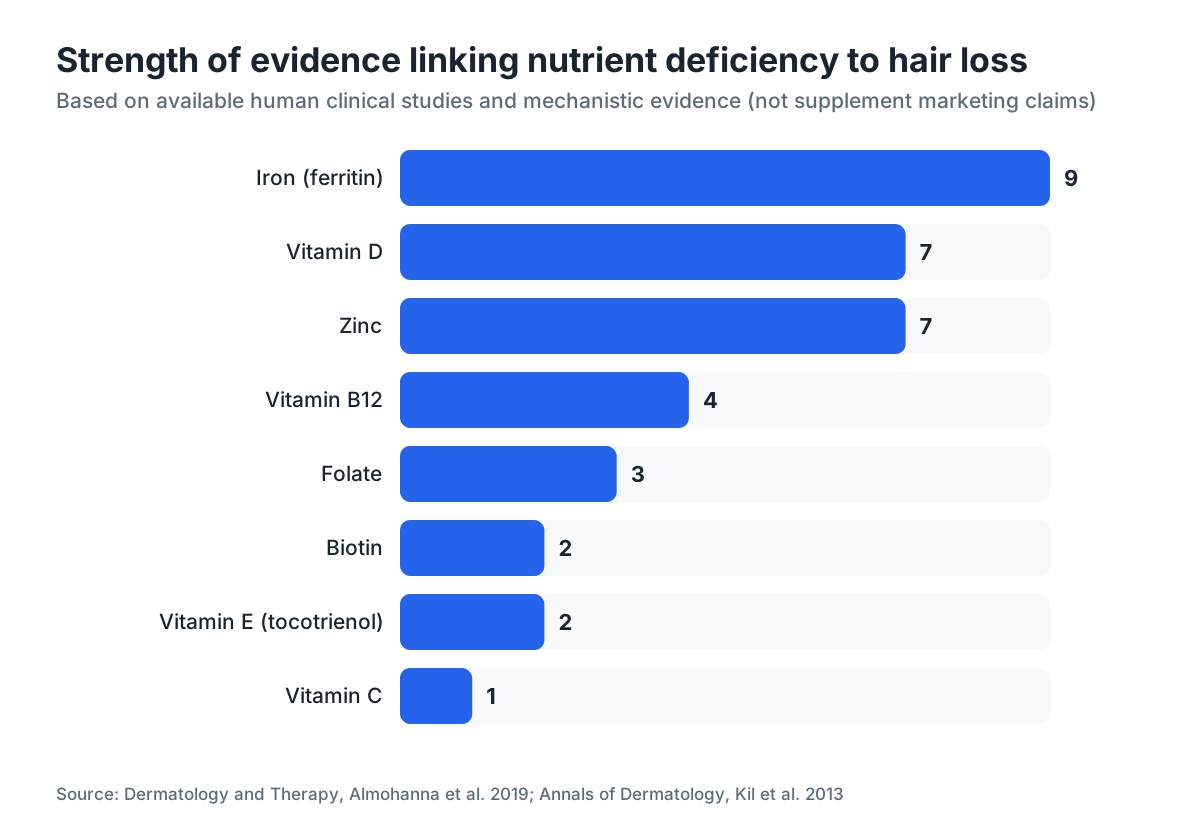
Not every low reading causes shedding, and not every deficiency causes it the same way. The nutrients with the clearest evidence are iron, vitamin D, and zinc. Biotin (vitamin B7) has a much weaker clinical case. Other vitamins, including C, E, and the B-complex group, show up in supplement ads constantly but carry thin evidence for causing hair loss in people eating a normal diet.
The honest hierarchy matters because supplementing something you're not deficient in is usually a waste of money. Worse, with fat-soluble vitamins like A and D, overdoing it can make shedding worse. More is not better. The goal is correcting a true deficiency, not loading up on whatever the bottle promises.
If you're trying to figure out what causes hair loss in your specific case, nutrition is one piece of a bigger picture that includes genetics, hormones, stress, and medical conditions. A blood panel is the only way to know if a deficiency is contributing.
Is iron deficiency the most common nutritional cause of hair loss?
Yes, by a wide margin. Iron deficiency, even without full anemia, is the nutritional problem most consistently linked to diffuse hair shedding in the published literature. A 2006 review in the Journal of the American Academy of Dermatology concluded that iron deficiency "may be related to several types of hair loss including androgenic alopecia, telogen effluvium, and possibly alopecia areata" [1].
The mechanism is simple. Iron feeds ribonucleotide reductase, the enzyme that drives DNA synthesis in rapidly dividing follicle cells. Starve the follicle of iron and cell division slows, the growth phase shortens, and more hairs shift to resting.
Who is most at risk? Premenopausal women with heavy periods, vegetarians and vegans, distance runners (impact hemolysis is real), pregnant and postpartum women, and anyone with malabsorption conditions like celiac or inflammatory bowel disease. Men can be deficient too, but it's far less common without an obvious cause.
The tricky part is the lab threshold. Standard reference ranges call ferritin (stored iron) normal anywhere above 12-15 ng/mL. But dermatologists often want ferritin above 40-70 ng/mL for hair to grow well, based on observational data. Nobody has a clean randomized trial nailing down the exact number. The closest we have is a 2010 study in the Journal of Korean Medical Science showing that ferritin below 30 ng/mL was significantly more common in women with telogen effluvium than in controls [2]. If your ferritin is technically "in range" but sits at 14, raise it with a dermatologist or hematologist.
Correction takes time. Iron stores rebuild slowly, and you typically won't see meaningful regrowth for three to six months after starting supplementation.
Does low vitamin D cause hair loss?
Yes, though the relationship is messier than with iron. Vitamin D receptors sit in hair follicles, especially in keratinocytes of the outer root sheath, and mice lacking functional vitamin D receptors develop alopecia regardless of serum D levels [3]. That's mechanistic evidence that the receptor pathway matters for cycling.
In humans, observational studies find lower serum 25-hydroxyvitamin D in people with telogen effluvium and alopecia areata compared to controls. But the correlations are moderate and confounded by everything else low vitamin D tracks with: poor diet, low sun exposure, obesity, chronic illness. A 2019 review in Dermatology and Therapy found "significant associations" between low vitamin D and several types of hair loss, then admitted most studies are cross-sectional, meaning we can't prove which way the arrow points [3].
The NIH Office of Dietary Supplements defines vitamin D deficiency as serum 25-hydroxyvitamin D below 20 ng/mL (50 nmol/L) [4]. Insufficiency runs 20 to 29 ng/mL. If your level is below 20 and you're shedding, correcting it is reasonable. Whether pulling a borderline-low level from 22 to 45 ng/mL will regrow hair is much less clear.
One caution. Vitamin D is fat-soluble and toxic in excess. The NIH sets the tolerable upper intake level for adults at 4,000 IU per day [4]. People self-dosing 10,000 IU daily without monitoring have developed hypercalcemia. And vitamin A toxicity, another fat-soluble vitamin people over-supplement, is itself a documented cause of hair loss. Get your level tested before taking high doses.
Can zinc deficiency cause hair loss?
Yes. Zinc is one of the cleaner associations in the literature. Severe zinc deficiency causes obvious hair changes including alopecia, and even moderate deficiency has been tied to more shedding in several studies. A 2013 study in Annals of Dermatology found serum zinc significantly lower in patients with telogen effluvium, alopecia areata, and androgenetic alopecia compared to healthy controls [5].
Zinc runs DNA and RNA polymerase function, protein synthesis, and normal division of follicle cells. It also helps regulate the androgen receptor and inhibits 5-alpha reductase (the same enzyme finasteride blocks), though at normal zinc levels that effect is minor.
Groups at risk for zinc deficiency: people eating very low animal protein diets, those with Crohn's disease or other malabsorption conditions, heavy alcohol users, and people on long-term proton pump inhibitors. Mild zinc deficiency is more common than most people realize, particularly in older adults.
Supplementation corrects deficiency-related shedding, but excess zinc is its own problem. Chronic high-dose zinc depletes copper, which can cause anemia and, ironically, more hair loss. The NIH upper limit for zinc in adults is 40 mg per day [9]. Typical multivitamins hold 8-11 mg, which is fine. Taking 50 mg or more daily on your own is a bad idea without medical guidance.
Does biotin deficiency actually cause hair loss?
True biotin deficiency is rare. Genuinely rare. It shows up mostly in people with a genetic disorder called biotinidase deficiency, those eating large amounts of raw egg white (which binds biotin in the gut), people on long-term anticonvulsants, or those on biotin-free parenteral nutrition. In those cases, yes, hair thinning and skin rash are documented symptoms.
For the average person eating a varied diet? Your biotin is almost certainly fine. Biotin is abundant in eggs, meat, fish, seeds, and many vegetables [10]. There are no published randomized controlled trials showing biotin supplements cause regrowth in people without a true deficiency. A 2017 review in Skin Appendage Disorders found that every published case report of biotin improving hair or nail health involved patients who were actually biotin-deficient to begin with [6].
The biotin supplement industry is huge precisely because biotin is safe, cheap, and legally marketable. The FDA does not regulate supplements the way it regulates drugs, and no supplement can legally claim to treat hair loss. What you read on the label is marketing, not a therapeutic claim backed by FDA review.
There is one genuinely useful fact about biotin. High-dose biotin (above 5,000 mcg, common in OTC hair supplements) can interfere with thyroid tests, troponin tests, and other immunoassay-based lab panels, producing falsely normal or abnormal results. Tell your doctor you're taking biotin before any blood work. The FDA issued a safety communication about this interference in 2019.
If you're looking at the broader field of hair loss supplements, the gap between biotin's marketing and its clinical reality is probably the biggest one to know about.
What does the research show about other vitamins and hair loss?
Vitamin A: both deficiency and excess cause hair loss. Severe vitamin A deficiency is rare in developed countries but does change follicles. More relevant in practice: vitamin A toxicity from over-supplementing (chronic intake above 10,000 IU daily) is a documented cause of diffuse alopecia. The fat-soluble vitamins are the ones to watch on both ends.
Vitamin B12: deficiency is linked to several forms of alopecia in case reports, and it's a reasonable check in people who are vegan, vegetarian, or have pernicious anemia. The evidence is observational and not strong enough for firm conclusions, but the deficiency risk in those groups is real.
Folate (vitamin B9): some studies find lower folate in alopecia areata patients, but causation hasn't been established. Folate deficiency causing isolated hair loss in otherwise well-fed people isn't clearly supported.
Vitamin C: it doesn't directly affect follicles in most evidence, but it does improve iron absorption. If you're iron-deficient and taking iron, pair it with vitamin C or a vitamin C-rich food to absorb meaningfully more. That's a practical tip with real support.
Vitamin E: the one study people cite for hair (a 2010 trial in Tropical Life Sciences Research) showed 100 mg of tocotrienol daily produced a 34.5% increase in hair count versus placebo [8]. The trial was small (n=38) and hasn't been replicated at scale. Interesting, not settled.
Which blood tests should you get if you think a deficiency is causing hair loss?
If your hair is shedding diffusely (all over, more than temples or crown) and you want to rule out nutritional causes, a reasonable baseline panel looks like this:
| Test | What it measures | Deficiency threshold (general) |
|---|---|---|
| Serum ferritin | Iron stores | <30 ng/mL often cited in hair loss context |
| Serum 25-hydroxyvitamin D | Vitamin D status | <20 ng/mL = deficient (NIH) |
| Serum zinc | Zinc status | <70 mcg/dL (lab-dependent) |
| CBC with differential | Anemia, overall blood health | Various |
| TSH (thyroid) | Thyroid function | Abnormal TSH is a common hair loss cause |
| Serum B12 | B12 status | <200 pg/mL often flagged |
| Folate | Folate status | <2 ng/mL generally low |
Thyroid is on the list because hypothyroidism causes diffuse shedding and is extremely common, especially in women. It mimics nutritional deficiency hair loss closely. Always check TSH alongside vitamins.
Ask your primary care physician or a dermatologist to order this panel. Most of these tests are covered by insurance with an appropriate diagnosis code. A dermatologist who specializes in hair loss reads results in clinical context rather than just flagging what falls outside the lab's standard range.
If you want a starting point before your appointment, the free AI scan at MyHairline can help you document your shedding pattern and identify whether it looks diffuse or patterned, which helps your doctor order the right workup. It's a tool to inform the conversation, not replace it.
How long does it take for hair to regrow after fixing a deficiency?
Slow. That's the realistic answer.
The human hair growth cycle has three phases: anagen (active growth, two to six years), catagen (transition, two to three weeks), and telogen (resting and shedding, two to four months). When a nutritional deficiency pushes hairs into telogen early, correcting the deficiency doesn't flip a switch. Follicles already in telogen still shed. New anagen growth starts, but it takes months to become visible.
Most people see meaningful improvement three to six months after correcting a deficiency, with continued gains up to twelve months. If you've been iron-deficient for a year, don't expect three months of supplements to fully fix it.
One common mistake is rechecking labs too early. Ferritin stores can take six to twelve months to fully replenish even with daily supplementation, particularly if the underlying cause (like heavy periods) hasn't been addressed. Fix the intake and fix the loss source.
If you've corrected a confirmed deficiency, waited six months, and are still seeing significant shedding or pattern loss, the deficiency probably wasn't the whole story. Androgenetic alopecia (genetic hair loss) can run alongside a nutritional issue. That's a different problem needing different solutions, which might include minoxidil for men or a combination of finasteride and minoxidil, or in advanced cases, a talk about a hair transplant.
Can too many vitamins cause hair loss?
Yes, and this is underappreciated. Vitamin A toxicity is the clearest example. Chronic intake above roughly 10,000 IU of preformed vitamin A (retinol) per day can cause diffuse hair loss, among other symptoms. Isotretinoin (Accutane), a synthetic vitamin A derivative used for acne, lists hair loss as a known side effect for the same reason.
Vitamin E in very high doses has anticoagulant effects and may interfere with vitamin K, though direct hair loss from vitamin E toxicity is less documented than with vitamin A.
Selenium toxicity (selenosis) is another one to know. Brazil nuts run so high in selenium that eating just a few a day can push you into toxic territory over weeks. Hair loss, brittle nails, and a garlic odor on the breath are classic signs.
The pattern holds: fat-soluble vitamins (A, D, E, K) and certain minerals (selenium, zinc at very high doses) accumulate in the body and can harm you in excess. Water-soluble vitamins like the B group and vitamin C carry much lower toxicity risk because the excess leaves in urine. Biotin at very high doses is safe from a toxicity standpoint, though it does cause the lab interference noted above.
Before starting any supplement protocol for hair loss, get your baseline levels checked. Then you know whether you're correcting a real gap or just piling onto what's already adequate.
If deficiencies are ruled out, what else could be causing hair loss?
Nutritional deficiencies explain a real but limited slice of hair loss cases. If your labs come back normal and you're still shedding or thinning, the most likely culprits are:
Androgenetic alopecia: genetic sensitivity to DHT (dihydrotestosterone). This drives the classic receding hairline and crown thinning in men, and diffuse thinning at the part in women. It affects roughly 50% of men by age 50 and up to 40% of women by menopause [11]. Blood tests look fine because it isn't a systemic deficiency. If you're seeing a receding hairline specifically, this is the most likely explanation.
Telogen effluvium from non-nutritional causes: major surgery, high fever, childbirth, crash dieting, or severe psychological stress can push large numbers of follicles into telogen. The shed hits two to three months after the trigger, which makes the cause easy to miss. It usually resolves on its own within six to nine months [11].
Alopecia areata: an autoimmune condition causing patchy loss, sometimes extensive. Different mechanism, different treatment path.
Hypothyroidism or hyperthyroidism: both cause diffuse shedding. TSH is the screening test.
Medications: blood thinners, beta blockers, certain antidepressants, cholesterol drugs, and more can cause or worsen shedding. If you started a new medication in the last three to six months and your hair changed, check the side effect profile.
For pattern hair loss specifically, the treatments with the best evidence are topical or oral minoxidil and finasteride. If you want to understand what minoxidil actually does before trying it, the article on does minoxidil work covers the clinical evidence honestly. And if you're weighing something more permanent, hair transplant expenses breaks down realistic costs without the upsell.
Here's the broader point. Fixing a vitamin deficiency won't stop genetic hair loss. Both can coexist, and treating the deficiency is still worth doing for your overall health, but it won't solve the pattern thinning. Know what you're treating.
MyHairline's free AI scan can help you photograph and track your hairline over time, which gives you and your doctor a cleaner picture of whether the loss is progressing and in what pattern.
Sources
- Journal of the American Academy of Dermatology, Trost et al. 2006
- Journal of Korean Medical Science, study on ferritin thresholds in telogen effluvium
- Dermatology and Therapy, Almohanna et al. 2019, 'The role of vitamins and minerals in hair loss'
- NIH Office of Dietary Supplements, Vitamin D Fact Sheet
- Annals of Dermatology, Kil et al. 2013, 'Serum ferritin and serum zinc levels in female patients with non-scarring alopecia'
- Skin Appendage Disorders, Patel et al. 2017, 'A Review of the Use of Biotin for Hair Loss'
- Tropical Life Sciences Research, Beoy et al. 2010, 'Effects of tocotrienol supplementation on hair growth in human volunteers'
- NIH Office of Dietary Supplements, Zinc Fact Sheet
- NIH Office of Dietary Supplements, Biotin Fact Sheet
- American Academy of Dermatology, Hair Loss Resource Center