

TL;DR: Hairlines recede primarily because a hormone called dihydrotestosterone (DHT) binds to genetically sensitive follicles, shrinking them over years until they stop producing visible hair. Genetics set your sensitivity, but age, stress, nutrition, and some medications speed the process. About 50% of men show significant hair loss by age 50, and women are affected too, though the pattern differs.
What actually causes a hairline to recede?
The short answer is DHT. Dihydrotestosterone is a byproduct of testosterone, made when an enzyme called 5-alpha reductase converts it in the scalp. If your follicles carry a genetic sensitivity to DHT, the hormone binds to androgen receptors inside those follicles and triggers a process called follicular miniaturization. The follicle shrinks. Each new hair grows in thinner, shorter, and lighter than the last. Eventually the follicle stops producing a visible hair shaft at all.
That process has a name: androgenetic alopecia (AGA). It is by far the most common cause of a receding hairline in both men and women [1]. The American Academy of Dermatology estimates it affects roughly 80 million people in the United States alone [2].
The hairline recedes rather than thinning uniformly from the top because follicles in the frontal and temporal scalp regions tend to carry more androgen receptors than those on the sides and back. That is why a hair transplant works at all: donor follicles from the back of the head are genetically resistant to DHT and keep growing after being moved [3].
You can read a fuller overview of the underlying mechanisms in our guide to what causes hair loss.
How does DHT actually shrink a hair follicle?
DHT binding to an androgen receptor inside a follicle shortens the anagen (active growth) phase of the hair cycle while extending the telogen (resting) phase. A follicle that used to grow hair for four to six years might only sustain growth for one to two years. The hair it produces gets progressively finer in diameter, a process researchers call miniaturization.
Studies using scalp biopsies show that miniaturized follicles have a reduced ratio of terminal (thick, pigmented) to vellus (thin, colorless) hairs. A ratio below 4:1 in the frontal scalp is considered diagnostic for androgenetic alopecia [4]. That is a concrete, measurable sign the follicles are responding to DHT.
The enzyme 5-alpha reductase exists in two forms: type 1 (found in sebaceous glands and liver) and type 2 (concentrated in scalp follicles and the prostate). Type 2 is the main driver of scalp DHT production. Finasteride, the FDA-approved oral treatment for male pattern hair loss, works by blocking type 2 specifically [5]. You can see how that plays out clinically in our finasteride overview.
None of this means testosterone itself is the problem. Men with low testosterone can still lose hair if their follicles are sensitive to even small amounts of DHT. High testosterone does not automatically mean faster hair loss. The sensitivity of the follicle receptor matters more than the raw hormone level.
Is a receding hairline genetic? How much does family history matter?
Genetics is the biggest single driver. Androgenetic alopecia is polygenic, meaning dozens of gene variants contribute, not one single inherited trait. The old folk rule that baldness skips a generation and comes from your mother's father has some biological basis (the primary androgen receptor gene sits on the X chromosome, which you get from your mother), but it is an oversimplification. Large genome-wide association studies have identified over 250 genetic loci associated with male pattern baldness [6], and your father's hairline matters too.
If both your parents show significant hair loss, your risk is substantially higher than if only one does. But plenty of men with no bald relatives still lose hair, and some men with extensively bald families keep full hairlines into their 70s. The genetic lottery is real but not absolute.
For women, the genetics are similar but the androgen signaling is modulated by estrogen, which is partly why women more often see diffuse thinning rather than a receding front hairline. After menopause, estrogen levels drop and androgenetic alopecia in women becomes much more common.
At what age do hairlines start to recede?
Hairline recession can start in the late teens, though most men who will lose hair notice the first signs in their 20s or 30s. The Norwood-Hamilton scale, the standard classification tool for male pattern baldness, starts at Stage I (no significant recession) and runs to Stage VII (only a band of hair remains on the sides and back).
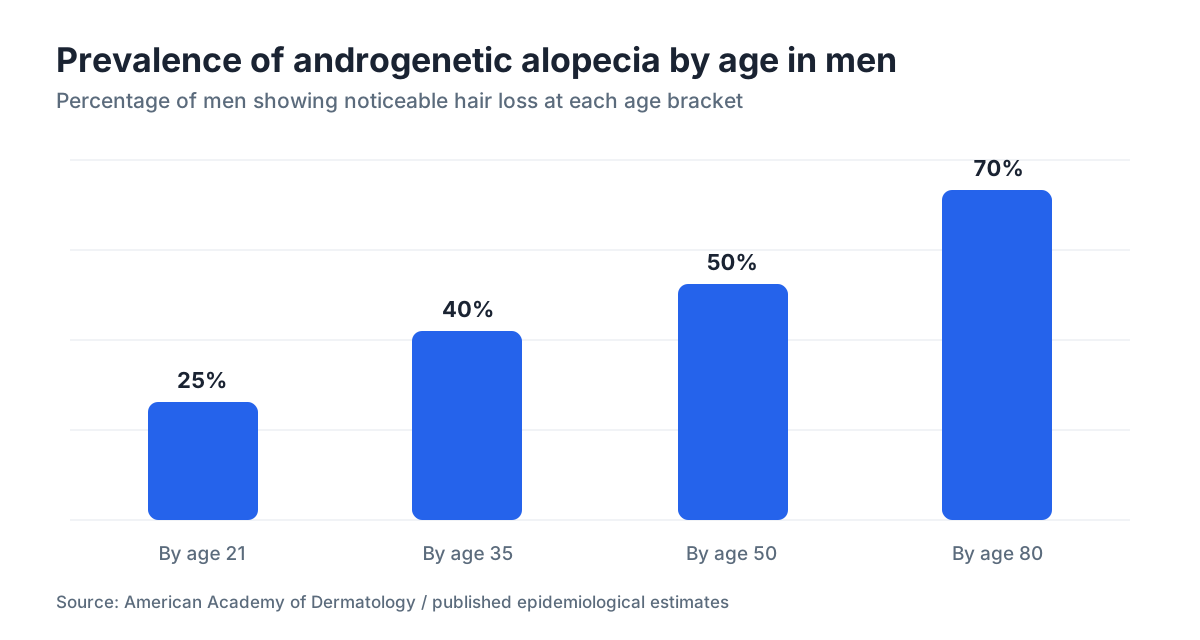
The commonly cited figure is that about 25% of men begin losing hair before age 21, 50% show noticeable loss by age 50, and roughly 70% experience some degree of androgenetic alopecia by age 80 [1]. Those numbers come from population studies and are broad averages. The rate of progression varies enormously between individuals.
Women follow a different timeline. Significant hair loss before menopause is less common, but it does happen, particularly in women with polycystic ovary syndrome (PCOS), which raises androgen levels. Post-menopause, prevalence rises sharply.
One practical point: early onset generally predicts more aggressive progression. A 20-year-old noticing clear recession is more likely to end up at a higher Norwood stage than someone who starts losing hair at 45. That is not certain, but it is the trend in longitudinal data, and it is one reason dermatologists often recommend starting treatment early rather than waiting to see how bad it gets.
What other factors make a hairline recede faster?
DHT and genetics are the foundation, but several other factors can accelerate the process or trigger a different type of hairline loss entirely.
Chronic stress raises cortisol, which disrupts the hair cycle and can push follicles from the growth phase into the resting phase prematurely. This is called telogen effluvium and it typically shows up as diffuse shedding 2 to 3 months after a stressor. It can worsen an already receding hairline. Our article on telogen effluvium covers this in detail.
Nutritional deficiencies are a genuinely underappreciated factor. Iron deficiency is the most documented, particularly in women. Ferritin levels below 30 ng/mL have been associated with hair shedding in some studies, though the exact threshold is debated. Zinc, vitamin D, and protein deficiency can all contribute. Supplementing when you are already replete, though, does not grow more hair. Before spending money on hair loss supplements, get your bloodwork done.
Scalp inflammation from conditions like seborrheic dermatitis (dandruff) or scalp psoriasis can accelerate follicular damage, particularly around the hairline.
Traction alopecia happens when hairstyles that pull tightly on the hairline, cornrows, tight ponytails, extensions, damage the follicle mechanically over time. This is common in women and men who wear protective styles. Unlike androgenetic alopecia, traction alopecia is preventable and sometimes reversible if caught early.
Medications including some blood thinners, retinoids, chemotherapy agents, and certain antidepressants can cause hair loss. Some men also ask about creatine; the evidence is limited but worth understanding, and we covered it in does creatine cause hair loss.
Thyroid dysfunction is another systemic cause. Both hypothyroidism and hyperthyroidism can cause diffuse hair thinning that mimics androgenetic alopecia. A TSH blood test rules this out quickly.
Why does the hairline recede in an M or V shape specifically?
The M-shape (recession at the temples with the front center initially held) and the V-shape or widow's peak are both products of where androgen receptor density is highest on the frontal scalp.
The temporal corners of the hairline, the areas that form the top of the M, have particularly high concentrations of DHT-sensitive follicles. They tend to miniaturize first. The central forelock often holds longer because follicle sensitivity there is somewhat lower, though it eventually catches up in higher Norwood stages.
A widow's peak, by contrast, is often a natural hairline shape present since birth, not recession at all. It becomes more prominent as temples recede, which makes people think the point itself is growing when actually the sides are retreating.
The Norwood-Hamilton scale tracks these patterns systematically. Stages II and III specifically describe early temporal recession. By Stage IV, the central top of the scalp starts thinning too. Knowing your Norwood stage matters practically because treatment outcomes, particularly for hair transplants, are partly tied to how much stable donor hair you have and how much more loss is likely. You can read more about recognizing where you are in our receding hairline guide.
Can a receding hairline grow back?
Sometimes, partially. It depends entirely on whether the follicles are still alive.
Miniaturized follicles that still produce vellus hairs can, in some cases, be pushed back toward producing terminal hairs with effective treatment. Follicles that have been miniaturized for years, to the point of complete fibrosis (scarring), cannot. There is no approved treatment that regrows hair from dead follicles. That is not pessimism; it is just the current state of the evidence.
Minoxidil (topical or oral) and finasteride are the two treatments with the most evidence for actually reversing some miniaturization and regrowing visible hair in areas with thinning, more than slowing further loss. The main finasteride trial published in the New England Journal of Medicine found that 48% of men showed hair regrowth at two years compared to placebo [5]. Real regrowth, more than stabilization, is possible in a meaningful subset of patients, particularly those who start early.
If the follicle is gone, a hair transplant is the only option that produces real hair in a bald area. Even then, the transplant does not stop ongoing loss in native hair, so most surgeons recommend continuing medical treatment alongside surgery.
For anyone unsure how advanced their own hair loss is, a free AI analysis at MyHairline can give you a baseline Norwood stage estimate and flag areas of concern before you talk to a dermatologist.
What do women experience differently with hairline recession?
Women do get androgenetic alopecia, but the pattern is different. Rather than a receding front hairline, most women experience diffuse thinning across the top and crown, described by the Ludwig scale. The frontal hairline is often preserved even in significant hair loss, which is one clinical difference dermatologists use to distinguish female pattern hair loss from other causes.
However, some women do experience frontal hairline recession. This is more common in women with hyperandrogenism, whether from PCOS, adrenal disorders, or certain medications including some forms of hormonal contraception that have androgenic progestin. Women with higher androgen levels are more likely to present with a pattern that resembles male androgenetic alopecia.
Frontal fibrosing alopecia (FFA) is a separate condition that causes a band of scarring recession at the front hairline, mostly in postmenopausal women. It is an immune-mediated condition, not DHT-driven in the same way, and it is worth knowing about because people sometimes mistake it for androgenetic alopecia and use the wrong treatments. FFA causes a distinctive pale, scarred band at the hairline margin.
Minoxidil is FDA-approved for women at 2% concentration and is used off-label at 5%. Finasteride is not FDA-approved for female pattern hair loss and is contraindicated in women who are or might become pregnant [5].
What treatments actually slow or stop hairline recession?
There are two FDA-approved treatments for androgenetic alopecia, and a large body of evidence on surgical options. Everything else sits at various levels of evidence.
Minoxidil (brand name Rogaine, now widely available as generic) is FDA-approved for both men and women. It works by prolonging the anagen phase and increasing blood flow to follicles. The 5% topical formulation for men produces better results than 2%, and oral minoxidil at low doses (0.625 mg to 2.5 mg daily) is gaining traction off-label for both sexes [7]. It does not block DHT. You can read the detail on minoxidil for men and check the known minoxidil side effects before starting.
Finasteride (1 mg oral, brand name Propecia) is FDA-approved for men. It blocks 5-alpha reductase type 2, reducing scalp DHT by roughly 60 to 70%. The NEJM trial noted above found statistically significant hair count increases vs. placebo at both one and two years [5]. It requires continuous use; stopping reverses the benefit within roughly 12 months. Combining it with minoxidil shows additive effects, and we cover that combination specifically in finasteride and minoxidil.
DHT blockers including saw palmetto and certain other supplements are sometimes discussed. The evidence is weaker than for finasteride but not zero. Our dht blocker article walks through what the studies actually show.
Hair transplants are the only permanent solution for already-bald areas. Modern follicular unit extraction (FUE) and follicular unit transplantation (FUT) have high success rates, but they are expensive (typically $4,000 to $15,000 in the US depending on graft count and clinic) and do not stop loss of existing native hair [8].
Low-level laser therapy (LLLT) has FDA clearance (a different standard than approval) as a medical device. Some small trials show modest benefit but the evidence base is thin compared to minoxidil or finasteride.
Platelet-rich plasma (PRP) injections show promising results in some studies but lack the large randomized controlled trial data that finasteride and minoxidil have.
How do doctors diagnose the reason a hairline is receding?
A dermatologist or trichologist typically starts with a visual examination and a pull test, gently tugging a cluster of hairs to count how many release easily. More than a few hairs per pull suggests active shedding rather than stable miniaturization.
Dermoscopy (a hand-held magnifying device) lets the clinician see follicle size variation directly, confirming miniaturization and estimating the ratio of terminal to vellus hairs. Some clinicians use phototrichograms or digital scalp photography to track progression over time.
Blood tests are used to rule out systemic causes: a complete blood count, ferritin, TSH, and in women, androgen levels including total and free testosterone, DHEAS, and sometimes prolactin. These are not usually necessary when the pattern is classic androgenetic alopecia in a man, but they matter a lot when hair loss is atypical, sudden, or in a young woman.
A scalp biopsy is rarely needed for a receding hairline but may be done when conditions like frontal fibrosing alopecia, lichen planopilaris, or other scarring alopecias are suspected, because the treatment path is completely different.
Getting an accurate diagnosis before spending money on treatments matters. Using minoxidil and finasteride for a scarring alopecia does very little. Using them for androgenetic alopecia, started early, can preserve a significant amount of hair over years.
Is there anything you can do to prevent hairline recession before it starts?
Not entirely, if your genetics are pointing that direction. But you can do meaningful things that shift the timeline.
Avoiding nutritional deficiencies is probably the most underrated preventive step. Adequate protein (roughly 0.8 to 1 g per kg of body weight daily), iron-replete status, and reasonable vitamin D levels give follicles the raw materials they need and remove one avoidable accelerant.
Scalp health matters more than most people realize. Chronic seborrheic dermatitis and scalp inflammation appear to worsen androgenetic alopecia progression, though the mechanism is not fully established. Keeping the scalp clean and managing dandruff with ketoconazole shampoo (which some small studies suggest has mild anti-androgenic effects at the scalp level) is a low-cost step worth doing.
Avoiding styles that create chronic traction on the hairline prevents a specific and entirely preventable type of recession. This is actionable and often ignored.
If your family history is strongly positive for early hair loss and you are starting to notice subtle changes, talking to a dermatologist in your mid-20s is not excessive. Starting finasteride at early Norwood Stage II preserves far more hair over ten years than starting at Stage IV and trying to recover lost ground.
The framing that works: you cannot change your follicle genetics. You can change when and how fast those genetics express themselves, and you can stay ahead of the process rather than reacting to it.
If you want a starting point before seeing a dermatologist, MyHairline's free AI scan at /scan can give you a quick visual assessment of your current hairline and flag what stage you might be at.
Sources
- American Academy of Dermatology Association: Hair Loss
- American Academy of Dermatology Association: Hair Loss
- National Library of Medicine: Androgenetic Alopecia (StatPearls)
- Journal of the American Academy of Dermatology: Diagnostic criteria for androgenetic alopecia
- Nature Communications: Genome-wide study identifies 287 genetic loci associated with male pattern baldness
- Journal of the American Academy of Dermatology: Oral minoxidil for hair loss
- International Society of Hair Restoration Surgery: Practice Census
- New England Journal of Medicine: Finasteride in the treatment of men with androgenetic alopecia (Kaufman et al 1998)
- NIH National Institute of Arthritis and Musculoskeletal and Skin Diseases: Alopecia Areata
- National Library of Medicine: Telogen Effluvium (StatPearls)