

TL;DR: You can slow or partially reverse a receding hairline, but you can't fully prevent genetic hair loss if the genes are there. Finasteride is the most evidence-backed option, minoxidil helps, and combining both outperforms either alone. The earlier you start, the more hair you keep. Lifestyle changes and scalp care reduce triggers but won't stop androgenetic alopecia on their own.
Can you actually prevent a receding hairline, or is it inevitable?
The honest answer depends on why your hairline is receding. If the cause is androgenetic alopecia (male or female pattern hair loss), genetics loaded the gun and you can't unload it. What you can do is slow the trigger pull, and sometimes reverse early loss that hasn't yet become permanent scarring of the follicle.
Androgenetic alopecia affects roughly 50% of men by age 50 and about 25% of women by the same age [1]. Those follicles are genetically programmed to shrink when exposed to dihydrotestosterone (DHT), a hormone converted from testosterone by the enzyme 5-alpha-reductase. Once a follicle miniaturizes completely and the papilla dies, no topical treatment brings it back. That window, the years between first thinning and full follicle death, is exactly when treatment works.
If the cause is something else (crash dieting, thyroid problems, telogen effluvium, tight hairstyles, medication side effects), then removing the cause often fully restores the hairline. So the first step before anything else is figuring out what causes hair loss in your specific case.
Prevention is real. It requires action early and realistic expectations. Nobody grows back a hairline that's been gone for a decade.
What are the earliest signs your hairline is starting to recede?
The classic early pattern in men is temporal recession, the corners of the hairline pulling back while the front-center stays roughly in place. That creates the early Norwood 2 shape. In women, pattern recession usually shows as a widening part or diffuse thinning at the crown rather than a sharp hairline retreat.
A few concrete things to watch for:
- Hair on your pillow or in the shower drain increasing noticeably. Losing 50 to 100 hairs a day is normal [2]. Consistently losing more than that warrants a look.
- Temples looking less dense in photos taken 12 to 18 months apart. Single snapshots lie; comparison is what reveals slow change.
- Miniaturization: hairs that are shorter, thinner, and lighter in color than the ones around them. A dermatologist can see this under a dermatoscope, but you can sometimes notice it yourself with good lighting.
- The hairline itself shifting back more than about 1.5 centimeters from the upper forehead crease. That measurement is a rough clinical starting point, not a hard cutoff.
Catching recession at Norwood 2 or early 3 is the best case for any preventive treatment. At that stage, the follicles are miniaturizing but most are still alive and responsive. See a board-certified dermatologist (ideally one who specializes in hair) if you notice two or more of these signs together.
Does finasteride actually stop hairline recession?
Finasteride is the most evidence-backed oral treatment for androgenetic alopecia in men. It blocks 5-alpha-reductase type II, which cuts DHT levels in the scalp by roughly 60-70% [3]. Lower DHT means slower follicle miniaturization.
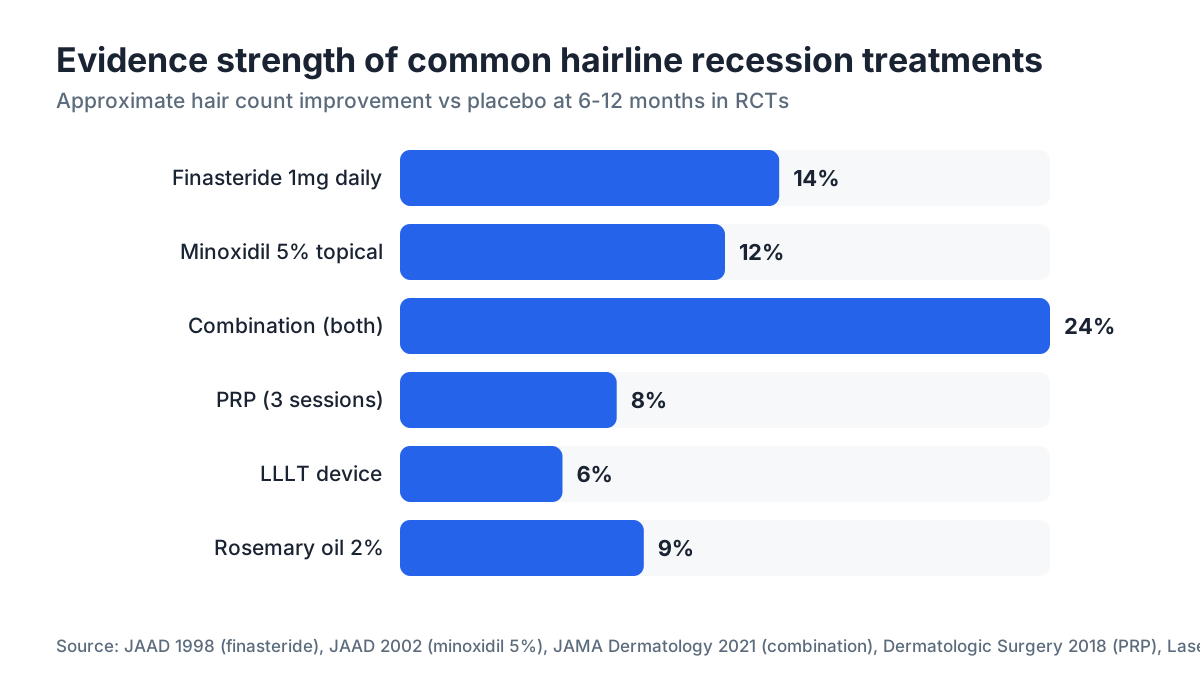
The 5-year randomized controlled trial published in the Journal of the American Academy of Dermatology found that men on 1 mg daily finasteride maintained or increased hair count compared to placebo, and that discontinuation led to loss returning to baseline within 12 months [3]. The drug does not regrow hair from dead follicles, but it keeps living ones alive longer and sometimes partially reverses early miniaturization.
For the hairline specifically, the temples and anterior hairline respond less well than the crown. Crown results are more dramatic in most trials. That said, stabilization of the hairline (meaning it stops retreating) is a realistic and clinically meaningful outcome for most men who start early.
Finasteride is FDA-approved for male pattern hair loss at 1 mg daily [4]. It's a prescription drug in the US. Sexual side effects and mood changes occur in roughly 1-2% of users in clinical trials, though real-world reported rates vary and post-finasteride syndrome remains debated in the literature. Read the full picture at finasteride before deciding.
Women of childbearing potential cannot take finasteride due to teratogenicity risk. Postmenopausal women are sometimes prescribed it off-label, but this is outside the FDA-approved indication.
How does minoxidil help, and which form works best?
Minoxidil started as an oral blood pressure medication. Hair growth was noticed as a side effect. Topical 2% and 5% formulations are FDA-approved over-the-counter treatments for androgenetic alopecia [4]. The mechanism isn't fully understood, but minoxidil appears to prolong the anagen (growth) phase of the hair cycle and increase blood flow to follicles.
For hairline recession, the honest picture is this: minoxidil maintains existing hair better than it regrows lost ground. In a 48-week placebo-controlled trial, 5% topical minoxidil produced a 12.4% increase in total hair count in men with vertex (crown) alopecia [5]. Frontal and hairline data in the same studies showed more modest results.
Topical 5% (foam or solution) applied twice daily is the standard starting point for men. Women typically use 2% twice daily or 5% once daily. The FDA-approved indication covers the vertex; use on the hairline is common in clinical practice but technically off-label.
Oral minoxidil (0.625 to 5 mg daily, prescription) has gained traction in recent years and may produce better systemic coverage of the scalp, including the hairline. A 2021 review in the Journal of the American Academy of Dermatology described low-dose oral minoxidil as effective and generally well tolerated, though side effects like fluid retention and unwanted facial hair exist [6]. Read more at oral minoxidil.
Read what to realistically expect before starting at minoxidil for men, and know the side effects upfront at minoxidil side effects.
One thing matters more than most people realize: if you stop minoxidil, the hair it maintained sheds within three to four months. It's a long-term commitment, not a course.
Is combining finasteride and minoxidil better than using either alone?
Yes, and the evidence is reasonably solid. The two drugs work through completely different mechanisms, so they complement rather than duplicate each other. Finasteride reduces DHT-driven follicle miniaturization. Minoxidil extends the growth phase and improves follicle circulation. Together, the effect is additive.
A 2021 randomized controlled trial published in JAMA Dermatology compared 5% topical minoxidil alone, oral finasteride alone, and their combination in men with androgenetic alopecia. The combination group showed superior hair count improvement at 24 weeks compared to either monotherapy [7]. Hair loss specialists increasingly consider the combination first-line for men with progressive loss.
The tradeoff is cost (two ongoing prescriptions or purchases) and side-effect stacking risk. Most men tolerate the combination without issue, but discuss it with a prescribing physician.
For a detailed look at using both together, see finasteride and minoxidil.
What lifestyle factors actually affect hairline recession?
Lifestyle doesn't override genetics, but it does affect the pace and severity of hair loss. A few areas with real evidence:
Nutrition. Iron deficiency is one of the most common nutritional causes of hair shedding, particularly in women [8]. Ferritin levels below 30 ng/mL are commonly associated with shedding even when hemoglobin is normal. Zinc, vitamin D, and protein adequacy matter too, though the supplementation evidence is weaker. Extreme caloric restriction reliably triggers telogen effluvium, which can push back the hairline temporarily but recovers once nutrition normalizes.
Stress. Chronic psychological stress elevates cortisol and can trigger telogen effluvium or accelerate existing androgenetic alopecia. This isn't psychosomatic hand-waving; there are plausible neuroendocrine mechanisms, including substance P pathways in the scalp. Stress management helps, but it's a background lever, not a primary treatment.
Scalp health. Chronic seborrheic dermatitis (dandruff at its worst) causes scalp inflammation that may accelerate miniaturization around the hairline. Keeping it under control with antifungal shampoos (ketoconazole 1-2%) is reasonable and low-risk. One small trial found ketoconazole shampoo modestly increased hair diameter [9].
Smoking. Multiple epidemiological studies link smoking to increased risk and severity of androgenetic alopecia, likely through vascular and oxidative stress pathways. Quitting is good advice for about a hundred reasons and this is one more.
Tight hairstyles. Traction alopecia from chronic pulling (tight ponytails, braids, locs) causes real hairline recession that starts as reversible inflammation and becomes permanent scarring if the tension continues for years. Changing styling habits early prevents it entirely.
Check out hair loss supplements for a realistic breakdown of which supplements have actual trial data and which are marketing.
Does DHT-blocking shampoo or topical DHT blocker help?
Topical DHT blockers are popular and the evidence is modest at best. Ketoconazole shampoo has the strongest data, and it's primarily an anti-inflammatory and antifungal. The 2% prescription version outperforms 1% OTC, but neither is a standalone hair loss treatment. Think of it as useful support, not primary therapy.
Topical finasteride and topical dutasteride are being studied as ways to reduce DHT in the scalp without as much systemic absorption, which lowers the risk of sexual side effects. A 2021 phase 2 trial found topical finasteride 0.25% gel reduced scalp DHT comparably to oral finasteride 1 mg while achieving lower serum DHT reduction [10]. These formulations are available through some compounding pharmacies but don't yet have FDA approval as topical agents. See the full picture at dht blocker.
Saw palmetto, biotin, pumpkin seed oil and similar supplements are frequently marketed as DHT blockers. The clinical evidence is weak. A few small studies show marginal benefit from pumpkin seed oil; nothing comes close to finasteride's efficacy. If you've already covered the proven treatments and want to add a low-risk supplement, that's your choice. Leading with supplements instead of proven drugs because they feel safer is a real-money mistake if your hairline is actively receding.
When does a receding hairline need a hair transplant?
A hair transplant doesn't prevent hair loss. It moves hair. If you transplant into a hairline and keep losing the native hair behind it without medical treatment, you end up with an island of transplanted hair and bare scalp behind it. Good surgeons won't operate on someone with rapidly progressive loss without ensuring they're on finasteride (or an equivalent) first.
Transplants make most sense when:
- The loss has stabilized (either naturally or with medication)
- The donor area at the back and sides of the scalp is dense enough to cover the recipient zone without depleting it
- You're realistic that the procedure restores density, not necessarily the hairline of your twenties
FUE (follicular unit extraction) and FUT (strip) are the two main surgical methods. Costs in the US typically run $4,000 to $15,000+ depending on graft count and clinic [11]. Results take 12 to 18 months to fully appear. See the complete overview at hair transplant.
For men in their early to mid-20s with aggressively receding hairlines, most experienced surgeons recommend holding off on surgery until the pattern stabilizes. A hairline designed at 22 can look wrong at 40 if loss continues behind it.
Are there early intervention tools like PRP or low-level laser therapy?
Two treatments sit in the category of real evidence with smaller effect sizes than drugs: platelet-rich plasma (PRP) and low-level laser therapy (LLLT).
PRP involves drawing the patient's own blood, concentrating the growth factors, and injecting them into the scalp. A 2018 meta-analysis in Dermatologic Surgery found PRP statistically significantly increased hair density and thickness compared to controls, though effect sizes varied widely across studies [12]. It's typically used as an adjunct to finasteride and minoxidil rather than a replacement. Sessions cost $600 to $1,500 each and are usually repeated 3 times initially then every 6 to 12 months. Insurance doesn't cover it.
LLLT devices (helmets, combs, and bands cleared by the FDA as medical devices) use red or near-infrared light to stimulate follicular activity. FDA clearance means the devices are safe, not that they've been proven to work at the level of an approved drug. Studies show modest hair count improvements, mostly at the crown, in men and women with early-stage androgenetic alopecia [13]. These are low-risk, reasonably low-cost over time, and worth considering as an add-on if you're already on a proven drug regimen.
Neither PRP nor LLLT is a first-line treatment. They're useful additions when you've maximized medical therapy or have contraindications to finasteride.
How do you know if your hairline recession is speeding up?
Track it. This sounds obvious and almost nobody does it consistently. Take a photograph in identical lighting and position (standing at arm's length from the bathroom mirror, same time of day) every three months. Comparing photos 12 months apart is far more reliable than day-to-day scrutiny, which gets distorted by lighting, styling, and anxiety.
A dermatologist can perform trichoscopy (dermoscopy of the scalp) to measure hair shaft thickness and the ratio of miniaturized to terminal hairs. A miniaturization rate above 20-30% in any zone is clinically significant and suggests active androgenetic alopecia [2].
Blood tests worth asking for if you're seeing a doctor about hair loss: TSH (thyroid), ferritin, CBC, total and free testosterone, DHT levels, and in women, DHEA-S and androgens. These won't diagnose androgenetic alopecia but they rule out other causes that are fully treatable.
Myhairline.ai offers a free AI-powered hair scan at /scan that estimates recession severity from photos and helps you decide whether the change you're seeing is significant enough to act on. It's not a diagnosis, but it's a useful starting reference before booking a dermatologist appointment.
If your hairline moved more than a centimeter at the temples in a single year, that's fast progression and warrants starting treatment without delay.
What is the most effective overall strategy to avoid further recession?
Here's the hierarchy by evidence strength:
-
Start finasteride 1 mg daily (men) if you have no contraindications. This is the single highest-impact intervention for genetic hairline recession. Add oral or topical minoxidil for additive benefit. The combination outperforms either alone [7].
-
Address any reversible causes: nutrition gaps, scalp inflammation, traction from styling, thyroid issues. These are low-hanging fruit that cost nothing to fix.
-
Add ketoconazole shampoo 2-3 times per week as a cheap, low-risk adjunct.
-
Consider LLLT as an add-on if you want to maximize coverage without adding drug side-effect risk.
-
Reserve PRP and hair transplant discussion for after 12 months on medical therapy, once you can see how much stabilization you've achieved.
The mistake most people make is spending months trying supplements and special shampoos before starting the drugs that actually work. Time matters. Every month of active follicle miniaturization without treatment is ground you're less likely to get back.
If you're a woman, the pathway is slightly different: minoxidil for men has some women-specific notes, and a dermatologist visit is more important upfront because female hair loss has more possible causes. Finasteride for women is off-label and only appropriate in specific circumstances.
At myhairline.ai, you can use the free AI scan to document your current hairline and track change over time, which at minimum helps you have a better conversation with a dermatologist.
Do things like creatine, DHT shampoos, or hair growth oils make hairline recession worse or better?
Creatine gets asked about a lot. A single small 2009 study found that rugby players taking creatine for three weeks had a 56% increase in DHT levels. That study has not been reliably replicated, and no trial has shown that creatine users have higher rates of clinical hair loss [14]. The concern isn't zero, but it isn't established either. See the full breakdown at does creatine cause hair loss.
Hair growth oils (castor oil, rosemary oil, peppermint oil) get promoted constantly. Rosemary oil has the best evidence: a 2015 randomized trial in Skinmed found 2% rosemary oil as effective as 2% minoxidil for increasing hair count after 6 months [9]. That's one trial and it used 2% minoxidil (the weaker version), so don't read this as rosemary beating minoxidil. Treat it as a reasonable, inexpensive adjunct if you enjoy using it, not a standalone treatment for recession.
Coffee and caffeine shampoos have a small evidence base suggesting caffeine inhibits DHT-related follicle suppression in vitro. Human trial data is limited. Not harmful, probably minimally helpful.
The pattern here: most of the "natural" options have weak or preliminary evidence. None have FDA approval for hair loss. Using them alongside proven treatments is reasonable. Using them instead of proven treatments while your hairline actively recedes is how people lose ground they can't get back.
Sources
- American Academy of Dermatology, Hair Loss Overview
- American Academy of Dermatology, Do You Have Hair Loss or Hair Shedding
- Kaufman KD et al., Journal of the American Academy of Dermatology 1998; finasteride 5-year trial
- FDA, Propecia (finasteride) and Rogaine (minoxidil) labeling and approval information
- Olsen EA et al., Journal of the American Academy of Dermatology 2002; minoxidil 5% vs 2% in men
- Randolph M, Tosti A, Journal of the American Academy of Dermatology 2021; oral minoxidil review
- Hu R et al., JAMA Dermatology 2021; combination finasteride and minoxidil RCT
- Trost LB et al., Journal of the American Academy of Dermatology 2006; iron and hair loss review
- Panahi Y et al., Skinmed 2015; rosemary oil vs minoxidil 2% RCT
- Mazzarella G et al., Journal of the European Academy of Dermatology and Venereology 2021; topical finasteride phase 2 trial
- International Society of Hair Restoration Surgery, Practice Census 2022
- Giordano S et al., Dermatologic Surgery 2018; PRP meta-analysis
- Avci P et al., Lasers in Surgery and Medicine 2013; LLLT review
- van der Merwe J et al., Clinical Journal of Sport Medicine 2009; creatine and DHT study