
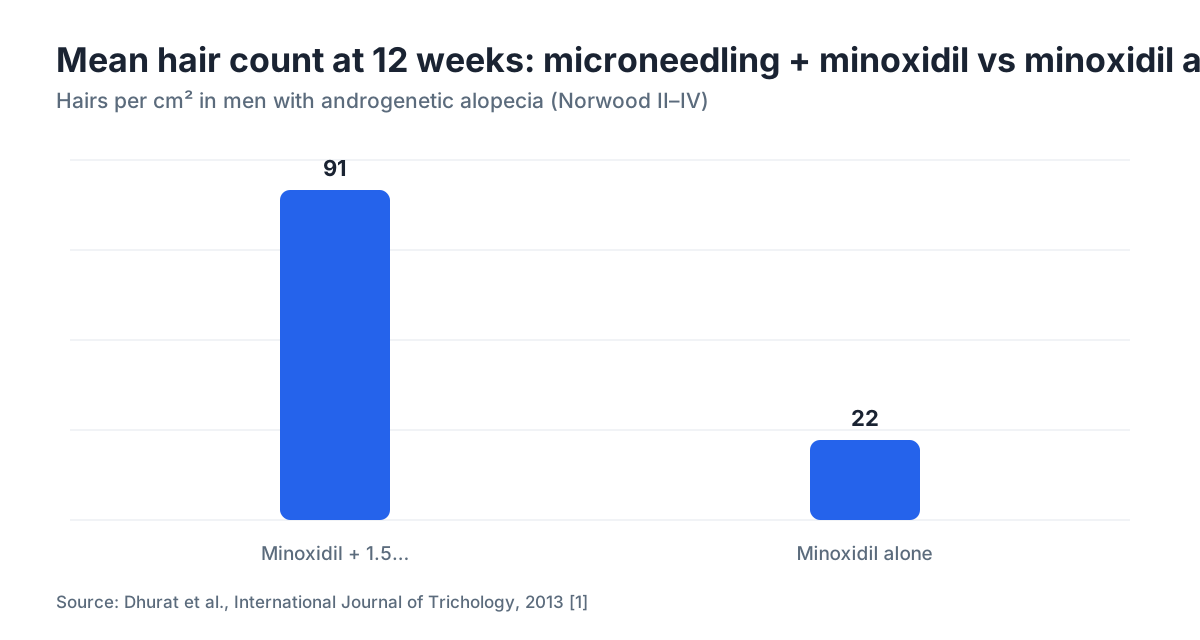
TL;DR: Derma rolling (microneedling) works by creating micro-injuries that trigger wound-healing growth factors and improve topical drug absorption. A 2013 randomized controlled trial found men using a 1.5 mm roller plus minoxidil reached 91 hairs per cm² versus 22 for minoxidil alone at 12 weeks. It is not a cure. It carries real infection risk if done wrong, and results vary a lot.
What is a derma roller and how does it work for hair loss?
A derma roller is a handheld device covered in tiny needles. You roll it across your scalp, the needles puncture the outer skin layer, and that controlled injury sets off a repair cascade: platelet activation, release of growth factors including platelet-derived growth factor (PDGF) and vascular endothelial growth factor (VEGF), and a burst of Wnt/beta-catenin signaling that activates hair follicle stem cells [8].
The wound-healing response is the mechanism that matters. Hair follicles are essentially small organs, and the same molecular signals that rebuild damaged tissue also push follicles from the resting phase (telogen) toward active growth (anagen). That is why microneedling is studied for androgenetic alopecia specifically. The follicles are still alive but stuck in a dormant-ish state, and the growth factor surge is a real biological nudge [7].
The second effect is absorption. Minoxidil, the most widely used topical hair loss treatment, absorbs poorly through intact stratum corneum. Micro-channels from needling let minoxidil reach the dermis far more efficiently, which means more drug reaches the follicle per application [1]. That is a real pharmacokinetic effect, not a marketing line.
"Derma rolling" covers several overlapping tools: the classic roller (a cylinder of needles you roll by hand), a derma stamp (a flat head you press straight down), and powered microneedling pens used in clinics. The physics differ slightly. The underlying biology is the same. Home rollers and clinical pens both have published data, though clinic devices tend to use longer needles and hit more consistent depths.
What does the clinical evidence actually show?
The study most often cited is a 2013 randomized controlled trial by Dhurat et al., published in the International Journal of Trichology. Researchers split 100 men with androgenetic alopecia into two groups: one used 5% minoxidil twice daily, the other used the same minoxidil plus a weekly session with a 1.5 mm derma roller. After 12 weeks, the microneedling group had a mean hair count of 91.4 hairs per cm² versus 22.2 in the minoxidil-only group. The authors concluded "microneedling is a simple, safe, effective, and affordable option for hair loss" [1]. That is a direct quote from the published conclusion.
That number is impressive. Keep some context in mind. The trial ran 12 weeks, which is short. Baseline hair counts were not perfectly matched between groups. And the roller sessions were done by trained clinicians, not by someone at home over a sink.
A 2021 systematic review and meta-analysis in Dermatologic Surgery pooled 11 studies on microneedling for hair loss and found consistent positive effects on hair density when microneedling was added to standard treatments. The authors flagged high heterogeneity across studies, meaning the protocols and outcomes varied enough that firm dosing guidance is hard to pull out [2].
A separate small trial from 2020 tested microneedling alone, with no minoxidil, and found meaningful improvement in hair density over 24 weeks. That suggests the mechanical effect works on its own, not only as a drug-delivery assist [3].
Nobody has good long-term data past one year. The closest evidence suggests benefits depend on continuing treatment, the same way they do with minoxidil and finasteride.
Which needle size should you use on your scalp?
Needle depth is the variable that matters most, and it is where most home users go wrong. Too short does nothing but improve absorption. Too long at home invites scarring.
For at-home use, 0.25 mm to 0.5 mm needles are the standard recommendation. These depths create surface micro-channels that improve topical absorption without reaching deep into the dermis. You feel a mild scratching, some redness that fades in hours.
The 1.5 mm length used in Dhurat et al. is a clinical depth. At 1.5 mm on the scalp you reach the mid-dermis, where the strongest follicular signaling happens. That depth also bleeds more, carries a higher infection risk, and needs real precision. Hit a blood vessel or go too deep on an uneven pass, and you can scar.
Some dermatologists have patients use 0.5 mm at home weekly and book a professional 1.0 to 1.5 mm session every 4 to 6 weeks. That combination is not from a single published protocol. It is a clinical consensus approach you hear across trichology practices, and individual practitioners differ.
| Needle Length | Setting | Primary Effect | Frequency |
|---|---|---|---|
| 0.25 mm | Home | Drug absorption | 2-3x per week |
| 0.5 mm | Home | Absorption + mild signaling | Weekly |
| 1.0 mm | Home (advanced) or clinic | Follicle signaling | Every 2-4 weeks |
| 1.5 mm | Clinic only | Strong follicle signaling + absorption | Every 4-6 weeks |
| 2.0 mm+ | Clinic only | Maximum signaling, scar risk | Every 6-8 weeks |
Using the roller mainly to boost topical minoxidil for men? 0.5 mm is probably the sweet spot at home: real drug penetration, manageable risk.
How do you use a derma roller on your scalp safely?
The protocol matters as much as the tool. Here is what the evidence and standard clinical guidance support.
Start with clean, dry hair and a clean scalp. Wash your hair and let it dry all the way before rolling. Wet skin is more fragile and the roller drags on it.
Disinfect the roller. Soak it in 70% isopropyl alcohol for 5 to 10 minutes before use. Do not skip this. An unsterile roller pressed into fresh micro-wounds is a direct infection pathway.
Part your hair to expose the target area. Work in sections: roll horizontally across a spot 3 to 5 times, then vertically, then diagonally. You want even coverage, not repeated passes over the same line. Moderate pressure is enough. You should not have to press hard.
Wait at least 15 to 30 minutes before applying minoxidil or any topical after rolling. The "apply immediately" advice you see in some guides comes from the logic of open channels, but fresh micro-wounds with immediate minoxidil contact can raise the risk of irritation and systemic absorption beyond the intended dose. A short wait keeps the absorption benefit while cutting that risk [4].
After rolling, rinse the device in isopropyl alcohol again, let it air dry, and store it in its case. Replace the roller head every 3 to 4 months, or sooner if needles look bent under light. Dull or bent needles tear rather than pierce, and tearing causes more tissue damage than useful signaling.
Do not roll over active scalp conditions: seborrheic dermatitis flares, folliculitis, psoriasis plaques, open cuts, or any skin infection. Microneedling through inflamed or infected skin is genuinely dangerous.
Can a derma roller replace minoxidil or finasteride?
Probably not, for most people.
Minoxidil and finasteride both have large, long-term evidence behind them. FDA approval for topical minoxidil goes back to 1988 for men and 1991 for women, with multiple meta-analyses confirming sustained hair count improvements [5]. Finasteride has more than 25 years of data showing it slows androgenetic alopecia by blocking DHT, the main driver of follicle miniaturization [9]. A DHT blocker approach hits the root cause in a way microneedling does not.
Microneedling looks additive, not a substitute. The best outcomes in trials come from combining it with a drug. If you already use minoxidil and see partial results, adding a derma roller is a low-cost way to possibly amplify them. If you are not on any treatment and do not want to be, derma rolling alone showed some benefit in one 2020 trial, but it is probably weaker than minoxidil alone [3].
The combination of finasteride and minoxidil plus microneedling has never been tested in a large RCT as a triple protocol, so calling that stack definitively superior would go past what the data supports.
For people who have progressed to heavy loss (Norwood 5 or above, or a receding hairline with significant miniaturization), a hair transplant is the only option that restores hair already gone. Derma rolling does not regenerate follicles that have fully fibrosed.
What are the real risks of derma rolling your scalp?
Most people writing about derma rolling undersell the risks. Here is an honest accounting.
Infection is the most serious one. You are opening wounds on a surface that carries bacteria. Folliculitis (infected hair follicles) is the most common complication, and severe cases can scar follicles and cause permanent hair loss in the treated area. Sterile technique and never rolling over inflamed skin cut this risk sharply. They do not erase it.
Scarring is possible with long needles used at home. The scalp is more forgiving than, say, the face, but aggressive or repeated deep rolling without enough healing time can lay down scar tissue in the dermis and disrupt follicle structure.
Systemic minoxidil absorption is real. Apply minoxidil right after a 1.5 mm pass and you can absorb far more than the label assumes. The FDA label for topical minoxidil notes that systemic absorption happens even under normal use, and hypersensitivity or cardiovascular symptoms, including fluid retention and blood pressure changes, are recognized adverse effects [5]. Rolling widens that door. For most healthy adults this is a minor concern. For anyone with a cardiovascular condition, flag it to a doctor.
Irritation and lingering redness round it out. Some people react badly to repeated mechanical trauma, especially with sensitive skin or an undiagnosed scalp condition. Redness lasting more than 24 to 48 hours, or any pustules, means stop and see a dermatologist.
The minoxidil side effects page covers that particular risk profile in more detail if you are using them together.
Who is a good candidate for scalp microneedling?
Microneedling for hair loss is best supported for androgenetic alopecia (male and female pattern hair loss), which is the most common form of hair loss overall [10].
People likely to benefit: men and women at Norwood 1 through 4 (early to moderate pattern loss) with active, miniaturizing follicles that can respond to growth factor signaling. People already on minoxidil who want better results. People who cannot tolerate finasteride (some men get sexual side effects and stop) and want an adjunct.
The evidence for microneedling in telogen effluvium is much weaker. Telogen effluvium is a shedding disorder driven by systemic stress, nutritional deficiency, or hormonal shifts. Mechanical scalp stimulation is unlikely to fix the underlying trigger. Not sure what is causing your hair loss? What causes hair loss covers the diagnostic landscape.
Microneedling is not appropriate for people with active scalp infections, blood clotting disorders, a keloid scar history (they may form raised scars at puncture sites), or anyone on blood thinners. Use it cautiously with scalp psoriasis or lichen planopilaris, both of which can worsen from skin trauma (a phenomenon called the Koebner effect).
Pregnant women should avoid it on the scalp. Not because of microneedling itself, but because the combination with topical minoxidil is contraindicated in pregnancy [5].
How long does it take to see results from derma rolling?
Realistic expectations: 12 weeks minimum before you can judge anything, and 6 months for a full picture.
The Dhurat 2013 trial saw meaningful differences in hair count at 12 weeks [1]. But hair follicles cycle over 2 to 6 years each, and the anagen growth phase alone runs months. What you measure at 12 weeks is mostly new hairs entering anagen and early-phase growth, not fully developed terminal hair.
Most dermatologists who use microneedling for hair loss expect patients to commit 6 months before drawing conclusions. Some responders shed first, around weeks 4 to 8, as follicles drop telogen hairs to make room for anagen growth. It can look alarming. It is normal follicular cycling, the same pattern you see when starting minoxidil.
Take photos under consistent lighting and conditions every 4 weeks. Counting hair by eye in a mirror is notoriously unreliable. Trichoscopy (a dermoscopy exam of the scalp) is the most accurate non-invasive way to track miniaturization and density, and a dermatologist can do it at baseline and follow-up.
Curious whether your pattern is likely to respond? The free AI hair analysis at MyHairline can assess your hairline and density from a photo before you spend on devices or clinic sessions.
How does a home derma roller compare to professional microneedling?
They differ on three things: needle depth, consistency, and cost.
Professional microneedling pens (brands like Dermapen or Eclipse MicroPen) use motor-driven needles at consistent, adjustable speeds and depths. They punch straight down instead of rolling at an angle, which makes more uniform wounds and less epidermal tearing. A trained clinician also covers the scalp more systematically than most people manage at home.
Platelet-rich plasma (PRP) often gets combined with clinical microneedling. PRP means drawing the patient's blood, spinning it to concentrate platelets, then applying or injecting that growth-factor-rich plasma right after needling. A 2019 meta-analysis in the Journal of the American Academy of Dermatology found PRP significantly increased hair density and thickness [6], though the evidence is still rated moderate quality because of small studies and variable protocols.
PRP runs $400 to $1,500 per session in the United States, and most protocols call for 3 initial sessions plus quarterly maintenance [6]. Home derma rollers cost $20 to $60 for a decent one.
The honest comparison: professional sessions produce stronger effects per session and lower infection risk (sterile environment, proper technique). Home rolling is cheaper and more frequent. For most people without an unlimited budget, home rolling at 0.5 mm plus minoxidil is a reasonable start, with professional sessions as an upgrade if budget and access allow.
Considering a hair transplant? Microneedling can help prep the recipient area beforehand, and some surgeons recommend it afterward to improve graft survival, though post-transplant timing has to be cleared by your specific surgeon.
Does a derma roller work for women with hair loss?
The trial data is thinner for women, but the biology is the same.
The Dhurat 2013 trial enrolled only men [1]. Several smaller trials and case series have included women with female pattern hair loss (FPHL) and found similar gains in density and thickness, but no large RCT in women exists yet [3].
Women with FPHL usually present with diffuse thinning at the crown and a widening part rather than a receding frontal hairline. The follicle miniaturization driven by hormonal androgen sensitivity works much like male pattern loss, so the growth factor stimulation from microneedling should run through the same pathways.
Women have one edge in combining treatments. Finasteride is not approved for premenopausal women because of teratogen risk, so the drug stack is more limited. Microneedling added to topical minoxidil is one of the few evidence-adjacent options with no hormonal side effects. Hair loss supplements like biotin and iron should be checked first to rule out nutritional deficiencies, which are disproportionately common in women with hair loss.
One caution: women with sudden or rapid shedding should rule out telogen effluvium (often from postpartum changes, iron deficiency, or thyroid disorders) before assuming FPHL. Microneedling the wrong type of hair loss is not harmful, but it is not likely to help either.
What should you look for when buying a derma roller for your scalp?
The market is flooded with cheap rollers. Here is what separates a decent product from a waste of money.
Needle material: titanium needles stay sharp longer. Stainless steel is acceptable but dulls faster, especially with repeated alcohol cleaning. Skip any roller that does not state the needle material.
Needle count: a head with 192 or 540 needles gives more even coverage per pass than a 64-needle head. More needles at the same depth means each one causes less trauma over a given area.
Needle straightness: before first use, hold the roller under a bright light and check the tips. They should be the same height and straight. Bent or uneven needles tear instead of making clean punctures.
Drum stability: the cylinder should spin freely with no wobble. A wobbly drum drags needles sideways across the skin, which increases tearing.
You do not need to spend $60 on a home roller. You do need to spend more than $10. The cheapest marketplace products are often made from low-grade materials where the labeled needle length is not what you actually get.
For the scalp specifically, look for a head width of 1 to 2 cm rather than the 3 to 4 cm heads sold for the face. The scalp curves more and needs a narrower head for good contact, especially at the temples and crown.
Replace the roller every 3 to 4 months. Needles dull with use and alcohol exposure. A dull roller does more harm than a fresh one.
Sources
- International Journal of Trichology, Dhurat et al. 2013 – "A Randomized Evaluator Blinded Study of Effect of Microneedling in Androgenetic Alopecia"
- Dermatologic Surgery, Systematic review and meta-analysis on microneedling for hair loss, 2021
- Journal of Cutaneous and Aesthetic Surgery, microneedling monotherapy for FPHL, 2020
- American Academy of Dermatology – Hair loss resource center
- FDA – Drugs@FDA database, minoxidil topical solution prescribing information
- Journal of the American Academy of Dermatology, Gupta et al. 2019 – PRP meta-analysis for androgenetic alopecia
- National Library of Medicine, StatPearls: Androgenetic Alopecia
- International Journal of Trichology – Wnt/beta-catenin signaling and hair follicle activation via microneedling
- FDA – Drugs@FDA database, finasteride (Propecia) prescribing information
- American Academy of Dermatology – Hair loss types and diagnosis overview