TL;DR: Microneedling with a 0.5 to 1.5 mm dermaroller does increase minoxidil absorption through physical microchannels in the scalp. A 2013 randomized controlled trial in the Journal of Cutaneous and Aesthetic Surgery found 82% of microneedling-plus-minoxidil patients showed more than 50% hair count improvement, vs. 4.5% using minoxidil alone. The combination appears genuinely additive, more than hype, and timing, needle depth, and hygiene all matter.
What is a dermaroller and how does it work on the scalp?
A dermaroller is a small handheld drum covered in tiny needles, usually 0.25 mm to 1.5 mm long, that you roll across skin to create shallow puncture channels. On the scalp, those channels do two things at once: they temporarily disrupt the stratum corneum, the outermost skin barrier that normally slows down topical drug penetration, and they trigger a mild wound-healing response that stimulates growth factors in the dermis.
The wound-healing part matters for hair loss because the response involves platelet-derived growth factor (PDGF), vascular endothelial growth factor (VEGF), and Wnt signaling, all of which nudge hair follicles from their resting phase back into active growth [1]. This is why microneedling alone, even without minoxidil, has shown some benefit in androgenetic alopecia trials. The absorption effect on minoxidil is separate and layered on top.
Dermarollers are the home-use version. Dermatology offices use motorized microneedling pens (like Dermapen), which allow more precise depth control and are harder to contaminate between uses. The clinical trials that showed the biggest results used dermarollers, so the evidence actually does apply to the home device you can buy online, more than office treatments.
Does microneedling actually increase minoxidil absorption?
Yes, and the mechanism is straightforward. Minoxidil in topical form (2% or 5% solution or foam) has to cross the stratum corneum to reach the dermal papilla where it does its job. The stratum corneum normally limits how much gets through. Microneedling punches temporary channels, roughly 0.1 to 0.3 mm in diameter depending on needle gauge, that bypass this barrier entirely.
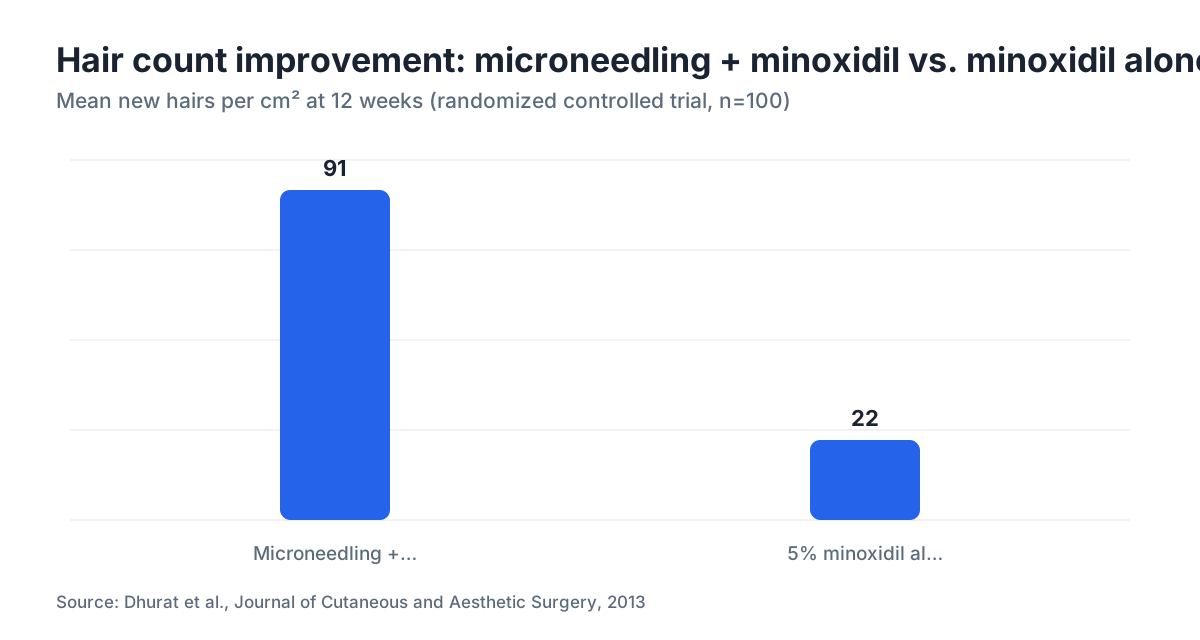
A 2013 randomized controlled trial published in the Journal of Cutaneous and Aesthetic Surgery (JCAS) compared weekly microneedling plus 5% minoxidil solution against 5% minoxidil alone over 12 weeks in men with androgenetic alopecia. The microneedling group showed a mean hair count increase of 91.4 hairs per cm² vs. 22.2 hairs per cm² in the minoxidil-only group [2]. That is roughly a fourfold difference in new hair count. 82% of the microneedling group had more than 50% improvement on investigator assessment vs. only 4.5% in the minoxidil-only group [2].
A 2021 systematic review in Dermatology and Therapy looked at multiple microneedling-plus-topical combination studies and concluded the combination consistently outperformed topical treatment alone across hair density, thickness, and patient satisfaction metrics [3]. The review noted that 0.5 mm and 1.0 mm needle depths appeared most studied and most effective for scalp applications.
These aren't small effect sizes. They're big enough to be clinically meaningful for someone deciding whether adding a dermaroller to their regimen is worth the effort.
What needle depth gives the best results without causing damage?
Most of the clinical evidence clusters around 0.5 mm to 1.5 mm needle depths for scalp use. Here's why depth matters:
0.25 mm reaches only the epidermis. It can improve product penetration a little but doesn't stimulate the dermal wound-healing response that activates growth factors. Good for face skin care; probably underdoses on the scalp.
0.5 mm is the most common starting recommendation for scalp microneedling. It reliably opens channels through the stratum corneum and into the upper dermis without significant bleeding. Most at-home dermarollers sit in this range.
1.0 to 1.5 mm reaches deeper into the dermis, closer to the hair bulge where stem cells live. The JCAS 2013 trial used 1.5 mm [2]. At this depth you'll likely see pinpoint bleeding, which is normal, but the risk of infection and scarring rises if the device isn't clean. Depths beyond 1.5 mm are not recommended outside a clinical setting.
The scalp is thicker than facial skin, so needles that would cause real damage on the cheek are generally fine on the scalp at 0.5 to 1.0 mm. Still, start at 0.5 mm if you're new to this. You can always step up; you can't un-scar a follicle you destroyed with a dirty 2 mm roller you used too aggressively.
When should you apply minoxidil after microneedling?
Timing is where a lot of people get this wrong, in both directions.
Apply minoxidil too soon, within about 30 minutes of needling, and you're pushing a pharmacologically active compound through a disrupted barrier into freshly traumatized tissue. Absorption will be dramatically higher than normal, which sounds great but can cause systemic absorption of minoxidil well above the intended dose. This increases the risk of side effects like scalp irritation, headaches, and in some reports, palpitations. Minoxidil is a vasodilator; flooding it systemically is not a goal.
The standard clinical guidance used in the JCAS trial was to apply minoxidil 24 hours after microneedling [2]. By that point the acute inflammatory phase has settled, some channel closure has begun, but enough enhanced permeability remains to improve absorption over baseline. Some dermatologists suggest a 12-hour window is acceptable; others say 24 hours is safer. There is no well-powered head-to-head trial of different timing windows specifically.
If you're using minoxidil foam daily, the practical approach most often recommended is: do your dermarolling session in the evening, skip minoxidil that night, resume normal application the next morning. That spacing protects you from over-absorption while still capturing the permeability benefit.
Never apply minoxidil immediately after needling. That advice comes from some YouTube routines and it's not supported by the clinical literature.
How often should you use a dermaroller with minoxidil?
Once a week is the frequency used in most published trials, including the key 2013 JCAS study [2]. That cadence gives the scalp time to complete the acute wound-response cycle before you puncture it again.
More is not better. Microneedling every day or every other day keeps the scalp in a chronic inflammatory state, which can actually impair follicle function rather than help it. Chronic inflammation is one of the contributing factors in hair loss to begin with. There's no published evidence that twice-weekly or daily needling outperforms weekly.
Once every two weeks is sometimes suggested for people with sensitive scalps or those just starting out. That's reasonable. You'll likely get a smaller effect than weekly, but you'll also have fewer adverse events while you learn how your scalp responds.
Longer-term protocols in studies usually ran 12 to 24 weeks before final assessments, so you should expect to commit to at least three months before judging whether it's working. Hair cycles are slow.
What dermaroller size (needle length) should you buy?
For home use on the scalp, a 0.5 mm or 1.0 mm roller is the practical sweet spot for most people. Here's a quick comparison:
| Needle length | Depth reached | Pinpoint bleeding? | Best for |
|---|---|---|---|
| 0.25 mm | Epidermis only | No | Beginners; minimal effect |
| 0.5 mm | Upper dermis | Rarely | Home use, everyday sensitivity |
| 1.0 mm | Mid dermis | Sometimes | Home use, established routine |
| 1.5 mm | Deep dermis | Usually | Clinical evidence basis; advanced home use |
| 2.0 mm+ | Subcutaneous | Yes | Professional setting only |
Needle gauge (thickness) also matters: finer needles (30 to 33 gauge) cause less tissue trauma per pass. Most consumer dermarollers use 0.2 to 0.25 mm diameter needles. Avoid cheap rollers with visible gaps between needles, bent tips, or flimsy drums; these cause ragged tissue tears rather than clean punctures.
Replace the roller every 3 to 6 months. Needles dull faster than you'd think, and a dull needle drags skin rather than piercing it, which is both more painful and less effective.
How do you use a dermaroller on your scalp safely?
The hygiene piece is non-negotiable. A contaminated roller pushed into open microchannels is a direct inoculation route for bacteria and fungi. Before every session: soak the roller head in 70% isopropyl alcohol for 5 to 10 minutes, then let it air dry. Don't wipe it dry with anything; contact can bend needles.
Clean your scalp before rolling. Shampoo to remove product buildup, oils, and dead skin. Some people apply a numbing cream (lidocaine-based) 30 to 60 minutes before; this is optional for 0.5 mm but reasonable for 1.0 to 1.5 mm depths.
Rolling technique: divide the target area into small sections. Roll in one direction about 4 to 6 times, lift, rotate 90 degrees, roll again, then 45 degrees, roll again. The goal is even coverage, not scrubbing back and forth in the same groove. Apply light-to-moderate pressure. The scalp should look pink and feel warm after, not raw.
After rolling: don't apply minoxidil yet (see the timing section above). Don't go swimming, sweat heavily, or apply harsh chemical products for at least a few hours. The next day, resume your normal minoxidil routine.
If you see persistent swelling, pustules, crusting that doesn't heal in a week, or significant hair shedding, stop and see a dermatologist. A small initial shed can happen as hair cycles reset, similar to what sometimes happens when starting minoxidil for men, but it should be modest and temporary [4].
Are there any real risks or side effects to watch out for?
Microneedling is generally low-risk when done correctly, but the risk profile changes when you're also applying a drug like minoxidil.
The main risks are:
Over-absorption of minoxidil. If you apply too soon after needling, more drug enters systemically than intended. Minoxidil at high systemic doses causes fluid retention, heart palpitations, and hypotension. The FDA label for topical minoxidil explicitly warns about systemic absorption risks [4]. The 24-hour spacing reduces this risk substantially.
Scalp infection. Open microchannels close within hours, but they're an infection opportunity in that window. Keep your equipment sterile, your scalp clean, and don't share rollers with anyone.
Follicle scarring. Rare with appropriate depths and technique, but using too-long needles, rolling too aggressively, or needling over active scalp conditions (psoriasis, seborrheic dermatitis, infections) can cause localized scarring that permanently damages follicles.
Initial shedding. Some users report a temporary increase in hair shedding during the first few weeks of adding microneedling. This is thought to reflect synchronization of hair cycles, similar to early telogen effluvium triggered by other scalp interventions. It usually resolves by week 8 to 12.
Who should skip this: people on blood thinners, those with active scalp infections, psoriasis flares, eczema, or rosacea on the scalp, and anyone with a keloid-forming history should consult a dermatologist before trying home microneedling.
Does microneedling work for hair loss without minoxidil?
It appears to, though the effect is smaller and the evidence is thinner. A 2021 meta-analysis found statistically significant hair density improvement with microneedling alone vs. placebo in multiple trials [3]. The proposed mechanism is the wound-healing cascade: the needle trauma triggers PDGF and VEGF release, promotes Wnt/beta-catenin signaling in follicle stem cells, and increases blood flow to the papilla.
A 2017 study in the International Journal of Trichology found that microneedling alone produced meaningful hair count increases in men who had previously plateaued on minoxidil therapy, suggesting the mechanism isn't purely about drug delivery [5]. That's actually encouraging: it means adding microneedling could help even if you're already getting good topical coverage.
That said, the combined evidence strongly favors the combination. If you're using minoxidil already, adding microneedling is probably worth it. If you're completely opposed to minoxidil or any topical, microneedling alone may give some benefit, but don't expect it to match what you'd get from an established medical treatment like minoxidil or finasteride.
How does this combination compare to other hair loss treatments?
It helps to put the microneedling-plus-minoxidil results alongside standard treatment benchmarks:
| Treatment | Evidence base | Typical hair count improvement | Time to results |
|---|---|---|---|
| 5% minoxidil alone | Multiple RCTs | ~10 to 17 hairs/cm² at 48 weeks [6] | 3 to 6 months |
| Microneedling + 5% minoxidil | RCTs | ~91 hairs/cm² at 12 weeks [2] | 2 to 4 months |
| Finasteride alone | Multiple RCTs | ~12 to 16% improvement in hair weight [7] | 6 to 12 months |
| Finasteride + minoxidil | Combination trials | Additive, ~20 to 25% hair count gain | 6 to 12 months |
| Hair transplant | Surgical | Permanent, dependent on donor supply | 12 to 18 months to full result |
The 91 hairs/cm² figure from the 2013 JCAS trial looks striking, and it is, but note that the trial ran only 12 weeks and used a subjective investigator assessment alongside the hair count. Longer trials and independent replication would give more confidence. Still, no other non-surgical combination has published those kinds of numbers in a randomized trial.
If you're also dealing with DHT-driven hair loss (androgenetic alopecia), pairing microneedling-plus-minoxidil with a DHT blocker like finasteride addresses a different part of the process: minoxidil stimulates growth, finasteride slows the hormonal trigger. The combination of all three has not been studied in a large RCT, but the mechanisms are complementary. The finasteride and minoxidil combination is already well-documented.
If you're wondering whether your pattern of loss is even the kind that responds to these treatments, an objective baseline matters. The free AI hair scan at MyHairline can give you a starting assessment of your hairline and density before you invest in a full regimen.
For a receding hairline specifically, early intervention with this kind of combination tends to produce better outcomes than waiting until the loss is advanced.
What does the FDA say about minoxidil and how does microneedling change the picture?
The FDA has approved topical minoxidil for androgenetic alopecia: 2% solution for women, 5% solution and 5% foam for men [4]. The label warnings include cautions about increased systemic absorption if applied to irritated or broken skin.
Microneedling creates temporarily broken skin by design. This is why the timing guidance (24 hours between needling and minoxidil application) matters so much from a safety standpoint: it's directly responsive to the label concern about enhanced systemic absorption.
The FDA has not evaluated or approved any specific microneedling-plus-minoxidil protocol. This combination is widely used off-label, supported by peer-reviewed research, but you are making a judgment call about timing and technique that your dermatologist would need to supervise if you want formal guidance.
The FDA does regulate dermarollers as Class I or Class II medical devices depending on their marketing claims. Rollers sold for scalp use generally fall under general wellness device exemptions if they make no drug claims. The FDA has warned about microneedling device contamination when single-use devices get reused in clinical settings, and that concern applies directly to home hygiene standards [8].
The agency's guidance on minoxidil side effects is worth reading before starting any minoxidil regimen, but especially before adding something that increases its absorption.
Is this combination worth it for most people with hair loss?
Honestly, yes, for most people already using or planning to use topical minoxidil. The incremental cost is low: a decent 0.5 mm dermaroller runs $15 to $40 and lasts three to six months. The incremental time is minimal: one rolling session per week of about five to ten minutes. The evidence, while not from a massive phase III trial, is internally consistent across multiple studies.
The caveat is that it adds complexity to your routine, requires real hygiene discipline, and has the over-absorption risk if you cut corners on timing. If you're the kind of person who will apply minoxidil immediately after rolling because you're in a hurry, this is genuinely risky. Don't do it halfway.
For someone at early stages of male pattern hair loss, this combination stacks well. For someone with significant loss, it's still worth adding to whatever else you're doing, but don't expect it to recover heavily miniaturized follicles. Once a follicle is gone, it's gone without a hair transplant.
You can also track whether it's working by taking standardized scalp photos monthly under the same light. MyHairline's AI scan is built specifically to track this kind of change over time, giving you something more objective than squinting at a mirror.
If you're unsure what's causing your hair loss in the first place, get that answered before committing to a regimen. Microneedling-plus-minoxidil is well-matched to androgenetic alopecia. It's not the right tool for alopecia areata, scarring alopecias, or systemic causes.
Sources
- Dhurat R et al., Journal of Cutaneous and Aesthetic Surgery, 2013 — microneedling growth factor mechanisms
- Dhurat R et al., Journal of Cutaneous and Aesthetic Surgery, 2013 — RCT microneedling plus minoxidil vs. minoxidil alone
- Fertig RM et al., Dermatology and Therapy, 2021 — systematic review microneedling for alopecia
- Banka N et al., International Journal of Trichology, 2017 — microneedling in minoxidil nonresponders
- Olsen EA et al., Journal of the American Academy of Dermatology, 2002 — 5% minoxidil vs. 2% vs. placebo RCT
- Kaufman KD et al., Journal of the American Academy of Dermatology, 1998 — finasteride 1mg RCT for androgenetic alopecia
- U.S. Food and Drug Administration — microneedling devices guidance and safety
- American Academy of Dermatology — hair loss overview and treatment guidance
- Starace M et al., Dermatology and Therapy, 2020 — microneedling adverse events review