
TL;DR: Dermarolling uses tiny needles to create micro-injuries in the scalp, triggering growth factors and improving minoxidil absorption. A 2013 randomized controlled trial found that a 0.5 mm dermaroller plus minoxidil produced far more regrowth than minoxidil alone. It's cheap and evidence-backed as an add-on, but it's not a standalone cure.
What is a dermaroller and how does it work on the scalp?
A dermaroller is a small handheld device covered in tiny needles set on a rolling drum. You roll it across your scalp, and those needles puncture the outer layers of skin to a controlled depth, usually between 0.25 mm and 1.5 mm depending on the roller you choose.
The punctures are shallow enough that you're not doing real damage, but deep enough to trigger your body's wound-healing response. That response releases platelet-derived growth factor (PDGF), vascular endothelial growth factor (VEGF), and other signaling molecules that also move hair follicles from resting phase back into active growth [1]. The micro-channels make the skin temporarily more permeable, which is why dermarolling and minoxidil together beat either one alone.
The device itself costs almost nothing next to prescription treatments, usually $10 to $40 for a consumer roller. Clinical microneedling pens used by dermatologists run on the same principle but with tighter depth control and bigger price tags.
Dermarolling goes by several names in the research: microneedling, percutaneous collagen induction therapy, and collagen induction therapy. They all describe the same mechanical process.
What does the research actually say about dermarolling for hair loss?
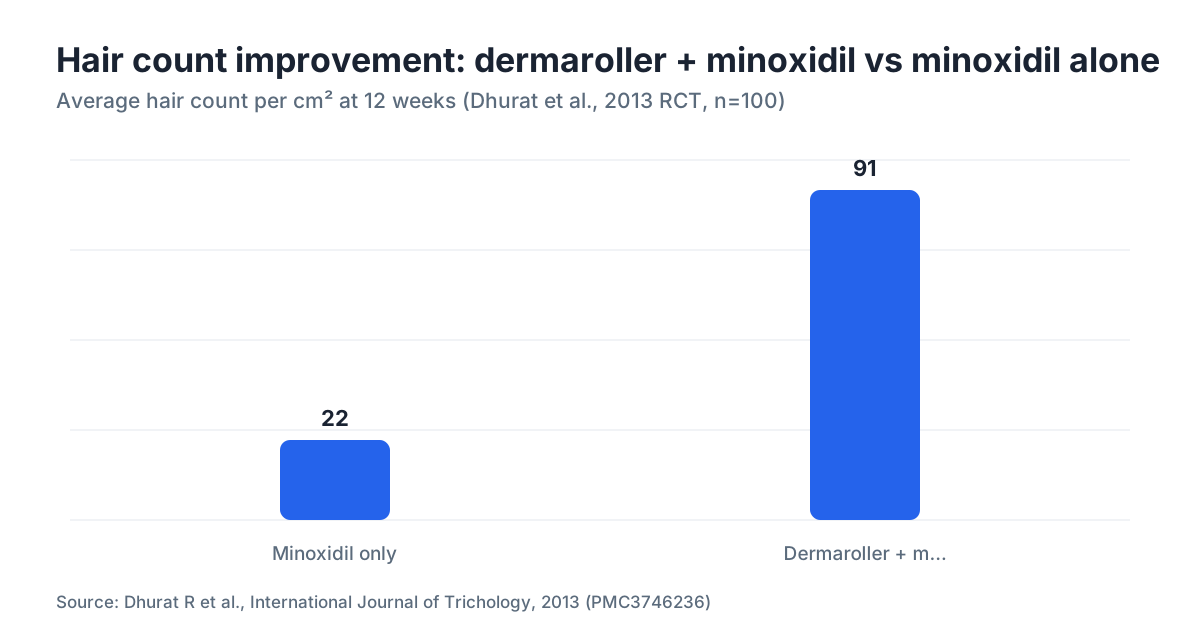
The most cited study comes from Dhurat et al., published in the International Journal of Trichology in 2013. Researchers split 100 men with androgenetic alopecia (pattern baldness) into two groups: one used minoxidil 5% twice daily, the other used minoxidil 5% twice daily plus weekly sessions with a 0.5 mm dermaroller. After 12 weeks, the microneedling group averaged 91.4 hairs per cm² against 22.2 in the minoxidil-only group [2]. That's a real gap, not a rounding error.
A 2021 systematic review in Dermatologic Surgery looked at 22 studies on microneedling for androgenetic alopecia and concluded that microneedling combined with minoxidil consistently outperformed minoxidil alone, and that microneedling combined with platelet-rich plasma (PRP) showed similar benefit [3]. Most individual studies were small and used different protocols, so precise magnitude comparisons are hard. The direction of the signal is consistent.
For androgenetic alopecia specifically, microneedling appears to work by activating Wnt/beta-catenin signaling and turning up hair-growth-related genes, according to a 2018 analysis in the Journal of Cutaneous and Aesthetic Surgery [4]. Whether that carries over to women, to diffuse thinning from telogen effluvium, or to scarring alopecias is far less certain. Most trials enrolled men with Norwood II to V loss.
Here's the honest summary. Microneedling has real supporting evidence when combined with minoxidil for male pattern hair loss. The evidence for standalone use, or for other hair loss types, is thinner.
What needle size should you use for hair loss?
Needle depth matters more than most dermarolling guides admit.
For at-home use, 0.5 mm is the size studied in the most-cited clinical trial [2] and the one most dermatologists name as a starting point. It's deep enough to trigger growth factor release but shallow enough to avoid heavy bleeding or infection risk if your technique is reasonable.
Depths from 0.25 mm to 0.5 mm are generally considered safe for home use. They open micro-channels that improve topical absorption without needing sterilization protocols beyond basic hygiene.
Depths of 1.0 mm and above get complicated. They produce more pronounced wound healing and may stimulate follicles harder, but they carry a higher infection risk and suit clinical settings where sterile technique is controlled. Some dermatologists use 1.5 mm rollers in-office for the scalp.
Needle size quick reference:
| Needle depth | Setting | Recommended for |
|---|---|---|
| 0.25 mm | Home | Improving topical absorption only |
| 0.5 mm | Home | Hair loss (evidence-backed depth) |
| 1.0 mm | Clinic preferred | Enhanced follicle stimulation |
| 1.5 mm | Clinic only | Aggressive treatment, professional supervision |
Skip anything marketed for the face at 0.1 or 0.2 mm. Those depths are too shallow to reach hair follicles, which sit deeper in the dermis.
Dermaroller quality varies a lot by brand. Titanium needles dull faster than surgical-grade stainless steel. If you're reusing a roller, stainless steel holds its edge longer and sanitizes more reliably. Replace the roller after 8 to 10 uses regardless.
How do you actually use a dermaroller on your scalp?
Start with a clean, dry scalp. Wash your hair beforehand and let it dry completely.
Sanitize the dermaroller in 70% isopropyl alcohol for at least 5 minutes before each session. Let it air dry. This step is non-negotiable. Pushing bacteria through micro-channels into the dermis is how you get a scalp infection.
Divide the area you're treating into sections. Roll in one direction 4 to 6 times, rotate 90 degrees and repeat, then rotate 45 degrees and repeat. The goal is even coverage across the thinning area, not random passes.
Apply light, even pressure. You should feel a mild prickling or scratching sensation. If it genuinely hurts or bleeds heavily, you're pressing too hard or the needle depth is too aggressive for at-home use.
If you use minoxidil, apply it after dermarolling. The micro-channels improve absorption significantly [2], which is most of the benefit. Wait at least 20 to 30 minutes after rolling before applying any topical, though some dermatologists suggest longer, up to an hour, to let the channels close slightly and cut irritation risk.
Frequency in the Dhurat 2013 trial was once weekly for 12 weeks [2]. That's a reasonable protocol to follow. Daily rolling is almost certainly counterproductive because the skin needs time to heal and cycle through repair.
After your session, clean the roller again in isopropyl alcohol, rinse it, and store it in its protective cap. Don't share rollers with anyone.
How does dermarolling compare to other hair loss treatments?
Dermarolling is not a replacement for proven first-line treatments. It's an add-on.
Minoxidil is FDA-approved for hair loss and has decades of randomized trial data behind it [5]. Finasteride is FDA-approved for male pattern baldness and works by blocking DHT, the hormone that shrinks follicles over time [10]. Combining finasteride and minoxidil is the standard of care for men with androgenetic alopecia who want medical treatment.
Dermarolling's job in that stack is support. It makes minoxidil more effective and may add some independent follicle stimulation. Using a dermaroller with nothing else is probably leaving results on the table.
Against platelet-rich plasma (PRP) injections, which also work through growth factor stimulation and cost $1,500 to $3,500 per course in the U.S. [11], dermarolling is far cheaper and produces similar scalp micro-injury effects. The clinical evidence for PRP is roughly the same quality as for dermarolling, meaning encouraging but not definitive. If budget is a constraint, dermarolling is the rational first step.
For people weighing a hair transplant, dermarolling is sometimes used after the procedure to improve graft survival, but the peer-reviewed evidence on that specific use is limited. Don't bet on anecdote for something that expensive.
Hair loss supplements like biotin and saw palmetto have much weaker evidence than microneedling combined with minoxidil. See the full breakdown in our guide to hair loss supplements.
| Treatment | FDA approved for hair loss | Monthly cost (approx.) | Level of evidence |
|---|---|---|---|
| Minoxidil (topical) | Yes | $10-30 | High (multiple RCTs) |
| Finasteride (oral) | Yes (men) | $15-40 | High (multiple RCTs) |
| Dermaroller + minoxidil | No | $10-40 (one-time) + minoxidil | Moderate (small RCTs) |
| PRP injections | No | $500-1,000/session | Moderate (small RCTs) |
| Low-level laser therapy | Yes (devices) | $200-600 one-time | Moderate |
| Hair transplant | N/A (procedure) | $4,000-15,000 total | High (for right candidates) |
Does dermarolling work for women with hair loss?
Most dermarolling trials enrolled men. That's a real gap in the literature.
The 2013 Dhurat trial included only men [2]. The 2021 systematic review found most of its included studies focused on male androgenetic alopecia [3]. Smaller studies and case reports involve women, but no large randomized trial has zeroed in on female pattern hair loss and microneedling.
Biologically, the mechanism should behave the same way. Women's scalp follicles respond to the same growth factors, and their skin has no structural difference that would make microneedling worse at improving topical absorption.
In practice, many dermatologists do recommend microneedling for women with androgenetic alopecia, especially alongside topical minoxidil (FDA-approved for women at 2% and used off-label at 5%) [5]. Oral minoxidil is increasingly used for women too, though in that case the absorption boost from dermarolling matters less, since you're not applying anything topically.
For women with diffuse thinning from telogen effluvium, the data is essentially nonexistent. That type of hair loss usually clears once the underlying trigger is fixed. Dermarolling probably doesn't hurt, but no trial supports it for that condition.
The honest answer: dermarolling is reasonable for women with pattern hair loss, as long as you accept you're extrapolating from male-heavy data.
What are the risks and side effects of scalp dermarolling?
Most people tolerate home dermarolling without serious trouble, but the risks are real and worth understanding before you start.
The common side effects are temporary redness, mild swelling, and scalp tenderness lasting 12 to 48 hours after a session. Those are normal inflammatory responses and part of how the treatment works.
Scalp infection is the worst risk, and it shows up when people skip sanitization or roll over existing skin conditions like psoriasis, seborrheic dermatitis, or open sores. Bacteria or fungi pushed below the skin surface can cause folliculitis or worse. If you have an active scalp condition, talk to a dermatologist before starting.
Too-aggressive needle depths at home (1.0 mm or above) raise the risk of bleeding, scarring, and post-inflammatory hyperpigmentation. Hyperpigmentation is more likely in darker skin tones.
Dermarolling over a receding hairline, where the skin is thin and close to the temples, needs lighter pressure. The scalp at the hairline has less tissue underneath than the crown.
People on blood thinners, those with active scalp infections, or those with certain autoimmune conditions affecting the scalp (like lupus or lichen planopilaris) should not use a dermaroller without medical clearance. Scarring alopecias in particular can be made worse by mechanical trauma to the scalp.
The American Academy of Dermatology recommends seeing a board-certified dermatologist before starting any home device treatment for hair loss, especially if the diagnosis isn't clear [6].
How long does it take to see results from dermarolling?
Don't expect anything in the first month. Hair growth is slow.
In the Dhurat 2013 trial, the protocol ran 12 weeks, and the hair count difference between groups was measured at week 12 [2]. Most clinical guidance and practitioner experience point to 3 to 6 months of consistent use before real results show, which matches how long follicles take to cycle from initiation to a visible new hair shaft.
Shedding from the treated area may briefly increase in the first few weeks of any hair-growth therapy. This is the shedding phase, and it happens as follicles move from resting (telogen) into active (anagen) growth and push out the old club hair. It's alarming. It's also normal. It does not mean the treatment is failing.
Photos help enormously. Take them from the same angle, same lighting, same distance, every 4 weeks. The month-to-month change is subtle enough that you'll doubt yourself without a reference point.
After 6 months with no visible change while running the protocol consistently, that's a fair point to reassess with a dermatologist. Some people don't respond, and dragging out an ineffective treatment isn't the answer.
Is professional microneedling better than a home dermaroller?
Professional microneedling pens like the Eclipse MicroPen or Dermapen use motorized needles with adjustable depth and speed, giving clinicians tighter control than a manual roller. They can reach depths up to 2.5 mm, well beyond safe home use.
For hair loss specifically, a 2019 study in the Journal of Dermatology found that motorized microneedling devices produced hair density improvements comparable to manual rollers in a head-to-head comparison, though the motorized group had slightly more consistent results [7]. The difference wasn't dramatic.
In-office scalp microneedling typically runs $200 to $700 per session in the U.S., and practitioners often recommend 4 to 6 sessions spaced 2 to 4 weeks apart [9]. That's a meaningful gap next to a $25 home roller.
The case for going professional: deeper needle access, sterile conditions, and the option to combine with PRP or other growth-factor treatments in the same session. If you have a difficult scalp condition or want more aggressive treatment, a dermatologist or trichologist is the right call.
The case for home rolling: the evidence base comes mostly from 0.5 mm manual roller protocols [2], which you can copy at home. For straightforward androgenetic alopecia in someone without scalp pathology, a home roller used correctly is a very reasonable place to start.
If you want a clearer read on your hair loss pattern before spending money on any treatment, the free AI analysis at MyHairline can assess your scalp photos and help you tell pattern loss from diffuse thinning or something that warrants a dermatologist visit.
Can dermarolling combined with minoxidil cause more side effects?
Yes, and it's worth being careful here.
Applying minoxidil right after dermarolling raises systemic absorption because the micro-channels let it skip the outer skin barrier. In a 2018 study, minoxidil plasma levels ran measurably higher when applied after microneedling than with normal application [8]. Higher systemic absorption means a greater chance of minoxidil side effects like fluid retention, headache, dizziness, or in rare cases, unwanted hair growth on the face.
The practical fix: wait at least 20 to 30 minutes after rolling before applying minoxidil. Some dermatologists suggest up to an hour. That lets the micro-channels close partway, blunting the absorption spike while still keeping a meaningful bump over baseline.
Start with a lower concentration of minoxidil (2% rather than 5%) if you're new to the combination, and give yourself time to see how your body responds before moving up.
People who already get significant systemic side effects from topical minoxidil alone should be extra cautious with the combination, or should weigh whether oral minoxidil (where the dose is more controlled) fits better.
What's the real cost of dermaroller treatment for hair loss?
The device itself is cheap. A decent stainless-steel 0.5 mm dermaroller costs $10 to $40 from established makers. You replace it every 8 to 10 sessions, which at once-weekly use means roughly every 2 months. Annual device cost lands around $60 to $240.
Add minoxidil, sold over the counter at about $10 to $30 per month for topical 5% solution or foam. The combination is the most cost-effective evidence-backed option for androgenetic alopecia.
Go clinical and the math changes fast. In-office scalp microneedling sessions run $200 to $700 each [9], and a typical course is 4 to 6 sessions. Add PRP and you can spend $1,500 to $3,000 or more for a single course. Hair transplant expenses run far higher, $4,000 to $15,000 or more depending on the method and extent of loss.
For someone early in hair loss, starting with a home dermaroller plus minoxidil and giving it 6 months is the rational first step. Check first that what you're seeing is actually androgenetic alopecia before committing to any treatment, since different causes need different approaches.
What should you know about dermarolling and hair loss treatments like minoxidil together?
Dermarolling plus minoxidil is the most studied pairing in the microneedling and hair loss literature, and the protocol most likely to produce results based on available evidence [2][3].
If you're already on topical minoxidil and not seeing enough, adding a weekly 0.5 mm dermarolling session is a low-risk, low-cost upgrade. If you're starting fresh, beginning both together is reasonable.
For men who are candidates for finasteride, adding dermarolling to a finasteride and minoxidil regimen hits the problem from three angles: DHT suppression, follicle stimulation, and better drug delivery. That's a more complete approach than any single step.
Some people ask about pairing dermarolling with other topical growth-factor serums. The absorption-enhancing logic applies to any topical you use after rolling, though most non-minoxidil topicals have weaker evidence for efficacy no matter how well they're absorbed [1].
If you're unsure what's causing your hair loss, read the full guide on what causes hair loss before spending on any treatment. Treating pattern baldness with a dermaroller when you actually have a nutritional deficiency or thyroid problem won't do much. Getting the diagnosis right matters more than the specific device or product.
MyHairline's free AI scan (/scan) can analyze your hairline pattern from photos and give you a starting point, though it doesn't replace a dermatologist for complex cases or unclear diagnoses.
Sources
- National Institutes of Health, National Library of Medicine: Microneedling in androgenetic alopecia (PMC review)
- Dhurat R et al., International Journal of Trichology, 2013: A Randomized Evaluator Blinded Study of Effect of Microneedling in Androgenetic Alopecia
- Dermatologic Surgery, 2021: Systematic review of microneedling for androgenetic alopecia (PubMed indexed)
- Journal of Cutaneous and Aesthetic Surgery, 2018: Microneedling and its mechanisms in hair regrowth
- U.S. Food and Drug Administration: Drugs (minoxidil OTC labeling and approval history)
- American Academy of Dermatology: Hair loss types and treatment guidance
- Journal of Dermatology, 2019: Motorized microneedling vs manual roller for androgenetic alopecia (PubMed indexed)
- NIH PubMed: Minoxidil plasma absorption after microneedling study, 2018
- American Academy of Dermatology: Microneedling procedure overview
- FDA: Drugs (finasteride/Propecia label and approval for androgenetic alopecia)
- NIH National Library of Medicine: Platelet-rich plasma for androgenetic alopecia systematic review