
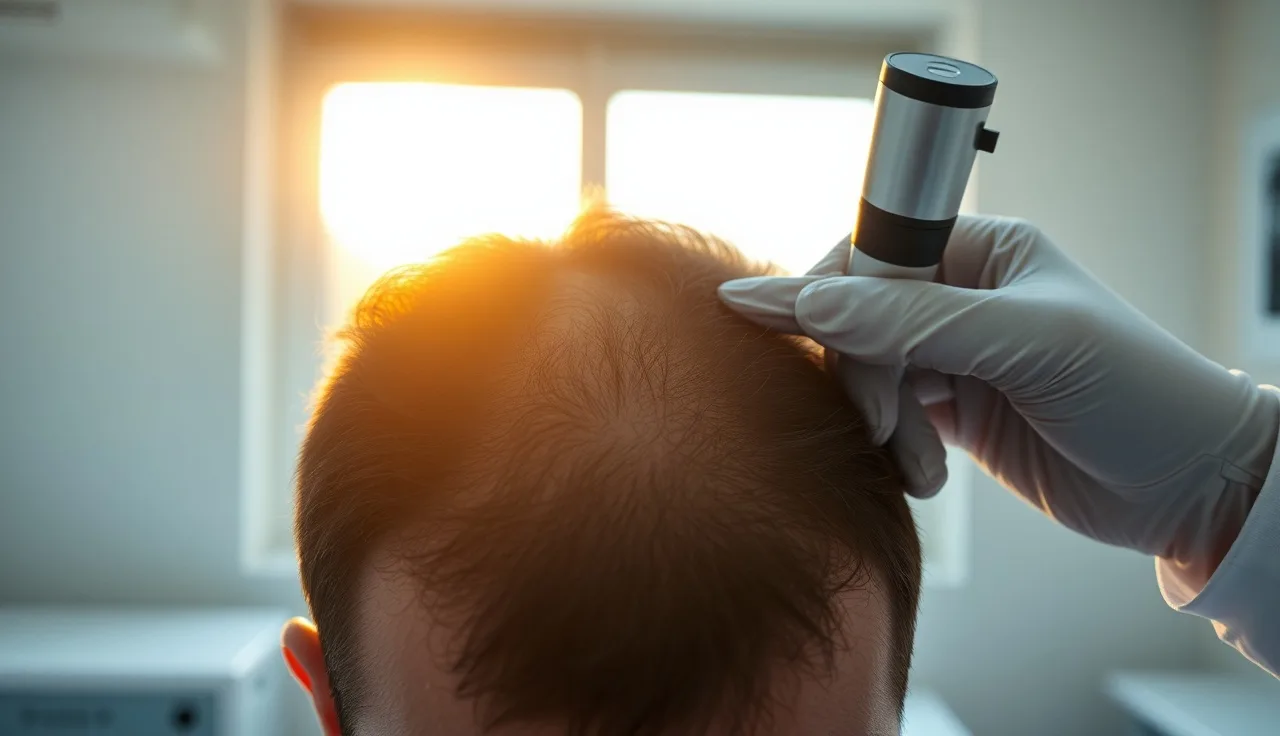
TL;DR: The two treatments with the most evidence are minoxidil (FDA-approved topical or oral) and finasteride (FDA-approved oral for men). Used together, they beat either one alone. Hair transplants give permanent results but cost $4,000 to $15,000. Everything else, including most supplements and shampoos, has weak or no clinical backing.
Why does hair loss happen in the first place?
Before spending money on anything, know what you're actually treating. The most common cause by far is androgenetic alopecia, which most people call male or female pattern hair loss. It affects roughly 50 million men and 30 million women in the United States [1]. DHT (dihydrotestosterone), a byproduct of testosterone, shrinks hair follicles over time until they stop producing visible hair. That process is genetic, hormonal, and progressive.
Not every shedding phase is pattern baldness, though. Telogen effluvium is a temporary, stress-triggered shed that often follows illness, crash dieting, surgery, or childbirth. Alopecia areata is an autoimmune condition where the immune system attacks follicles in patches. Thyroid disorders, nutritional deficiencies, and certain medications can all thin your hair. Get the cause right and the rest of your decisions get easier.
A dermatologist can usually identify the cause with a scalp exam, pull test, and sometimes blood work. If you want a fast first look at your pattern and stage, a free AI hair analysis at MyHairline can help you see where you stand before a clinic visit. More on each underlying cause at what causes hair loss.
Which hair loss treatments are FDA-approved?
Two drugs have FDA approval specifically for hair loss: minoxidil and finasteride. That's the whole list.
Minoxidil was originally a blood pressure drug. Researchers noticed it caused hypertrichosis (excess hair growth) as a side effect, and the topical 2% formulation got FDA approval for women in 1991, then 5% for men. It works by prolonging the anagen (growth) phase of the hair cycle and widening blood vessels around follicles. The FDA label states minoxidil is for "hereditary hair loss at the vertex of the scalp" [2]. It does not work well on a completely bald area or on a receding hairline, a point many ads skip.
Finasteride 1 mg (sold as Propecia and as generics) got FDA approval for men with androgenetic alopecia in 1997. It blocks the 5-alpha reductase enzyme that converts testosterone to DHT, cutting scalp DHT levels by roughly 60% [3]. It is approved for men only. The FDA has not approved it for women of childbearing age because of documented fetal risk.
A third option, low-level laser therapy (LLLT) devices, has FDA clearance (not approval, a lower bar) for certain home-use devices. Clearance means the device is substantially equivalent to a predicate device, not that the FDA independently verified efficacy.
Everything else, including biotin supplements, caffeine shampoos, and hair growth serums, lacks FDA approval for hair loss.
How well does minoxidil work for men and women?
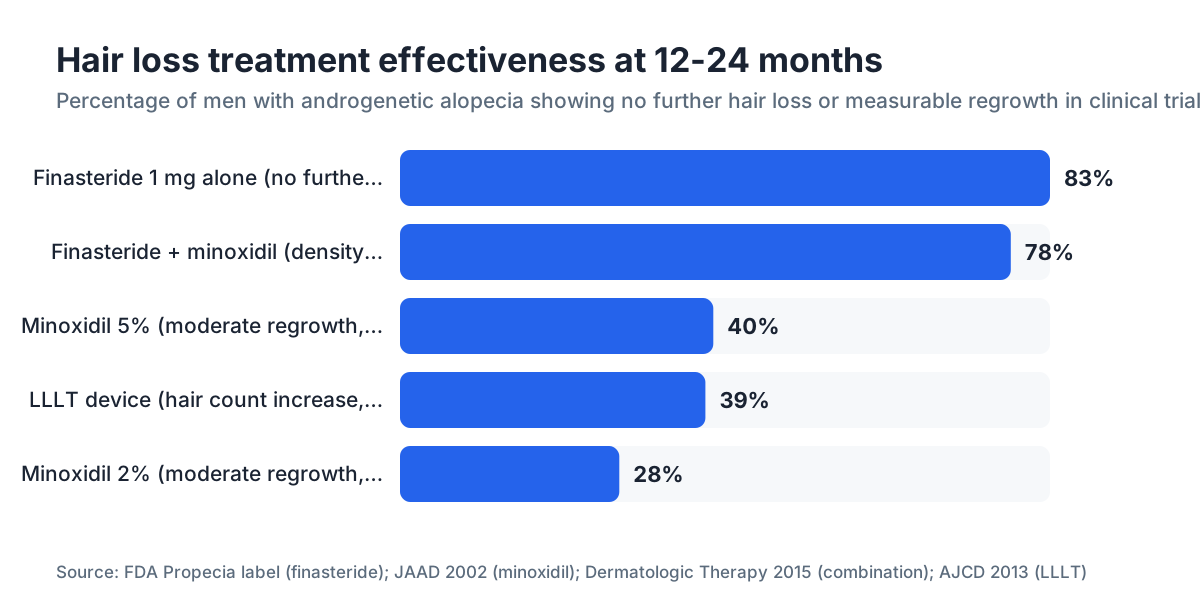
For men with androgenetic alopecia, topical 5% minoxidil beats 2%. A randomized controlled trial published in the Journal of the American Academy of Dermatology found that 5% minoxidil produced 45% more hair regrowth than 2% after 48 weeks [4]. About 40% of men in clinical trials show moderate regrowth; most others get stabilization rather than meaningful new growth.
For women, 2% topical minoxidil is FDA-approved, and 5% foam is also approved for women (the 5% solution carries more scalp irritation risk for women because of the propylene glycol carrier). Studies show roughly 60% of women with pattern hair loss get reduced shedding or some regrowth [2].
Oral minoxidil at low doses (0.625 mg to 2.5 mg daily for women, 2.5 mg to 5 mg for men) has gained traction off-label. A 2021 review in the Journal of the American Academy of Dermatology found oral minoxidil effective for multiple hair loss types and generally well-tolerated at these doses, though it carries a risk of fluid retention and hypertrichosis [5]. See the full breakdown at oral minoxidil and a detailed look at the topical option at minoxidil for men.
Minoxidil is a forever drug. Stop, and whatever regrowth you had sheds within three to six months. That's not a flaw. It's just how the biology works.
How effective is finasteride for male hair loss?
Finasteride 1 mg is the most effective single oral medication for androgenetic alopecia in men. The original registration trials found that 83% of men taking finasteride had no further hair loss at two years, versus 28% on placebo. About 66% showed some measurable regrowth at two years [3].
It takes six to twelve months to see meaningful results. Most dermatologists treat a full two-year trial as the proper evaluation window. Like minoxidil, the benefit is maintenance-dependent: stop the drug and DHT rebounds, usually with visible shedding within 6 to 12 months.
The sexual side effects (reduced libido, erectile dysfunction, ejaculatory disorders) occurred in roughly 2 to 4% of men in the original trials [3]. Post-finasteride syndrome, a claimed persistent sexual and neurological symptom complex after stopping the drug, is debated in the literature. The FDA added a label update in 2012 noting reports of persistent sexual side effects after discontinuation [3]. Anyone weighing this drug should read the current FDA label and have a frank conversation with their prescriber.
Dutasteride (0.5 mg) blocks both 5-alpha reductase isoforms rather than one, cutting DHT by roughly 90%. It's approved in some countries for hair loss and used off-label in the US. Studies suggest it beats finasteride for hair density, but the deeper DHT suppression means a potentially stronger side-effect profile. It is not FDA-approved for hair loss in the US.
Does combining finasteride and minoxidil work better than either alone?
Yes, and the data on this are reasonably solid. A randomized trial published in Dermatologic Therapy found that oral finasteride plus topical 5% minoxidil produced significantly greater hair density improvement at 12 months than either drug alone [6].
The logic is simple. Finasteride goes after the hormonal driver (DHT). Minoxidil extends the growth phase independent of DHT. Two different mechanisms, so the effects stack. Most hair loss specialists treat this combination as first-line for men with moderate-to-significant androgenetic alopecia who are willing to take an oral medication.
For a detailed look at how the two drugs interact and what dosing looks like in practice, see finasteride and minoxidil.
What are the best non-drug treatment options?
Platelet-rich plasma (PRP)
PRP means drawing your own blood, spinning it to concentrate platelets, and injecting the plasma into the scalp. Platelets release growth factors that may wake dormant follicles. A 2017 meta-analysis in Aesthetic Plastic Surgery reviewed 19 studies and found PRP significantly increased hair density and thickness compared to controls, but the authors noted big differences in preparation protocols and called for standardized trials [7]. Cost runs $500 to $2,500 per session, and most protocols need three to four sessions followed by maintenance every 6 to 12 months. It is not FDA-approved for hair loss, and insurance does not cover it.
Low-level laser therapy (LLLT)
FDA-cleared laser caps and combs deliver red light (typically 650 to 660 nm) to the scalp. The mechanism is unclear but likely involves stimulating mitochondrial activity in follicle cells. Evidence is modest. A 2013 randomized controlled trial in the American Journal of Clinical Dermatology found a 39% increase in hair count over 26 weeks with an LLLT device versus sham [8]. Results are real but generally less impressive than finasteride or minoxidil. Devices cost $200 to $900 upfront with no ongoing drug cost, which appeals to people who want to skip medications.
Hair transplant surgery
FUE (follicular unit excision) and FUT (follicular unit transplantation) surgeries move DHT-resistant hair from the back and sides of the scalp to thinning areas. The transplanted hair is permanent. Results look natural when an experienced surgeon does the work. The catch is cost ($4,000 to $15,000 in the US) and the fact that you need enough donor hair to cover the recipient area. If you're still actively losing hair, a transplant without medication is like filling a leaking bucket: the non-transplanted hair keeps falling. Full details at hair transplant and hair transplant expenses.
Ketoconazole shampoo
Ketoconazole 2% shampoo (prescription) has weak evidence of anti-androgenic effects at the scalp level. A small trial found it comparable to 2% minoxidil for some hair density measures [9]. Most dermatologists suggest it as an add-on, not a standalone treatment.
Do hair loss supplements actually work?
Most don't, at least not in people who already eat a reasonable diet. Biotin is the biggest over-promise in the supplement aisle. The FDA has noted that biotin can interfere with lab test results, and there is no peer-reviewed evidence that biotin supplements prevent or reverse androgenetic alopecia in people without a biotin deficiency [10].
Nutrient deficiencies can genuinely cause hair loss. Low iron, zinc, vitamin D, and protein are real contributors, particularly in women. Correcting a documented deficiency through diet or supplements can stop deficiency-related shedding. But supplementing nutrients you're not short on doesn't buy you extra growth.
Saw palmetto has a weak anti-androgenic mechanism similar to finasteride. One randomized trial found modest benefit for androgenetic alopecia compared to placebo, but head-to-head against finasteride, it comes out clearly behind. The dose, formulation, and bioavailability vary wildly across products.
Nutritional support for hair makes sense when blood work reveals an actual deficiency. For a breakdown of what has evidence and what's marketing, see hair loss supplements.
How do treatments compare on cost, evidence, and effort?
The table below lines up the main options on the dimensions that matter most to someone making a real decision.
| Treatment | FDA status | Monthly cost (approx.) | Evidence strength | Who it's for |
|---|---|---|---|---|
| Topical minoxidil 5% | Approved | $10-25 | Strong (multiple RCTs) | Men and women, all stages |
| Oral minoxidil | Off-label | $15-40 | Good (large case series, trials) | Men and women, all stages |
| Finasteride 1 mg | Approved (men) | $15-50 | Very strong (multicenter RCTs) | Men with AGA only |
| Dutasteride 0.5 mg | Off-label (US) | $20-60 | Good (RCTs vs finasteride) | Men unresponsive to finasteride |
| FUE/FUT transplant | Surgical | $4,000-15,000 total | Permanent results | Men/women with stable donor area |
| PRP injections | Not approved | $500-2,500/session | Moderate (mixed RCTs) | Adjunct to medication |
| LLLT devices | Cleared | $200-900 upfront | Modest (small RCTs) | Mild-moderate AGA |
| Ketoconazole 2% shampoo | Rx (antifungal) | $10-30 | Weak (small trials) | Adjunct use |
| Biotin supplements | Not approved | $10-20 | Very weak (no RCTs for AGA) | Deficiency only |
All cost estimates are from US retail and compounding pharmacy pricing as of mid-2025. Generic minoxidil and finasteride are cheap. Brand-name Propecia costs far more for identical finasteride.
What is the best hair loss treatment for men specifically?
For men with androgenetic alopecia, the evidence points clearly toward combination therapy: oral finasteride 1 mg plus topical 5% minoxidil. The American Academy of Dermatology's clinical guidelines recommend both as first-line treatments for male pattern hair loss [1].
If a man can't tolerate finasteride's side effects or doesn't want an oral drug, topical minoxidil alone is a reasonable starting point. If medication is out entirely, LLLT devices give some benefit with the lowest risk profile.
For men at a receding hairline stage (Norwood 2-3), medication started early can preserve most density. At Norwood 5-7, realistic expectations matter. Medication will slow further loss; it may not meaningfully restore a large bald area. A transplant combined with ongoing medication is the most complete approach for men with significant loss who have adequate donor hair.
The honest answer most men don't want to hear: starting treatment early, when shedding first becomes noticeable, produces better outcomes than waiting until hair loss is advanced. Follicles that have been dormant for years respond poorly to any treatment.
What treatments work best for women with thinning hair?
Female pattern hair loss (FPHL) shows up differently than in men, usually as diffuse thinning over the crown and a widening part rather than a receding front hairline. Treatment options are narrower because finasteride is not FDA-approved for women of childbearing potential.
Minoxidil 2% or 5% is the first-line recommendation for women. Low-dose oral minoxidil (0.625 mg to 1.25 mg daily) has shown strong results in women across multiple case series and is increasingly prescribed off-label [5]. Spironolactone, an anti-androgen, is used off-label in post-menopausal women or women on contraception and has decent evidence for FPHL.
For women hit with sudden diffuse shedding, the cause is often telogen effluvium tied to hormonal changes, nutritional gaps, or illness. That type of hair loss often resolves on its own once the trigger is gone. More detail on that process at hair loss telogen.
PRP is used in women too, and the evidence base is comparable to men. Hormone evaluation (estrogen, thyroid, ferritin, vitamin D) is worth pursuing before committing to long-term topical treatment, since reversible causes are common in women.
When is a hair transplant worth considering?
A hair transplant makes the most sense when you've already tried medication and want to address an area medication can't restore, your hair loss has stabilized (or you're willing to keep taking medication to protect existing hair), and you have enough donor hair in the back and sides for realistic coverage.
FUE leaves no linear scar and heals faster; FUT harvests a strip and leaves a linear scar but yields more grafts in a single session. Both techniques, done well by an experienced surgeon, produce natural-looking permanent results. Graft survival rates above 90% are typical with skilled surgeons.
A transplant is not a one-time cure if you're still losing hair. The transplanted hair is DHT-resistant, but native hair around it can keep thinning. Most surgeons strongly recommend staying on finasteride or minoxidil after surgery.
Cost in the US typically runs $4,000 to $15,000 depending on graft count and clinic [11]. Medical tourism (Turkey is the most common destination) can bring costs down to $1,500 to $3,000, but vetting the surgeon's credentials and hygiene standards becomes your job. See full surgical and cost detail at hair transplant and hair transplant expenses.
If you want an objective look at where your hairline and density stand before talking to a surgeon, a free AI scan at MyHairline can give you a baseline Norwood stage assessment.
What about side effects and long-term risks of hair loss drugs?
Minoxidil's most common side effects are scalp irritation and, rarely, unwanted facial hair growth (more common in women using the 5% solution). Systemic side effects from topical minoxidil are uncommon because absorption is low. Oral minoxidil carries more systemic risk: fluid retention, lower blood pressure, and hypertrichosis are the main concerns at doses used for hair loss [5]. People with cardiovascular conditions should discuss oral minoxidil carefully with their doctor.
Finasteride's sexual side effects (reduced libido, ED, ejaculatory changes) affect roughly 2 to 4% of men per the original clinical trials. The more debated issue is post-finasteride syndrome. The FDA updated the label in 2012 to include reports of persistent sexual dysfunction after stopping the drug [3]. The causation question stays unresolved in the published literature. If sexual side effects occur, most resolve after stopping the drug; a minority of men report they persist.
For a full side-effect breakdown with clinical frequencies, see minoxidil side effects.
Nobody has perfect long-term safety data on low-dose oral minoxidil for hair loss because the indication is fairly new. The closest data comes from decades of cardiovascular use at much higher doses. At hair-loss doses, the risk profile looks favorable, but this is an honest area of remaining uncertainty.
How do you know which treatment is right for your situation?
The right treatment depends on the type of hair loss, how far it's progressed, your sex, your tolerance for side effects, and your budget.
For men with androgenetic alopecia (the most common scenario), the rational starting point is finasteride 1 mg daily plus topical 5% minoxidil. Add LLLT if budget allows and you want to cover multiple mechanisms. Consider PRP as an add-on if you're seeing a dermatologist who offers it. Transplant surgery makes sense once you've been on medication for 12 months and have stable remaining hair.
For women with pattern thinning, start with topical minoxidil and get blood work to rule out reversible causes. If topical irritation is a problem, low-dose oral minoxidil is a viable alternative. Spironolactone is worth discussing with a doctor for women with documented androgen excess.
For anyone with patchy, sudden, or diffuse hair loss that doesn't fit the classic pattern, see a dermatologist before starting any product. Alopecia areata, scarring alopecias, and telogen effluvium follow entirely different treatment logic.
The American Academy of Dermatology publishes patient-facing guidelines at aad.org that are honest and evidence-based [1]. Reading them before your first consultation is time well spent.
Sources
- American Academy of Dermatology, Hair Loss: Diagnosis and Treatment
- FDA, Rogaine (minoxidil) labeling and approval history
- FDA, Propecia (finasteride) prescribing information
- Olsen EA et al., Journal of the American Academy of Dermatology, 2002
- Randolph M & Tosti A, Journal of the American Academy of Dermatology, 2021
- Hu R et al., Dermatologic Therapy, 2015
- Gupta AK & Carviel J, Aesthetic Plastic Surgery, 2017
- Lanzafame RJ et al., American Journal of Clinical Dermatology, 2013
- Piérard-Franchimont C et al., International Journal of Dermatology, 1998
- FDA, Biotin (Vitamin B7) Safety Communication
- International Society of Hair Restoration Surgery, Practice Census 2022