
TL;DR: Most natural hair loss remedies have thin evidence. A few hold up. Rosemary oil matched 2% minoxidil for scalp regrowth in one randomized controlled trial. Saw palmetto beats placebo but loses to finasteride. Scalp massage measurably thickens hair. Nothing natural cures pattern baldness for good, but several options are worth trying before or alongside the proven drugs.
What counts as a 'natural' treatment for hair loss?
Natural is a slippery word. For this article it means plant-derived, mechanical, or nutritional approaches that don't need a prescription and aren't classified as drugs by the FDA. That covers rosemary oil, saw palmetto, scalp massage, biotin, pumpkin seed oil, and dietary changes. It leaves out minoxidil (an FDA-approved drug even though you can buy it over the counter) and finasteride.
Why does the line matter? Because the evidence for natural treatments barely overlaps with the evidence for drugs. Drug trials have to clear FDA standards to reach market. Natural product studies are smaller, shorter, and often paid for by the supplement companies selling the product. That doesn't make them worthless. It means you read the results with one eyebrow raised.
The cause of your hair loss matters more than any product. The big three are androgenetic alopecia (pattern baldness, driven by DHT sensitivity) [1], alopecia areata (autoimmune), and telogen effluvium (stress or nutrient-related shedding) [2]. Natural approaches work best for telogen effluvium tied to a nutritional deficiency, and worst for alopecia areata, where the immune system is actively attacking follicles. Figuring out what causes hair loss before you spend a dollar is the smartest move you can make.
Does rosemary oil actually regrow hair?
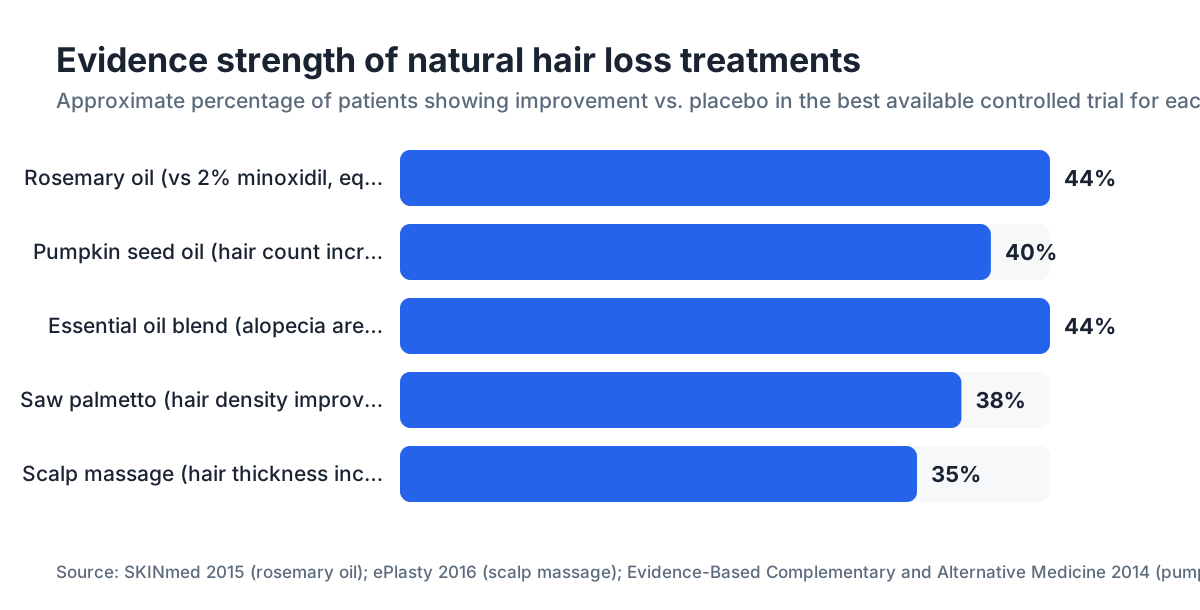
Rosemary oil is the one natural treatment with a real head-to-head trial behind it. A 2015 randomized, double-blind study in SKINmed compared rosemary oil to 2% minoxidil solution in 100 patients with androgenetic alopecia over six months [3]. Both groups showed significant hair count increases at the six-month mark, with no statistically significant difference between them. The rosemary group reported less scalp itching.
That result is genuinely interesting. It's also a single study of 100 people, and nobody has repeated it at scale. The proposed mechanism: carnosic acid, the active compound in rosemary, stimulates nerve growth factor, which may help follicles recover. There's also evidence rosemary inhibits 5-alpha reductase, the enzyme that turns testosterone into DHT [4], the hormone behind most pattern baldness. So the biology is plausible even where the proof runs thin.
If you're going to try it, dilute it. Two or three drops of essential oil in a carrier like jojoba or coconut oil, or a pre-formulated scalp serum, applied to the scalp daily. Commit to at least four months. You will see nothing meaningful in six weeks. Side effects stay minimal for most people, though some get contact dermatitis, so patch-test on your inner arm first.
For where rosemary sits next to the drug options, see the breakdown of minoxidil for men.
Does scalp massage help with hair loss?
More than most people expect. A 2016 Japanese study followed nine healthy men who got standardized scalp massages for 24 weeks [5]. Each session ran four minutes a day with a scalp massage device. By week 24, hair thickness (measured as cross-sectional area) rose significantly, even though total hair count barely moved. The researchers proposed that mechanically stretching dermal papilla cells switches on hair growth gene expression.
A 2019 survey study of 327 people who self-massaged daily for 11 to 20 minutes found most reported stabilized or increased hair growth [6]. Survey data is weak evidence. But the direction lines up with the mechanistic study.
Scalp massage costs nothing and carries no side effects. Even if the effect is small, adding it to whatever else you're doing is easy math. Ten minutes in the shower or before bed, fingertips with moderate pressure moving in small circles, is plenty. No gadget required, though a silicone scalp massager is fine if you like one.
What evidence exists for saw palmetto?
Saw palmetto (Serenoa repens) is a plant extract that inhibits 5-alpha reductase, the same enzyme finasteride targets, just far weaker [7]. The hair loss evidence is real but modest.
A 2020 systematic review in the Journal of Dermatological Treatment pulled together the controlled studies on saw palmetto for androgenetic alopecia and found that oral saw palmetto at 320 mg/day improved hair density and cut shedding across multiple studies, with a smaller effect than finasteride [8]. A randomized trial comparing 320 mg/day oral saw palmetto to 1 mg/day finasteride found finasteride ahead at 24 months, though saw palmetto still beat placebo.
Here's the practical read. If you want a DHT blocker but the finasteride side effect profile genuinely worries you, saw palmetto is a reasonable first step for mild or early pattern loss. It won't match the drug. It's available without a prescription, runs roughly $20 to $40 a month for a standardized extract, and stays gentle for most people.
One caution. Saw palmetto can interact with blood thinners and may skew PSA test results, which matters if you're being screened for prostate conditions. Tell your doctor you're taking it.
Can nutritional deficiencies cause hair loss and can fixing them reverse it?
Yes, and this is where natural treatment actually earns its keep, when a deficiency is the real cause. The best-documented nutrient-related hair loss involves iron, vitamin D, zinc, and biotin [9].
Iron deficiency is the most common nutritional cause of hair loss in women. Ferritin below 30 ng/mL is linked to increased telogen (resting phase) shedding [9]. Correcting it through diet or supplements can meaningfully cut shedding, but it takes months and depends on confirming that low iron was the cause in the first place. A blood test, not a supplement, is where this starts.
Vitamin D receptors sit inside hair follicles, and several studies tie low vitamin D to alopecia areata and telogen effluvium, though causation isn't nailed down [2]. Zinc deficiency causes diffuse hair loss, and zinc tends to run low in people with alopecia areata. Biotin deficiency is genuinely rare in well-fed adults, which means most biotin supplements do nothing for most people who buy them. The American Academy of Dermatology notes biotin helps hair loss only when a true deficiency exists [10].
The table below shows which nutrients have real evidence and which blood markers to check.
| Nutrient | Hair loss type most linked | Key blood marker | Suggested supplementation if deficient |
|---|---|---|---|
| Iron (ferritin) | Telogen effluvium, female pattern | Serum ferritin (target >30 ng/mL) | Iron supplements or iron-rich diet |
| Vitamin D | Alopecia areata, TE | 25-OH vitamin D (target 40-60 ng/mL) | D3 supplement |
| Zinc | Alopecia areata, diffuse loss | Serum zinc | Zinc picolinate 25-50 mg/day |
| Biotin | True biotin deficiency only | Biotin blood level (rarely needed) | Only if deficiency confirmed |
| B12 | Diffuse shedding | Serum B12 | Supplement or injection if low |
For a wider look at hair loss supplements and what the research actually supports, that's a topic on its own.
If your shedding started after stress, rapid weight loss, illness, or a restrictive diet, read up on telogen effluvium separately. That kind of loss is often nutritionally driven and genuinely reversible.
What about pumpkin seed oil, onion juice, and other popular remedies?
Pumpkin seed oil has the second-best evidence among natural DHT blockers, behind saw palmetto. A 2014 randomized controlled trial in 76 men with androgenetic alopecia found 400 mg/day oral pumpkin seed oil over 24 weeks produced a 40% increase in hair count versus 10% in the placebo group [11]. That's one trial. Replication would help. But the result is strong enough that pumpkin seed oil earns a spot in the "try it" pile for anyone who wants a soft DHT-blocking approach.
Onion juice has one frequently cited study showing benefit in alopecia areata. It's small and the design is shaky, so I wouldn't lean on it. The smell is a real barrier to daily scalp use anyway.
Castor oil is everywhere on social media. The evidence for it is essentially zero. No controlled trials. Anecdotes exist, but anecdotes fit any outcome including placebo and measurement error. Castor oil is thick, hard to wash out, and can trigger folliculitis. Skip it.
Ketoconazole shampoo lands in an odd spot. It's technically an antifungal drug you can buy over the counter (Nizoral 1%), but people group it with the non-prescription crowd. There's reasonable evidence it lowers DHT at the scalp and may slightly slow pattern loss when used two to three times a week [4]. It's cheap and worth stacking as an adjunct.
How do natural treatments compare to minoxidil and finasteride?
Honest answer: nothing natural competes with the drugs for moderate to severe pattern baldness.
Minoxidil 5% topical produces measurable regrowth in roughly 40 to 60% of men who use it consistently [1]. Finasteride 1 mg/day stops progression in about 83% of men and produces visible regrowth in about 66% over two years [1]. Those numbers come from large, well-controlled trials. The strongest natural option, rosemary oil, rests on one trial of 100 people showing equivalence to 2% minoxidil, not 5%. Saw palmetto beats placebo but loses to finasteride head-to-head.
That doesn't make natural treatments pointless. A realistic plan might run like this: rosemary oil and scalp massage as low-risk daily habits, fix any nutritional deficiency, and if the loss keeps progressing, layer in the drugs. Plenty of people do exactly that. Combining approaches isn't an either-or call.
For anyone worried about minoxidil side effects or finasteride's possible sexual side effects, natural options give you a lower-risk on-ramp. The tradeoff is slower, less reliable results. That's a real tradeoff, not fine print.
The combination of finasteride and minoxidil together is the most evidence-backed non-surgical approach there is. Natural treatments can sit on top of that stack, but they won't replace it for significant pattern baldness.
Does diet affect hair loss?
Diet affects hair loss mostly through nutritional status, and to a smaller degree through inflammation. The Mediterranean diet has appeared in at least two observational studies as linked to slower androgenetic alopecia progression [10]. It's heavy on antioxidants and anti-inflammatory compounds and delivers enough protein, zinc, and B vitamins. The catch: observational studies can't prove cause, and the reported effects are modest.
Protein intake matters more directly. Hair is almost entirely keratin, a structural protein. Chronically low protein causes diffuse shedding. The threshold isn't high for most people eating a varied diet. Roughly 0.8 grams per kilogram of body weight per day is the minimum the USDA recommends, but people on very low calorie diets, vegans who aren't tracking intake, or anyone recovering from an eating disorder can fall short.
Sugar and ultra-processed food probably don't directly cause hair loss in healthy people, but they worsen insulin resistance, which some research ties to pattern baldness progression. The link is indirect and the evidence isn't strong enough to build dietary rules around it alone.
There's also a persistent claim that creatine speeds up hair loss by raising DHT. The evidence is limited but the question is fair. The full breakdown is at does creatine cause hair loss.
Are there natural options specifically for alopecia areata?
Alopecia areata is an autoimmune condition where the immune system attacks hair follicles [2]. That mechanism sets it apart from pattern baldness, and most of the natural approaches above don't touch the immune piece.
The natural options with at least some evidence for alopecia areata are zinc supplementation (if levels are low), vitamin D correction, and topical garlic or onion juice on the patches. The garlic and onion evidence is weak and the practical hurdles are real. Aromatherapy with essential oils (lavender, rosemary, thyme, and cedarwood in a carrier oil) was tested in one 1998 Scottish trial of 86 patients and showed significant improvement in regrowth versus the control group using carrier oil alone [12]. That trial is old and small, but it's genuine and gets cited constantly.
For mild or patchy alopecia areata in adults, the AAD lists watchful waiting as a starting option because up to 80% of cases with less than 50% scalp involvement recover on their own within a year [2]. Sometimes the most natural move is to wait. Uncomfortable advice, but honest.
For more extensive alopecia areata, the 2023 FDA approvals of baricitinib and ritlecitinib (JAK inhibitors) mark a real advance in drug treatment. Not natural, but worth knowing about if you're dealing with widespread loss and natural approaches haven't worked.
What's a realistic natural treatment routine for early pattern hair loss?
If you're seeing the start of a receding hairline or diffuse thinning at the crown and want to lead with natural options, here's what an evidence-based daily routine actually looks like.
Morning: apply a rosemary oil serum or diluted rosemary essential oil to the scalp and massage it in for two to three minutes. Take 320 mg of standardized saw palmetto extract with a meal if you're comfortable with it. If your diet runs low on protein, hit your target first (at least 80 to 100 g/day for most adults).
Evening or shower time: five to ten minutes of scalp massage. Swap in a 1% ketoconazole shampoo two to three times a week for your regular one. Keep the scalp clean without scrubbing it with harsh detergents every day.
Monthly check-in: take photos in consistent lighting. Hair changes slowly. Comparing week to week just breeds anxiety with no useful signal. A six-month photo comparison is the shortest window that means anything.
Get bloodwork done before you spend on supplements. If your ferritin, vitamin D, zinc, or B12 is low, fix those first. Supplementing to correct a deficiency works. Supplementing on top of normal levels mostly burns money.
If you're still seeing clear progression at six months, that's the moment for a real conversation about minoxidil or finasteride. Natural options are a reasonable first step, not a permanent substitute, for most people with active pattern baldness.
If you can't tell whether your shedding points to pattern baldness or something else, MyHairline's free AI hair scan (/scan) can read your photos and steer you toward the right category to research first.
When should you stop trying natural treatments and see a dermatologist?
Natural treatments are fine for mild, stable, or early hair loss. They're the wrong lead strategy in a few situations.
See a board-certified dermatologist if you're losing hair in patches (possible alopecia areata), your scalp is red, scaly, or painful (could be scarring alopecia, which permanently kills follicles if left untreated), hair loss is sudden and diffuse over a few weeks, or you're shedding eyebrows or eyelashes alongside scalp hair. Those patterns point to conditions where a delayed diagnosis causes damage you can't undo.
The AAD recommends a dermatologic evaluation for any hair loss that keeps worsening, comes with scalp symptoms, or hasn't responded to over-the-counter approaches after six months [10]. That's a fair line to draw.
For most people with gradual pattern thinning, going natural first is reasonable. But "natural" shouldn't mean dodging a professional exam. A dermatologist can confirm the type of loss with a physical exam or scalp biopsy, order the right bloodwork, and help you combine approaches that work together. If cost is the sticking point, many telehealth platforms now run dermatology consults for $50 to $100 without insurance.
Sources
- American Academy of Dermatology (AAD), Hair Loss: Diagnosis and Treatment
- American Academy of Dermatology (AAD), Alopecia Areata: Signs and Symptoms
- Panahi Y et al., Rosemary oil vs minoxidil 2%, SKINmed 2015
- Rafi MM et al., Rosemary and ketoconazole DHT inhibition, Phytotherapy Research 2000
- Koyama T et al., Scalp massage and hair thickness, ePlasty 2016
- English RS & Barazesh JM, Self-assessments of standardized scalp massages, Dermatology and Therapy 2019
- Prager N et al., Saw palmetto extract in androgenetic alopecia, Journal of Alternative and Complementary Medicine 2002
- Evron E et al., Saw palmetto systematic review, Journal of Dermatological Treatment 2020
- Almohanna HM et al., The role of vitamins and minerals in hair loss, Dermatology and Therapy 2019
- American Academy of Dermatology (AAD), Hair Loss: Tips for Managing
- Cho YH et al., Pumpkin seed oil for androgenetic alopecia, Evidence-Based Complementary and Alternative Medicine 2014
- Hay IC et al., Aromatherapy as treatment for alopecia areata, Archives of Dermatology 1998
- FDA, Drugs (agency drug information portal)