

TL;DR: Telogen effluvium is temporary hair loss where a physical or emotional shock forces a large share of scalp hairs out of growth and into the resting (telogen) phase at once. Shedding peaks about two to three months after the trigger. Most people see full regrowth within six to nine months after the cause resolves.
What exactly is telogen effluvium?
Telogen effluvium (TE) is diffuse shedding across the whole scalp, triggered by a shock to the body or mind. Your scalp normally cycles through three phases: anagen (active growth, two to six years), catagen (a two-week transition), and telogen (a resting phase of roughly three months before the hair drops and a new one grows underneath). At any moment, around 85 to 90 percent of your hairs sit in anagen and only 10 to 15 percent in telogen [1].
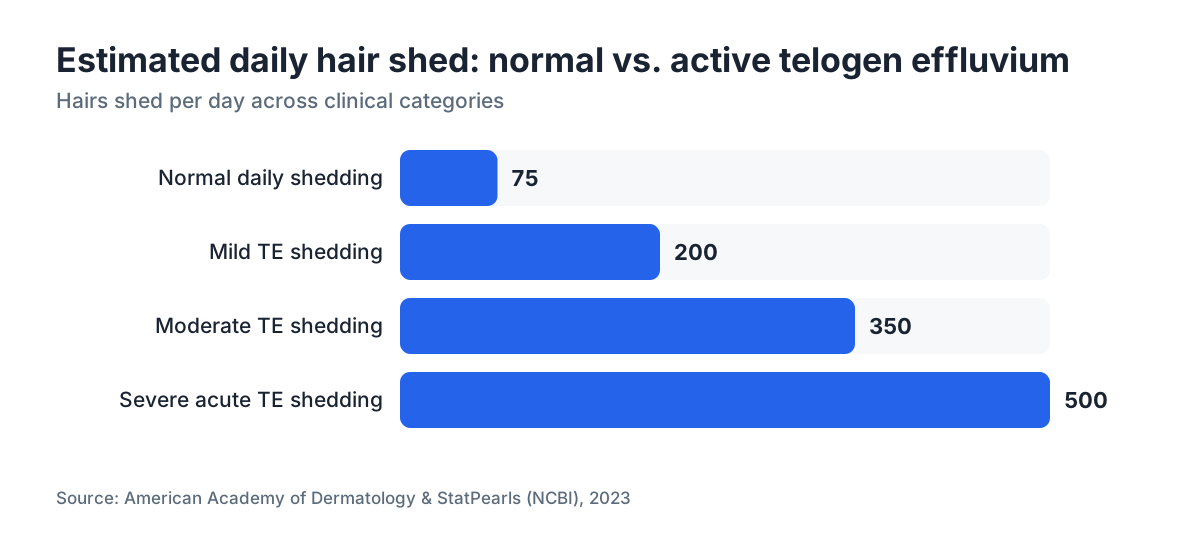
TE breaks that ratio hard. A stressful event signals a large batch of anagen hairs to quit growing early and enter telogen together. Three months later, when those resting hairs shed on schedule, you lose far more hair than usual. Some people shed 300 to 500 hairs a day against a normal range of 50 to 100 [2].
The word "effluvium" comes from the Latin for outflow. That is what it looks like: hair pouring out in the shower, on the pillow, in the brush, from everywhere at once. It is terrifying. But once you understand the biology, you see why the outlook is usually good.
TE is not androgenetic alopecia (pattern baldness), which permanently shrinks follicles through DHT. In TE the follicles stay intact and can regrow hair once the stressor passes.
What is the normal hair growth cycle and how does TE interrupt it?
TE interrupts the anagen-to-telogen transition: a trigger forces many follicles out of growth early and into rest at the same time, so they all shed together about 60 to 90 days later. To see why, you need a working model of the follicle cycle.
Anagen is the growth phase. The dermal papilla at the base of the follicle signals keratinocytes to divide and push a new hair shaft upward. A single follicle can stay in anagen for two to six years, which is why some people grow hair to the waist while others max out at the shoulders.
Catagen is a short programmed regression phase. The follicle shrinks, the papilla detaches slightly, and the hair stops growing. This lasts about two weeks.
Telogen is the resting phase. The follicle goes quiet. The old hair, now called a "club hair" for its rounded root, sits anchored for roughly 100 days. At the end of telogen, a new anagen hair grows beneath it and pushes the club hair out. That is the normal shed you see in the shower.
A fourth phase, exogen, describes the active release of the club hair. Some researchers treat it as its own regulated event rather than a passive result of new growth [3].
Here is the diagnostically confusing part: because telogen lasts about three months, you shed now because of something that happened two or three months ago. Multiple follicles get the same premature signal at nearly the same moment, then let go on the same delay.
What triggers telogen effluvium?
Almost any large physical or psychological stress can trigger TE. The common thread is a disruption of the body's normal signaling to follicles. Here are the best-documented causes [4]:
Physical stress and illness. High fever, surgery, severe infection, or hospitalization can trigger TE within weeks. COVID-19 has been prominently linked to it; a 2021 study in the Journal of the American Academy of Dermatology reported hair loss in 27 percent of COVID-19 patients across a registry of 1,567 cases [5].
Hormonal shifts. Postpartum TE is one of the most common variants. During pregnancy, high estrogen prolongs anagen and gives women thicker hair. After delivery, estrogen falls sharply and many follicles enter telogen at once. Shedding usually peaks two to four months postpartum and resolves by twelve months.
Nutritional deficiency. Iron is the most studied nutritional trigger. Ferritin (stored iron) below 30 ng/mL is associated with TE in some studies, though the causal threshold is debated [4]. Zinc, biotin, protein, and vitamin D deficiencies have each been linked to diffuse hair loss, though the evidence for zinc and biotin is weaker than the marketing suggests.
Crash dieting and rapid weight loss. Severe caloric restriction starves follicles. Bariatric surgery patients often develop TE in the months after the procedure from combined caloric and micronutrient shortfall.
Thyroid disease. Both hypothyroidism and hyperthyroidism can cause diffuse shedding, because thyroid hormones set the duration of anagen. Treating the thyroid condition generally resolves the hair loss [12].
Medications. A long list of drugs can trigger TE, including beta-blockers, anticoagulants, retinoids, antithyroid agents, and some antidepressants. The FDA drug label for isotretinoin lists hair loss as a known adverse effect [6].
Psychological stress. Severe ongoing stress (bereavement, divorce, job loss) can trigger TE, though the mechanism is less clean than for physical triggers. The hypothalamic-pituitary-adrenal axis and elevated cortisol appear to shorten anagen.
Scalp inflammation and chronic TE. When no single acute event is obvious and shedding runs past six months, dermatologists call it chronic TE. It is more common in women in their 30s to 60s and may involve a lower threshold for ending anagen, though the cause is still not fully understood.
How is telogen effluvium diagnosed?
There is no single lab test for TE. Diagnosis is clinical: a dermatologist takes a careful history, zeroes in on events two to four months before shedding started, and rules out other causes.
The pull test is the standard bedside check. The clinician grasps 40 to 60 hairs near the scalp and pulls with steady traction. Extracting more than 10 percent (roughly four to six hairs) counts as positive and points to active shedding [4]. In acute TE this test is strongly positive. In chronic TE it may be weakly positive or vary by region.
Trichoscopy, dermoscopy of the scalp, can show more telogen hairs at follicular openings. A scalp biopsy, when done, shows a telogen-to-anagen ratio above 20 to 25 percent, usually with little inflammation [4].
Blood work matters, because TE is almost always secondary to something else. A reasonable baseline panel covers complete blood count, ferritin, thyroid-stimulating hormone, and a full metabolic panel. Low ferritin is often both diagnosis and treatment target. An abnormal TSH redirects the whole workup.
Pattern matters too. TE thins the entire scalp, often most obvious at the temples and crown, but without the receding frontal geometry of androgenetic alopecia. If a man has a defined frontal recession sitting on top of diffuse shedding, both conditions may be present at once. That combination is common, and it complicates diagnosis and treatment.
How long does telogen effluvium last?
Acute TE is self-limiting for most people. Once the trigger resolves, follicles return to anagen and visible regrowth shows up within three to six months. Full density recovery usually takes six to twelve months. The American Academy of Dermatology notes that most acute TE resolves within six to nine months [2].
Chronic TE is a different animal. It runs past six months, sometimes for years. It is more common in women and tends to fluctuate rather than march steadily. The outlook is still generally good, but recovery is slower and the trigger is harder to pin down. Some women find it cycles with hormonal shifts or bouts of stress.
The single biggest variable is whether the underlying cause has been found and fixed. Someone whose TE came from iron deficiency but who never supplements iron will keep shedding. Someone with postpartum TE and no deficiency will almost certainly recover on their own.
One thing to know: regrowth looks different from mature hair. New hairs come in finer and shorter at first, so the scalp can look better in some lighting and worse in others. The baby hairs along the hairline that show up a few months into recovery are a good sign, not a worry.
To track your own shedding, count hairs lost in a standardized 60-second comb test or collect shed hairs across one 24-hour period. A count consistently above 100 is worth raising with a dermatologist. A single high-count day means little.
What is the difference between telogen effluvium and androgenetic alopecia?
This is the distinction that matters most, because the treatment paths split sharply. TE is diffuse and reversible once the trigger is gone. Androgenetic alopecia is patterned, DHT-driven, and progressive without treatment.
| Feature | Telogen Effluvium | Androgenetic Alopecia |
|---|---|---|
| Cause | Systemic stress, nutritional deficit, hormonal shift | DHT-driven miniaturization of genetically susceptible follicles |
| Pattern | Diffuse across entire scalp | Patterned (temples, crown in men; diffuse crown in women) |
| Onset | Acute, 2-3 months after trigger | Gradual over years |
| Reversibility | Usually fully reversible | Progressive without treatment |
| Follicle status | Intact, normal caliber | Progressively miniaturized |
| Pull test | Positive during active phase | Usually negative |
| Treatment target | Remove trigger, address deficiency | Finasteride, minoxidil, transplant |
The two can coexist. Someone genetically prone to pattern loss may have a TE episode that unmasks or speeds up the underlying androgenetic process. That matters because after the TE clears, they may not return to their pre-TE baseline if pattern loss was already progressing underneath.
If you are unsure which you have, or suspect both, a dermatologist with a trichoscope can usually tell them apart by comparing follicle caliber across scalp zones. For a quick preliminary read before a consultation, our free AI hair scan analyzes photos of your scalp and gives a Norwood or Ludwig stage estimate, which at least tells you whether patterned loss is part of the picture.
For people with androgenetic alopecia alongside TE, the evidence-based options include minoxidil for men, finasteride, or in advanced cases a hair transplant.
What treatments actually help telogen effluvium?
The honest answer: nothing directly speeds recovery from acute TE in a healthy person once the trigger has resolved. The follicles return to anagen on their own schedule. What treatment can do is fix modifiable causes and support the follicle environment.
Fix the underlying cause first. Obvious, but often missed. Low ferritin means iron supplementation. Abnormal thyroid function means treating the thyroid. A suspect medication means a conversation with the prescriber about alternatives. TE from severe caloric restriction means restoring adequate protein and micronutrients.
Minoxidil. Topical minoxidil is not FDA-approved for TE, but it is the most commonly recommended drug option. It prolongs anagen and may help follicles reenter growth faster. The 2 percent and 5 percent solutions are FDA-approved for androgenetic alopecia [7], and many dermatologists use them off-label in TE. The catch: minoxidil can cause a brief shedding episode of its own as it shifts telogen hairs out, which is alarming in someone already shedding heavily. Read up on minoxidil side effects before you start.
Oral minoxidil. Low-dose oral minoxidil (0.625 mg to 2.5 mg daily in women, up to 5 mg in men) is increasingly used off-label for diffuse loss. A 2020 retrospective study in the Journal of the American Academy of Dermatology found meaningful density gains at low doses, though most of that data comes from androgenetic alopecia populations [8].
Nutrition. Iron, zinc, vitamin D, and protein all matter. There is reasonable evidence for correcting documented deficiencies. The evidence for topping up nutrients already in the normal range is much weaker. The hair loss supplements market is packed with products that prey on TE patients with little clinical support. Biotin is the clearest example: it is needed for hair growth, but supplementing it when you are not deficient does nothing, and very high doses can throw off certain lab tests [11].
Stress management. If psychological stress is a driver, dealing with it is medically relevant, more than calming. Cortisol's effect on follicle cycling is real, even if the size of the effect is hard to measure.
Platelet-rich plasma (PRP). PRP has some evidence in androgenetic alopecia, but the data for TE specifically is thin. It is expensive and not covered by insurance. I would not spend money on it for uncomplicated acute TE.
What to skip. Laser combs, most hair growth shampoos, and supplements sold specifically for TE have very little evidence. Save the money.
Can telogen effluvium become permanent?
Pure TE does not cause permanent hair loss. The follicles survive. That is the core difference from scarring alopecias, where follicles are destroyed, and from androgenetic alopecia, where they miniaturize over time.
A few scenarios can still produce outcomes that look permanent.
First, a significant nutritional deficiency (especially iron) left uncorrected can drag chronic TE out for a long time. The longer the deficiency runs, the more the whole cycle stays disrupted.
Second, and this is the big one, long-standing chronic TE in someone with underlying androgenetic alopecia can speed up the appearance of pattern loss. The androgenetic process was coming anyway, but a year or two of continuous shedding can reveal it years sooner than it would have shown otherwise.
Third, a small body of literature suggests that in some women with chronic TE, follicles eventually miniaturize even without a classic androgenetic pattern. This is contested and may just be misclassification of the underlying condition.
The practical takeaway: if your TE has not improved much twelve months after the trigger resolved, see a dermatologist. Do not assume it is still just TE. You may need a biopsy to confirm follicle status.
What does the shedding actually look like and how do you know it is TE?
TE shed hairs are club hairs: they come out with a small white or pale bulb at the root end. That is the telogen bulb, a tiny white dot. If you look at a shed hair and see that rounded pale root, the hair finished its normal resting phase before falling. That is the expected finding in TE.
By contrast, in traction alopecia or aggressive styling damage, hairs often break mid-shaft with no bulb. In alopecia areata, the telltale sign is "exclamation mark" hairs, narrower at the base than the tip.
Distribution matters. TE is diffuse. A part that looks wider across the whole scalp, thinning noticeable at all four quadrants, and thin hair along the temples and crown all point toward TE. If the loss is strictly at the temples in a receding pattern, think androgenetic alopecia instead, or check with a dermatologist.
Photos under consistent lighting (same room, same time of day) every two to four weeks are the most practical way to track progression or recovery. Counting hairs is tedious but gives objective data when you are not sure things are improving.
Always ask yourself the timing question: what happened two to four months before the shedding started? Major surgery, a serious illness, intense dieting, a big life stressor, a new medication, the birth of a baby? Naming the event is diagnostically useful and genuinely reassuring, because it points to a finite episode rather than ongoing progressive loss.
Does diet affect telogen effluvium recovery?
Diet matters more in TE than in most other hair loss conditions, because nutritional deficiency is both a primary trigger and a key variable in how fast you recover.
Protein is the foundation. Hair is almost entirely keratin, a protein. Inadequate dietary protein (generally below 0.8 grams per kilogram of body weight per day) can directly starve growing follicles [4]. People who have crash-dieted, had bariatric surgery, or followed very restrictive plans often have TE partly or mostly from protein shortfall.
Iron is the most studied micronutrient in TE. Studies find women with ferritin below 30 ng/mL are more likely to have TE, though researchers disagree on the exact cutoff [4]. Correcting iron deficiency anemia clearly improves TE outcomes. What is less clear is whether correcting low-normal ferritin (say, 15 to 30 ng/mL) in a non-anemic person makes a real difference. The data is suggestive, not conclusive. Iron deficiency is common in women with heavy periods or restricted diets and often goes undiagnosed [10].
Zinc deficiency can cause diffuse hair loss and shows up more than people expect in low-meat diets or inflammatory bowel disease. Serum zinc below 70 mcg/dL is generally considered deficient. Supplementing zinc in someone who is not deficient does nothing useful and can interfere with copper absorption at high doses.
Vitamin D receptors sit in hair follicles, and low vitamin D has been linked to several forms of hair loss including TE. The mechanism is not fully worked out, but given how common vitamin D insufficiency is and how low the risk of correcting it, this is worth checking.
Biotin deficiency is genuinely rare in people eating a normal diet. True deficiency causes hair loss, skin rash, and neurological symptoms. The claim that extra biotin speeds hair growth in non-deficient people has very little support [11].
You can get most of this from food: lean meat and legumes for protein and iron, leafy greens and seeds for zinc, fatty fish or fortified foods for vitamin D. If you are looking at hair loss supplements, pick products that address documented deficiencies with documented doses, not proprietary blends.
What should you do right now if you think you have telogen effluvium?
Step one: see a dermatologist, ideally one who works with hair disorders. A diagnosis by elimination (ruling out pattern loss, alopecia areata, and scarring alopecias) matters before you spend money on treatments.
While you wait for that appointment, get basic bloodwork from your GP. Ask for ferritin (more useful than hemoglobin or serum iron), TSH, vitamin D, zinc, and a CBC. These are cheap tests that often point straight at a treatable cause.
Think hard about the past three to four months. Write down: any illness, fever, or hospitalization; any diet change or body weight swing over 10 percent; any medications started or stopped; any surgeries or procedures; any major emotional events; and for women, any recent birth, change or stop in hormonal contraception, or start of perimenopause. Bring the list to your appointment.
Do not panic-buy treatments. Acute TE in a healthy person who has addressed the trigger will resolve. Spending on unproven supplements or laser devices during the waiting period is almost always wasteful.
For a quick, free starting point before you see a clinician, the MyHairline AI hair scan analyzes photos of your scalp to gauge whether your loss looks diffuse (consistent with TE) or patterned (suggesting androgenetic involvement). It is not a diagnosis, but it helps you frame the right conversation with your doctor.
If TE and androgenetic alopecia appear to coexist, the dual-therapy of finasteride and minoxidil has the most evidence behind it for the androgenetic part. TE itself still resolves on its own timeline once the trigger is gone.
Sources
- StatPearls (NCBI Bookshelf), Telogen Effluvium
- American Academy of Dermatology, Hair loss types: Telogen effluvium
- Journal of Investigative Dermatology, Exogen: shedding the final stage of the hair cycle
- Dermatology Practical & Conceptual, Telogen effluvium: A review (Malkud, 2015)
- Journal of the American Academy of Dermatology, COVID-19 and hair loss registry study (Freeman et al., 2021)
- FDA, Isotretinoin (Accutane) drug label
- FDA, Minoxidil topical solution labeling (OTC)
- Journal of the American Academy of Dermatology, Low-dose oral minoxidil retrospective study (Randolph and Tosti, 2020)
- National Institutes of Health Office of Dietary Supplements, Iron fact sheet for health professionals
- National Institutes of Health Office of Dietary Supplements, Biotin fact sheet
- American Academy of Dermatology, Hair loss: Who gets it and causes