
TL;DR: A bad hair transplant shows up as large doll-like plugs, a hairline that looks drawn with a ruler, obvious scarring, poor graft survival that leaves thin patches, hair growing the wrong direction, and density that never blends. Most of it traces back to outdated technique, under-trained surgeons, or clinics chasing graft counts over quality. Catch it early because revision surgery is harder and costs more.
What does a bad hair transplant actually look like?
It looks fake. Not slightly-off fake. Obviously-a-wig-glued-to-your-scalp fake. Anyone who has seen a hair transplant from the 1980s or 1990s knows the classic version: round clumps of 10 to 20 hairs punched into the scalp in rows, each clump separated by a bald gap, the whole thing built like a cheap doll's hairline. That was the plug era, and it is what gave hair transplants a bad name for decades.
Modern follicular unit excision (FUE) and follicular unit transplantation (FUT), done properly, produce results that are genuinely hard to spot. That is the good news. The bad news is that the global boom in transplant tourism has flooded the market with under-qualified surgeons, assembly-line clinics, and technician-run procedures where the doctor barely touches the patient [1]. Botched results still happen. They just come with smaller grafts now.
Knowing what failure looks like protects you two ways. It helps you spot a surgeon whose portfolio waves red flags before you hand over money. And if you have already had surgery and something feels off, you can name the problem early and understand what your revision options actually are.
What is the "pluggy" look and why does it happen?
"Pluggy" describes grafts that are too large, too round, and spaced too far apart, so each clump reads as a separate island of hair instead of part of a continuous scalp. It is the oldest complaint about hair transplants, and it still shows up today.
Original transplant plugs held anywhere from 8 to 30 hairs in a single cylindrical graft about 4 mm across [2]. The scalp does not grow hair in circles of 30. It grows it in follicular units of 1 to 4 hairs, clustered in groups already shaped by your genetics. Modern technique transplants those natural units one at a time. Put anything bigger than a small follicular cluster into the scalp and you get tufts that look pasted on.
Plugginess in 2024 still happens for a handful of reasons:
- Some surgeons, mostly in lower-cost markets, use oversized grafts because it covers ground faster.
- Sloppy extraction damages follicular units and leaves them bulky at the base, so they sit raised when they grow.
- Placing grafts too deep or too shallow changes how the hair exits the scalp and makes clusters stand out.
- No single-hair grafts at the front. The very edge of a natural hairline is always made of single-hair units. A surgeon who plants 3-hair or 4-hair grafts right at the hairline edge is almost guaranteed to produce something that looks wrong.
Here is a rule that saves people money: if a surgeon's before-and-after photos show tight rows of equally spaced tufts instead of a soft, irregular, continuous hairline, walk away.
What makes a hairline look unnatural after a transplant?
The hairline is the hardest part of a transplant to get right and the part that causes the most visible failures. A natural hairline is not a line. It is a zone: irregular, slightly asymmetric, fading from bare forehead to dense scalp. Your brain reads those micro-irregularities as real without you ever noticing them consciously.
Here are the specific hairline errors that give a bad transplant away:
Ruler-straight hairline. A perfectly horizontal line across the forehead never happens in nature. Surgeons who draw one are inexperienced or cutting design corners.
Hairline placed too low. For most men the frontal hairline sits roughly 7 to 9 cm above the glabella (the brow ridge between the eyes), adjusted for head size and facial proportions [3]. Set it lower and it looks age-inappropriate now and stranger as the patient ages.
No transition zone. Natural hairlines have a 1 to 2 cm soft band of fine, single-hair grafts at the front. A transplant that jumps from zero hair to full density in one row skips that band and looks like a hairpiece.
Symmetry that is too perfect. Real hairlines carry slight asymmetry. A mirror-perfect transplanted hairline looks off the same way early CGI faces looked off before anyone could say why.
Wrong angle and direction. Temple hair sweeps back and slightly down. Central forelock hair points forward and slightly down. Ignore the natural growth angle of each zone and the hair either lies flat in the wrong direction or sticks out perpendicular to the scalp. This is one of the hardest problems to fix in revision.
A 2019 study in Dermatologic Surgery reported that patients ranked hairline design as the single biggest factor in perceived naturalness, above density and scar visibility [4].
What does scarring from a bad hair transplant look like?
Every hair transplant leaves a trace. The only question is whether the outside world can see it.
FUT (strip) surgery leaves a linear scar across the back of the scalp. Done well, it is a thin white line hidden under hair at normal length. Done badly, it is a wide, stretched, sometimes keloid scar that shows even under an inch of coverage. Wide scars come from closing the wound under too much tension, poor healing genetics, or a surgeon using skin-surgery technique on a scalp [1].
FUE surgery leaves small round punch scars at each extraction site. Done well, each scar is 0.8 to 1.0 mm and fades to a white dot you have to hunt for. Done badly, the extraction pattern is so dense the dots merge and the donor zone looks patchy. That is over-harvesting, and it is permanent because no hair is left to cover it.
Recipient-site scarring gets less attention but it is real. If grafts go in with a punch or blade that is too big, or if infection sets in, the scalp can pit or take on a cobblestone texture even after the hair grows.
A patient with noticeable patchiness at the back of the head, a visible horizontal scar, or a bumpy recipient area is showing you scarring failures. Some respond to additional FUE or scalp micropigmentation. Some never fully clear.
How can you tell if graft survival was poor?
Graft survival is the share of transplanted follicles that live and grow hair. A well-run procedure hits 90 to 95 percent [5]. Poorly run clinics have documented rates below 50 percent. The problem is timing: you cannot judge the final result for at least 12 months, and full density often takes 18. That lag is exactly how failing clinics keep patients calm, always pointing to the "normal" growth timeline.
Signs survival went wrong:
- At 6 months, almost nothing has sprouted from the transplanted zone. Some people grow slowly, but if barely 30 percent of the area shows any hair by month 6, something is off.
- At 12 months, the area looks sparse compared to the clinic's example photos at similar density.
- Density is dramatically uneven, with fully bald patches inside the transplanted zone next to areas of normal growth.
- Hair that grew, shed, and never came back. Normal shock loss happens in weeks 2 to 6 and the hair returns. If it does not, the graft died.
Poor survival comes from grafts drying on the tray before implantation (common in assembly-line clinics where grafts sit 4 or more hours), rough extraction, implantation that went too deep, recipient-site trauma, and post-op infection [5].
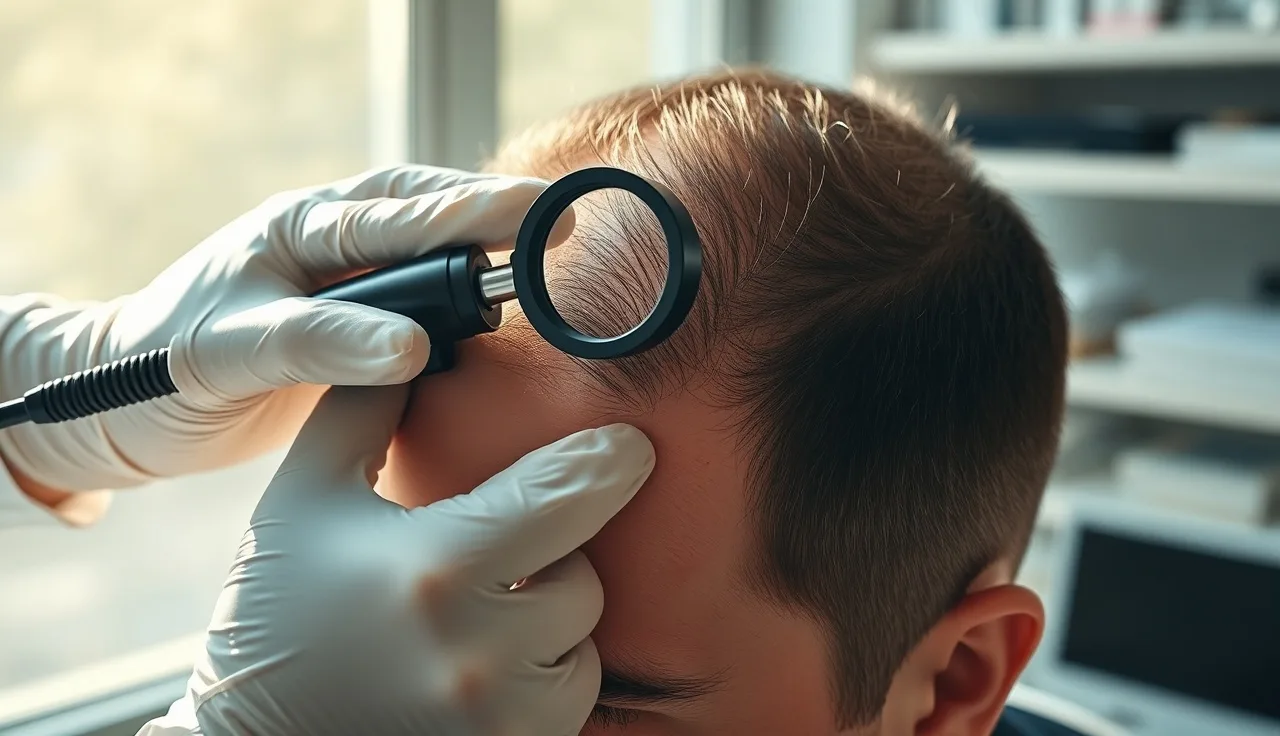
If you suspect a bad outcome, get an independent dermatologist to examine your scalp with trichoscopy before you assume the worst or rush a revision. Some results that look grim at 6 months settle out by 14 to 18 months.
What are the signs of a bad hair transplant clinic before you even book?
The best time to catch a bad transplant is before it happens. Watch for these during your research and consultation:
The pitch is built on graft count, not outcomes. "5,000 grafts for $2,000" is a warning, not a deal. Graft count only means something next to survival rate, placement quality, and hairline design. A clinic competing on raw numbers is optimizing the wrong variable.
Technicians do the extractions and implantations with no surgeon present. In some countries this is more than a bad sign, it may be illegal. In the United States, performing medical procedures without physician oversight violates state medical practice acts [12]. Popular destinations in Turkey, India, and parts of Eastern Europe allow non-physician technicians to run the critical steps while the doctor drops in for minutes. The results show it.
Before-and-after photos are all flawless or clearly filtered. Every surgeon has average cases. A portfolio with nothing but pristine results is cherry-picked or retouched.
No talk of donor preservation. A surgeon who never mentions conserving your donor supply for future work is thinking about this procedure only, not the fact that hair loss keeps going. A 25-year-old who burns his whole donor area on one transplant and keeps losing native hair has no options at 40. [See our guide on understanding your options: hair transplant.]
A 15-minute video consult with no scalp exam. Designing a hairline and reading donor density takes time. A rushed call is built to close a sale, not evaluate a patient.
Prices far below market. A well-done FUE transplant runs $4,000 to $15,000 or more in the US and UK depending on graft count and surgeon reputation [6]. A quote under $1,500 for the same claimed procedure usually reflects a compromised process, more than cheaper labor.
Can a bad hair transplant be fixed?
Sometimes. The honest answer is that some bad transplants are correctable and some are not.
Pluggy, old-style results from large-punch procedures can often be improved by surgically removing or thinning the old plugs and replacing them with natural follicular unit grafts. Surgeons call this graft reduction followed by re-transplantation. It runs 2 to 3 procedures over several years, and the outcome hinges on how much usable donor hair is left and how much scarring the first surgery caused [7].
Unnatural hairlines can be softened by adding single-hair grafts in front of the existing transplant, or by surgically revising the hairline position. This is delicate work that needs a surgeon with real hairline-revision experience, not a general operator.
Donor over-harvesting is the hardest fix. Strip too many follicles from the back of the scalp and there is no clean solution. Scalp micropigmentation can camouflage the patchy donor area. Body hair transplantation (beard or chest hair) is possible but limited, because body hair differs from scalp hair in texture and growth cycle, so results rarely look identical.
If you think your result is bad, wait at least 12 to 18 months from surgery before seeking revision, unless you have a specific medical concern like infection. Plenty of results that look poor at 6 months improve a lot. Then get an independent assessment from a board-certified dermatologist or plastic surgeon who did not do your original procedure. An outside eye matters.
If you are shedding in a way that might have nothing to do with the transplant, read up on conditions like telogen effluvium that can hit both native and transplanted hair.
What are realistic expectations for a good hair transplant result?
A good transplant will not give you the hair you had at 18. That is not a flaw in the surgery, it is arithmetic: you are moving existing hair from one part of your scalp to another, not making new hair. The total count on your head does not go up [11].
What a good transplant can realistically do:
- Restore a natural hairline that fits your face and age.
- Add density to the front and top that reads as continuous with the surrounding hair.
- Produce a result invisible to casual inspection, meaning a friend would not clock it unless you told them.
What it cannot do:
- Replace medical management of ongoing loss. Keep losing native hair without treating it and the transplant turns into an island as the hair around it thins. Most transplant surgeons push patients to continue or start finasteride or minoxidil for men after surgery to protect the native hair [8].
- Give full coverage if your loss is advanced (Norwood 6 or 7) and your donor supply is limited.
- Last forever with no future work. Hair loss keeps moving, so a result that looks good at 35 may need topping up at 50.
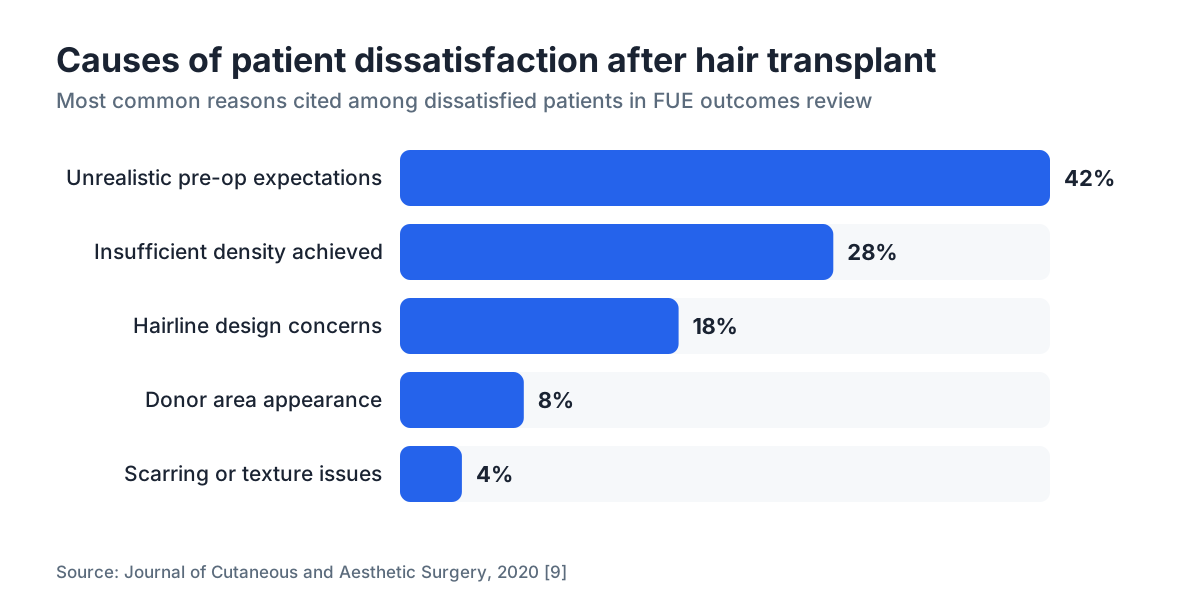
A 2020 review in the Journal of Cutaneous and Aesthetic Surgery found patient satisfaction of 70 to 80 percent among well-selected FUE candidates treated by experienced surgeons, with most dissatisfaction traced to unrealistic pre-op expectations rather than surgical error [9].
How do you evaluate a surgeon's before-and-after portfolio honestly?
Before-and-after photos are the most useful research tool you have and the easiest one to fake. Read them like a skeptic.
Consistent lighting and angle. Before and after shots should match: same angle, same light, wet or dry hair specified the same way. A before photo under harsh overhead light paired with an after photo in soft side light with product in the hair is built to inflate the difference, not show you the truth.
Multiple angles. A real portfolio shows the hairline straight on, at 45 degrees from each side, and from the top. Nothing but straight-on shots from 6 feet away hides more than it reveals.
Cases that look like yours. A Norwood 5 with fine hair should ask to see Norwood 5 patients with fine hair, not easy Norwood 2 hairline touch-ups. Ask directly.
After photos at 12 months or more. Some clinics show results at 6 to 8 months, which can look impressive in the early growth surge before things mature. Verify the timing.
Signs of natural irregularity. Good results show slight asymmetry, a transition zone, and varied density. Perfectly uniform results usually mean heavy product or retouching.
Here is a clean test: if a clinic will not show you at least 20 to 30 full cases, including ones they consider average rather than just their best 10, you have not seen their real work.
Not sure what stage you are at or whether a transplant even makes sense yet? Get a free AI-based scan at MyHairline to see what you are working with before you book any consultations.
What questions should you ask a hair transplant surgeon before committing?
The right questions sort a serious surgeon from a sales pitch fast:
-
Who performs the extractions and the implantations? If the answer is "our trained technicians," ask how much physician oversight there is. In the US a physician must be meaningfully present and responsible [12]. Abroad, ask flat out whether the doctor does the procedure personally or just supervises.
-
How many grafts do I need, and how many do I have available in my donor area? A surgeon who cannot give you a realistic donor assessment is not thinking about your long-term outcome.
-
How do you design the hairline, and can I see it before anything starts? The design should be drawn on your scalp with a marker and approved by you before a single incision.
-
What is your revision policy if I am not satisfied? Reputable surgeons often offer free or reduced-cost touch-ups for poor graft survival. No revision policy tells you how confident they are.
-
Do you recommend ongoing medical therapy to protect native hair? A surgeon who waves off finasteride or minoxidil may be focused on getting you back for more procedures instead of your overall result. The combination of finasteride and minoxidil alongside a transplant is worth talking through.
-
Can I speak with two or three previous patients? Not everyone arranges this, but the surgeons most confident in their work often will.
-
What is your graft survival rate and how do you measure it? Any answer with no specific number or method should make you suspicious.
When is a hair transplant premature or not the right choice?
Hair transplants have a timing problem nobody talks about enough. Surgery should almost never be step one, and in young patients it can create problems that outlast the fix.
A transplant is premature if:
- You are under 25 and your loss pattern has not stabilized. Transplant a hairline onto a 22-year-old with active, unpredictable loss and you freeze that hairline in place while the native hair behind it keeps receding, leaving an island of grafts in a sea of thinning hair ten years later.
- You have not tried medical therapy first. Finasteride stabilizes hair loss in roughly 87 percent of men who use it, per the prescribing label [10]. Minoxidil can add density. These are real tools. A surgeon who never mentions them is leaving them off the table.
- Your cause of loss has not been diagnosed. Transplanting into a scalp with active alopecia areata, untreated scarring alopecia, or traction alopecia treats the symptom and ignores the cause. Whatever killed the original hair can kill the grafts.
Knowing what causes hair loss, and whether yours is the androgenetic type a transplant can actually address, is something to be certain about before any procedure. A board-certified dermatologist with hair loss expertise is the right person to make that call, not a clinic with a financial stake in the answer.
If you are early and wondering about your receding hairline, medical options may buy you years before a transplant becomes necessary, if it ever does.
Sources
- International Society of Hair Restoration Surgery (ISHRS), 2022 Practice Census
- American Academy of Dermatology, Hair Transplant Overview
- Aesthetic Surgery Journal, Hairline Design in Hair Restoration, 2018
- Journal of Dermatological Treatment, Graft Survival Rates in FUE and FUT, 2021
- American Board of Hair Restoration Surgery, Patient Education on Cost
- American Academy of Dermatology, Hair Transplant Overview
- American Hair Loss Association, Treatment Recommendations Post-Transplant
- Journal of Cutaneous and Aesthetic Surgery, Patient Satisfaction in FUE Hair Restoration, 2020
- U.S. Food and Drug Administration, Propecia (finasteride) prescribing label
- National Institutes of Health, MedlinePlus: Hair Transplants
- American Society of Plastic Surgeons, Hair Transplantation Patient Safety