
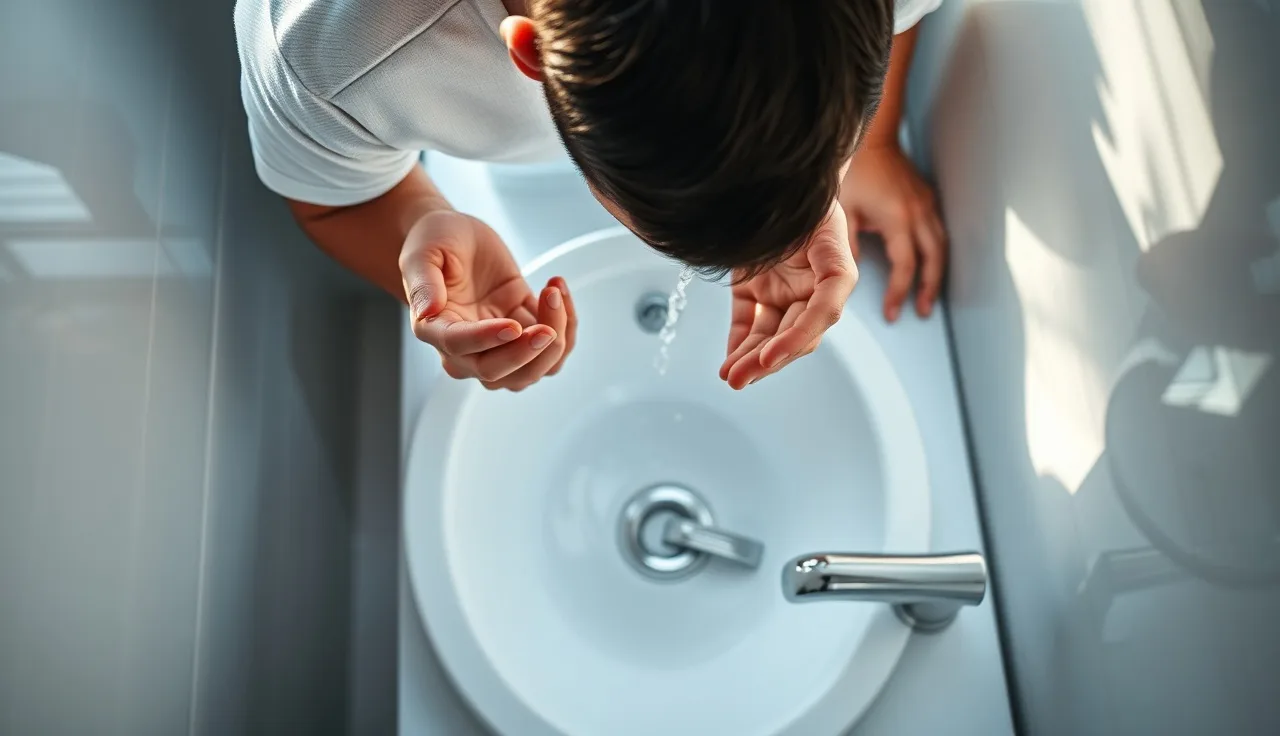
TL;DR: For the first 48-72 hours, don't touch the recipient area. From day 3 or 4, most surgeons allow gentle saline or diluted baby shampoo applied by hand, no rubbing, no jets. Grafts anchor by day 14. The three mistakes that lose grafts are direct water pressure, friction, and skipping washes, which lets crusts harden and rip follicles out when they finally fall off.
Why washing matters so much in the first two weeks
A transplanted graft holds on to nothing mechanical. In the first 24 hours it sits in a fibrin clot, and for the following week or so it depends on new blood vessels growing in around it. Push too hard and the graft pops out. Skip washing and crusts harden around the follicle, then when those crusts drop off later they can drag the graft out with them.
Good post-transplant washing does three jobs at once: keeps the scalp clean enough to block infection, keeps crusting soft, and delivers moisture to healing tissue. All of it without disturbing a graft that hasn't anchored.
Most clinics land on gentle misting or light hand application of diluted shampoo starting around day 3 or 4 [1]. The exact day depends on your surgeon's protocol, the type of procedure (FUE leaves smaller wounds than FUT), and how densely the grafts are packed. Dense packing means grafts sit closer together and your margin for error shrinks.
Washing is not optional, and done right it is not dangerous. Technique decides whether a graft lives, not the act itself.
What actually happens to a graft if you disturb it too early
A follicular unit graft is about 1-2 mm across and sits in a tiny incision. Your surgeon placed it at a precise depth and angle. In the first hours, one thing holds it there: the fibrin clot.
Between days 1 and 5, new capillaries grow into the base of the graft, a process called revascularization [2]. Until those connections form, the graft is loose. A 2016 study in Dermatologic Surgery found graft survival dropped measurably when patients ran direct tap water pressure over the area before day 5, compared with those who used a gentle spray protocol [3].
After day 10 to 14, revascularization is far enough along that careful normal washing is safe. By day 14 most surgeons call the grafts anchored. That is not permission to scrub, but the catastrophic dislodgement risk is basically gone.
You'll see small scabs or crusts around each graft for the first week or two. Normal. The goal is to soften them so they release on their own instead of piling into a thick layer you have to force off.
The day-by-day washing timeline most surgeons follow
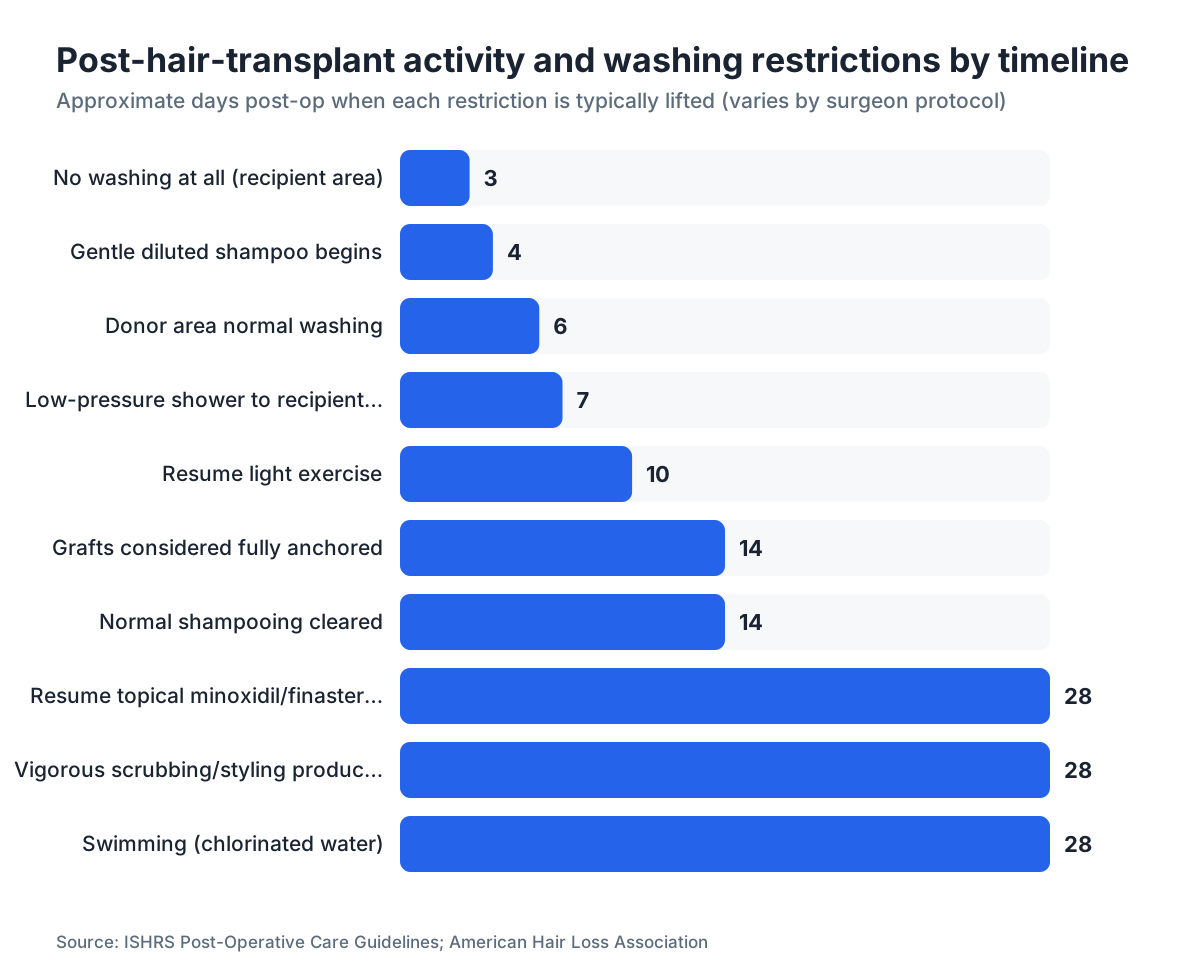
No single protocol rules them all, and your clinic's written instructions beat anything on this page. The schedule below matches the consensus across published post-operative guidelines from the major hair restoration societies [1][4].
| Days post-op | What to do |
|---|---|
| 0-2 | No washing. Keep the recipient area dry. Some clinics mist with saline, but that's done for you at the office. |
| 3-4 | Start gentle washing. Most clinics begin here. Diluted baby shampoo or the clinic's saline spray. Pour or pat, never rub. |
| 5-7 | Add moisture time. Let diluted shampoo sit a minute to soften crusts before rinsing with low-pressure water. |
| 8-14 | Crusts should be nearly gone. Slightly more water pressure is okay, still no rubbing. A soft cupped hand to rinse is fine. |
| 15+ | Normal shampooing is usually cleared. Skip vigorous scrubbing another 2-4 weeks if dense packing was used. |
The donor area (back or sides) heals faster than the recipient area and can often take a more normal wash by day 5 or 6. Keep suds and water from cascading down onto the top of the scalp.
Here's what most patients get wrong. They're so scared of washing that they skip days. That lets crusts harden. A graft trapped in a rigid scab can get knocked loose during sleep just as easily as one blasted by water. Gentle daily washing from day 3 or 4 is the safer bet.
Step-by-step: exactly how to wash on days 3 through 14
Here's the technique. Read it once before you're standing over the sink with wet hands.
Fill a clean cup with lukewarm water. Not hot, because heat drives up swelling and vasodilation. Add 3-4 drops of a mild sulfate-free or baby shampoo and swirl to dilute. You want sudsy water, not concentrated shampoo.
Lean over the sink or step into the shower with your head tilted so water doesn't pour straight down from the crown. Squeeze or pour the diluted shampoo water from the cup onto the recipient area. No shower head on the grafts in the first 7 days. If you have to use the shower, drop the pressure to its lowest setting, hold the head at least 20-25 cm away, and aim it at your forehead so water runs back over the scalp on its own rather than striking grafts.
Let it sit 60 seconds. This is the step everyone skips. That one minute of contact softens crusts, which means you need less force, not more.
Rinse by pouring clean lukewarm water from a cup over the area. Repeat until no shampoo remains. Pat dry with clean, soft cloth or gauze. Never rub. No hot blow-dry for the first week. Cool air from a dryer held 30 cm away is fine and actually helps dry around grafts without any friction.
The whole thing should feel almost absurdly gentle. If you're wondering whether you're scrubbing hard enough to really clean the scalp, you aren't, and that's exactly right.
Which shampoo and products are actually safe to use
Your clinic will probably send you home with a shampoo or saline spray. Use that first. If they don't, or you run out, here's what to reach for.
Baby shampoo (Johnson's style, fragrance-free) shows up most often in published post-operative protocols because it is pH-balanced, fragrance-free, and very mild [4]. Dilute it heavier than feels reasonable: about 10 parts water to 1 part shampoo for the first week.
Sulfate-free shampoos made for color-treated or sensitive hair work too, from around day 7 on. They clean without stripping the scalp's oils, which keeps healing tissue moist.
Skip anything with minoxidil for at least 2 weeks post-op, ideally until your surgeon clears it around the 4-week mark. Minoxidil for men is a solid tool for keeping your non-transplanted hair, but on fresh incisions or immature grafts it can cause irritation and possibly hurt graft survival. The FDA label for topical minoxidil warns against use on irritated or damaged scalp [5]. Same logic for finasteride and DHT blocker topicals: pause them until the scalp closes.
Stay off anti-dandruff shampoos with ketoconazole, coal tar, or selenium sulfide during the first two weeks. They work well against seborrheic dermatitis, but they are biologically active and can irritate tissue that's still healing.
Conditioner is generally fine on the donor area. Keep it off the recipient area until week 3 or 4 unless your surgeon says otherwise.
What about the donor area, do you wash it differently
Yes, and most people never get a straight answer on this.
With FUE (follicular unit extraction), the donor area has dozens to hundreds of tiny 0.8-1.2 mm punch wounds scattered across the back and sides [9]. Smaller than the recipient incisions, but they still need to heal. Skip washing there for the first 2-3 days too. After that, the donor area is tougher than the recipient zone and handles a more normal wash by day 5 or 6 [1][4].
With FUT (follicular unit transplantation, or strip surgery), the donor area has a linear incision sutured closed. Keep that suture line dry for the first 5-7 days. When you wash near it, pat gently around the sutures instead of dragging water across them. Sutures usually come out between days 10 and 14, and your surgeon will tell you how to wash after that.
In practice, tilt your head so water and shampoo flow over the donor area without running hard onto the recipient zone. Wash in sections if you need to.
Can crusts or scabs damage your grafts, and how do you remove them safely
Crusts are unavoidable. They're dried serum, blood, and skin cells that collect around each graft site in the first days. A small crust actually protects the graft at first. Crusts that build thick, harden, and hang on past day 10 are the problem.
A thick hardened crust can compress the graft, cut blood flow to the follicle, and when it eventually drops off (through washing, sleep friction, or catching it by accident) it can take the graft with it. The American Hair Loss Association and most post-op guidelines call for progressive softening, not picking or scrubbing crusts off [4].
The method: after day 5, apply a little diluted shampoo and let it sit 3-5 minutes instead of 60 seconds. The crust softens. Rinse gently. If a crust won't release with this, leave it. Try again tomorrow. Never dig at crusts with your fingernails.
Some surgeons suggest dabbing a very small amount of petroleum jelly or a prescribed lotion on stubborn crusts overnight, then washing in the morning. Still seeing heavy crusting at day 14? Call your clinic instead of forcing anything.
Common mistakes that actually dislodge grafts
Most washing-related graft loss traces back to a short list of avoidable errors.
Direct shower pressure. A standard shower head, even at medium pressure, hits harder than a fresh graft can take in the first 5-7 days. Plenty of patients figure a quick rinse under the shower is fine. In week one, it is not.
Fingernail contact. People instinctively scratch and stimulate the scalp with their nails while washing. Harmless on a normal scalp. On a recipient area full of fresh grafts, a nail can lift a follicle straight out of its incision.
Hot water. Heat causes vasodilation and swelling, which can nudge grafts out of position. Lukewarm is the temperature for the full first two weeks.
Skipping days. Letting crusts build until they need force to remove creates the same risk as direct pressure.
Bending forward too fast. Washing over a sink, avoid quick head movements. Blood rushes to the head when you're bent over and raises pressure at the graft sites, especially in the first 48-72 hours. Lean slowly, hold the position.
Towel rubbing. Even a soft towel dragged across the recipient area can dislodge immature grafts. Pat only.
When can you go back to washing hair completely normally
Most surgeons clear patients for fully normal shampooing at the 2-week mark, assuming the grafts look well-healed and crusting has cleared [1][4]. Normal means your regular shampoo, a normal shower head, and your fingertips (not fingernails) massaging the scalp gently.
Full mechanical normalcy, meaning vigorous scrubbing, hard-pressure shower heads, and styling products worked into the scalp, usually waits until the 4-week mark.
Worth knowing: around weeks 3 to 8, many patients hit shock loss, where transplanted hairs (the shafts, not the follicles) shed fast. This is an expected phase called telogen effluvium, and it has nothing to do with your washing technique [6]. The follicles are still there, growing underneath. Don't panic and rip up your routine thinking you broke something.
If you had a hair transplant and you're worried about the long-term result, your surgeon will schedule check-ins at 1 month, 3 months, and 6-12 months. New growth usually becomes visible at 3-4 months and reaches full density around 12-18 months post-procedure.
How do you know if a graft was actually lost during washing
Honestly, it's hard to tell in the moment. A dislodged graft may look like a tiny scab or a small hair attached to a bulb, like a hair pulled from the root, showing up on your towel or in the cup of water. Most patients never spot individual graft loss because grafts are small and you'd need close inspection to confirm it.
What you would notice if a lot of grafts are lost: bald patches in the recipient area at the 4-6 month mark, when the surrounding hair grows in but those zones stay sparse. A handful of dislodged grafts from bad washing is unlikely to leave a visible gap. Widespread rough washing across the first two weeks could show up as a thinner final result.
If you think you dislodged a graft, photograph the area and call your clinic the same day. Some clinics can re-implant a very recently dislodged graft, though that window is short (a few hours at most) and the outcome is uncertain.
If you want an objective read on density over time, the free AI scan at MyHairline (myhairline.ai/scan) can analyze scalp photos and give you a baseline to compare against, which beats squinting at a mirror.
What else should you avoid in the first two weeks besides washing mistakes
Washing draws the most questions, but it isn't the only thing that decides how many grafts survive.
Sun exposure. UV and heat damage healing tissue and can cause hyperpigmentation in fresh incisions. Wear a loose, soft hat or stay out of direct sun for the first two weeks. Don't rub sunscreen into the recipient area until it's fully healed, because working SPF cream into the scalp is the same as rubbing anything else into it.
Physical activity. Heavy sweating raises scalp moisture and blood pressure at the graft sites. Most surgeons say avoid intense exercise for 7-10 days. A walk is fine. A high-intensity session is not [4].
Smoking. Nicotine constricts blood vessels and cuts oxygen delivery to healing follicles. Wound-healing research consistently finds worse outcomes in smokers [7]. If you ever needed a reason to stop for two weeks, this is it.
Alcohol. It thins the blood and can increase bleeding and swelling. Most clinics say skip it for the first 5-7 days.
Scratching and picking. Sleep on clean pillowcases, keep your hands off your scalp, and when itching ramps up (it will around days 5-7 as healing kicks in) use the antihistamine or topical your surgeon prescribed instead of scratching.
For long-term maintenance after a transplant, finasteride and minoxidil together are the most evidence-backed combination for protecting the non-transplanted hair that's still at risk.
Sources
- International Society of Hair Restoration Surgery (ISHRS): Post-operative Patient Care Guidelines
- National Library of Medicine / StatPearls: Hair Transplantation
- Dermatologic Surgery: 'Effect of postoperative care on hair graft survival' (2016)
- American Hair Loss Association: Hair Transplant Post-Operative Care
- FDA Drug Label: Minoxidil Topical Solution 2% and 5%
- Journal of the American Academy of Dermatology: Telogen effluvium review
- National Institutes of Health / NIH: Smoking and wound healing impairment
- American Academy of Dermatology (AAD): Hair loss overview
- PubMed / Journal of Cutaneous and Aesthetic Surgery: FUE vs FUT comparative outcomes
- Dermatologic Surgery: Hair transplant graft survival and handling study