
TL;DR: Dilute rosemary essential oil to 2-3% in a carrier oil (2-3 drops per teaspoon of carrier), massage into your scalp for 4-5 minutes, and leave it on for at least 30 minutes or overnight before washing out. A 2015 randomized trial found rosemary oil matched minoxidil 2% for hair count at 6 months. It won't reverse significant hormonal hair loss on its own.
Does rosemary oil actually work for hair loss?
Probably, for mild to moderate loss. And the science behind it is stronger than you'd expect for a plant extract.
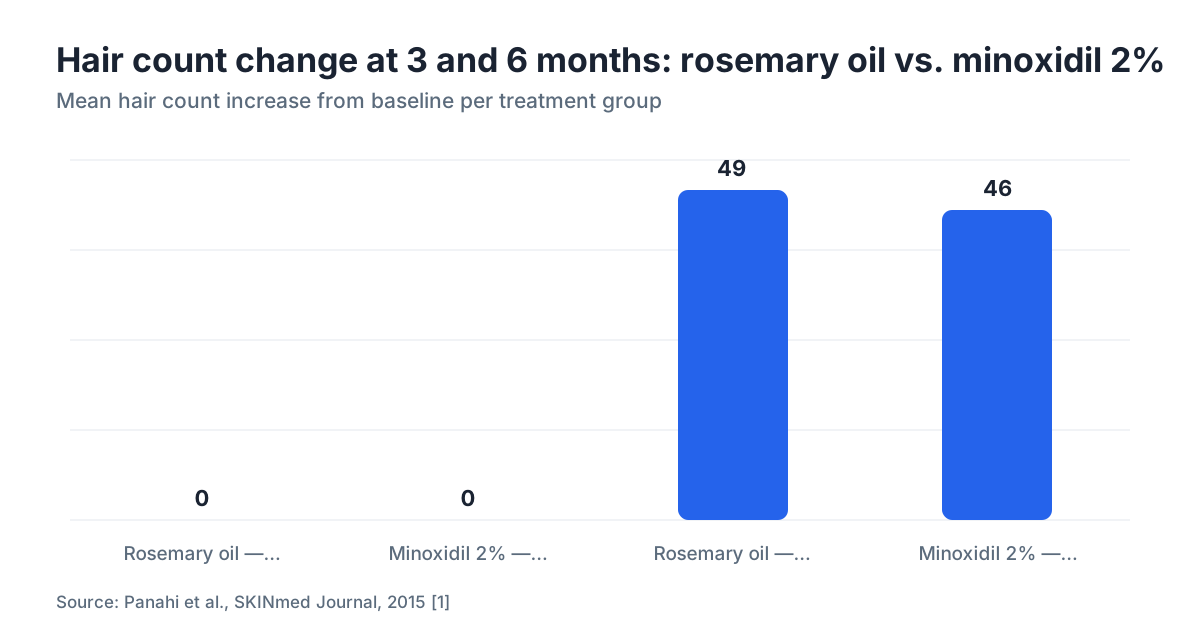
The key study is a 2015 randomized controlled trial in SKINmed Journal comparing rosemary oil to minoxidil 2% in 100 patients with androgenetic alopecia [1]. Both groups applied their treatment twice daily for six months. At three months, neither group showed meaningful change. By six months, both groups had significantly increased hair count compared to baseline. More people in the minoxidil group reported scalp itching than in the rosemary group, which is the opposite of what most people expect.
The proposed mechanism is that rosemary's active compound, carnosic acid, stimulates nerve growth factor and improves circulation to the dermal papilla, the cells at the base of each follicle that govern growth [2]. There's also some evidence it mildly inhibits 5-alpha reductase, the enzyme that converts testosterone to DHT, though the inhibition is far weaker than finasteride. If you want to understand how DHT blockers work, that's worth reading separately.
What rosemary oil won't do: reverse significant androgenetic alopecia on its own, regrow hair on a completely smooth scalp, or work faster than six months. Anyone selling you something different is overpromising.
What concentration of rosemary oil is safe to put on your scalp?
Essential oils are concentrated. Undiluted rosemary oil on your scalp is a bad idea. It can cause contact dermatitis, chemical burns, and in rare cases sensitization that makes you reactive to rosemary forever.
The standard safe range is 1% to 3% dilution in a carrier oil [3]. The SKINmed trial used a 2% concentration, which is the sweet spot most dermatologists reference.
Here's what that looks like in practice:
| Dilution | Rosemary drops | Carrier oil amount | Use case |
|---|---|---|---|
| 1% | 1 drop | 1 teaspoon (5 ml) | Sensitive scalp, first-time users |
| 2% | 2 drops | 1 teaspoon (5 ml) | Standard daily use (matches trial dose) |
| 3% | 3 drops | 1 teaspoon (5 ml) | Normal scalp, experienced users |
One teaspoon is plenty for one application if you're targeting a thinning area. For a full scalp treatment you might use two teaspoons total, so double your drops accordingly.
Always do a patch test before your first full application: put a small amount on your inner forearm, wait 24 hours, check for redness or itching. Skipping this step is how people end up with inflamed scalps.
The carrier oil you choose matters less than people think. Jojoba, coconut, argan, and sweet almond oil all work. If you have fine hair that goes flat, jojoba or grapeseed oil are lighter. If you have coarse or dry hair, coconut or olive oil work fine though they're heavier to wash out.
Step-by-step: the best way to apply rosemary oil for hair growth
This is the method that most closely mirrors what the clinical trial used, adjusted for practical home use.
Step 1: Mix your oil fresh or in a small batch. Combine 4 drops of rosemary essential oil with 2 teaspoons of carrier oil in a small glass bottle. That gives you a 2% dilution and enough for one full-scalp treatment. You can make a week's worth in a 30ml bottle.
Step 2: Separate your hair into sections. You need the oil to reach the scalp, more than coat your hair shaft. Use a comb to part your hair and expose the scalp where you want to focus. For a receding hairline, start at the temples and front hairline.
Step 3: Apply directly to the scalp with your fingertips. Do not pour it on from the bottle. Use your fingertips or a dropper to place small amounts along each part, then move the part and repeat. Work from front to back.
Step 4: Massage for 4-5 minutes. This is where most people rush. Scalp massage has its own evidence base: a 2016 study in ePlasty found that standardized scalp massage increased hair thickness after 24 weeks [4]. Use the pads of your fingers, not your nails. Work in small circular motions. The massage improves blood flow and helps the oil penetrate the upper dermis.
Step 5: Leave it on. The trial protocol used twice-daily application with the oil left on. Realistically, an overnight treatment (apply before bed, wash out in the morning) is more practical and probably more effective than a short-contact rinse. A minimum of 30 minutes is the floor. Overnight is better.
Step 6: Wash it out thoroughly. Use a gentle, sulfate-free shampoo. One wash is usually enough with lighter carriers like jojoba. Coconut oil may need two washes.
That's the entire protocol. It's not complicated. Consistency is the only part that's hard.
Can you use rosemary oil in shampoo instead of applying it directly?
Yes, and it's easier to stick with long-term, though you likely get less benefit than a leave-on treatment.
Adding rosemary oil to your shampoo means contact time is measured in minutes, not hours. The scalp exposure is shorter. But some people find daily shampoo-based application easier to maintain than a pre-wash oil routine, which matters because six months of imperfect use beats one week of perfect use.
If you go this route: add 5-6 drops of rosemary essential oil per ounce of your regular shampoo, mix well before each use (it won't fully emulsify, so shake the bottle), and try to let the shampoo sit on your scalp for 2-3 minutes before rinsing. That short dwell time makes a real difference versus rinsing immediately.
Some rosemary shampoos are sold pre-made. The quality varies enormously. Read the ingredient list: rosemary extract (rosmarinus officinalis leaf extract) should appear in the first half of the list, not near the bottom as a fragrance afterthought. If it's at the bottom, the concentration is too low to do anything meaningful.
The direct scalp application method above is probably more effective. The shampoo method is fine as a supplement, or a lower-effort replacement if the direct method is what's causing you to quit.
How long does rosemary oil take to show results?
Six months. That's the honest answer, based on the only good comparative trial we have [1].
Hair growth cycles make faster results structurally impossible. The anagen (growth) phase of a follicle is the only phase where you can influence fiber production. Telogen (resting) follicles aren't growing, so any treatment, whether rosemary oil, minoxidil, or anything else, has to wait for the follicle to re-enter anagen. That cycle takes three to six months for most scalp follicles.
What the SKINmed trial actually showed: at three months, neither the rosemary group nor the minoxidil 2% group showed statistically significant hair count improvement versus baseline. At six months, both groups did. That three-month gap with no visible change is why most people quit too early.
A realistic timeline looks like this: weeks 1-4, nothing visible happens; weeks 4-12, you might notice reduced shedding (this is normal and not a sign it's failing); weeks 12-24, some people start noticing new fine hairs at the hairline or slower density loss; month six onward, the clearest evidence of whether it's working for you.
Photograph your scalp under consistent lighting every four weeks. Your eye adapts to what it sees in the mirror daily and is terrible at detecting gradual change. A photo comparison is far more reliable.
How often should you apply rosemary oil for hair loss?
The trial used twice-daily application. That's aggressive and messy. In practice, most people find daily or every-other-day application is what they can actually sustain.
Once daily, left on overnight, is probably the best balance of results and livability. If even that's hard because of your hair texture, schedule, or hair color (carrier oils can temporarily affect some dyed hair), every other day is still worth doing.
The key variable is total contact time with your scalp per week, not the number of separate applications. One overnight application gives you roughly 8 hours of contact. Seven short 10-minute applications per week give you less than two hours total. Fewer applications done properly beat frequent half-hearted ones.
If you're combining rosemary oil with other treatments, which many people do, timing matters. If you're using topical minoxidil for men, apply it separately: let minoxidil dry fully (about 4 hours) before applying the rosemary oil mix, or apply them at different times of day to avoid any unpredictable interactions.
Can you mix rosemary oil with minoxidil or other hair loss treatments?
There's no clinical trial testing a combined rosemary-plus-minoxidil protocol, so the honest answer is that we don't have direct evidence on whether combining them beats either alone.
Logically, their mechanisms differ enough that they could complement each other. Minoxidil is a vasodilator that prolongs the anagen phase and widens the follicle [5]. Rosemary works partly through improved circulation and possible mild DHT inhibition. These aren't redundant pathways.
Practically, you should not mix them in the same product you apply at the same time. Minoxidil's absorption rate can be altered by carrier oils. The FDA-approved formulations (2% and 5% topical minoxidil) are tested as standalone products, and changing what you mix them with is not a tested approach. If you want to read more about minoxidil side effects before adding it to your routine, that's a smart starting point.
The cleanest approach: use minoxidil in the morning per its label, let it dry, and do your rosemary oil treatment at night. That's not validated by a trial, but it avoids the mixing problem.
Finasteride and rosemary oil is a similar story. They address the same upstream problem (DHT) through different mechanisms, with finasteride being dramatically more potent. If you're already on finasteride, adding rosemary oil is low-risk and might offer some additive benefit, but don't expect rosemary to substitute for finasteride's hormonal effect.
What type of hair loss responds best to rosemary oil?
The SKINmed trial enrolled patients with androgenetic alopecia (pattern baldness), so that's where the evidence points [1]. Androgenetic alopecia is the most common form of hair loss, affecting a large majority of men and many women, particularly after menopause [11].
For telogen effluvium, the temporary shedding triggered by stress, illness, nutritional deficiency, or hormonal shifts, rosemary oil might help by supporting scalp circulation during recovery, but the primary treatment is addressing the root cause. No topical alone fixes a nutritional deficit or a post-viral shed.
Alopecia areata is an autoimmune condition and outside the scope of what rosemary oil addresses. The mechanism there is immune-mediated follicle attack, not circulation or DHT.
The honest ranking of who's likely to benefit most:
- Early androgenetic alopecia (Norwood I-III in men, Ludwig I-II in women) where follicles are miniaturizing but not yet gone
- Diffuse thinning without a clear hormonal driver
- As a maintenance tool for someone who has stabilized loss with medication and wants to support scalp health
If you want to understand what causes your hair loss before deciding on any treatment, do that first. Rosemary oil applied to a scalp where follicles are already permanently gone won't produce results.
If you want a fast read on where your own hairline stands, the free AI scan at MyHairline (myhairline.ai/scan) can give you a Norwood or Ludwig stage estimate based on photos you upload, which helps you calibrate what treatments make sense.
Are there any side effects or risks from rosemary oil on the scalp?
Rosemary oil is generally well-tolerated at 2-3% dilution, but risks exist and are worth knowing before you start.
Contact dermatitis is the main concern. Rosemary contains compounds including camphor and 1,8-cineole that can irritate sensitive skin. The SKINmed trial reported scalp itching and redness in some participants in both groups, with the rosemary group actually reporting slightly less itching than the minoxidil group [1]. Individual reactions still vary.
Allergic sensitization is a real risk with repeated essential oil use. If you develop a reaction, stop immediately. Continued exposure after sensitization can worsen the reaction.
Rosemary oil is not safe to ingest in concentrated form. Keep it away from eyes. If it gets in your eyes, flush with water immediately.
For pregnant or breastfeeding people: rosemary in normal culinary amounts is fine, but concentrated essential oil applied to large skin areas has not been safety-tested in pregnancy. Most practitioners suggest caution. Speak with your OB before using it.
People with epilepsy should also be cautious. Rosemary's camphor content has been associated with a lowered seizure threshold in high doses, though the dose absorbed through scalp application is quite small.
The American Academy of Dermatology has not issued a specific guideline on rosemary oil for hair loss as of the most recent update, meaning neither endorsement nor contraindication at the institutional level [6]. It sits in the category of interventions that are probably safe and possibly helpful, without the formal evidence base that minoxidil or finasteride carry.
How does rosemary oil compare to minoxidil, finasteride, and other treatments?
Straight comparison, no hype:
| Treatment | Mechanism | Evidence level | Time to results | Monthly cost (approx.) |
|---|---|---|---|---|
| Rosemary oil 2% | Circulation, mild DHT inhibition | 1 RCT vs. minoxidil 2% [1] | 6 months | $5-15 |
| Minoxidil 2% topical | Vasodilation, anagen prolongation | Multiple RCTs, FDA-approved [5] | 4-6 months | $15-30 |
| Minoxidil 5% topical | Same, stronger | FDA-approved, better for men | 3-6 months | $15-30 |
| Finasteride 1mg oral | 5-alpha reductase inhibitor, lowers DHT | Multiple large RCTs, FDA-approved | 6-12 months | $20-80 |
| Hair transplant | Surgical follicle relocation | Well-established surgical outcomes | 12-18 months post-op | $4,000-15,000 total |
Rosemary oil holds up surprisingly well for what it costs, particularly at early stages where follicles are still active. The honest caveat: the one trial comparing it to minoxidil used the weaker 2% minoxidil formulation, not the 5% that most men use. We don't know how rosemary oil stacks up against 5% minoxidil or against finasteride and minoxidil used together.
For moderate to advanced androgenetic alopecia, rosemary oil alone is not a substitute for proven medical treatments. For early loss, as the only thing someone is willing to try, or as a complement to medication, it's a reasonable, low-risk choice. If cost is the deciding factor and the loss is mild, start here. If the loss is progressing quickly, rosemary oil is not enough on its own.
You can also think about this in terms of risk. Rosemary oil has essentially no systemic side effects at scalp-applied doses. Finasteride has sexual side effects in a subset of men (roughly 2-4% in trials, though post-market reports suggest higher rates for some outcomes). Minoxidil can cause initial shedding and, in the oral form, systemic effects. Rosemary oil's risk profile makes it worth trying as a first step or adjunct, particularly for people who are wary of pharmaceutical side effects.
Where should you buy rosemary essential oil and what should you look for?
This matters more than most people realize. The essential oil market is largely unregulated, and mislabeling is common. A 2018 analysis of lavender and tea tree oils found substantial purity variation across commercial products, and rosemary oil faces the same quality issues.
What to look for on the label:
The latin name must be Rosmarinus officinalis (some products now list Salvia rosmarinus, the updated botanical name for the same plant). If the label just says "rosemary oil" without a latin name, skip it.
Look for "100% pure essential oil" or "undiluted." Products labeled "rosemary oil" are sometimes pre-diluted in a carrier and useless as a starting point for making your own dilution at a known concentration.
Gas chromatography/mass spectrometry (GC/MS) testing is a marker of quality. Some reputable brands publish batch-specific GC/MS reports. Brands that do this include Plant Therapy, Eden Botanicals, and Tisserand (confirm current testing practices directly with the brand, as this can change).
Price is a rough quality signal. A 10ml bottle of pure rosemary essential oil should cost $8-20 USD at retail. Under $5 is suspicious. Over $40 for 10ml is almost certainly overpriced marketing.
Buy from a company that stores and ships essential oils in dark glass bottles, not clear plastic. Rosemary oil oxidizes in light, and oxidized oil is less effective and more likely to irritate skin.
For hair loss supplements you might be considering alongside rosemary oil, apply the same skepticism to quality and evidence.
What is the best rosemary oil routine for a receding hairline specifically?
A receding hairline usually means androgenetic alopecia starting at the temples and frontal hairline. The same 2% concentration and overnight application protocol applies, but your targeting changes.
For the hairline specifically: use a fine-toothed comb or the back of a rat-tail comb to part the hair just above the hairline and along the temple recession. Apply the oil mixture directly along these parts, touching the scalp. Then massage with two or three fingers in small circles along the hairline and temples for 2-3 minutes before moving to the crown.
The follicles at the hairline are the ones miniaturizing first in a typical Norwood progression. Getting the oil directly onto the scalp (not the hair) at those precise spots is the entire point. It's easy to spend five minutes rubbing carrier oil into your hair shaft without ever touching the scalp where it needs to go.
A receding hairline that's visibly progressing over months is a signal to be realistic about what rosemary oil can do. It may slow the progression. It is unlikely to fully reverse a recession that's already several centimeters back. At that stage, a medical consultation to discuss finasteride, minoxidil, or a hair transplant evaluation is genuinely warranted, more than a suggestion.
MyHairline's free AI scan at myhairline.ai/scan can help you classify your hairline stage before you decide on a treatment stack. Knowing your Norwood stage matters because it changes the math on what's realistic.
Sources
- SKINmed Journal, Panahi et al. 2015, Rosemary oil vs. minoxidil 2% RCT
- Journal of Investigative Dermatology, Murata et al. 2013, Carnosic acid and nerve growth factor
- International Fragrance Association (IFRA), Essential oil concentration standards
- ePlasty, Koyama et al. 2016, Standardized scalp massage and hair thickness
- FDA, Minoxidil OTC drug labeling and approval
- American Academy of Dermatology, Hair loss overview and treatment guidance
- Toxicological Research, Oh et al. 2014, Peppermint oil and hair growth in mice
- PubMed Central, Almohanna et al. 2019, role of vitamins and minerals in hair loss
- FDA, 21 CFR Part 358, topical minoxidil monograph
- HHS MedlinePlus, Androgenetic alopecia