
TL;DR: Falling estrogen and progesterone during menopause shifts more hair follicles into the shedding phase, causing diffuse thinning mainly at the crown and part line. Up to 40-50% of postmenopausal women are affected. Topical minoxidil 2% is the only FDA-approved treatment for women; other options have supporting evidence but fewer large trials. No treatment fully reverses severe loss.
What does menopause actually do to your hair?
Estrogen and progesterone do something useful for your hair that almost nobody talks about: they prolong the anagen (growth) phase of the hair cycle. When those hormones fall sharply during perimenopause and menopause, follicles spend less time growing and more time in telogen (the resting, pre-shed phase). The result is diffuse thinning, mostly across the top of the scalp, with the frontal hairline usually staying intact. That pattern is different from male-pattern baldness, which advances in a predictable V-shaped recession. Women tend to keep their hairline but lose density everywhere behind it.
Androgens make things worse. As estrogen drops, the ratio of androgens to estrogens shifts. Dihydrotestosterone (DHT) binds to receptors in genetically susceptible follicles and miniaturizes them over repeated cycles, producing finer, shorter hairs until some follicles stop producing visible hair at all. This is the same biological process behind androgenetic alopecia in men, just playing out more slowly and with a different distribution in women [1].
There is also a stress-related shedding event that many women hit in perimenopause that looks different: sudden, dramatic daily shedding that begins two to four months after a hormonal shift or a stressful life event. That is telogen effluvium, and it is worth understanding separately because the treatment approach differs. The two conditions often overlap in menopausal women, which makes diagnosis harder.
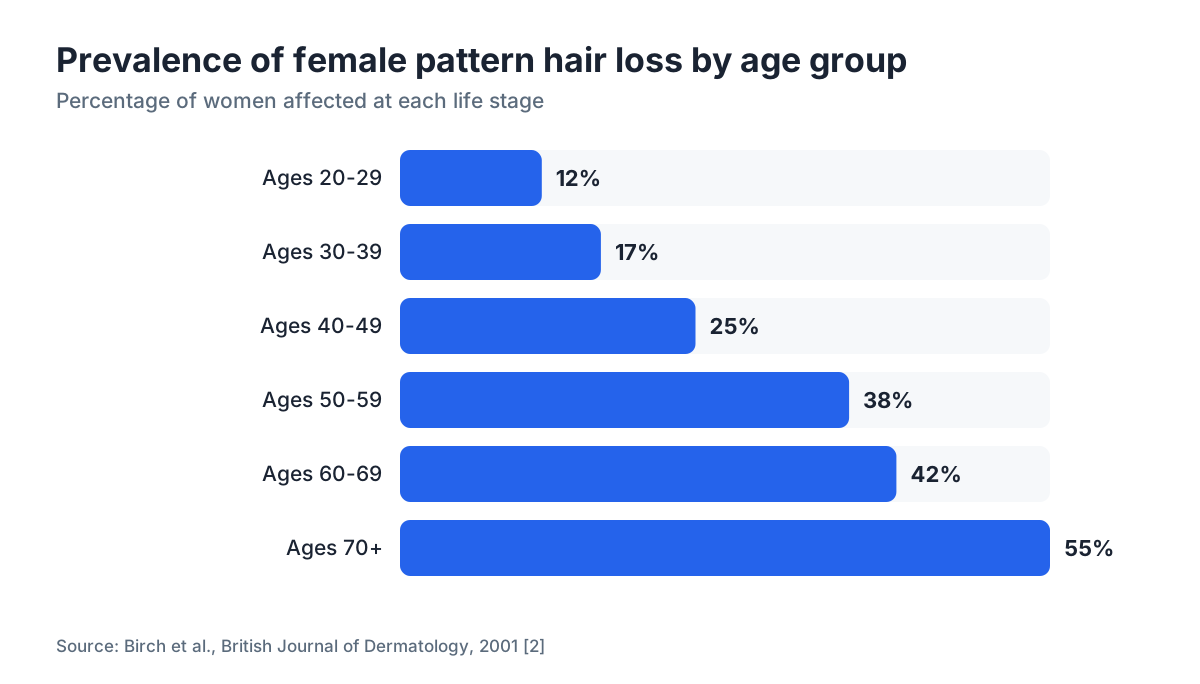
A large cross-sectional analysis published in the British Journal of Dermatology found that approximately 38% of women under 70 and over 29% of women over 70 have female pattern hair loss (FPHL), making it the most common hair disorder in women [2]. Prevalence rises sharply after menopause.
How do you know if menopause is actually causing your hair loss?
Not all hair loss in a menopausal woman is menopausal hair loss. A dermatologist will typically run blood work before assuming hormones are the only culprit. The short list of things that get ruled out first: thyroid disease (both hypo and hyperthyroid cause diffuse shedding), iron deficiency (ferritin below 30 ng/mL is a common hidden driver [3]), zinc deficiency, vitamin D deficiency, and autoimmune conditions like alopecia areata or lupus.
The physical exam matters too. FPHL produces a characteristic widening of the part line, with density loss fanning back toward the crown. The Ludwig scale classifies it in three stages: Stage I is mild widening of the part, Stage II is moderate thinning with visible scalp, and Stage III is severe thinning with the scalp clearly visible across much of the top [13]. A dermoscopy exam, where the dermatologist uses a magnifying device on the scalp, can reveal miniaturized follicles and the ratio of terminal to vellus hairs without needing a biopsy.
If your shedding started suddenly and is diffuse rather than patterned, and if you can time it to about two to four months after a stressor, surgery, crash diet, or illness, that points more toward telogen effluvium than FPHL. The distinction matters because telogen effluvium usually resolves on its own once the trigger is removed; FPHL is chronic and progressive.
One practical self-check: the pull test. Grasp about 60 hairs between your fingers, apply gentle traction, and pull slowly. Losing more than six hairs per pull suggests active shedding. It is not diagnostic on its own but gives a dermatologist useful information. If you want a quick baseline picture before your appointment, a free AI scan at MyHairline can photograph your part line and flag visible thinning patterns worth discussing with your doctor.
Which treatments for menopause hair loss actually have evidence?
Let me be direct: the evidence hierarchy here is not great. There are solid data on topical minoxidil, decent data on oral minoxidil, limited trial data on spironolactone, and mostly small or poor-quality studies on everything else. Here is what the research actually says.
Topical minoxidil (2% for women): This is the only FDA-approved treatment specifically for female pattern hair loss [5]. It extends the anagen phase and increases follicle size. A randomized controlled trial published in the Journal of the American Academy of Dermatology found that 2% minoxidil solution produced significantly more hair regrowth than placebo after 32 weeks in women with FPHL [6]. The 5% foam is approved for women too, though it was initially studied mainly in men. Results take four to six months to appear. If you stop using it, gains reverse within three to four months. Roughly 40-60% of women see moderate improvement; the rest see stabilization or minimal change. Side effects are generally mild, though scalp irritation and, less commonly, unwanted facial hair growth from the solution running down the face, are reported. Read more about those tradeoffs at minoxidil side effects.
Oral minoxidil (low-dose): Doses of 0.25-1 mg/day are used off-label for women. A 2020 retrospective study in the Journal of the American Academy of Dermatology of 100 women found that 79% had improvement in hair density with low-dose oral minoxidil over six months [7]. It avoids scalp irritation but carries systemic side effects including fluid retention and hypertrichosis (body hair growth). Your doctor needs to assess your blood pressure and cardiac history first. More detail at oral minoxidil.
Spironolactone: This is a potassium-sparing diuretic used off-label for FPHL because it blocks androgen receptors. Doses of 50-200 mg/day are typical. The evidence is mostly retrospective observational data, not large randomized trials. Reviews find beneficial effects in most studied women but note that large controlled trials are still missing. It cannot be used in pregnancy. It often works better when FPHL is clearly androgen-driven (think: oily skin, acne, or elevated androgens on blood work).
Finasteride and dutasteride: These are 5-alpha-reductase inhibitors that block DHT production. Finasteride is FDA-approved for men at 1 mg/day but is used off-label in postmenopausal women. A meta-analysis in the Journal of the American Academy of Dermatology found that 5-alpha-reductase inhibitors improved hair counts in postmenopausal women, but the evidence is weaker than for men and the drug is teratogenic (it causes birth defects and must not be used in premenopausal women without reliable contraception) [11]. Dutasteride has a similar profile with slightly stronger DHT suppression and even less trial data in women.
Hormone replacement therapy (HRT): The relationship between HRT and hair loss is complicated. Estrogen itself does not directly treat FPHL, but restoring estrogen-to-androgen balance can slow the progression in some women. Progestin choice matters: synthetic progestins with high androgenic activity (like norethindrone) can worsen hair loss, while progesterone or low-androgenic progestins may be more neutral. This is a conversation to have with your gynecologist or menopause specialist, not a decision to make independently.
What do vitamins and supplements actually do for female hair loss in menopause?
This is where a lot of money gets spent on very little evidence. Let me sort by what has reasonable support versus what is mostly marketing.
Correcting a real deficiency: If your ferritin is below 30 ng/mL, correcting iron deficiency can slow shedding. If your vitamin D is low (below 20 ng/mL per most clinical guidelines), correcting it may help, though vitamin D supplementation alone has not been shown to regrow hair in women with normal levels [3]. Same for zinc. The point is: supplements work when they fix a documented deficiency. Taking them when your levels are already normal does not produce extra hair.
Biotin: The internet loves biotin. The evidence does not. Biotin deficiency causes hair loss, but genuine biotin deficiency in adults without underlying metabolic disorders is rare. A 2017 review in Skin Appendage Disorders found no evidence that biotin supplementation promotes hair growth in non-deficient individuals [8]. High-dose biotin also interferes with thyroid and troponin lab tests, which is a real clinical hazard. Skip it unless your doctor specifically identifies a deficiency.
Nutrafol and similar products: These multi-ingredient supplements (typically containing saw palmetto, ashwagandha, marine collagen, and various vitamins) have small company-sponsored trials showing modest improvement in hair density. A 2018 randomized controlled trial funded by the manufacturer showed improvement in women taking the supplement versus placebo, but it was small (n=40) and industry-funded [9]. Not worthless, but not enough to confidently recommend over proven treatments. More context at hair loss supplements.
Marine collagen and keratin supplements: Some small trials show improvements in hair thickness and tensile strength, not necessarily in density or follicle count. If you want to take one, it is unlikely to hurt. Just do not expect it to reverse pattern hair loss.
The honest answer on female hair loss vitamins: correct any deficiency your bloodwork reveals, then put the rest of your money into topical or oral minoxidil. That is the approach most dermatologists would recommend in private.
How is female hair loss after menopause different from premenopausal loss?
Timing and hormone context matter a lot here. Premenopausal women who develop FPHL often have a stronger androgen excess signal, whether from polycystic ovary syndrome, elevated DHEA-S, or elevated free testosterone. The loss pattern can be the same, but the hormonal workup looks different and treatment priorities shift.
Postmenopausal FPHL, meaning female hair loss after menopause, is mostly driven by the drop in estrogen's protective effect combined with the now relatively higher androgen environment. The scalp becomes more sensitive to DHT that was always present but previously balanced by estrogen. Because DHT-sensitive follicles have been accumulating damage over years, the thinning tends to be more diffuse and advanced by the time a postmenopausal woman sees a dermatologist.
One practical difference: postmenopausal women have more treatment options because pregnancy risk is gone. Finasteride and dutasteride are genuinely off the table for premenopausal women without reliable contraception due to teratogenicity, but in a postmenopausal woman, the risk profile looks more acceptable.
What causes hair loss covers the full range of triggers beyond menopause, which is useful if your thinning started before your periods stopped.
Can a hair transplant fix menopause-related hair loss?
It can help in the right patient, but it is not the obvious next step the way it might be for a man at Norwood VI. Here is why.
Hair transplants move follicles from a donor area (typically the back and sides of the scalp) to areas of thinning. In male-pattern baldness, the back and sides usually retain DHT-resistant follicles indefinitely, giving surgeons a reliable donor supply. In female pattern hair loss, thinning is diffuse across the whole scalp, which can compromise donor zone quality. If the donor follicles are themselves miniaturizing, transplanted hairs may eventually thin too.
Good candidates for transplant among women with FPHL are those with stable, localized thinning who have intact donor density at the back of the scalp. A scalp biopsy to assess follicle health before surgery is standard practice at reputable clinics. Women with diffuse unpatterned alopecia (meaning thinning all over including the back) are generally poor candidates.
Cost in the US ranges from roughly $4,000 to $15,000 depending on graft count and technique [10]. Full detail is at hair transplant. If you are considering this route, get at least two consultations with board-certified hair restoration surgeons, and make sure they address donor density specifically.
Does hormone replacement therapy help or hurt hair loss after menopause?
HRT's relationship with hair is genuinely nuanced and the evidence is messier than either side of the debate admits.
Estrogen and progesterone both have effects on the hair cycle. Estrogen prolongs anagen, so it is broadly hair-protective. Progesterone has a weak anti-androgenic effect in some formulations, which could theoretically slow FPHL. There are case series and observational data suggesting that women on HRT have better hair density than those not on it, but large controlled trials designed specifically around hair outcomes are scarce.
The variable that matters most is which progestogen is used. Synthetic progestins vary widely in androgenic activity. Norethindrone acetate and levonorgestrel have relatively high androgenic activity and have been reported to worsen hair loss in some women. Micronized progesterone (Prometrium) and dydrogesterone have lower androgenic activity and are more commonly recommended when hair is a concern. An endocrinologist or menopause specialist familiar with HRT formulations is the right person to work through this with you, not a general practitioner who prescribes HRT infrequently.
HRT decisions involve breast cancer risk, cardiovascular risk, bone density, and quality of life, far more than hair. Hair should be one factor in a broader conversation, not the driving indication.
What does a realistic treatment timeline look like?
People underestimate how slow hair biology is. A single hair cycle takes two to six years. Treatments work by gradually shifting follicles back toward healthy growth cycles, not by immediately producing new hair. Here is a realistic calendar:
Months 1-3: Most people see no obvious improvement. Some women notice increased shedding early with minoxidil, which is actually resting hairs getting pushed out to make way for new growth. This is normal and temporary.
Months 4-6: Slower shedding and early regrowth become noticeable. Hair density photography or a trichoscopy exam at a dermatologist's office can document objective changes before you can see them with the naked eye.
Month 12: A fair point to judge whether a treatment is working. The American Academy of Dermatology considers 12 months the minimum evaluation period for FPHL treatment response [1].
Ongoing: FPHL is chronic. Any treatment that works needs to continue indefinitely to hold results. Stopping minoxidil means losing the gains within three to four months.
If you are combining treatments, which is common, the timeline is similar, but some dermatologists see better results when spironolactone or an oral DHT blocker is added to topical minoxidil. Read about the combination approach at finasteride and minoxidil, which covers the evidence on stacking these treatments.
Patience is the hardest part of treating FPHL. Most women who quit treatment early do so in months two or three, right before they would have started seeing results.
What lifestyle changes actually make a difference?
Not many, honestly. Hair loss myths fill the internet, so let me separate signal from noise.
Diet: Severe caloric restriction or crash dieting is a known trigger for telogen effluvium. Adequate protein intake (roughly 0.8g per kilogram of body weight per day as a minimum per the Dietary Reference Intake, with some hair-focused nutritionists recommending higher) matters because keratin is a protein. A balanced diet helps, but eating kale every day will not regrow hair on a miniaturizing follicle.
Scalp care: Keeping the scalp clean, reducing chronic inflammation, and minimizing traction hairstyles (tight ponytails, braids, or extensions) prevents traction alopecia layering on top of FPHL. Scalp massages, while popular, have only one small study suggesting modest benefit (a 2016 Japanese study of nine men), and the evidence in women with FPHL is essentially absent.
Heat and chemical processing: These damage the hair shaft, not the follicle. They can make existing thinning look worse but do not cause or accelerate FPHL. If your hair is already fragile and fine from thinning, cutting back on heat damage reduces breakage and makes what you have look better.
Stress: Chronic psychological stress elevates cortisol, which can extend the telogen phase. Managing sleep and reducing chronic stress is genuinely good for hair over the long term, though it works slowly. This is not a replacement for treatment, but it is not nothing either.
If you are wondering whether something specific you are doing, like creatine supplementation, might be contributing, does creatine cause hair loss covers that question with the available evidence.
When should you see a dermatologist, and what will they actually do?
See a board-certified dermatologist, ideally one who specializes in hair disorders, if: your shedding is heavy (more than 150 hairs per day consistently), your part line is visibly wider than it was a year ago, you are finding patches of complete hair loss rather than diffuse thinning, or your scalp has any itching, burning, or tenderness. Scarring alopecias like lichen planopilaris destroy follicles permanently. Catching them early is what saves the hair.
At the first visit, a hair-focused dermatologist will typically take a detailed history (stress, illness, medications, family history), examine the scalp with a dermatoscope, and order baseline labs. Standard bloodwork includes: TSH (thyroid), complete blood count, ferritin (iron stores), serum zinc, vitamin D (25-OH), total and free testosterone, DHEA-S, and prolactin. Some will add a scalp biopsy to separate FPHL from other diagnoses when the clinical picture is unclear.
Treatment is almost never one-and-done. Expect to revisit every four to six months at first for photography and assessment. If you have not tried topical minoxidil yet, most dermatologists will start there because the evidence is strongest and it is over the counter. If minoxidil is not enough after 12 months, adding spironolactone or a low-androgenic HRT formulation is the typical next step.
For women who want a preliminary sense of their thinning pattern before booking an appointment, a tool like the free AI hair scan at MyHairline can help you describe what you are seeing more precisely when you talk to your dermatologist.
DHT blockers and menopause: do they work for women?
DHT is the androgen most responsible for follicle miniaturization in FPHL, so blocking it makes biological sense. The real question is whether the available drugs deliver in women.
DHT blockers work through two main mechanisms: 5-alpha-reductase inhibition (finasteride, dutasteride) which reduces DHT production, and androgen receptor blockade (spironolactone, bicalutamide) which stops DHT from acting on the follicle even if it is present.
In postmenopausal women, finasteride at 1 mg/day has shown improvement in hair density in several small trials. A systematic review in the Journal of the American Academy of Dermatology covering multiple randomized controlled trials found that 5-alpha-reductase inhibitors improved hair counts in women versus placebo, but the trials were small and effect sizes were modest [11]. Dutasteride inhibits both type 1 and type 2 5-alpha-reductase (finasteride only inhibits type 2) and may be stronger, with some clinicians using it at 0.5 mg/day off-label when finasteride has not worked.
Spironolactone is probably the most commonly prescribed systemic treatment for FPHL in the US outside of minoxidil. It is not FDA-approved for this indication, but it has decades of clinical use, a known side-effect profile, and reasonable observational evidence. The main downside beyond the teratogenicity issue (irrelevant in postmenopausal women) is electrolyte monitoring: high-dose spironolactone can raise potassium, so periodic blood tests are needed.
The honest takeaway: DHT blockers are a real option for postmenopausal women with FPHL, especially when there is a clear androgen-excess signal. They are not magic, and the trial evidence is thinner than most dermatologists would like.
Sources
- American Academy of Dermatology, Hair Loss in Women
- Birch MP et al., British Journal of Dermatology, 2001, prevalence of FPHL
- Trost LB et al., Journal of the American Academy of Dermatology, 2006, iron and hair loss
- U.S. FDA, Drug Approval Database, Rogaine (minoxidil) topical
- DeVillez RL et al., Journal of the American Academy of Dermatology, 1994, minoxidil 2% RCT in women
- Randolph M, Tosti A, Journal of the American Academy of Dermatology, 2021, low-dose oral minoxidil in women
- Patel DP et al., Skin Appendage Disorders, 2017, biotin and hair/nail health review
- Ablon G, Journal of Drugs in Dermatology, 2018, Nutrafol RCT in women
- International Society of Hair Restoration Surgery, Practice Census 2022
- Adil A, Godwin M, Journal of the American Academy of Dermatology, 2017, systematic review of FPHL treatments
- National Institute on Aging, NIH, Menopause
- Blumeyer A et al., JDDG (Journal of the German Society of Dermatology), 2011, S1 guideline on FPHL