TL;DR: The FDA approves 2% topical minoxidil twice daily for women, but dermatologists commonly use 5% once daily or low-dose oral minoxidil (0.25 to 1 mg/day) off-label with strong trial support. Higher doses grow more hair but carry more side effects. Your diagnosis, hormonal status, and tolerance should drive the choice.
What is the right minoxidil dose for female hair loss?
The short answer: it depends on whether you're using topical or oral minoxidil, and what your dermatologist is trying to treat.
The FDA approved 2% topical minoxidil solution (1 mL twice daily) for women in 1991 under the brand name Rogaine. That's the only dose with a specific female approval on the label. [1] The 5% foam and 5% solution carry an FDA approval for men, though many dermatologists prescribe the 5% concentration off-label for women because the clinical data supports it growing significantly more hair than the 2% strength.
Oral minoxidil is a different story entirely. At 0.25 mg to 1 mg per day, it's used off-label for female pattern hair loss (androgenetic alopecia) and increasingly for other diffuse loss conditions. No oral minoxidil product is FDA-approved specifically for hair loss in any gender, though the tablet itself is FDA-approved as a blood pressure medication at much higher doses (5 to 40 mg/day). [2]
The practical takeaway: start with what's FDA-approved for women (2% topical twice daily), then talk to a dermatologist about whether 5% topical or low-dose oral makes sense for your pattern and lifestyle.
How does minoxidil actually work for women's hair?
Minoxidil is a potassium channel opener. It widens blood vessels near hair follicles and extends the anagen (growth) phase of the hair cycle, which means follicles that were shrinking spend more time actively growing hair. [9]
In women, the most common pattern of loss is diffuse thinning across the crown and part line, called female pattern hair loss or FPHL. Minoxidil works well for this because the follicles are miniaturized but still alive. It can't revive completely dead follicles, which is why starting earlier tends to produce better results.
It does not block dihydrotestosterone (DHT). That's an important distinction. If your hair loss has a significant hormonal driver, minoxidil slows the visible effects by stimulating growth, but it doesn't address the underlying androgen sensitivity. That's where treatments like finasteride or other DHT blockers might complement it, though finasteride carries significant pregnancy risks and is generally not used in women of childbearing age without strict precautions.
One nuance worth knowing: minoxidil requires conversion to its active form (minoxidil sulfate) by an enzyme called sulfotransferase, found in hair follicles. Some people, estimated at roughly 40%, are low sulfotransferase responders and see minimal benefit from topical minoxidil because the conversion step is weak at the scalp. [3] Oral minoxidil bypasses this partly because it's converted systemically, which may explain why some non-responders to topical formulations do better on oral.
2% vs 5% topical minoxidil for women: which dose grows more hair?
The 5% concentration grows more hair. That finding is consistent across the studies that compared the two directly.
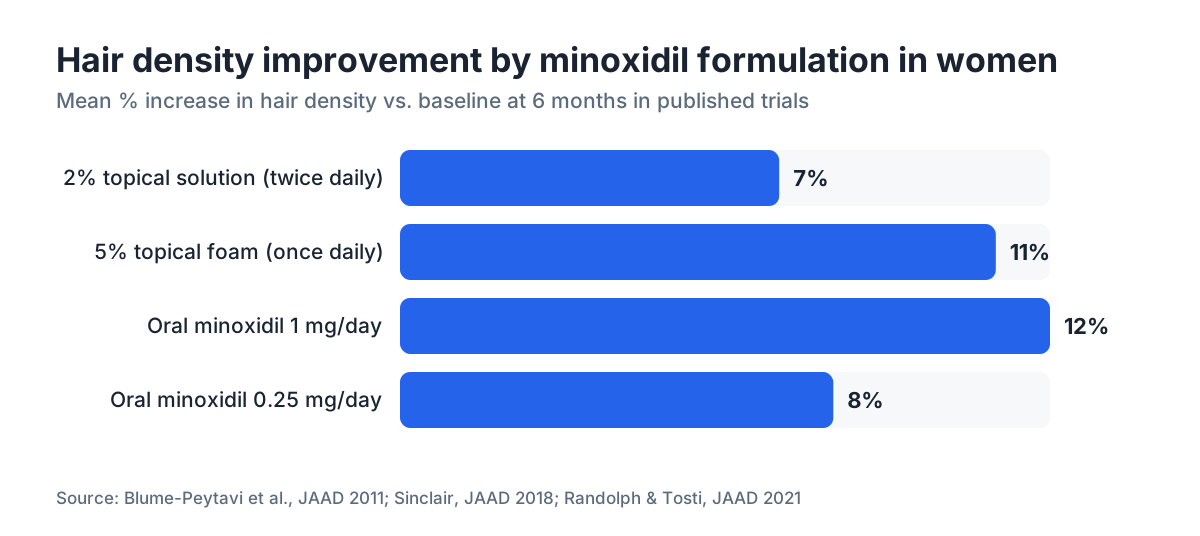
A 48-week randomized controlled trial published in the Journal of the American Academy of Dermatology found that women using 5% minoxidil foam once daily had significantly greater increases in total and terminal hair count compared with women using 2% solution twice daily. [4] The 5% group also reported better satisfaction scores.
The tradeoff is facial hair. The most common complaint with 5% minoxidil in women is increased facial hair growth (hypertrichosis), particularly around the hairline and temples. Rates in studies run roughly 3 to 5% with the 2% solution and can reach 10% or higher with 5% application. [4] This usually reverses when you stop or reduce the dose, but it's worth knowing before you switch.
| Formulation | FDA approval (women) | Typical frequency | Hair regrowth evidence | Hypertrichosis risk |
|---|---|---|---|---|
| 2% solution | Yes (1991) | Twice daily | Moderate | Lower (~3 to 5%) |
| 5% solution | No (off-label) | Once or twice daily | Higher | Higher (~10%+) |
| 5% foam | No (off-label) | Once daily | Higher | Higher |
| Low-dose oral (0.25 to 1 mg) | No (off-label) | Once daily | Comparable to topical 5% | Moderate |
Practically speaking: if you've been using 2% for six months with limited results and no side effects, moving to 5% topical applied once daily at night is a reasonable next step, ideally with a dermatologist's input.
What is the evidence for oral minoxidil tablets for female hair loss?
Low-dose oral minoxidil has quietly built a solid evidence base over the last decade. It's the format generating the most dermatology research right now.
A 2018 study in the Journal of the American Academy of Dermatology followed 100 women with FPHL who took 1 mg oral minoxidil daily for six months. Investigators found a mean 12.4% increase in hair density and a 17.9% increase in hair diameter, with high tolerability at that dose. [5] Side effects were mostly mild: fluid retention in about 7% of participants and hypertrichosis in about 14%.
A smaller pilot using 0.25 mg daily found meaningful hair density improvements with fewer systemic effects, which makes it appealing for women who are sensitive to medication or postmenopausal with cardiovascular considerations. [6]
The reason oral minoxidil appeals to many women is simple: compliance. Applying a liquid or foam to your scalp once or twice a day is messier and more time-consuming than swallowing a small tablet. Adherence to topical regimens is a real problem, and poor adherence is the main reason topical minoxidil fails in practice.
For a detailed breakdown of the oral route, the dosing schedules used in studies, and what to watch for, the oral minoxidil explainer covers this thoroughly.
Oral minoxidil is not appropriate for everyone. Women with low blood pressure, heart conditions, or who are pregnant should not take it without careful medical evaluation. The original high-dose use as a blood pressure drug makes even the low hair loss doses pharmacologically active throughout the body.
How long does it take for minoxidil to work in women?
Expect nothing for the first three months. That's not a failure, it's the biology.
Hair follicles move through cycles measured in months. Minoxidil nudges follicles from the resting (telogen) phase into active growth (anagen), but that transition takes time. The first visible sign is often increased shedding around weeks 4 to 8, which alarms a lot of women into stopping. That shed is actually a sign the follicles are cycling into a new growth phase. Stopping at that point throws away the investment.
Most clinical trials run for 24 to 48 weeks because meaningful regrowth typically shows at six months. [4] Peak density improvement in most studies happens between 9 and 12 months of consistent use. After that, maintenance is what minoxidil does: it holds the gains you've made as long as you keep using it.
If you stop minoxidil, the hair gained from it sheds within 3 to 6 months. This isn't a side effect, it's just what happens when the drug is removed. The follicles revert to whatever their baseline trajectory would have been. Know this before you start, because keeping the results is effectively a long-term or indefinite commitment.
If you're unsure where your hair loss stands right now, tools like the free AI hair analysis at MyHairline can help you track the pattern before and after you start treatment, giving you a baseline to compare against at the six-month mark.
Are there specific minoxidil doses for different types of female hair loss?
The dosing conversation changes depending on what's actually causing your hair loss, because minoxidil isn't effective for every type.
Female pattern hair loss (androgenetic alopecia) is the condition with the most minoxidil evidence. The 2% and 5% topical doses and oral doses up to 1 mg have the strongest trial data behind them for this diagnosis. [1][5]
Telogen effluvium, the diffuse shedding triggered by stress, illness, nutritional deficiency, or hormonal shifts, is different. Minoxidil can speed re-entry into the growth phase, but it's not treating the root cause. Many dermatologists recommend addressing the underlying trigger first. The telogen effluvium article goes into depth on identifying what's driving that type of loss. If the cause is resolved, hair often recovers without minoxidil.
Alopecia areata (patchy, autoimmune-driven loss) can sometimes respond to topical minoxidil as an adjunct therapy, but minoxidil is not a first-line or standalone treatment for it. The American Academy of Dermatology guidelines don't include minoxidil as a primary recommendation for alopecia areata. [7]
Traction alopecia and scarring alopecias generally don't respond to minoxidil once the follicle is damaged or destroyed. Minoxidil can't revive what isn't there.
The honest dose guidance: if you have confirmed FPHL, standard doses (2% twice daily or 5% once daily topically, or 0.25 to 1 mg oral) are reasonable to try. For anything else, get a diagnosis first. Treating the wrong cause with minoxidil wastes months and money.
What side effects should women watch for at each dose level?
Side effects are dose-dependent, and that's actually useful information for deciding where to start.
At 2% topical, the most common problems are scalp irritation, dryness, and the propylene glycol in the solution causing contact dermatitis in sensitive people. Facial hypertrichosis runs about 3 to 5% in clinical trials. [1] Systemic absorption is low at this dose and frequency.
At 5% topical, hypertrichosis risk goes up, scalp irritation is similar, and some women notice slightly more initial shedding. Cardiovascular effects are rare but have been reported with prolonged heavy use of high-concentration topical solutions because skin absorption, though low, isn't zero.
At oral doses of 0.25 to 1 mg daily, systemic effects become more relevant. The most common are hypertrichosis (facial and body hair, occurring in roughly 14 to 20% of women at 1 mg), fluid retention or ankle swelling (about 7%), and headache. [5] At 1 mg, blood pressure lowering is usually not clinically significant in healthy women, but it can cause dizziness in people with already-low blood pressure or those taking antihypertensives.
Pericardial effusion, a serious fluid accumulation around the heart, has been documented with high-dose oral minoxidil (the blood pressure doses of 5 mg and above). At 0.25 to 1 mg for hair loss, this risk appears negligible based on current data, but the evidence base is still relatively short-term. [6] Women with any cardiac history should discuss this with their doctor specifically before starting oral minoxidil.
For a complete rundown of how to manage side effects and which ones warrant stopping the medication, the minoxidil side effects guide is worth reading in full before you start.
Can women use the same minoxidil products as men?
Technically yes, but with caveats worth understanding.
The 5% foam is labeled and marketed for men but uses the same active ingredient at the same concentration. Women who use it are doing so off-label, which is legal and common in medical practice. Dermatologists often prefer the foam over the 5% solution for women because the foam contains less propylene glycol (the ingredient most associated with scalp irritation and contact dermatitis) and may have lower facial absorption when applied carefully to the crown rather than the hairline. [4]
The minoxidil for men article outlines the full men's labeling, which helps explain why the doses differ and what the original FDA review data looked like for each sex. The female trial data used lower concentrations partly because early assumptions about women's smaller body mass and potentially different cardiovascular sensitivity drove more conservative dosing. Later research showed 5% is well-tolerated in women, but the FDA label hasn't been updated to reflect that.
Bottom line: a woman using the men's 5% minoxidil foam once daily at night is doing what many dermatologists recommend, it's just not what the box says.
How should women apply minoxidil correctly to get the best results?
Application technique matters more than most people realize, and doing it wrong is a common reason for poor results.
For topical minoxidil (2% or 5% solution): use the dropper to apply 1 mL directly to the dry scalp in the area of thinning. Part your hair in several sections so the liquid reaches the scalp instead of sitting on top of the hair. Massage it in gently, then wash your hands right away. Let it dry fully before lying down or going to bed, usually 2 to 4 hours, to reduce transfer to pillowcases and potentially to your face.
For 5% foam: dispense roughly half a capful onto your fingers (keeping the can inverted), apply to the scalp in the thinning area, and work it in with your fingers. The foam dissolves quickly. Apply to dry hair at night. This is the format easiest to fit into a routine.
For oral minoxidil: take your tablet at the same time each day. Evening is often recommended to line up the mild blood pressure dip with sleep. Food doesn't significantly affect absorption.
Avoid applying topical minoxidil to wet hair, to the hairline (to reduce facial hypertrichosis), or more than twice daily. More is not better. Doubling the dose doesn't double the effect and it does increase side effects. [1]
If you've been inconsistent and wonder whether that's behind poor results, that's genuinely one of the most common explanations. Missing doses regularly is almost as bad as not starting.
When is minoxidil not enough and what else should women consider?
Minoxidil is effective for a real subset of women, but it's not the only tool, and for some it's the wrong one or insufficient alone.
Women with confirmed androgenetic alopecia who want stronger hormonal intervention can ask about spironolactone, an oral antiandrogen prescribed off-label for FPHL at doses of 50 to 200 mg/day. A retrospective cohort found spironolactone produced hair improvement in about 74% of women with FPHL. [8] It's not FDA-approved for hair loss but is widely used by dermatologists and is compatible with minoxidil.
Finasteride can be used in postmenopausal women, though it's not FDA-approved for female hair loss the way it is for men, and it's contraindicated in women who could become pregnant. The evidence at 1 mg/day in postmenopausal women is mixed; some trials show benefit, others don't. More detail is in the finasteride and minoxidil comparison.
Low-level laser therapy (LLLT), platelet-rich plasma (PRP) injections, and nutritional support (particularly for women with iron or ferritin deficiency driving shedding) are other adjuncts with varying levels of evidence. Hair loss supplements covers the supplement evidence specifically.
For women with advanced loss who haven't responded to medical therapy, hair transplant is an option, though donor availability and the diffuse nature of female pattern loss make candidacy more complex than for men. A dermatologist or hair restoration specialist can assess whether it makes sense.
Still trying to pin down the cause of your shedding? Reviewing what causes hair loss helps sort the many possibilities before you commit to a treatment. The MyHairline scan tool can map your current pattern, which is useful when you're weighing whether to escalate from 2% to 5% or add oral minoxidil.
What do FDA and AAD guidelines say about minoxidil for women?
The FDA's current labeling for topical minoxidil for women specifies 2% solution, 1 mL applied twice daily. The agency states: "The 2% topical solution is the only formulation approved for use in women" and notes that clinical studies demonstrated statistically significant increases in non-vellus hair counts at 32 and 48 weeks compared to placebo. [1]
The American Academy of Dermatology's clinical guidelines on female pattern hair loss rate topical minoxidil as a Grade A recommendation, the highest level, for women with FPHL, at the 2% or 5% concentration. [7] The AAD acknowledges the off-label use of 5% and notes the superior efficacy with similar tolerability.
For oral minoxidil, neither the FDA nor the AAD has issued specific approval or a formal guideline recommendation as of 2024. The use is driven by individual dermatologist discretion backed by the published trial literature. The International Society of Hair Restoration Surgery and several European dermatology societies have published position papers supporting low-dose oral minoxidil as a reasonable option when topical therapy fails or isn't tolerated, but these aren't FDA approvals. [6]
What this means in practice: you have full regulatory cover using 2% topical as directed. You have strong professional society support (AAD Grade A) for 5% topical. You have growing but still-maturing trial evidence and dermatologist consensus for oral dosing. Knowing where each option sits on that spectrum helps you have a more useful conversation with your doctor.
Sources
- FDA, Rogaine for Women (minoxidil 2%) prescribing information
- FDA, Loniten (minoxidil tablets) prescribing information
- Goren A et al., Dermatology and Therapy, 2014, sulfotransferase activity and minoxidil response
- Blume-Peytavi U et al., Journal of the American Academy of Dermatology, 2011 to 5% minoxidil foam vs 2% solution in women
- Sinclair RD, Journal of the American Academy of Dermatology, 2018, oral minoxidil 1 mg in women with FPHL
- Randolph M, Tosti A, Journal of the American Academy of Dermatology, 2021, oral minoxidil review
- American Academy of Dermatology, Clinical Practice Guidelines: Female Pattern Hair Loss
- Rathnayake D, Sinclair R, International Journal of Dermatology, 2010, spironolactone for FPHL
- National Library of Medicine, MedlinePlus, minoxidil topical
- U.S. National Institutes of Health, ClinicalTrials.gov, minoxidil female hair loss trials