
TL;DR: Minoxidil can regrow sparse or thinning eyebrows in many people. A randomized controlled trial published in 2022 found 2% topical minoxidil significantly outperformed placebo after 16 weeks. It works best for non-scarring hair loss. Expect 3-6 months before visible results. The main risks are skin irritation and unwanted facial hair if the product migrates beyond your brows.
What is minoxidil and why would it work on eyebrows?
Minoxidil is a vasodilator originally developed as an oral blood pressure drug in the 1970s. Doctors noticed patients were growing unexpected hair. That observation led to topical versions, and the FDA approved 2% topical minoxidil for scalp hair loss in women in 1991 and 5% for men in 1997 [1]. Eyebrows are hair follicles, too. The mechanism minoxidil uses on the scalp, prolonging the anagen (active growth) phase of the hair cycle and widening blood vessels around follicles, applies to facial hair follicles the same way [2].
The FDA approval covers scalp hair loss only. Using it on eyebrows is off-label, which is common in dermatology. Off-label doesn't mean experimental in the reckless sense. It means your dermatologist has clinical evidence that a drug works for a use the manufacturer didn't seek formal approval for. Real, peer-reviewed trials have tested minoxidil on eyebrows specifically, and we'll get into them next.
If you're wondering what thinned your eyebrows in the first place, what causes hair loss covers the full spectrum, from hormonal shifts to autoimmune conditions like alopecia areata. That context matters because minoxidil works better on some causes than others.
What does the clinical evidence say about minoxidil on eyebrows?
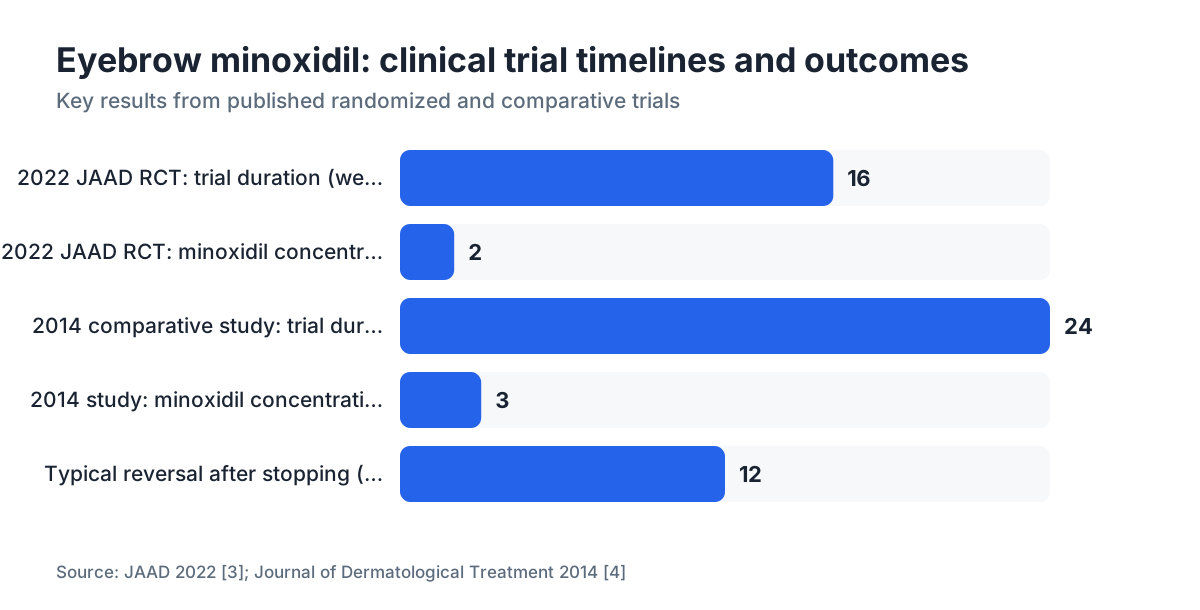
The strongest study is a randomized, double-blind, placebo-controlled trial published in 2022 in the Journal of the American Academy of Dermatology. It enrolled 32 participants with eyebrow hypotrichosis (medically thin eyebrows) and compared 2% topical minoxidil solution against placebo applied twice daily for 16 weeks. The minoxidil group showed statistically significant improvements in hair count and hair density over placebo [3]. Small trial, strong design. Randomized, controlled, blinded is the top tier of evidence, and that's what this is.
An earlier 2014 study compared 3% minoxidil lotion against 0.25% finasteride gel in women with eyebrow loss. Both groups improved, but the minoxidil group had a meaningful edge in global photography assessments after 24 weeks [4].
Nobody has good data on what percentage of people respond. The closest the 2022 JAAD trial gets is showing a statistically significant group-level difference, which means some participants in the minoxidil arm likely saw little change while others saw a lot. Real-world variation is wide.
Minoxidil doesn't regrow hair where follicles have been permanently destroyed, such as scarred skin from burns or surgery. Evidence for alopecia areata affecting eyebrows is mixed. Minoxidil alone isn't the standard treatment for active autoimmune eyebrow loss. That's a separate clinical conversation.
How do before and after results for minoxidil eyebrows actually look?
The photographic assessments in the 2022 JAAD trial and the 2014 comparative study used standardized global photography and trichoscopy (dermoscopy of the scalp or skin surface) to measure outcomes [3][4]. These tools catch changes the naked eye misses, which is worth knowing because early progress can feel invisible.
In practice, people documenting minoxidil eyebrow before and after results online report a timeline that tracks scalp use: little visible change in the first 8 weeks, subtle density increases around weeks 10-12, more noticeable filling around weeks 16-20. Some catch shedding early on, the same telogen effluvium effect seen on the scalp when minoxidil pushes resting hairs out to make room for new growth [5].
Photographs are the only honest way to track eyebrow progress. Because you see your face every day, perceptual drift makes it easy to miss gradual improvement or to convince yourself it's working when it isn't. Take a standardized photo in consistent lighting every four weeks from the same angle. That's the only data that means anything.
Results that look dramatic in before and after photos online are often taken with different lighting, makeup removed from the after shot, or grooming changes. That doesn't mean the drug isn't working. It means internet photos are a bad benchmark.
What concentration of minoxidil works best for eyebrows?
The 2022 JAAD trial used 2% minoxidil solution [3]. The 2014 study used 3% [4]. No published randomized trial compares 2%, 3%, and 5% head to head for eyebrows.
For scalp use, 5% minoxidil outperforms 2% in men [1], and the 5% foam is approved for women's scalp use as well. Whether that same dose-response holds for facial follicles is unknown. Most dermatologists who prescribe minoxidil off-label for eyebrows start with 2% solution to hold down the risk of irritation and unwanted hair migration. A lower dose used consistently beats a higher dose used inconsistently, and skin around the eye is sensitive.
Minoxidil foam (5%) is sometimes preferred for the scalp because propylene glycol, the carrier in most solutions, irritates some users. Around the eyes, that irritation risk climbs, so many practitioners lean toward 2% solution or a compounded formulation without propylene glycol [6]. If your skin is reactive, take that seriously.
Oral minoxidil is a separate route. Low-dose oral minoxidil (0.625 mg to 2.5 mg daily) is used more and more off-label for hair loss by dermatologists, and some clinical reports note eyebrow growth as a side effect. Oral minoxidil covers that route in detail, including its different risk profile.
How do you apply minoxidil to eyebrows safely?
Precision matters more here than on the scalp. Your eyebrow sits centimeters from your eye, and minoxidil in the eye stings and irritates. It also migrates. Apply it heavily or rub the area and the drug spreads to your forehead, temples, or upper cheeks and grows hair there too.
The approach used in clinical trials is a small amount, often one drop from a dropper bottle or a fingertip-size dab of foam, applied directly to each eyebrow and gently massaged in [3]. Let it dry completely before you touch your face. Many people apply it at night so it gets several hours of contact time without the risk of rubbing it into their eyes.
Wash your hands before and after. Don't apply it to irritated or broken skin. Avoid the eyelid margin. If you wear contact lenses, take them out before applying and wait 15 to 20 minutes before putting them back in.
Frequency in the main trials was twice daily [3][4]. Once daily may be enough for some people and cuts the irritation burden, but no head-to-head trial has confirmed that for eyebrows. Twice daily is what the evidence supports.
If you're also dealing with scalp hair loss and want to see your full picture before committing to a regimen, the free AI hair analysis at MyHairline can map where your loss is concentrated and how severe it is before you spend money on products.
What are the side effects of using minoxidil on eyebrows?
The most common side effect in the eyebrow-specific trials was local irritation: redness, dryness, and itching at the application site [3][4]. Part of that is the drug, part is the carrier solvents. Propylene glycol is a known contact irritant for some people [6].
Unwanted hair growth elsewhere on the face is a real risk if the product migrates. The medical term is hypertrichosis. It shows up on the temples, forehead, or upper cheeks. It's dose and spread dependent. Careful application with a small volume cuts this risk sharply.
Systemic absorption from topical minoxidil is low but not zero. The main systemic concerns from oral minoxidil, fluid retention, low blood pressure, and a faster heart rate, are rarely seen at the concentrations used topically on an area as small as an eyebrow [1]. The 2022 JAAD trial reported no systemic adverse events at the 2% dose over 16 weeks [3]. Still, if you have cardiovascular disease or take blood pressure medication, talk to a doctor before using any minoxidil.
For the full picture of what minoxidil can do systemically and topically, minoxidil side effects goes deep.
There's also the shedding phase. Some users see an initial jump in eyebrow hair loss around weeks 2-6. Same mechanism as the scalp: minoxidil moves hairs from telogen (resting) into anagen (growing), which can temporarily push existing resting hairs out [5]. It usually clears on its own.
Who is a good candidate for minoxidil eyebrow treatment?
Minoxidil works best when follicles are still present but underperforming. That means people with:
Naturally sparse eyebrows that have always been thin. Over-plucked eyebrows where follicles haven't been permanently damaged. Age-related eyebrow thinning. Eyebrow loss from nutritional deficiencies (once the deficiency is corrected). Certain types of alopecia where follicles are not scarred.
It's a poor fit when follicles have been destroyed. Scarring alopecias, injury, radiation damage, and heavy cosmetic tattooing over follicles all limit what minoxidil can do. If the follicle is gone, no topical drug brings it back.
Women often see more dramatic eyebrow results than men in the clinical trials, possibly because male eyebrow follicles are more androgen-sensitive and resistant to minoxidil's mechanism. Both sexes show up in the positive trial data.
Pregnancy is a contraindication. The FDA label for topical minoxidil carries a pregnancy category C warning, meaning animal studies showed adverse fetal effects and there are no adequate human studies [1]. Avoid during pregnancy and breastfeeding.
Age isn't a hard cutoff, but minoxidil hasn't been studied in children for eyebrow use. Adult use is where the evidence sits.
How long does it take to see results on eyebrows?
The 2022 JAAD trial ran 16 weeks and found significant improvement by that endpoint [3]. The 2014 study ran 24 weeks [4]. Most dermatologists set patient expectations at 4 to 6 months before judging whether the treatment is working.
The hair growth cycle partly explains the timeline. Eyebrow hairs have a shorter anagen phase than scalp hair, roughly 4 to 6 months versus 2 to 6 years for scalp hair [2]. Turnover is faster, which is why eyebrows never grow as long as head hair. Minoxidil has to work inside that constrained cycle.
A reasonable minimum trial is 16 weeks of twice-daily use. If you haven't seen any measurable change by week 20, the response is likely poor and continuing indefinitely isn't well-supported. If you're seeing gradual improvement, most practitioners suggest staying on it, because stopping minoxidil typically reverses the gains within 3 to 4 months, the same as scalp use [1].
Track with photos. The improvement is incremental, not sudden.
Do you need a prescription for minoxidil for eyebrows?
In the United States, 2% and 5% topical minoxidil are available over the counter for scalp use. No prescription needed to buy them [1]. Off-label use on eyebrows doesn't change the legal status of the purchase. Anyone can buy minoxidil without a prescription.
Since eyebrow use is off-label, though, a dermatologist can guide you on concentration, application technique, and what to watch for. If you want a compounded formulation (lower propylene glycol, custom concentration, a topical minoxidil cream instead of solution), you'll need a prescription for a compounding pharmacy to make it.
Oral minoxidil always requires a prescription in the US [1]. If a dermatologist recommends systemic treatment for eyebrow loss, that route is fully supervised.
Over-the-counter 2% minoxidil solution runs roughly $10 to $25 per month depending on brand and retailer. Compounded preparations vary widely but typically cost $30 to $80 per month. The price gap from scalp minoxidil is minimal because you use a tiny fraction of the bottle on eyebrows.
Are there better alternatives to minoxidil for eyebrow regrowth?
Bimatoprost is the strongest alternative with published evidence. It's a prostaglandin analog originally developed for glaucoma (brand name Lumigan) and later approved as Latisse for eyelash growth [7]. Small trials and case reports show it also promotes eyebrow growth. A study comparing bimatoprost to minoxidil for eyebrow hypotrichosis found both effective at 16 weeks, with bimatoprost showing a slight edge in some photographic measures. Bimatoprost requires a prescription.
Platelet-rich plasma (PRP) injections into the eyebrow area are used by some dermatologists for alopecia areata-related brow loss. The evidence base is smaller and the cost runs much higher, typically $500 to $1,500 per session, with multiple sessions needed.
For people whose eyebrow loss is part of systemic alopecia areata, JAK inhibitors like baricitinib and ritlecitinib were FDA-approved for scalp alopecia areata in 2022 and 2023, and some evidence suggests they also restore eyebrows and eyelashes. These are prescription systemic medications with meaningful side effect profiles and real cost concerns.
Microblading and permanent cosmetic tattooing are cosmetic fixes, not medical ones. They don't regrow hair but can restore the look of eyebrows in people who aren't candidates for medication or haven't responded to it. If you're weighing a more permanent solution for hair loss elsewhere, hair transplant explains how follicle transplantation works, though eyebrow transplants are a specialized subset of that field.
For most people with simple eyebrow thinning or over-plucked brows, minoxidil is the cheapest, most accessible, and most evidence-backed first step.
What happens if you stop using minoxidil on your eyebrows?
The same thing that happens when you stop using it on your scalp: the effect reverses. Minoxidil doesn't fix the underlying cause of eyebrow thinning. It creates conditions that favor active growth while you're using it. Stop, and follicles drift back to their old behavior over roughly 3 to 4 months [1].
This is the core commitment question. If you respond well and want to keep the results, you're looking at ongoing use indefinitely. That's not unique to minoxidil. It's true of nearly every hair loss treatment. Finasteride stops working when you stop taking it. PRP effects fade. No treatment on the market permanently resets a follicle's behavior without surgery.
If you stop and want to figure out whether to restart or try a different approach, look at your whole hair loss pattern rather than one patch in isolation. Does minoxidil work covers the evidence on who responds and who doesn't, worth reading before you commit to a long-term regimen.
The honest answer to the long-term question: if it's working and tolerable, there's no strong medical reason to stop. If it's causing skin irritation, a cost you can't sustain, or results you're not happy with, a dermatologist can help you weigh alternatives.
Is minoxidil safe to use near the eyes long-term?
This is one of the most common worries, and the evidence is reassuring but limited. The 2022 JAAD trial ran 16 weeks with no significant adverse events near the eye itself [3]. Long-term safety data specifically for eyebrow application doesn't exist the way it does for the scalp, where minoxidil has been studied and used for over 30 years [1].
The main eye safety concern is direct contact with the eye causing irritation. That's a mechanical risk from application, not a systemic or chemical one. Minoxidil has no documented ocular toxicity at topical doses. The FDA label for topical minoxidil doesn't list eye damage as a known risk; it flags cardiovascular effects at systemic doses [1].
Practical eye safety comes down to technique: small amounts, avoid the eyelid, let it dry fully before sleep, don't touch your eyes after application until you've washed your hands. If you get minoxidil in your eye, rinse with clean water.
For people using MyHairline's free AI scan to assess their hair loss before deciding on treatment, the scan can clarify whether your eyebrow thinning fits a pattern likely to respond, which can save you months of trial and error on a product that may not fit your type of loss.
If eye symptoms appear during use (persistent redness, visual changes, irritation that doesn't resolve), stop and see an eye doctor. That's the conservative and correct response.
Sources
- FDA, Rogaine (minoxidil) prescribing information and OTC label
- American Academy of Dermatology, Hair loss overview
- Journal of the American Academy of Dermatology, 2022 RCT: topical minoxidil 2% for eyebrow hypotrichosis
- Journal of Dermatological Treatment, 2014: minoxidil 3% vs finasteride 0.25% gel for eyebrow hypotrichosis in women
- American Hair Loss Association, minoxidil information page
- National Institutes of Health, National Library of Medicine: propylene glycol contact irritation
- FDA, Latisse (bimatoprost ophthalmic solution) approval and label
- Dermatology and Therapy journal, review of low-dose oral minoxidil for hair loss