

TL;DR: Telogen effluvium (TE) is the most common cause of diffuse hair shedding in children, triggered by illness, fever, surgery, severe nutritional deficiency, or emotional stress. Hair follicles don't die; they just pause. Most kids regrow full hair within 3 to 6 months once the trigger is gone, without any medication.
What is telogen effluvium and why does it happen in children?
Telogen effluvium is a temporary disruption of the hair growth cycle. Normally, about 85 to 90 percent of scalp hairs are in the anagen (active growth) phase at any given time, while roughly 10 to 15 percent rest in the telogen (resting) phase before shedding [1]. When a child's body goes through a significant physical or psychological stress, a large share of growing hairs shift into the telogen phase all at once. About 2 to 3 months later, those resting hairs shed together, producing the alarming handfuls parents find in the tub, on the pillow, or tangled in a brush.
The follicle itself is not damaged. The hair root is dormant, not dead. That distinction matters enormously for families who understandably fear their child is going bald.
TE is the most common cause of diffuse (widespread, not patchy) hair loss in children [2]. It hits infants, toddlers, school-age kids, and teenagers. The physiology is the same across age groups; only the triggers differ slightly. For a broader look at how hair loss works across all ages, see our guide on what causes hair loss.
What triggers telogen effluvium in kids?
The trigger is almost always something that happened 6 to 16 weeks before the shedding started, which makes diagnosis confusing. Parents often show up at the pediatrician's office describing sudden hair loss with no obvious current problem, because the stressful event is already in the past.
The most common triggers in children:
- High fever (above 39°C / 102°F), especially from influenza, COVID-19, or other viral infections
- Major surgery or general anesthesia
- Severe or prolonged illness (hospitalization, sepsis)
- Significant nutritional deficiency, particularly iron, zinc, protein, or biotin [3]
- Rapid weight loss from crash dieting in adolescents or from an underlying eating disorder
- Hypothyroidism or hyperthyroidism
- Emotional trauma or chronic psychological stress
- Starting or stopping certain medications (most commonly isotretinoin, propranolol, or anticonvulsants)
- Childbirth in adolescent mothers (the postpartum TE that adults experience applies to teen moms too)
In newborns and young infants, a variant called neonatal TE is physiologically normal. Almost all newborns shed their birth hair in the first 3 to 4 months of life as maternal hormones clear and the infant's own hair cycle sets in [2]. This is not a disease and needs no workup.
One thing parents often miss: the trigger doesn't need to feel dramatic. A moderate illness, a stressful school year, or 4 months of low protein intake from a poorly planned vegetarian diet can each be enough to push follicles into early telogen.
How do you know it's telogen effluvium and not something else?
The pattern of shedding is the first clue. TE produces diffuse thinning across the whole scalp, not distinct bald patches. If your child has one or more well-defined, smooth, round patches of hair loss, alopecia areata is more likely. If the hair is broken rather than shed at the root, tinea capitis (a fungal infection) or traction from tight hairstyles should be on the table.
A dermatologist or pediatrician can run a simple pull test: grasping 40 to 60 hairs between thumb and forefinger and applying gentle traction. In active TE, more than 10 percent of pulled hairs come out at the root (called club hairs because of their white bulb end). In normal shedding, fewer than 6 hairs per pull is the expected result [2].
Dermatoscopy (a handheld magnifying tool used on the scalp) can confirm TE by showing normal follicle density with no miniaturized or empty follicles, which sets it apart from androgenetic alopecia.
Lab work is usually ordered to rule out treatable triggers:
| Test | What it checks | Relevant threshold |
|---|---|---|
| Ferritin | Iron stores | Below 30 ng/mL is associated with TE [3] |
| TSH | Thyroid function | Abnormal in ~2% of pediatric TE cases [2] |
| CBC | Anemia, infection | Low hemoglobin suggests a nutritional cause |
| Zinc (serum) | Zinc deficiency | Below 70 mcg/dL is suggestive |
| Total protein / albumin | Protein status | Low in malnutrition-driven TE |
| ANA (if indicated) | Lupus screening | Ordered if other autoimmune signs are present |
Biopsy is rarely needed in pediatric TE. When it is done, the telltale finding is a raised ratio of telogen to anagen follicles, typically greater than 20 to 25 percent telogen hairs, without follicular scarring [2].
How much hair shedding is normal in a child?
The average person loses 50 to 100 hairs a day under normal conditions [1]. For a child with a smaller head of hair, even that baseline can look alarming on a white bathroom tile. TE can push daily shedding to 300 hairs or more.
A practical way to track it: the wash-day count. Have the parent collect shed hairs during one shampoo session and count them. Fewer than 100 sits inside the normal wash-day range. Counts consistently above 200 over several wash days, plus visible scalp show-through or a thinner ponytail, is clinically significant.
The other useful measure is the before photo. Families rarely have one. Encourage parents to photograph the child's hairline and crown in consistent lighting every 4 weeks; that beats subjective memory of how thick the hair used to be by a mile.
How long does telogen effluvium last in children?
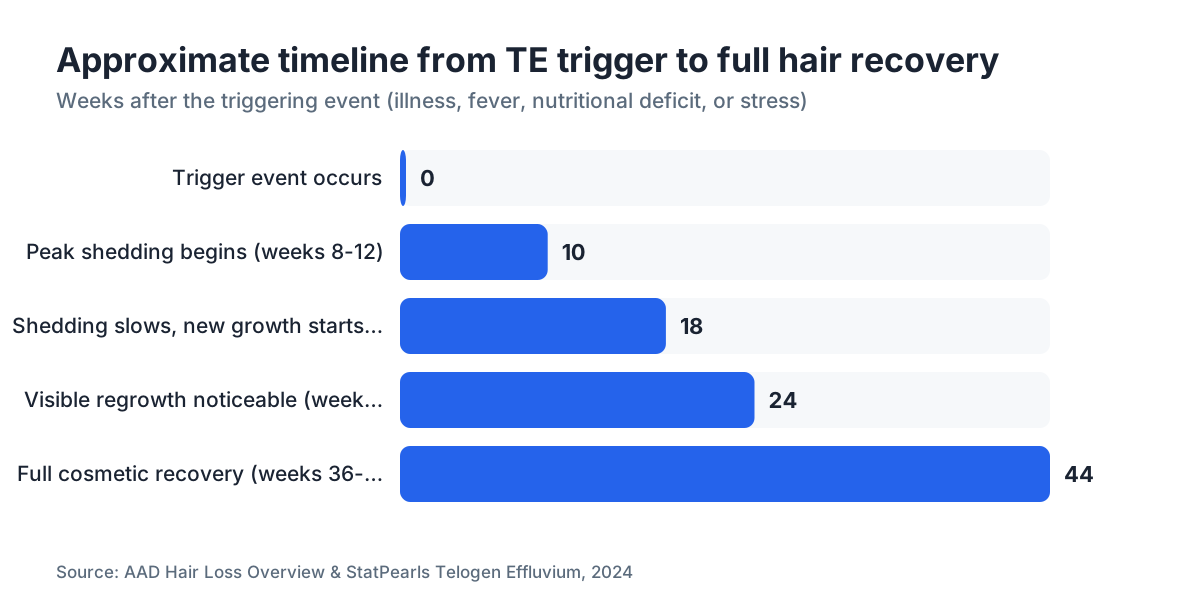
Acute TE usually clears on its own within 3 to 6 months of the trigger being removed [1][2]. The timeline breaks down roughly like this:
- Weeks 0 to 8: peak shedding phase, most alarming for families
- Months 2 to 4: shedding slows as new anagen hairs begin emerging
- Months 4 to 9: visible regrowth, often a fringe of short new hairs around the hairline
- Month 12: most children have cosmetically full hair again
Chronic TE means shedding that lasts beyond 6 months. It does happen in children but is less common than in adults. When it does, the likely explanation is either that the underlying trigger (an undiagnosed thyroid disorder, ongoing iron deficiency, or a chronic illness) hasn't been found and corrected, or, less often, that the child has a genetic predisposition to follicular sensitivity [2].
There is no good evidence that treating TE with minoxidil or any topical agent speeds up recovery in children. The follicles wake up when they wake up. What you can do is remove the trigger and make sure nutritional status is solid.
Is telogen effluvium in kids related to COVID-19?
Yes. Post-COVID TE in children became a documented pattern after 2020 and 2021. Both SARS-CoV-2 infection itself and the high fever that comes with it can trigger TE. In pediatric COVID-19 survivors, hair loss shows up among persistent symptoms reported at follow-up, consistent with a post-infectious TE pattern [4].
The timeline matches any fever-triggered TE: shedding starts roughly 2 to 3 months after infection and resolves on its own in most cases. Parents who never connected their child's illness (which might have seemed mild) with hair loss 10 weeks later are often surprised by the link.
Multisystem inflammatory syndrome in children (MIS-C), a severe post-COVID complication that involves hospitalization, carries an even higher TE risk because it stacks fever, systemic inflammation, and physiological stress into one event.
What nutritional deficiencies cause hair shedding in children?
Iron deficiency is the most studied and probably the most important nutritional trigger of TE in children. Low serum ferritin, even without frank anemia, has been consistently tied to telogen effluvium in dermatology literature [3]. Research on iron and hair loss notes that a ferritin level below 30 ng/mL may be too low to support normal hair cycling, even when hemoglobin is normal.
Zinc deficiency is the second most common nutritional cause, particularly in children with restrictive diets, malabsorption syndromes (like Crohn's disease), or acrodermatitis enteropathica (a rare genetic condition affecting zinc absorption).
Protein deficiency (kwashiorkor-level intake in severe cases, or subclinical low protein in fad dieters) pushes follicles into telogen because hair is a low-priority tissue; the body reroutes amino acids to essential organs first.
Biotin deficiency as a cause of hair loss gets enormous attention online but is actually rare as a standalone trigger in children eating a normal diet [9]. Biotin supplementation without a confirmed deficiency doesn't make hair grow faster or thicker, despite what supplement marketing implies. Families spending money on biotin gummies without a confirmed deficiency are almost certainly wasting it. For a broader look at which hair supplements have real evidence behind them, see hair loss supplements.
Vitamin D has a murkier role. Some observational studies link low vitamin D with TE, but it isn't established that supplementing vitamin D alone reverses shedding in kids who have no other deficiencies.
Nutrient workups should follow lab results, not supplement ads.
How do you treat telogen effluvium in a child?
The honest answer: for most children, treatment means removing the trigger and waiting. No medication forces hair follicles back into anagen faster than the natural cycle allows.
Step one is correcting any identified nutritional deficiency. If ferritin is below 30 ng/mL, iron supplementation under pediatric guidance is appropriate. If zinc is low, supplementing to normal range makes sense. If the child's diet is protein-deficient, fix that, ideally with a registered dietitian's help.
Step two is treating any underlying medical condition: hypothyroidism with levothyroxine, a fungal infection with antifungals, an eating disorder with psychiatric and nutritional support.
Step three is time and reassurance. Most parents find this unsatisfying, but it is genuinely the correct clinical approach for acute TE with a known, resolved trigger.
Minoxidil is FDA-approved only for adults [7]. The 2% topical solution is sometimes used off-label by dermatologists in older adolescents (typically 16 and up) when TE drags on or when androgenetic alopecia is suspected alongside it, but only under specialist supervision. For details on the side effect profile, see minoxidil side effects. It is not a first-line treatment for a 7-year-old with post-viral TE.
Finasteride is not used in children. It carries teratogenicity risks and affects hormonal development. This is not a gray area. See our article on finasteride for adult context.
If you want a quick, structured way to understand what pattern of loss your child actually has, MyHairline's free AI hair scan (/scan) can analyze scalp photos and flag whether the pattern looks like TE, alopecia areata, or something else worth discussing with a dermatologist. It does not replace a clinical evaluation, but it can give parents clearer language before the appointment.
Supportive measures that help without causing harm:
- Reduce mechanical stress: gentle detangling, loose hairstyles, less heat
- Get enough protein, iron, and zinc through food before reaching for supplements
- Manage stress with whatever the child actually responds to (exercise, sleep, a structured routine)
- Skip the temptation to try several topical products at once; if something changes, you won't know what caused it
When should you take a child's hair loss to a doctor?
See a pediatrician or dermatologist promptly if:
- Shedding has lasted beyond 3 months with no clear cause
- The child has patchy rather than diffuse loss (alopecia areata needs its own workup and management)
- There is visible scalp scaling, redness, or broken hair stubs (tinea capitis needs oral antifungal treatment)
- The child has other symptoms: fatigue, weight changes, cold intolerance, or joint pain
- Shedding is severe enough to cause the child emotional distress
- The child is under 5 and the neonatal period is long past
A referral to a pediatric dermatologist makes sense if the pediatrician's workup comes back normal but shedding continues. Dermatoscopy and trichoscopy are available in most pediatric derm offices and can rule out subtler diagnoses without a biopsy.
Alopecia areata affects about 2 percent of people at some point, including children, and can look like TE early on [11]. A dermatologist will tell them apart. If alopecia areata is confirmed, the treatment path is entirely different and involves topical or injectable corticosteroids, or newer JAK inhibitor therapies in severe cases.
Can stress alone cause telogen effluvium in children?
Yes. Psychological stress is a well-recognized trigger of TE, and children are not immune. A traumatic event (loss of a parent or sibling, abuse, a major school transition, a serious accident) can produce TE just as a physical illness can.
The mechanism runs through the hypothalamic-pituitary-adrenal (HPA) axis. Elevated cortisol from chronic stress inhibits hair follicle cycling at the cellular level, particularly through effects on stem cells in the follicle bulge region [5]. This is an active research area; the exact molecular pathway isn't fully mapped, but the clinical observation is solid.
Pediatric clinicians have seen TE in children facing academic pressure, bullying, and family instability. In those cases, the hair won't stabilize until the stress load drops. No topical product touches the root cause.
Parents sometimes feel guilt about this, worrying their choices caused the stress. That guilt is rarely warranted. Life events happen. The goal is to identify the stress, reduce it where possible, and make sure the child has support.
What does regrowth look like and how can you tell it's happening?
Regrowth in TE is almost always underway before parents notice it, because new anagen hairs start short and fine. The first visible sign is usually a halo of 1 to 2 cm baby hairs around the hairline, often clearest at the temples and forehead. These hairs are often a bit lighter or wavier than the mature shaft.
On a phone photo taken in natural light, you can usually spot the density difference between new growth areas and older mid-shaft hair by month 4 or 5. The scalp show-through that alarmed parents at month 2 starts to look less severe.
Full cosmetic recovery to pre-TE density typically takes 9 to 12 months from the trigger event, even though most shedding stops by month 6 [1]. Families need to understand that "the shedding stopped" and "the hair is fully back" are separated by about 3 to 6 months of quiet regrowth.
If regrowth hasn't begun by month 6 or 7, that's a signal to revisit the diagnosis and labs. Either the trigger is ongoing, there's a second diagnosis layered on top of the TE, or the shedding was never purely TE in the first place.
Is telogen effluvium in children a sign of future hair loss?
In the vast majority of cases, no. Acute TE from a one-time event (an illness, surgery, a nutritional dip) carries no raised risk of adult pattern baldness or chronic hair loss. The follicles recover fully and behave normally afterward.
The exception worth knowing: adolescents who go through TE may sometimes have an underlying genetic sensitivity to androgens that wasn't yet clinically obvious. If an adolescent boy gets TE from a known trigger and then regrows hair, but the regrown hair seems finer or the hairline looks slightly different than before, that could be the earliest overlap with early androgenetic alopecia. A dermatologist can assess this with dermatoscopy, which reveals follicular miniaturization (the hallmark of androgenetic alopecia) when it's present.
For teen boys specifically, look at the family history of male pattern baldness. A kid who loses hair at 14 after a bout of flu and then fully regrows is almost certainly fine. A kid who loses hair at 17, partially regrows, and has multiple paternal relatives with significant baldness deserves a closer look at whether androgenetic alopecia is starting. Our piece on what causes hair loss covers that trajectory in detail.
For girls and young women, telogen effluvium does not predict female pattern hair loss. They are separate conditions with different mechanisms.
Sources
- American Academy of Dermatology – Hair loss types: Telogen effluvium overview
- StatPearls (NCBI/NIH) – Telogen Effluvium
- Journal of the American Academy of Dermatology – Trost et al., 'The diagnosis and treatment of iron deficiency and its potential relationship to hair loss' (2006)
- CDC – COVID-19: Long-Term Effects
- Peters et al. – 'Stress and the Hair Follicle', PLOS Biology (2006)
- National Institutes of Health – MedlinePlus: Hair Loss
- FDA – Drugs information portal (minoxidil topical label)
- Guo & Katta – 'Diet and hair loss: effects of nutrient deficiency and supplement use', Dermatology Practical & Conceptual (2017)
- AAD – Alopecia areata overview