

TL;DR: Androgenic alopecia is permanent, pattern-based hair loss driven by DHT and genetics. Telogen effluvium is diffuse shedding set off by a stressor like illness or crash dieting, and it usually reverses within 6 months. Getting the diagnosis right matters because the treatments are completely different. A dermatologist can usually tell them apart with a scalp exam and basic bloodwork.
What is the core difference between androgenic alopecia and telogen effluvium?
One is permanent and patterned. The other is temporary and everywhere. That single distinction drives every treatment decision that follows.
Androgenic alopecia (AGA) is a genetically programmed condition where dihydrotestosterone (DHT) gradually miniaturizes hair follicles in a predictable pattern. On men that means a receding hairline and crown thinning. On women it usually means a widening part and diffuse thinning at the top of the scalp while the frontal hairline stays mostly intact. The follicles don't die outright, but over years they produce shorter, finer hair until they stop producing visible hair at all. Left alone, it progresses.
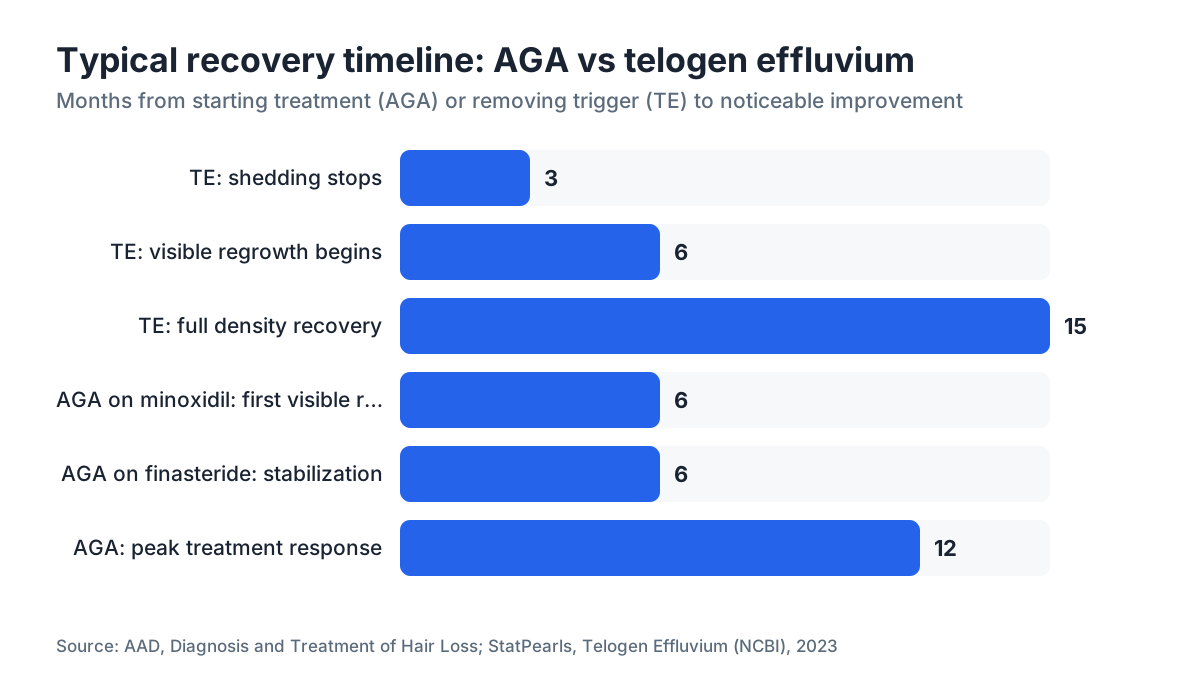
Telogen effluvium (TE) works differently. A physical or emotional stressor shocks a large number of follicles out of their growth phase (anagen) and into the resting phase (telogen) all at once. About 2 to 3 months later, those follicles shed their hair at the same time. The result is sudden, heavy, diffuse shedding from all over the scalp, not a tidy receding hairline. Once the trigger is gone, most follicles cycle back into anagen and the hair returns.
The practical upshot: AGA needs ongoing medical treatment to slow or reverse. TE is usually self-limiting and often needs nothing more than removing the trigger and waiting. Treat TE like AGA, or the reverse, and you waste time and money.
What does the hair loss actually look like in each condition?
Pattern is your first and best clue. AGA thins the top and spares the sides. TE thins everywhere at once.
With androgenic alopecia, the thinning follows a map. In men, the Norwood-Hamilton scale describes the progression from a simple M-shaped recession at the temples (Norwood 2) through a horseshoe of hair around a bald crown (Norwood 7) [1]. In women, the Ludwig scale captures a widening center part that spreads toward the top of the scalp while the frontal hairline often holds [2]. In both sexes, AGA is asymmetric in a very specific way: the patterned zones thin, and the back and sides stay thick. That zone difference is the telltale sign.
With telogen effluvium, the shedding is diffuse. You lose hair from the entire scalp, including the back and sides. You may notice handfuls on the shower floor or a sudden change in your ponytail circumference. The scalp usually looks normal. There is no bald patch, no receding hairline, no distinct zone difference. A useful self-test: part your hair in different areas. If the thinning is equally bad everywhere, TE is more likely. If the crown and temples are noticeably worse than the back, lean toward AGA.
The pull test findings differ too. In active TE, you can gently pull a small clump of 40 to 60 hairs near the scalp and extract more than 6 telogen hairs (identified by a white bulb at the root, not a dark pigmented sheath). The American Academy of Dermatology notes that a positive pull test, yielding more than 10% telogen hairs, supports a TE diagnosis [3]. In stable AGA the pull test is usually negative, though AGA does have an elevated baseline shed rate compared to people without it.
How do timelines and onset differ between the two?
Timeline is the second-best diagnostic clue, and the gap between the two is dramatic. TE announces itself in months. AGA creeps in over years.
Telogen effluvium almost always has a clear "before." A stressor happens, then 2 to 3 months later the shedding begins. Classic triggers include childbirth (postpartum TE is extremely common), major surgery, rapid weight loss, a high fever, thyroid disruption, iron deficiency, or a crash diet [4]. The shedding peak usually lasts 3 to 6 months and then resolves over the following months as follicles re-enter anagen. Chronic TE, where shedding persists beyond 6 months, is less common and warrants a deeper workup, but even chronic TE does not produce the pattern-specific thinning of AGA.
Androgenic alopecia is slow and silent. Most people with AGA cannot name a specific month when it started. It builds over years, often decades, and the early signs (a slightly higher hairline, a bit more scalp visible at the crown) are easy to dismiss as normal variation. By the time a 30-year-old man notices his AGA, the follicle miniaturization has usually been underway since his early 20s. That long ramp is why AGA is routinely underestimated.
A rule of thumb: if you are shedding heavily right now and it started suddenly within the last 6 months, think TE first. If you are noticing a slow, progressive thinning that has been worsening over years, think AGA first. Many people have both at once, which complicates matters considerably.
Who gets androgenic alopecia vs telogen effluvium?
Androgenic alopecia affects roughly 50% of men by age 50 and about 40% of women by age 70, making it one of the most common conditions in dermatology [5]. Risk is strongly genetic. Having a father or maternal grandfather with significant hair loss raises your odds, though the inheritance pattern is polygenic and not simply Mendelian. AGA can start in the late teens but most commonly becomes noticeable in the 20s and 30s.
Telogen effluvium has a much broader reach. It can hit anyone, at any age, given the right trigger. Women are diagnosed with TE more often than men, partly because postpartum hair loss is extremely common (affecting up to 50% of women in the months after delivery according to some estimates [4]), and partly because women are more likely to undergo rapid dieting or to have thyroid and iron abnormalities that drive TE. That said, men get TE too, often after surgery, serious illness, or a period of severe stress.
The two conditions also overlap. A woman with a genetic predisposition to AGA may notice it for the first time after a postpartum TE episode, because the TE unmasks the underlying AGA that was progressing quietly. A man who crashes his diet for 6 months may shed heavily from TE and simultaneously have AGA progressing in his temples. The co-occurrence is common enough that dermatologists have a term for it: "combined" or "overlapping" hair loss.
How do doctors diagnose androgenic alopecia vs telogen effluvium?
A board-certified dermatologist can usually distinguish the two in a single clinic visit, though bloodwork often confirms the picture.
The clinical exam looks at distribution (patterned vs. diffuse), hair shaft caliber variation (AGA produces miniaturized hairs alongside normal ones; TE produces uniform-caliber hairs throughout the scalp), and scalp appearance. Dermoscopy, a magnified look at the scalp surface, is increasingly standard: AGA shows a characteristic variation in hair shaft diameter of greater than 20% across follicles in the affected zone, while TE typically shows uniform shafts with no miniaturization [6].
Bloodwork rules out the reversible causes of TE. A standard panel includes thyroid-stimulating hormone (TSH), ferritin, a complete blood count, and sometimes zinc, vitamin D, and a full metabolic panel [3]. Low ferritin is one of the more common and treatable drivers of TE. There is no blood test for AGA itself.
Scalp biopsy is rarely needed but can be definitive when the clinical picture is unclear. In AGA, biopsy shows a high ratio of telogen to anagen follicles and evidence of follicle miniaturization. A pathologist looking at a biopsy from active TE sees a high proportion of telogen follicles without the miniaturization pattern.
If you want a preliminary read before booking a dermatologist, MyHairline's free AI hair scan can analyze your scalp photos and flag whether the pattern looks more consistent with AGA or diffuse shedding, though it is not a substitute for a clinical diagnosis.
What treatments work for androgenic alopecia?
AGA has two FDA-approved medications with real evidence behind them, plus surgical options for the right candidates. Everything else is supporting cast.
Minoxidil is the only topical treatment with FDA approval for hair loss in both men and women [7]. The 5% foam formulation for men and the 2% solution for women are the approved forms, though 5% is commonly used off-label in women under dermatologist guidance. Minoxidil prolongs anagen and increases follicle size. It does not block DHT, so it works independently of the hormonal pathway. Results take 4 to 6 months to see, and stopping the drug reverses any gains within months. See a detailed breakdown of the risks in our guide to minoxidil side effects.
Finasteride is an oral 5-alpha reductase inhibitor approved by the FDA for male pattern hair loss [8]. It lowers scalp DHT by about 60%, which is the mechanism AGA depends on. Clinical trials show that roughly two-thirds of men stabilize or regrow hair at 1 year on 1 mg/day finasteride [8]. Our full finasteride guide covers who is a candidate and what the sexual side effect data actually shows. Finasteride is not FDA-approved for women, and it is contraindicated in women who are or may become pregnant due to risk of fetal harm.
For men and women who want a non-drug option, a DHT blocker approach using topical ketoconazole shampoo or nutritional strategies may offer modest added benefit, though the evidence is much weaker than for finasteride or minoxidil.
When medical treatment is not enough, hair transplant surgery (FUE or FUT) permanently moves DHT-resistant follicles from the back and sides of the scalp to balding areas. Transplants work well for AGA and poorly for TE because TE follicles are not permanently damaged.
Combining finasteride and minoxidil produces better results than either alone. A 2021 randomized controlled trial in JAAD found that combination therapy significantly outperformed either monotherapy at 24 weeks [9]. Our finasteride and minoxidil article walks through how to stack them.
What treatments work for telogen effluvium?
The best treatment for TE is finding and removing the trigger. That sounds obvious, but it matters: if someone has iron-deficiency TE and you prescribe minoxidil without correcting the ferritin, they will keep shedding.
For nutritional causes, the fix is nutritional. Low ferritin is one of the most common reversible drivers. Most dermatologists aim for a ferritin level above 40 ng/mL as a practical target for hair cycling, though the evidence for a specific threshold is not settled. Correcting thyroid dysfunction, stopping a crash diet, or treating an underlying chronic illness will typically resolve TE within 3 to 6 months of the underlying issue being corrected.
Minoxidil is sometimes used in TE to speed up the transition of follicles back into anagen, and some dermatologists recommend it for chronic TE, but there are no large randomized controlled trials specifically in TE. The minoxidil for men evidence base is overwhelmingly in AGA, not TE. Oral minoxidil at low doses (0.625 to 2.5 mg/day) is being studied for multiple hair loss conditions and may have a role in speeding recovery from chronic TE, but treat it as off-label territory for now. See our oral minoxidil article for the current data.
Finasteride has essentially no role in TE unless the patient also has AGA. Platelet-rich plasma injections are sometimes offered but the evidence base is thin and the costs are high.
The honest summary: most TE resolves on its own once the cause is fixed. Patience is genuinely the first-line treatment, and that is worth saying plainly rather than routing everyone toward expensive products.
Can you have androgenic alopecia and telogen effluvium at the same time?
Yes, and it is more common than people assume.
AGA progresses silently in the background while TE can overlay it acutely. The clinical picture is someone who has mild ongoing pattern thinning that suddenly worsens after a surgery or a bout of COVID-19. The TE sheds aggressively for a few months, then resolves, but the person is left at a worse AGA baseline than before the acute episode because the TE stripped out hair that would have otherwise masked the underlying miniaturization.
This overlap is one reason a dermatologist evaluation matters. Treating only the TE and ignoring the AGA means the patient recovers from the acute shed but then keeps losing ground long-term. Treating only the AGA while TE is active will feel like the treatment is not working, because TE shedding is not DHT-mediated and minoxidil or finasteride will not stop it.
The practical approach in overlap cases is usually: address the TE trigger first, then assess the residual AGA pattern once shedding has stabilized, and then decide on AGA treatment.
What are the key differences in a side-by-side comparison?
The table below summarizes the main clinical differences. These are generalizations; individual cases vary.
| Feature | Androgenic Alopecia | Telogen Effluvium |
|---|---|---|
| Pattern | Patterned (Norwood/Ludwig zones) | Diffuse, all-over scalp |
| Onset | Gradual, years | Sudden, 2-3 months after trigger |
| Reversibility | Permanent without treatment | Usually self-reversing |
| Pull test | Usually negative | Usually positive (active TE) |
| Hair shaft caliber | Miniaturized hairs present | Uniform caliber |
| Known trigger | No | Yes (illness, diet, surgery, etc.) |
| Scalp appearance | Normal or slightly visible | Normal |
| Key lab finding | None (genetic/hormonal) | Low ferritin, abnormal TSH, etc. |
| Primary treatment | Minoxidil, finasteride, transplant | Remove trigger, correct deficiency |
| Timeline to improvement | 6-12 months with treatment | 3-6 months after trigger removed |
A few notes on the table. The pull test result depends on whether TE is active; in resolved TE it normalizes. AGA can coexist with a positive pull test if active TE is present at the same time. And "permanent without treatment" for AGA is accurate but worth qualifying: early intervention with finasteride or minoxidil can genuinely stabilize and sometimes partially reverse miniaturization, particularly in early Norwood stages.
What other conditions can look like these two?
The differential diagnosis for hair loss is wide, and getting it wrong costs time.
Alopecia areata produces patchy, well-circumscribed bald spots (not diffuse and not patterned like AGA). The patches often show "exclamation point" hairs at the border: short hairs that are narrower near the scalp. It is autoimmune in origin, not hormonal.
Traction alopecia comes from chronic tension on the hair, from tight braids, ponytails, or extensions. It causes a distinct hairline recession along the temporal margins and can be mistaken for early AGA in women. The history of hairstyling practices is the key differentiator.
Frontal fibrosing alopecia (FFA) is a scarring alopecia that destroys follicles permanently along the frontal and temporal hairline. It is increasingly common in women over 50. It looks like AGA recession, but up close it shows perifollicular redness and scale, and a biopsy shows fibrosis. It does not respond to AGA treatments.
Nutritional deficiencies, particularly iron, zinc, and biotin, can drive diffuse shedding that mimics TE. They can also make AGA progress faster. Our guide to hair loss supplements covers what the evidence actually says about nutritional interventions.
The takeaway: if your hair loss is atypical in any way, get a dermatologist opinion before self-treating. The internet has a way of routing everyone toward minoxidil regardless of the actual diagnosis.
How do you know if your hair loss is permanent?
This is the question that keeps people up at night, and there is an honest answer. AGA damage is largely permanent without treatment. TE damage is not damage at all.
For androgenic alopecia, the loss already done is largely permanent without treatment. Once a follicle has miniaturized to the point of producing no visible hair, it is generally not recoverable. Follicles that are still producing fine, miniaturized hair may respond to treatment and produce thicker hair again, particularly with early finasteride. The window for intervention matters: starting treatment early in the Norwood progression typically produces better outcomes than starting late [8]. See our receding hairline article for what the research says about early-stage AGA intervention.
For telogen effluvium, the follicles are not damaged. They are dormant, not dead. The hair will return once the trigger is removed, typically within 3 to 6 months. The density and thickness should return to pre-TE baseline, assuming no underlying AGA was being masked.
The gray zone is chronic TE, defined as diffuse shedding lasting more than 6 months. In chronic TE, follicles can potentially undergo some degree of secondary miniaturization over time, which can blur the line with AGA. A dermatologist with dermoscopy experience can usually distinguish the two.
If you are uncertain, a free AI scan at MyHairline can give you a pattern-based read on your photos before you decide whether to book a clinical visit.
What causes each type of hair loss and can it be prevented?
Understanding the root cause is the most direct path to prevention.
Androgenic alopecia has two required ingredients: a genetic susceptibility and circulating androgens (specifically DHT). You cannot change your genetics, but you can blunt the DHT signal. Finasteride, DHT blockers like topical ketoconazole, and even certain scalp care habits can slow the process. Starting minoxidil before significant thinning occurs, rather than after, is underused and arguably the highest-leverage preventive move for men who know they have a strong family history. There is no known dietary change that prevents AGA, and no supplement with convincing evidence for prevention.
Telogen effluvium is more preventable in theory because triggers are often controllable. Maintaining adequate iron stores (ferritin ideally above 40 ng/mL), not crash dieting, managing thyroid conditions, and spacing out major elective surgeries where possible all reduce TE risk. Postpartum TE is essentially unavoidable because the hormonal shift after delivery will push follicles into telogen regardless of what a new mother does, but knowing that it is coming and that it resolves on its own can reduce the anxiety it causes.
For a broader overview of triggers and mechanisms behind both conditions, our article on what causes hair loss covers the full range.
One note on lifestyle factors: some research links creatine supplementation to elevated DHT [10], which raises questions about whether it could accelerate AGA in susceptible individuals. The evidence is preliminary but worth knowing if you have a strong family history. Our does creatine cause hair loss article covers that data in detail.
Sources
- American Academy of Dermatology, Hair loss types: androgenetic alopecia
- American Academy of Dermatology, Hair loss types: female pattern hair loss
- American Academy of Dermatology, Hair loss: diagnosis and treatment
- StatPearls (NCBI Bookshelf), Telogen Effluvium
- StatPearls (NCBI Bookshelf), Androgenetic Alopecia
- Journal of the American Academy of Dermatology, Dermoscopy in hair and scalp disorders
- FDA, Drugs (minoxidil labeling)
- StatPearls (NCBI Bookshelf), Finasteride
- Journal of the American Academy of Dermatology, Combination minoxidil and finasteride vs monotherapy RCT (2021)
- Clinical Journal of Sport Medicine, Creatine supplementation and DHT in rugby players (van der Merwe et al., 2009)
- Nature Scientific Reports, Post-COVID-19 hair loss (2021)
- Dermatology Practical and Conceptual, Ferritin and hair loss review (NCBI PMC)