

TL;DR: Yes, telogen effluvium is almost always reversible. Once the underlying trigger (crash diet, surgery, illness, extreme stress, thyroid dysfunction) is identified and corrected, most people see shedding slow within 6-8 weeks and meaningful regrowth by 3-6 months. Chronic cases lasting over 6 months take longer but still usually resolve. No drug is required in most cases.
What exactly is telogen effluvium and why does it happen?
Telogen effluvium (TE) is a diffuse, temporary form of hair shedding caused by a systemic shock that pushes a large number of hair follicles out of their active growth phase (anagen) and into the resting phase (telogen) all at once [1]. Normally about 5-15% of your scalp follicles are in telogen at any given time. During TE, that proportion can jump to 30% or higher, which is why shedding can seem alarming.
The trigger doesn't damage the follicle itself. That's the key biological fact that makes reversal possible. The follicle is still alive and anchored; it's just sitting idle. Once the physiological disruption passes, the follicle can cycle back into anagen and produce a new hair shaft.
Common triggers include [1][2]:
- Significant caloric restriction or protein deficiency (crash diets, weight-loss surgery)
- Major surgery or hospitalization
- High fever or severe infection, including COVID-19
- Thyroid disorders (both hypo- and hyperthyroidism)
- Iron deficiency
- Postpartum hormonal shift (estrogen drops sharply after delivery)
- Chronic psychological stress
- Starting or stopping certain medications (isotretinoin, hormonal contraceptives, beta-blockers)
Shedding typically starts 2-3 months after the trigger, not during it. That lag confuses people. You crash-diet in January, and you're alarmed by extra hair in the shower in March. The timing makes it easy to miss the connection.
For a broader look at the mechanisms behind different types of hair loss, see our guide on what causes hair loss.
Does telogen effluvium go away on its own?
For the vast majority of people, yes. Acute telogen effluvium, which lasts fewer than 6 months, resolves on its own once the trigger is removed [1][3]. The American Academy of Dermatology notes that hair shed due to a stressful event typically begins growing back within a few months without any treatment [2].
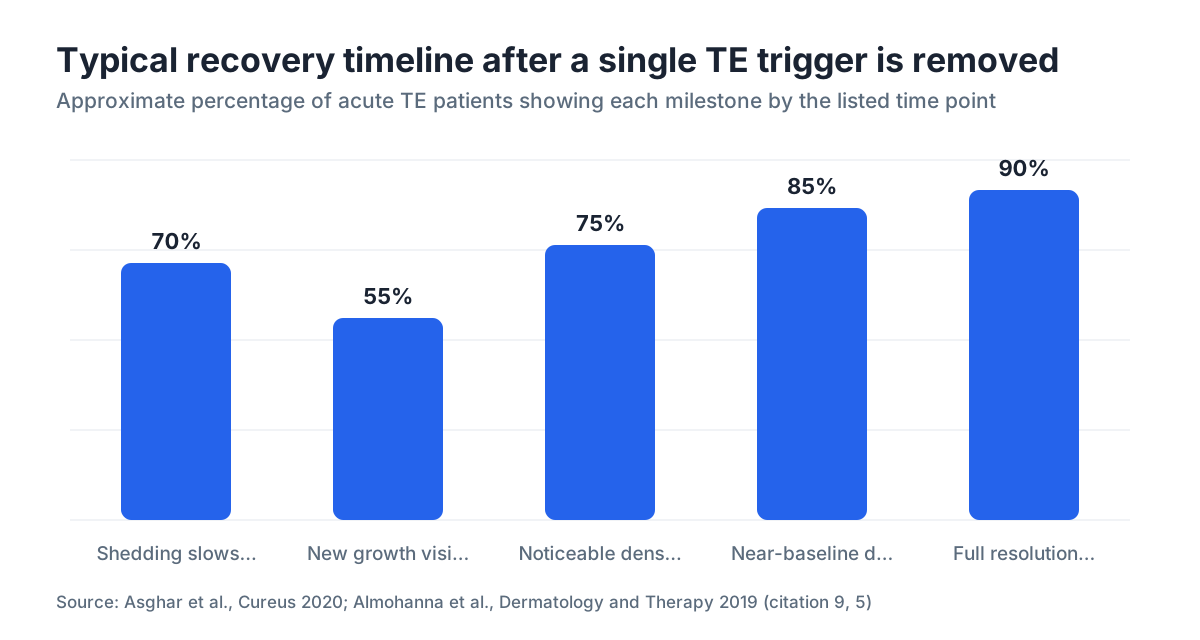
Here's what the timeline actually looks like in practice:
- Weeks 1-6 after removing the trigger: Shedding rate begins to slow, though it may not feel that way because you're still losing the telogen hairs that were already queued up.
- Weeks 6-12: Most people notice noticeably less hair on the pillow and in the shower drain.
- Months 3-6: New growth is visible, often as short, fine hairs around the hairline and part.
- Months 6-12: Hair density returns close to baseline for most acute cases.
Chronic telogen effluvium, defined as shedding that persists beyond 6 months, is a different story in terms of timeline but not prognosis. A study published in the Journal of the American Academy of Dermatology found that chronic TE, while distressing, does not progress to complete baldness and tends to fluctuate over years before eventually stabilizing [3]. It's drawn out, but it still reverses.
The one situation where TE does not fully reverse is when it uncovers an underlying androgenetic alopecia (pattern hair loss). The TE resolves, but the permanent miniaturization from genetic pattern loss was there already. This is common and often goes unrecognized until the TE clears.
How long does it take for hair to grow back after telogen effluvium?
Human hair grows roughly 0.35 mm per day, or about 1 cm (just under half an inch) per month [4]. That biology sets a hard floor on how fast recovery looks.
Even after the follicle re-enters anagen immediately, you won't see the new strand emerging from the scalp for several weeks, and it won't be long enough to blend with surrounding hair for 3-6 months. This is why the recovery period feels like nothing is happening even when regrowth is well underway.
A realistic recovery timeline for acute TE:
| Phase | Timeline (from trigger removal) | What you notice |
|---|---|---|
| Shedding slows | 6-10 weeks | Fewer hairs on brush/shower drain |
| New growth starts | 8-12 weeks | Short, fine hairs at hairline |
| Visible density improvement | 3-6 months | Part looks less wide |
| Near-baseline density | 9-12 months | Most people satisfied with result |
| Chronic TE stabilization | 1-7 years | Variable; shedding eventually quiets |
Postpartum TE is one of the better-studied subtypes. Most women see significant regrowth by 12 months postpartum, often earlier [2]. The trigger (the hormonal drop after delivery) is self-limiting, which is why postpartum TE is among the most reliably reversible variants.
What nutritional deficiencies cause telogen effluvium and how do you fix them?
Nutritional triggers are some of the most actionable causes because they're correctable with targeted intervention. The deficiencies most clearly tied to TE in peer-reviewed literature are iron, zinc, and protein [5].
Iron is the most studied. Ferritin (stored iron) below roughly 30 ng/mL has been associated with hair shedding in several studies, though the threshold is debated and some dermatologists target levels above 70 ng/mL before declaring iron status optimal for hair regrowth [5]. Don't supplement iron without a blood test; excess iron causes real harm.
Zinc deficiency produces a pattern of hair loss that can look identical to TE. Crash dieters and people with malabsorptive conditions (Crohn's disease, after bariatric surgery) are at particular risk. Correcting zinc deficiency typically takes 3-4 months to show up in hair density.
Protein: Hair is almost entirely keratin, a structural protein. Severe protein restriction sends the body a signal to deprioritize non-vital protein uses, and hair is first to go. This is why extreme calorie restriction, especially low-protein dieting, causes TE reliably. Getting protein intake back to adequate levels (generally 0.8-1.2 g per kg of body weight for most adults, per standard dietary guidance) is usually enough to stop the trigger.
Vitamin D deficiency has been proposed as a contributor, and there's some mechanistic evidence for vitamin D receptors in follicles, but the clinical link is less solid than for iron or zinc [5]. Getting your levels checked is reasonable; mega-dosing without a deficiency is not.
For more on supplements that have actual evidence behind them, the guide on hair loss supplements covers what's worth the money and what's marketing.
Do you need minoxidil or finasteride to reverse telogen effluvium?
For pure, trigger-driven TE, no. Neither minoxidil nor finasteride is a treatment for TE in the same way that addressing the root cause is. Removing the trigger is the treatment.
That said, minoxidil does get used off-label for TE, and the rationale is not irrational. Minoxidil shortens the telogen phase and pushes follicles back into anagen faster. A small number of clinicians use it to accelerate recovery when shedding is severe and the patient needs to see results faster [6]. The evidence for this specific use is limited, mostly small studies and case series, not large randomized trials.
The complication: minoxidil itself causes an initial shedding surge in some people during the first 4-8 weeks of use, because it forces follicles into anagen and the old telogen hairs drop first. If you have TE and start minoxidil, that initial shed can be genuinely frightening. Understanding the minoxidil side effects profile before starting helps set expectations.
Finasteride is for androgenetic alopecia (male pattern baldness) driven by DHT. It does not treat TE. If a workup reveals that TE has uncovered underlying pattern loss, then finasteride becomes relevant, but it's doing a different job. See the finasteride guide for the evidence there.
If you're trying to figure out whether what you're experiencing is TE, pattern loss, or both, an objective baseline can help. MyHairline's free AI scan (/scan) photographs your scalp and compares density across the crown, frontal, and temporal zones, which can show whether thinning is diffuse (more typical of TE) or follows the Norwood/Ludwig pattern.
Bottom line: for TE, spend your money on blood tests and fixing the trigger before spending it on drugs.
What blood tests should you get to find the cause of telogen effluvium?
A good workup is the fastest way to find a fixable cause. There is no single universal panel, but most dermatologists and primary care physicians will order some version of the following [1][2]:
- Complete blood count (CBC): checks for anemia
- Ferritin: the most important iron marker for hair; not always included in a basic iron panel
- Thyroid-stimulating hormone (TSH): both hypothyroidism and hyperthyroidism cause TE
- Free T3 and T4 if TSH is abnormal
- Serum zinc
- 25-hydroxyvitamin D
- Metabolic panel (CMP): liver and kidney function, protein status
- ANA (antinuclear antibody) if autoimmune disease is suspected
- In women: androgen panel (DHEA-S, total and free testosterone), prolactin if irregular cycles
The ferritin test is specifically worth flagging to your doctor because it's easy to miss. Standard "iron studies" may not include it. Ask explicitly.
If labs come back entirely normal, the cause is usually in the history: a stressful event 2-3 months ago that the patient initially dismissed, or a diet change that didn't seem drastic enough to matter. A detailed timeline conversation with a dermatologist is often more diagnostic than lab work.
Is chronic telogen effluvium different, and can it be reversed too?
Chronic telogen effluvium (CTE) is defined as diffuse shedding lasting more than 6 months with no obvious single trigger. It's frustrating to have and underdiagnosed because it sits in an awkward middle ground: not dramatic enough to alarm most clinicians, but persistent enough to genuinely affect quality of life.
A widely cited study by Whiting published in the Journal of the American Academy of Dermatology described CTE as a self-limiting condition that does not lead to baldness and tends to show a fluctuating course over years before eventually resolving [3]. That's honest hope: it reverses, but on a longer, less predictable timeline.
CTE is more common in women in their 30s-50s and is sometimes linked to subtle, ongoing nutritional insufficiencies, low-grade chronic stress, or thyroid fluctuation that standard thyroid panels miss (normal TSH does not always mean optimal thyroid function for hair). Repeated ferritin checks over time can sometimes catch a deficiency that was marginal on first testing.
The absence of a single dramatic trigger is what makes CTE harder to treat. The approach is iterative: optimize nutrition, manage stress, rule out autoimmune disease, and wait. Most people with CTE see resolution within 2-7 years in observational data, though that range is wide because the underlying causes are heterogeneous.
For people wondering whether chronic diffuse thinning is TE or early androgenetic alopecia, a trichoscopy examination by a dermatologist, or at-home tracking of hair density over time, is the most useful differentiator.
What makes telogen effluvium worse or slow down recovery?
Some behaviors extend TE well past the point the original trigger has passed. The most common ones:
Ongoing caloric restriction. People who lose a lot of hair start restricting calories further (thinking it's vanity-related) or start fad diets in search of a fix. This can perpetuate the very trigger they're trying to escape.
Anxiety about hair loss creating its own stress response. Elevated cortisol from chronic psychological stress is itself a TE trigger. There's a feedback loop where the hair loss causes stress and the stress prolongs the hair loss. This isn't the patient's fault, but it is a real mechanism.
Starting and stopping treatments erratically. Particularly with minoxidil: stopping minoxidil after starting it causes a shedding episode as follicles drop back to their natural telogen schedule. This can look like TE relapse.
Missed ongoing trigger. An undiagnosed thyroid condition, for example, keeps sending the same disrupting signal continuously. Labs that come back "borderline normal" in one reading should sometimes be rechecked at 6-month intervals.
Heat styling and mechanical damage don't cause TE (TE is systemic, not mechanical), but aggressive styling can increase the number of hairs that appear to shed by breaking shafts and weakening follicle anchoring, muddying the clinical picture.
Sleep deprivation is another underappreciated contributor. There's decent mechanistic evidence that growth hormone released during deep sleep supports anagen, and chronic poor sleep can shift follicular cycling [7]. Fixing sleep won't cure TE alone, but it probably extends recovery if left unaddressed.
How is telogen effluvium diagnosed and how do you know it's getting better?
A dermatologist diagnoses TE primarily through clinical history, a "hair pull test" (grasping 40-60 hairs between fingers and pulling; shedding more than 6 hairs is considered abnormal), and trichoscopy [1][2]. A scalp biopsy, while invasive, is the gold standard when the diagnosis is uncertain, showing increased percentage of telogen follicles without follicular miniaturization (the miniaturization distinguishes TE from androgenetic alopecia).
Knowing it's getting better is harder to measure than it sounds. The two most useful signals:
First, look at the shed count. A hair count diary, where you literally count hairs lost each day for two weeks, gives a baseline. A sustained drop in daily count over 4-6 weeks is more meaningful than how you feel on any given day.
Second, look for new growth, not density. Early recovery shows up as short, fine hairs at the hairline and temples before overall density improves. A lot of people miss these and think nothing is happening. Pulling back hair in raking light near a window is the best DIY way to see them.
Photographic tracking is genuinely useful here. Consistent overhead and side-part photos every 4 weeks, in the same lighting, let you compare over time without relying on memory. For a more systematic approach to tracking, the telogen effluvium overview has specific photo protocol guidance.
When does hair loss stop being telogen effluvium and become something more serious?
TE is diagnosed in part by exclusion. There are several red flags that should prompt a faster or more aggressive workup [1][2]:
- Patchy hair loss rather than diffuse shedding (think circular bald patches): this suggests alopecia areata, an autoimmune condition, not TE
- Scalp inflammation, scaling, pustules, or scarring: scarring alopecias destroy follicles permanently and are a dermatological emergency in terms of timeline
- Hair loss accompanied by severe fatigue, unexplained weight changes, joint pain, or rash: possible systemic autoimmune disease
- No improvement after 12 months despite addressing all identifiable triggers
- Progressive recession at the temples and crown that follows a clear Norwood pattern: that's androgenetic alopecia, not TE, and it requires a different conversation about finasteride and minoxidil or eventually a hair transplant
Androgenetic alopecia is the one hair loss condition that is not reversed by fixing a nutritional deficiency or waiting it out. The two conditions absolutely co-exist, and TE often makes underlying pattern loss visible earlier than it would have appeared otherwise. A good dermatologist distinguishes them by looking at distribution, pull test results, miniaturization on trichoscopy, and family history.
If you're in your 20s or early 30s and your father or maternal grandfather had significant pattern loss by 40, don't assume diffuse shedding is purely TE. Get the workup, but keep an eye on the pattern of loss too.
What can you actually do to speed up recovery from telogen effluvium?
The honest answer is that most of the recovery timeline is biological and you can't dramatically compress it. But a few things genuinely help vs. the things sold to people in this situation that don't.
Things with real evidence behind them:
-
Correct specific deficiencies identified on labs. Iron supplementation in iron-deficient patients has documented impact on hair regrowth; the same goes for zinc and thyroid hormone replacement [5]. This is not vitamin shopping; this is fixing a deficiency.
-
Eat adequate protein. 0.8-1.2 g per kg of body weight daily if you've been restricting. Hair is protein; you can't grow it in a famine.
-
Manage the sleep and stress axis. Not glamorous, but the data supporting cortisol's role in follicle cycling is real [7].
-
Be patient with the biology. Hair grows 1 cm per month. The math doesn't change.
Things with weak or no evidence for TE specifically:
- Biotin supplements (useful if you have a genuine biotin deficiency, which is rare; otherwise the evidence for supplementing in TE is poor [5])
- Collagen powders
- Scalp massage (has some evidence in androgenetic alopecia, less specifically for TE)
- Most "hair growth" shampoos at the level of dose that gets rinsed off in 90 seconds
If you want to track whether anything you're doing is actually working, MyHairline's AI scan (/scan) can give you a density baseline against which to measure change over time, which beats guessing in the mirror.
For men who are simultaneously dealing with or worried about pattern loss, understanding DHT blockers and how they differ from TE management is a useful read before making treatment decisions.
Sources
- StatPearls (NCBI/NIH) - Telogen Effluvium
- American Academy of Dermatology - Hair Loss: Tips for Managing
- Whiting DA, Journal of the American Academy of Dermatology 1996 - Chronic telogen effluvium: increased scalp hair shedding in middle-aged women
- Oshima H et al., Journal of Investigative Dermatology - Hair growth rate reference
- Almohanna HM et al., Dermatology and Therapy 2019 - The role of vitamins and minerals in hair loss: a review
- Badri T et al., StatPearls (NIH/NCBI) - Minoxidil
- Peters EMJ et al., PLoS ONE 2017 - Stress and the hair follicle: exploring the connections
- American Academy of Dermatology - Telogen Effluvium Overview
- Asghar F et al., Cureus 2020 - Telogen Effluvium: A Review of the Literature
- U.S. FDA - Minoxidil Drug Label (Rogaine)
- National Institutes of Health Office of Dietary Supplements - Iron Fact Sheet for Health Professionals