

TL;DR: Telogen effluvium (TE) is diffuse shedding set off by physical or emotional stress. The nape sheds early because the hair there is finer and the follicles react faster to any systemic disruption. Most cases clear on their own within 3 to 6 months once the trigger is gone. Some take up to a year to fully recover.
What is telogen effluvium and why does it cause nape thinning?
Telogen effluvium is not a disease. It's a response. Something stresses your body, a large share of hair follicles all shift from the growth phase (anagen) into the resting phase (telogen) at once, and two to three months later that resting hair sheds in bulk. You lose hair you never noticed starting to loosen. [1]
The nape is the strip of scalp just above the hairline at the back, roughly where a shirt collar sits. It shows TE early for a few reasons. The hair there runs finer and cycles in shorter phases than the hair on top. Finer follicles are more metabolically sensitive, so they react faster to nutritional drops, hormonal shifts, or systemic illness. There's also less density to hide the loss, so even moderate shedding gets obvious fast.
Some clinicians describe the nape as a "sentinel zone" for diffuse loss, though that phrase isn't standard in the literature. What is well documented: TE produces diffuse, all-over shedding, and the spots that were already thinner (the temples and nape) look worse than the crown, where density started higher. [1]
For the full picture of the condition, see our guide on telogen effluvium.
What triggers telogen effluvium at the nape specifically?
Nothing triggers the nape by itself. The triggers that cause TE at the nape are the same ones that cause it anywhere on the scalp. The nape just looks worse because the follicles are more sensitive and the baseline density is lower, not because of any local cause.
The most common documented triggers [2]:
| Trigger Category | Examples |
|---|---|
| Physical stress | Surgery, high fever, childbirth, severe illness |
| Nutritional deficiency | Iron (ferritin below 30 ng/mL is frequently cited), zinc, vitamin D, protein |
| Hormonal change | Thyroid dysfunction, postpartum estrogen drop, stopping hormonal contraceptives |
| Psychological stress | Prolonged anxiety, grief, burnout |
| Medications | Beta-blockers, retinoids, anticoagulants, some antidepressants |
| Rapid weight loss | Crash dieting, bariatric surgery |
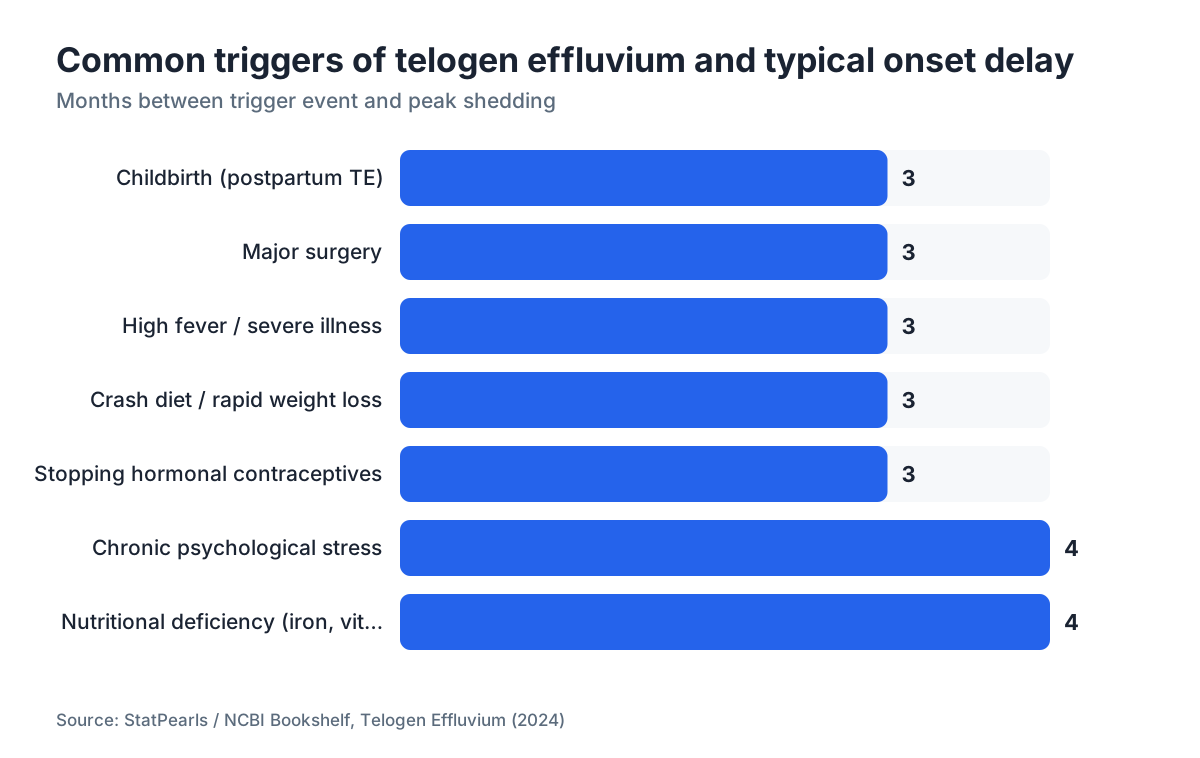
The two to three month lag between trigger and shedding is the part that throws everyone. You lose your job in January, your hair starts falling out in March, and it makes no sense at the time. [1] The lag is baked into the biology: the follicle sits in telogen for roughly 100 days before the resting hair gets pushed out.
One pattern worth knowing. If you've had COVID-19 or another illness with a high fever, post-illness TE is well documented. A 2021 study in The Lancet found hair loss affected about 22% of hospitalized COVID-19 patients at six months of follow-up. [3] The nape is often where these patients notice it first, because they feel the stubble when they rest their head on a pillow.
If you're trying to work out whether diet is your trigger, our article on what causes hair loss covers the nutritional angles.
How is telogen effluvium at the nape different from androgenetic alopecia?
This is the question that matters most, because the two conditions send you down completely different treatment paths.
Androgenetic alopecia (AGA, pattern hair loss) is driven by dihydrotestosterone (DHT) attacking genetically susceptible follicles. In men it follows the Norwood scale, usually receding at the temples and thinning at the crown first. The nape and occipital region (the lower back of the scalp) are classically DHT-resistant, which is exactly why surgeons harvest donor hair from there. [4]
In women, AGA usually thins the center part and top of the scalp while the frontal hairline stays relatively intact.
So if you're thinning mostly at the nape, pattern loss is actually the less likely explanation, especially if you're young. The nape is not a typical AGA zone.
TE thins everywhere at once but concentrates where density was already low. It follows no pattern. You'll see more hair in the shower drain, on the pillow, and in the brush. The 60-second pull test, where a dermatologist grasps about 60 hairs and pulls gently, comes back positive (more than 6 hairs release) during active TE and usually negative in stable AGA. [2]
The other tell is time. TE is temporary by definition once the trigger is gone. AGA is progressive without treatment. A dermatologist can usually separate them with a scalp exam, trichoscopy (dermoscopy of the scalp), and a basic blood panel to rule out thyroid or ferritin problems.
Some people have both at the same time. Chronic TE can speed up the visible march of underlying AGA. That overlap is harder to read and usually needs a board-certified dermatologist to sort out.
How long does telogen effluvium at the nape of the neck last?
Acute TE, the kind set off by a single identifiable event, usually clears within 3 to 6 months after the trigger is removed. The shedding itself tends to peak around 3 months post-trigger and then slow. You'll often spot new short hairs at the nape as regrowth starts. [2]
Getting density back takes longer. Even after shedding stops, the new anagen hairs have to grow out. Scalp hair grows roughly 1 to 1.5 cm per month on average [5], so putting an inch of length back at the nape adds a couple of months on top of the recovery clock. A realistic full recovery runs 9 to 12 months from the original trigger.
Chronic TE is a different animal. It's defined as TE lasting more than 6 months, and it's less well understood. It hits women more than men and often has no single identifiable trigger. Some research points to low ferritin as a quiet, persistent driver in many chronic cases. A 2006 review in the Journal of the American Academy of Dermatology reported ferritin below 10 ng/mL was strongly associated with chronic diffuse telogen hair loss in women. [6]
If your nape thinning is still getting worse at 6 months with no obvious cause, that's your cue to see a dermatologist. Chronic TE that keeps cycling sometimes needs a broader workup: thyroid antibodies, complete blood count, and iron studies.
Can you actually see telogen effluvium at the nape, or just feel it?
Both. And the feeling usually comes first, which surprises people.
During active shedding, the nape feels "thin" to the touch, almost scratchy when you run your fingers through it. The hair has lost its bulk. Pull a few strands and many come away easily with a small white bulb at the root. That white bulb is the telogen club hair. It's normal to shed but alarming to see in numbers. [2]
Visually, you or a partner may notice the nape looks lighter or shows more scalp, especially under direct light or when the hair is wet. People often describe the back of the neck looking "scraggly" where it used to taper cleanly.
Photos help enormously. Take a standardized shot of the nape once a month, same lighting each time. Your subjective read is unreliable, because the brain quietly adjusts to whatever it sees in the mirror day after day. A photo series gives you data instead of a hunch.
Want a clearer read before booking a dermatologist? An AI-assisted scalp analysis can flag diffuse thinning early. The free scan at MyHairline gives you a visual assessment of your hairline and density zones, including the back of the scalp, in a few minutes. It's not a diagnosis. It's something concrete to bring to a doctor.
What blood tests should you get if your nape is thinning from TE?
Run a targeted blood panel before you spend a dollar on treatments. You want to rule out the reversible systemic causes first, because if low ferritin is driving your TE, no amount of topical minoxidil will fully fix it until you correct the iron.
The standard panel most dermatologists order for diffuse hair loss:
| Test | Why It Matters | Target Range |
|---|---|---|
| Serum ferritin | Most common nutritional driver of TE | Above 70 ng/mL for hair health (many labs flag "normal" below this) |
| TSH (thyroid-stimulating hormone) | Both hypo- and hyperthyroidism cause TE | 0.4 to 4.0 mIU/L (symptoms can appear at the edges) |
| Free T3/T4 | TSH alone can miss subclinical thyroid issues | Lab-specific ranges |
| CBC (complete blood count) | Rules out anemia | Lab-specific |
| Vitamin D (25-OH) | Low vitamin D linked to hair loss in several studies | Above 30 ng/mL |
| Zinc | Rarely low, but worth checking in crash dieters | 70 to 120 mcg/dL |
| Fasting glucose / insulin | PCOS-related TE in women | Lab-specific |
The ferritin number deserves a hard look. The standard lab "normal" range often starts at 12 or 15 ng/mL, but dermatologists frequently cite 70 ng/mL as the level needed to support healthy hair cycling. [6] You can be told your iron is "normal" and still have TE driven by a suboptimal ferritin. Ask for the actual number, not the word "normal."
Get these done before your dermatology visit so you show up with data in hand.
What treatments actually help telogen effluvium at the nape of the neck?
The honest answer: the most effective treatment is fixing the trigger. That lands badly when you're watching hair fall out, but it's true. If iron deficiency, thyroid dysfunction, or post-surgical stress is driving your TE, no topical product will beat the root cause.
Once you've dealt with the trigger, here's what the evidence supports.
Minoxidil (topical or oral) Minoxidil extends the anagen (growth) phase and shortens telogen. The FDA approved 5% topical minoxidil for men and 2% (later also 5%) for women, both for androgenetic alopecia, but it's widely used off-label for TE to push follicles back into growth faster. [7] For the nape, foam or solution goes straight on the thin area. Give it at least 4 months for meaningful regrowth. Low-dose oral minoxidil (0.625 to 2.5 mg/day for women, 2.5 to 5 mg for men) is increasingly used off-label, and some dermatologists prefer it for diffuse loss because the coverage is systemic rather than spot-applied. See the full breakdown of minoxidil for men or oral minoxidil for dosing detail.
Nutritional correction If ferritin is low, iron supplementation (usually ferrous sulfate 325 mg or ferrous gluconate) over 3 to 6 months can meaningfully cut TE shedding. Correcting low vitamin D and zinc helps too. Don't supplement blindly. Iron overload is a real risk, so treat off the actual lab number.
Reducing scalp tension Tight ponytails or buns at the nape pile traction stress on top of systemic TE. Letting the hair down and switching to soft elastics takes the mechanical load off follicles that are already vulnerable.
What doesn't work, or isn't worth the money Ketoconazole shampoo gets recommended a lot. It has modest evidence for AGA (it slightly lowers scalp DHT), but there's no strong trial data for it in TE specifically. Platelet-rich plasma (PRP) injections show up for chronic TE, yet the evidence is thin and a series runs $1,500 to $4,000 with no guarantee. Biotin: unless you have a confirmed deficiency (rare), it won't help. Broad hair-loss supplements tend to stack biotin with other ingredients at doses no trial has validated. We break down the evidence on hair loss supplements if you want the ingredient-by-ingredient read.
Finasteride and other DHT blockers are usually not indicated for pure TE, because TE isn't a DHT problem. If you have concurrent AGA, the math changes. See finasteride and DHT blockers for the AGA-specific evidence.
Does stress management actually change the outcome?
Yes, though the size of the effect is hard to pin down.
Chronic psychological stress raises cortisol, and cortisol acts directly on hair follicle cycling. A 2021 study in Nature showed that sustained corticosterone (the rodent version of cortisol) suppressed hair follicle stem cell activity by blocking GAS6 signaling, giving a mechanism for the link between stress and hair cycle disruption. [8] That was animal data, but it matched what dermatologists have watched in the clinic for decades.
What this means in practice: if ongoing psychological stress is your trigger, treating the shedding with minoxidil while you keep running on empty gets you mediocre results. The follicles are still sitting in a bad hormonal environment.
Sleep is probably the most underrated lever here. Growth hormone, which supports anagen, peaks during deep sleep. If you're sleep-deprived and stressed, you're undercutting recovery at the biological level, more than the lifestyle one.
None of this cures TE. The shedding phase runs its course regardless of what you do. But cutting the trigger load shortens the run and lowers the odds of acute TE sliding into chronic TE.
Is telogen effluvium at the nape more common in women or men?
TE overall is more common in women, but it hits both sexes. The gap comes partly from hormonal triggers women face and men don't. Postpartum TE affects roughly 40 to 50% of women within 3 to 5 months of giving birth [2], and stopping hormonal birth control is another common women-specific trigger.
Men get TE too, usually from illness, surgery, crash dieting, or severe psychological stress. In men, nape TE sometimes gets mistaken for pattern loss creeping toward the back of the head, but true AGA doesn't thin the nape, so a proper exam usually clears that up fast.
In men, if the nape is thinning alongside a receding hairline and crown thinning, that's more suspicious for concurrent AGA with a TE overlay. Then both conditions need attention.
For women, postpartum nape thinning is so common that many OBs now flag it as expected. It typically resolves by 12 months postpartum without treatment. It can still be severe enough to be distressing, and minoxidil sometimes gets used, with one caveat: if you're breastfeeding, most dermatologists advise waiting until weaning, since the safety data in lactation is limited.
When should you see a dermatologist about nape thinning?
You can manage mild, temporary TE at home if you've found a clear trigger and the shedding is slowing by month 3. See a dermatologist if:
- The shedding is still speeding up or holding steady at 6 months with no clear trigger
- You're losing more than 150 to 200 hairs a day (a rough count off the drain and brush)
- The nape shows scalp even when the hair is dry and unparted
- You're also losing eyebrows or body hair (that points toward alopecia areata or another autoimmune cause, not TE)
- You have other systemic symptoms: fatigue, cold intolerance, weight change, nail changes
- You've already run a blood panel and everything came back clean
A board-certified dermatologist who focuses on hair disorders (trichologist MDs, or derms who do trichoscopy routinely) is the right person. Not every dermatologist spends equal time on hair. Ask when you book whether they regularly evaluate hair loss.
For a first look before your appointment, the free AI hair analysis at MyHairline can document your current nape density and give you a baseline to track against. Again, not a diagnosis, just useful data to hand the doctor.
If you're seeing diffuse thinning across the whole scalp along with the nape, the full article on finasteride and minoxidil covers what combined treatment looks like for people carrying both TE and AGA.
Can telogen effluvium at the nape become permanent?
Standard TE is not permanent. The follicles aren't destroyed. They're idling in the wrong phase. Once the trigger resolves and the follicle re-enters anagen, normal hair grows back. [1]
The exception is prolonged, severe TE that pushes follicles into a state called "follicular exhaustion," where follicles that have cycled fast and often eventually miniaturize. That's uncommon and shows up mostly in the worst chronic cases.
The practical permanence risk is different. Someone with underlying AGA who assumes all their thinning is TE ignores the AGA, and the AGA keeps progressing while they wait. Follicles that have miniaturized far enough from AGA don't always recover, even with treatment. So the real danger usually isn't TE itself. It's mislabeling permanent hair loss as temporary TE and letting the clock run.
If nape thinning has dragged on past a year, get trichoscopy. It can show miniaturized follicles (a sign of AGA) versus uniform follicle size with reduced density (more consistent with TE). That single distinction changes the whole prognosis.
Sources
- StatPearls (NCBI Bookshelf), Telogen Effluvium
- Huang C et al., The Lancet, 6-month consequences of COVID-19 in patients discharged from hospital, 2021
- International Society of Hair Restoration Surgery (ISHRS)
- Loussouarn G, International Journal of Cosmetic Science, Hair fiber characteristics and methods to evaluate them, 2001
- Rushton DH, Journal of the American Academy of Dermatology, Nutritional factors and hair loss, 2006
- MedlinePlus (U.S. National Library of Medicine), Minoxidil Topical
- Choi S et al., Nature, Corticosterone inhibits GAS6 to govern hair follicle stem-cell quiescence, 2021
- American Academy of Dermatology, Hair Loss
- Malkud S, Journal of Clinical and Diagnostic Research, Telogen Effluvium: A Review, 2015
- NIH Office of Dietary Supplements, Iron Fact Sheet for Health Professionals
- NIH Office of Dietary Supplements, Vitamin D Fact Sheet for Health Professionals