

TL;DR: Primary telogen effluvium is triggered directly at the follicle, usually by an acute physical shock that pushes hairs into the resting phase early. Secondary telogen effluvium is driven by an ongoing systemic problem, like thyroid disease, iron deficiency, or chronic illness, that keeps the follicle stuck in resting mode. Primary cases usually clear within six to twelve months once the trigger is gone. Secondary cases persist until the underlying condition is treated.
What is telogen effluvium and why does the primary vs secondary distinction matter?
Telogen effluvium is a diffuse, non-scarring form of hair shedding where an unusually high percentage of scalp follicles all shift out of their active growth phase (anagen) and into the resting phase (telogen) at once, after which the hairs fall out [1]. The normal resting fraction is roughly 5 to 15 percent of your roughly 100,000 scalp follicles at any one time. In telogen effluvium that figure can jump to 30 percent or higher, which is why sufferers shed 300 or more hairs a day instead of the usual 50 to 100 [1].
The primary versus secondary classification tells you where the problem starts. Primary telogen effluvium means the trigger acts directly on the follicle, or more precisely it disrupts the hair cycle at the level of the follicle itself, usually as a sudden, one-time biological insult. Secondary telogen effluvium means something systemic, a disease, a nutritional gap, a medication, is continuously sending the wrong biochemical signals to the follicle from outside it.
This distinction matters for two reasons. The prognosis is completely different. Primary cases are almost always self-limiting. And treating secondary telogen effluvium without finding and fixing the driver is pointless; the shedding just keeps coming back.
Getting the classification right is the difference between "wait six months" and "get a blood panel today."
For a broader look at how telogen effluvium fits into the wider landscape of hair loss types, the telogen effluvium overview is a good place to start.
How does the normal hair cycle create the conditions for telogen effluvium?
Every follicle cycles independently through three phases: anagen (active growth, lasting two to six years on the scalp), catagen (a brief two-week transition), and telogen (the resting phase, lasting roughly three months) [2]. At the end of telogen, the resting club hair sheds and a new anagen hair starts growing from the same follicle.
What makes telogen effluvium possible is that the jump from anagen to telogen can be sped up by stress signals. Normally only a small fraction of follicles rest at any moment. When a big physiological stressor hits, a large cohort of follicles all shift to telogen together. About three months later, when those follicles reach the end of their telogen phase and the club hairs shed, the person hits a sudden, alarming burst of diffuse shedding [1].
That three-month lag is clinically important. People often can't connect the hair loss to its cause, because the shedding starts months after the trigger. A woman who lost her hair in January may not remember that she had surgery, delivered a baby, or crash-dieted in October.
What is primary telogen effluvium and what causes it?
Primary telogen effluvium is triggered by a discrete, identifiable event that pushes a large number of follicles into telogen at once. The follicle itself is structurally normal. It is just responding to a sudden physiological signal. Common triggers include [1][3]:
- Childbirth (postpartum telogen effluvium is the single most common presentation)
- Major surgery or general anesthesia
- Severe febrile illness, including COVID-19
- Crash dieting or rapid significant weight loss (more than about 15 to 20 pounds over a few months)
- Acute severe psychological stress
- Stopping oral contraceptives
- High-dose vitamin A or retinoid use
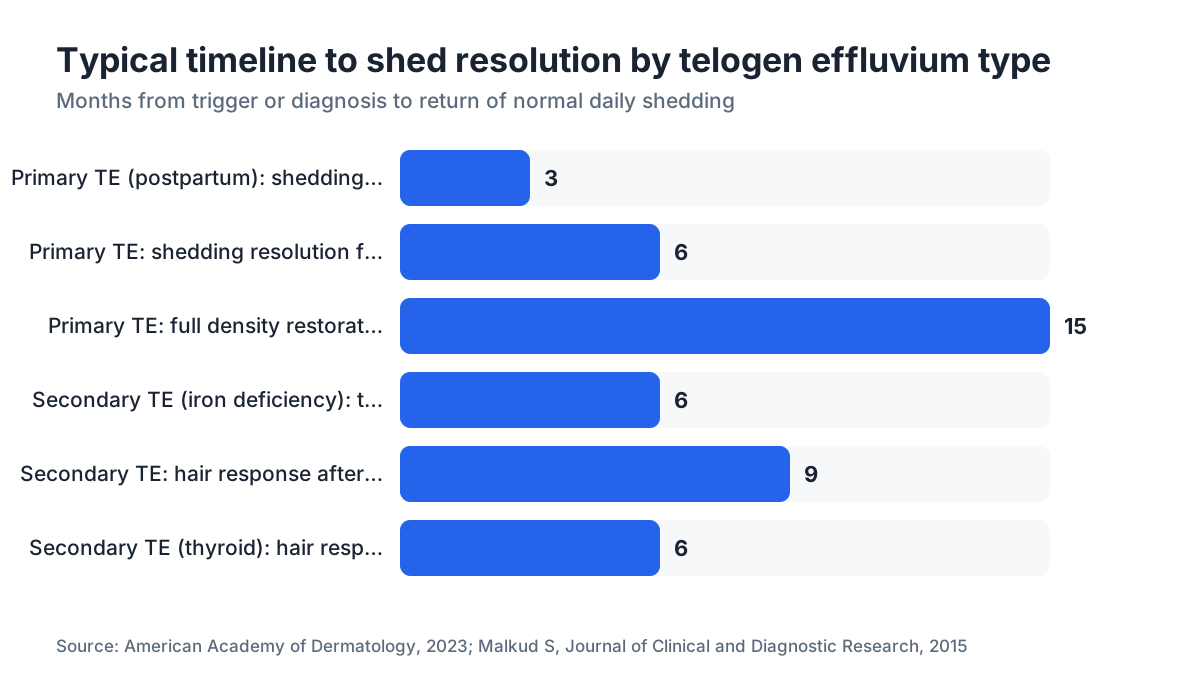
The key word is "acute." A single, finite stressor is the hallmark. The American Academy of Dermatology notes that postpartum hair loss, one of the most common forms, typically begins two to four months after delivery and resolves on its own within six to twelve months [3].
In primary telogen effluvium, once the trigger resolves, the follicles are biologically fine. They re-enter anagen without any help. The hair grows back. That is the good news. The frustrating part is the timeline: full density restoration can take a year or more after the shedding stops, because you are waiting for new anagen hairs to grow from root to visible length.
What is secondary telogen effluvium and what causes it?
Secondary telogen effluvium has no single triggering event. Instead, an ongoing systemic condition chronically disrupts the biochemical environment that follicles need to stay in anagen. The follicle keeps trying to cycle normally but gets interrupted over and over. Shedding is persistent rather than episodic.
The most common drivers found in clinical practice include [1][4]:
- Iron deficiency (with or without overt anemia)
- Thyroid dysfunction, both hypothyroidism and hyperthyroidism
- Zinc deficiency
- Protein malnutrition
- Autoimmune conditions such as lupus
- Chronic systemic diseases (liver disease, kidney disease, inflammatory bowel disease)
- Certain long-term medications, including anticoagulants, beta-blockers, and some antidepressants
- Hormonal changes from polycystic ovary syndrome (PCOS)
A paper by Headington published in the Journal of the American Academy of Dermatology (1993) laid out five distinct patterns of follicle cycling disruption in telogen effluvium, separating acute from chronic presentations and noting that chronic cases almost always have an identifiable systemic cause driving the failure to re-enter anagen [1].
Because the cause persists, so does the shedding. People with secondary telogen effluvium often describe months or years of chronic diffuse thinning rather than the dramatic single shed-episode typical of primary cases. Left untreated, chronic secondary telogen effluvium can overlap with or unmask androgenetic alopecia, making the picture more complicated. For a broader look at what drives hair loss systemically, see what causes hair loss.
How do primary and secondary telogen effluvium differ in symptoms and appearance?
Both types cause diffuse shedding across the entire scalp rather than patterned thinning at the temples or crown. That diffuse quality is what separates telogen effluvium from androgenetic alopecia, which tends to follow a predictable pattern (see receding hairline for what patterned loss looks like).
Beyond that shared feature, the presentations diverge:
| Feature | Primary TE | Secondary TE |
|---|---|---|
| Onset | Sudden, usually 2-4 months after a trigger | Gradual, insidious |
| Trigger | Single identifiable acute event | Ongoing systemic condition |
| Duration | Usually resolves in 6-12 months | Persists until underlying cause treated |
| Shedding pattern | Acute burst, then tapering | Chronic, relatively constant daily shed |
| Scalp appearance | Normal, no inflammation | Normal scalp; underlying disease signs elsewhere |
| Lab work | Usually normal | Often abnormal (ferritin, TSH, CBC) |
| Hair regrowth | Spontaneous once trigger is gone | Requires treating the systemic cause |
The pull test helps in both cases. Gently pulling 40 to 60 hairs from the mid-scalp and extracting more than six is considered positive and suggests active telogen effluvium [3]. Both types will test positive during active shedding. The test result alone won't tell you which type you have.
In primary telogen effluvium, you can often date the trigger fairly precisely once you count backward three months from the shedding onset. In secondary telogen effluvium, there is no such "aha" moment.
How is each type diagnosed?
Diagnosis starts with a detailed history. A dermatologist will ask about deliveries, surgeries, illnesses, medications, diet changes, and stress events in the prior three to six months for primary cases, and about ongoing health conditions and symptoms for secondary cases [3].
For secondary telogen effluvium, blood work is the next step. The minimum useful panel generally includes [4][8]:
- Serum ferritin (the best single marker for iron stores; many labs flag deficiency at under 12 ng/mL, but hair loss can occur with ferritin under 30 to 70 ng/mL according to some dermatology consensus guidelines)
- Thyroid-stimulating hormone (TSH)
- Complete blood count (CBC)
- A metabolic panel
- Zinc level
- In women, free and total testosterone, DHEA-S, and prolactin if hormonal causes are suspected
Trichoscopy (dermoscopy of the scalp) can show increased numbers of short vellus hairs and empty follicles, which confirms active cycling disruption, but it does not distinguish primary from secondary on its own [5].
A scalp biopsy is rarely needed for straightforward telogen effluvium, but it can help when the diagnosis is uncertain, particularly to rule out scarring alopecia or alopecia areata. On biopsy, telogen effluvium shows an increased ratio of telogen to anagen follicles, typically over 25 percent [1][9].
If you want a starting point before your dermatology appointment, the free AI scan at MyHairline can analyze your shedding pattern and flag whether your presentation looks more like a systemic or follicle-level process. It does not replace a blood test, but it can help you walk in with better questions.
Does nutrition deficiency cause secondary telogen effluvium and which deficiencies matter most?
Iron deficiency is probably the most common correctable cause of secondary telogen effluvium, particularly in premenopausal women [4]. The follicle is metabolically demanding. It divides faster than almost any other tissue in the body, and that rapid division needs iron for DNA synthesis. When ferritin drops, the follicle appears to treat hair growth as expendable and shifts into telogen to conserve resources.
A 2006 review in the Journal of the American Academy of Dermatology by Trost, Bergfeld, and Calogeras found that iron deficiency may worsen hair loss and that repleting ferritin was associated with hair recovery in several case series, though the authors cautioned that randomized controlled trial data were limited at the time [4]. That limitation in the evidence base is still honest today. No large RCT has proven iron supplementation reverses telogen effluvium in isolation, but the mechanistic logic and clinical consensus are strong.
Zinc deficiency disrupts the hair cycle in a similar way. Severe protein malnutrition (including crash dieting below roughly 1,000 calories per day or very low protein intake) can trigger telogen effluvium through both a direct follicle energy deficit and downstream hormonal disruption.
Vitamin D deficiency has been proposed as a contributor, but the evidence is weaker. B12 deficiency, especially in vegans or people on long-term metformin, can also matter. The honest answer is that a good clinician will test broadly and let the results guide supplementation rather than guessing. Taking iron when ferritin is already normal does nothing and can cause harm.
For an overview of supplements marketed for hair loss and what the evidence actually says about them, see hair loss supplements.
How long does each type take to resolve?
Primary telogen effluvium follows a fairly predictable course. Shedding typically peaks around three to four months after the trigger, then gradually tapers over the next two to four months. Most people see shedding return to normal within six months of onset. Density takes longer to recover, because new anagen hairs must grow out several inches before they add visible bulk. Full restoration of density often takes twelve to eighteen months from the triggering event [3].
Secondary telogen effluvium has no fixed timeline, because it depends entirely on how quickly and how completely the underlying condition is treated. Correcting iron deficiency, for example, can take three to six months of supplementation to meaningfully raise ferritin, then several more months for the follicle response to catch up. Treating hypothyroidism with levothyroxine typically shows hair benefits within three to six months of reaching a euthyroid state, but individual responses vary.
Here is the frustrating reality. Some people with secondary telogen effluvium have overlapping androgenetic alopecia that was being held back by relatively healthy follicles, and when the systemic insult depletes those follicles, the underlying genetic pattern shows itself. Correcting the deficiency stops the accelerated shedding, but it does not reverse the genetic miniaturization that was happening in the background. This is one reason why seeing a dermatologist rather than just self-supplementing is genuinely worth it.
What treatments actually help, and are they different for each type?
For primary telogen effluvium, the evidence-based answer is largely: wait. Nothing meaningfully speeds recovery once the trigger is gone, because the follicles are biologically intact and cycling normally. Using minoxidil during a primary telogen effluvium episode is a judgment call. Some dermatologists use it to shorten the shed period a little, but there are no strong trial data showing it speeds return to baseline density after an acute episode [3].
For secondary telogen effluvium, the treatment is the underlying cause. Full stop. You treat the thyroid condition. You replete iron. You adjust or swap the offending medication with your doctor's guidance. You address the PCOS or lupus. Hair improvement follows systemic improvement, sometimes slowly.
Minoxidil has a clearer role in secondary telogen effluvium when the underlying cause is being addressed but recovery is slow, or when the condition has unmasked co-existing androgenetic alopecia. Both topical and oral minoxidil forms have evidence for promoting anagen re-entry in affected follicles [6]. The FDA-approved labeled indication for topical minoxidil is androgenetic alopecia, not telogen effluvium specifically, but off-label use for diffuse shedding is common in dermatology practice [6].
Finasteride and other DHT blockers are not first-line for either type of telogen effluvium unless there is concurrent androgenetic alopecia. They block the androgen pathway, which is not the primary driver in either primary or secondary TE. For men with documented androgenetic alopecia plus secondary telogen effluvium, treating the systemic cause alongside finasteride and minoxidil can be reasonable, but the finasteride is targeting the androgenetic component, not the effluvium itself.
For minoxidil for men specifically, the standard topical dosing studied is 5% solution or foam applied twice daily. Reviewing minoxidil side effects before starting is worth your time, particularly the paradoxical initial shedding that can alarm people in the first four to eight weeks.
Can telogen effluvium become permanent?
True telogen effluvium, primary or secondary, does not by itself cause permanent hair loss. The follicles are resting, not dead. As long as the follicle stays intact (non-scarred, non-miniaturized by androgens), it can re-enter anagen and produce a normal terminal hair.
Three scenarios can make hair loss feel or look permanent.
First, very long-standing secondary telogen effluvium, running for years with an untreated cause, can theoretically lead to follicle miniaturization over time, though this is less well-documented than with androgenetic alopecia.
Second, and more commonly, the telogen effluvium was never the only problem. It was layered on top of androgenetic alopecia. Once the effluvium resolves, the genetic thinning pattern that was progressing underneath becomes obvious. That is not the telogen effluvium making hair loss permanent. It is the androgenetic alopecia that was already there. You have to address both.
Third, if shedding gets misclassified and a scarring alopecia such as lichen planopilaris is missed, then yes, the loss becomes permanent, because scarring alopecia destroys follicles. This is a strong argument for getting a proper dermatological evaluation rather than assuming all diffuse shedding is benign telogen effluvium.
The MyHairline AI scan can flag patterns that look more concerning and prompt you to seek in-person evaluation sooner, rather than waiting six months on the assumption that things will resolve on their own.
How is telogen effluvium different from androgenetic alopecia?
This is probably the question most people are really asking when they first notice shedding. The two conditions can coexist, which adds confusion.
Androgenetic alopecia (pattern hair loss) is driven by dihydrotestosterone (DHT) causing progressive follicle miniaturization in genetically susceptible follicles, following a predictable anatomic pattern: temples, crown, and mid-scalp in men (tracked by Norwood stages), and diffuse thinning over the top of the scalp in women [7]. It is essentially permanent without treatment and progresses over years.
Telogen effluvium, both types, causes diffuse, non-patterned shedding. No particular region of the scalp is targeted. The follicles are not miniaturizing, they are simply going dormant. Recovery is possible and expected in primary cases and in treated secondary cases.
A few practical differences that can help you sort out which is happening to you:
- If your hairline is receding at the temples in a predictable V-shape and your crown is thinning, that points heavily toward androgenetic alopecia.
- If hair is shedding uniformly all over, with equal thinning at the back and sides (areas that should be androgen-resistant), telogen effluvium is more likely.
- If the shedding started suddenly after a clear event, primary telogen effluvium fits.
- A dermatologist can use trichoscopy to see miniaturized hairs (pointing to androgenetic alopecia) versus normal-caliber hairs that are simply in telogen (pointing to effluvium).
For a deeper look at pattern loss, what causes hair loss covers the androgenetic pathway in detail.
When should you see a doctor instead of waiting it out?
If you have had significant diffuse shedding for more than three months with no obvious acute trigger, see a dermatologist and ask for bloodwork. Secondary telogen effluvium that goes undiagnosed for a year is a year of ongoing follicle stress that did not need to happen.
See someone sooner if:
- You have any symptoms that might suggest thyroid disease (fatigue, weight changes, temperature intolerance, palpitations)
- You follow a restrictive diet or have had rapid weight loss
- You are a premenopausal woman with heavy periods (a major iron drain that is frequently missed)
- You have joint pain, rashes, or other signs of systemic autoimmune disease
- Shedding comes with scalp redness, scaling, pain, or visible loss of follicle openings (the last sign suggests scarring alopecia, which needs urgent attention)
- You are losing eyebrows, eyelashes, or body hair along with scalp hair (this raises the possibility of alopecia areata or systemic disease)
Primary telogen effluvium after a clear, single trigger in an otherwise healthy person is genuinely a watch-and-wait situation. But watch-and-wait does not mean ignore-and-hope. It means monitoring, confirming that shedding is actually tapering, and being ready to investigate further if it does not.
Sources
- Headington JT. Telogen effluvium: new concepts and review. Journal of the American Academy of Dermatology, 1993
- National Institutes of Health, National Library of Medicine. Hair follicle anatomy and cycling overview
- American Academy of Dermatology Association. Hair loss types: alopecia and related conditions
- Trost LB, Bergfeld WF, Calogeras E. The diagnosis and treatment of iron deficiency and its potential relationship to hair loss. Journal of the American Academy of Dermatology, 2006
- Rudnicka L, et al. Atlas of Trichoscopy. Springer, 2012. Referenced in: Dermoscopy in hair and scalp disorders, PubMed review
- U.S. Food and Drug Administration. Minoxidil topical solution and foam: approved labeling
- American Academy of Dermatology Association. Androgenetic alopecia: overview and treatment
- Phillips TG, Slomiany WP, Allison R. Hair Loss: Common Causes and Treatment. American Family Physician, 2017
- Grover C, Khurana A. Telogen effluvium. Indian Journal of Dermatology, Venereology, and Leprology, 2013. PubMed indexed
- Malkud S. Telogen Effluvium: A Review. Journal of Clinical and Diagnostic Research, 2015. PubMed indexed
- Rebora A. Telogen effluvium: an etiopathogenetic theory. International Journal of Dermatology, 1993