

TL;DR: Most telogen effluvium resolves on its own within 3 to 6 months once the trigger is removed. No drug is FDA-approved specifically for TE. Minoxidil can speed regrowth and has the most evidence behind it. Treating the underlying cause, whether thyroid disease, iron deficiency, or nutritional gaps, matters more than any topical or oral medication.
What is telogen effluvium and why does it cause so much hair loss?
Telogen effluvium (TE) is a diffuse shedding condition where a large percentage of hairs enter the resting (telogen) phase at once and then fall out, usually 2 to 3 months after a triggering event. Normally, roughly 10 to 15 percent of scalp hairs sit in telogen at any one time [1]. During a TE episode, that figure can climb above 30 percent, which means 300 or more hairs shed per day instead of the usual 50 to 100 [1].
The condition is not the same as androgenetic alopecia (pattern baldness). TE does not selectively thin the crown or temples. It hits the whole scalp more or less evenly, and it does not permanently destroy follicles. That distinction changes everything about treatment: if the follicles are intact, the hair should come back.
Common triggers include physical trauma, major surgery, childbirth (postpartum telogen effluvium is one of the most frequent forms), severe emotional stress, rapid weight loss, crash dieting, thyroid disorders, iron deficiency, and certain medications. Chronic TE, lasting more than 6 months, is less understood and may involve a persistent fluctuating trigger or an underlying hormonal shift.
Not sure whether what you are seeing is TE or pattern loss? A proper diagnosis matters before you spend money on anything. The telogen effluvium guide on this site walks through the diagnostic criteria in detail.
Does telogen effluvium need medication at all?
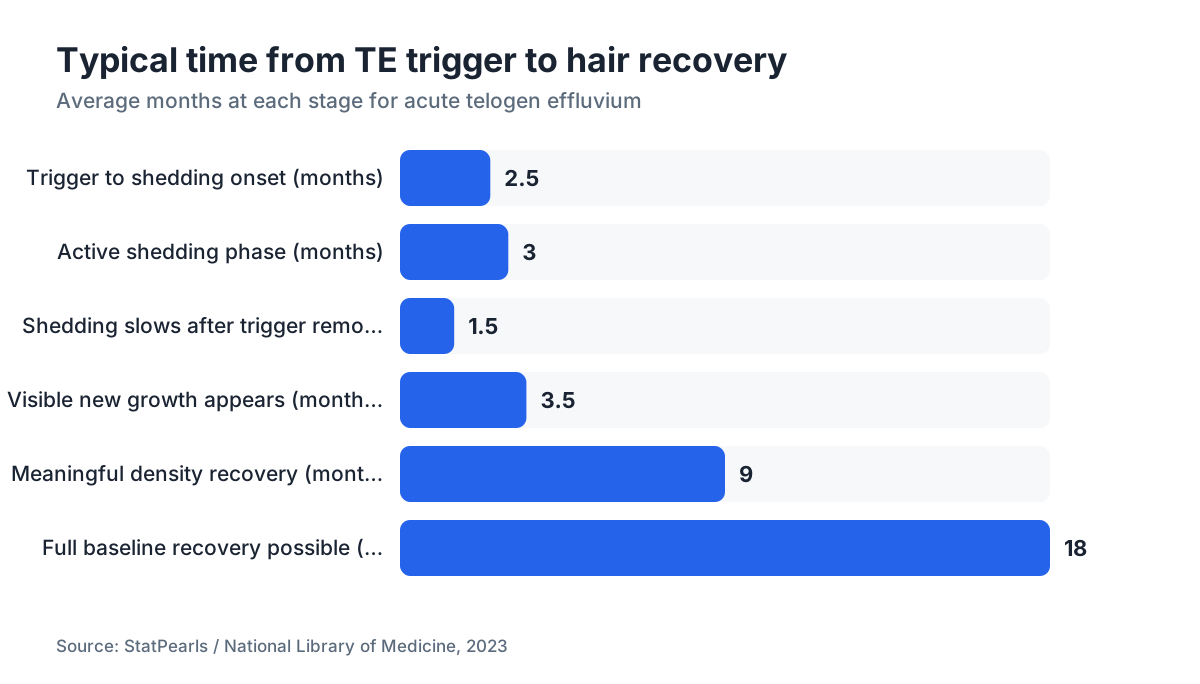
Honest answer: often no. The best-supported intervention for TE is finding and removing the trigger. Multiple dermatology reviews confirm that most acute TE cases resolve on their own within 3 to 6 months once the cause is addressed [2]. Hair density returns to baseline over another 6 to 12 months as the new anagen hairs grow out.
That is not satisfying when you are watching clumps come out in the shower. But it is the biological reality. Medicating before you know the cause can delay finding what is actually wrong.
The cases where medication genuinely helps fall into two buckets. First, an underlying treatable condition is driving the TE, such as hypothyroidism, iron deficiency anemia, or a nutritional deficiency. Treating that condition is the medication. Second, the shedding is prolonged, severe, or distressing enough that a topical stimulant like minoxidil is worth starting to speed regrowth while the underlying cause gets corrected.
What medication does not do is stop a TE episode already in progress. Hairs that have already entered telogen will shed. The goal is to shorten how long the follicles stay dormant and make sure the next cycle starts on time.
Which medications cause telogen effluvium?
This is probably the most underappreciated question in the space. A meaningful share of TE cases are drug-induced, and the list of offenders is long.
The mechanism is usually one of two things. The drug forces hairs prematurely into telogen (the toxic effluvium pattern, seen with chemotherapy at high doses), or it shifts the hormonal or metabolic environment enough to disrupt the follicle cycle (the more common delayed pattern, appearing 2 to 4 months after starting the drug).
| Drug Class | Common Examples | Typical Onset After Starting Drug |
|---|---|---|
| Retinoids | Isotretinoin, acitretin | 1 to 3 months |
| Anticoagulants | Heparin, warfarin | 1 to 4 months |
| Antithyroid drugs | Carbimazole, propylthiouracil | 1 to 3 months |
| Beta-blockers | Propranolol, metoprolol | 1 to 4 months |
| ACE inhibitors | Captopril, enalapril | Months to years |
| Hormonal contraceptives | Pills with high androgen index | 2 to 3 months |
| Antidepressants | Fluoxetine, sertraline, paroxetine | 2 to 4 months |
| Mood stabilizers | Lithium, valproic acid | 2 to 6 months |
| Cholesterol drugs | Clofibrate, gemfibrozil | 3 to 6 months |
| Interferons | Interferon alpha | 1 to 2 months |
This list is not exhaustive. The American Academy of Dermatology notes that drug-induced alopecia is often underreported, because the delay between starting a medication and losing hair makes the connection easy to miss [2].
If you recently started a new medication and are shedding more, that timeline is a diagnostic clue. Do not stop a prescribed medication without talking to the prescribing doctor, but do bring the timeline to their attention. Sometimes a substitution is possible. Sometimes the benefit of the drug outweighs the cosmetic impact and you manage the hair loss separately.
One common confusion: finasteride (used to treat androgenetic alopecia) occasionally triggers a short-lived TE episode in the first 2 to 4 months of use, as follicles shift from miniaturized to healthy cycles. This is usually temporary. The finasteride article covers this in depth.
Can minoxidil treat telogen effluvium?
Minoxidil is the medication most commonly used in TE management, even though it is not FDA-approved for that specific indication. The FDA approvals for minoxidil are for androgenetic alopecia: the 2% and 5% topical solutions for men and women, and (since October 2022) an OTC 5% foam for women [3].
Dermatologists reach for it off-label for a logical reason. Minoxidil shortens the telogen phase and extends anagen. In a follicle that is dormant because of TE, anything that nudges it back into growth phase faster helps. A randomized controlled trial published in the Journal of the American Academy of Dermatology found that 5% topical minoxidil significantly increased hair counts compared to placebo in women with diffuse hair loss, which included TE-pattern loss [4].
In practice, topical 5% minoxidil applied once or twice daily is what most dermatologists suggest when a TE patient wants to do something active. It does not stop shedding in the first few weeks and may briefly increase it (called shedding acceleration, where telogen hairs get pushed out faster to make room for new anagen hairs). That early spike alarms people, but it is a sign the drug is working.
Oral minoxidil at low doses (0.625 mg to 1.25 mg daily for women, 2.5 mg to 5 mg for men) is gaining ground. A 2022 retrospective study in the Journal of the American Academy of Dermatology covering 1,404 patients found good tolerability and meaningful hair density improvement [5]. Off-label oral use is a real option worth discussing with a dermatologist for chronic TE cases, or when topical compliance is a problem.
Read more on oral minoxidil and the general minoxidil for men breakdown if you want the full picture on dosing and side effects.
Does finasteride help with telogen effluvium?
Finasteride blocks the conversion of testosterone to dihydrotestosterone (DHT). In androgenetic alopecia, DHT is the main driver of follicle miniaturization, so finasteride makes clear pharmacological sense there.
In pure telogen effluvium, where DHT-driven miniaturization is not the mechanism, finasteride has no direct role. The evidence for finasteride in TE specifically is essentially absent. But the clinical picture is often not pure. Many men presenting with what looks like TE actually have TE sitting on top of early androgenetic alopecia. In those cases, the TE resolves on its own while finasteride handles the underlying pattern loss that would have progressed anyway.
If bloodwork and a dermatologist assessment suggest your hair loss is purely reactive (recent surgery, illness, stress), starting finasteride adds cost and side-effect exposure without clear benefit for that condition. If there is any suspicion of concurrent pattern loss, the math changes.
The finasteride and minoxidil combination article discusses the logic of using both together for patients with mixed presentations.
What nutritional deficiencies need to be treated to stop TE?
This is where medication, in the broad sense of replacing what is missing, does real work in TE.
Iron deficiency is the most studied. Ferritin (stored iron) below 30 ng/mL is consistently linked with diffuse hair shedding in premenopausal women in the dermatology literature [6]. Some researchers argue the threshold for hair-related ferritin deficiency may be as high as 70 ng/mL, though that is debated. The practical takeaway: get a serum ferritin checked. If it is low, iron supplementation is treatment, not optional.
Thyroid disease is another common driver. Both hypothyroidism and hyperthyroidism can cause TE, and treating the thyroid disorder with levothyroxine or antithyroid medication usually resolves the hair loss over several months. Ask for TSH, free T3, and free T4 if shedding is diffuse without an obvious cause.
Zinc deficiency shows up particularly in people on restrictive diets. A 2013 study in Annals of Dermatology found significantly lower serum zinc levels in TE patients compared to controls [7]. Supplementing zinc in deficient patients improved hair loss scores.
Vitamin D deficiency has weaker evidence. Association studies exist, but randomized trials showing that supplementation reverses TE are lacking as of this writing. Checking and correcting a deficiency is low-risk and sensible. Expecting it to be the magic fix is not.
Biotin is marketed hard for hair loss. The honest picture: biotin deficiency is rare in people eating a normal diet, and supplementing biotin in non-deficient people has not been shown in trials to improve TE or any other hair loss condition [8]. The FDA has warned that high-dose biotin supplements interfere with thyroid and cardiac biomarker lab tests [8]. If a doctor is running thyroid labs on you, disclose any biotin supplementation.
The hair loss supplements article has a full breakdown of what the evidence shows for each supplement category.
Are there prescription treatments beyond minoxidil?
A few others come up in clinical practice, though the evidence base is thinner.
Spironolactone is sometimes used in women with chronic TE that has a hormonal component. It is an aldosterone antagonist that also blocks androgens at the follicle. It is not FDA-approved for hair loss and the TE-specific trial data is sparse, but dermatologists use it in women with elevated androgens or hormonal swings driving chronic shedding. It is not appropriate for men because of feminizing side effects.
Corticosteroids show up occasionally in the TE literature for acute, very severe cases, but there is no strong evidence and their use is not standard practice. The risk of systemic steroids making other conditions worse usually outweighs the benefit for a self-limiting condition like TE.
Platelet-rich plasma (PRP) injections are used by some dermatologists and hair clinics for TE, typically when the condition has dragged on or when a patient wants to speed regrowth. The evidence is mixed and trial quality varies. A 2019 meta-analysis in Aesthetic Plastic Surgery found PRP improved hair counts in alopecia conditions generally, but the TE-specific subset was small [9].
Nutraceuticals like Viviscal (marine protein complex) and Nutrafol have some industry-funded trial data showing modest improvement in hair shedding in women. That funding bias should temper enthusiasm, but these are probably harmless options for patients who want to add something over-the-counter while waiting for TE to resolve.
Antifungal shampoos with ketoconazole are sometimes recommended to reduce scalp inflammation that may be extending the telogen phase. The evidence is indirect, mostly borrowed from androgenetic alopecia studies, but ketoconazole 2% shampoo used twice weekly is low-risk.
How long does it take for hair to grow back after treating TE?
The hair cycle sets the timeline, not medication speed. Each follicle runs its own independent clock.
Anagen (growth phase) lasts 2 to 7 years. Catagen (transition) lasts about 2 weeks. Telogen (rest) lasts 2 to 4 months. Once a hair enters telogen and sheds, the follicle rests before restarting. That rest period is what you are waiting out.
After the trigger is removed, most patients notice shedding slow down within 1 to 2 months. New growth becomes visible (often as short, fine hairs at the scalp surface) around 3 to 4 months. Meaningful density recovery takes 6 to 12 months [2]. Full recovery to baseline density can take up to 18 months in some cases, especially when the TE episode was prolonged.
Minoxidil shortens telogen and can bring that regrowth timeline forward by 4 to 8 weeks in some patients. That is real but not dramatic. Managing expectations is part of managing TE.
If you have not seen any improvement by 12 months after addressing the known trigger, revisit the diagnosis. Either the trigger was not fully removed, a new trigger appeared, or the diagnosis was partly wrong and there is concurrent androgenetic alopecia or another condition.
If you want an objective picture of where your hairline currently stands, the free AI hair scan at MyHairline gives you a starting reference point to compare against as you track recovery.
What bloodwork should you get before starting any medication for TE?
Going straight to medication without bloodwork is like patching a roof without finding the leak. This panel is what most dermatologists order.
Complete blood count (CBC): screens for anemia that could be driving TE.
Serum ferritin: the most sensitive iron marker for hair-related iron deficiency. Serum iron and TIBC are less reliable on their own.
Thyroid function: TSH is the standard screen; add free T4 if TSH is borderline.
Vitamin D (25-OH): worth knowing, even if the hair benefit of correction is modest.
Zinc: relevant if diet is restricted.
Sex hormones in women with suspected hormonal TE: total and free testosterone, DHEAS, and prolactin are the usual starting panel.
Antinuclear antibody (ANA): screens for autoimmune conditions like lupus that can cause diffuse shedding mimicking TE.
This is not expensive or unusual bloodwork. A primary care doctor can order all of it. Knowing what you are dealing with before buying minoxidil, iron supplements, or anything else saves both money and time.
Everything that can start a TE episode is covered in the what causes hair loss guide if you want the broader picture.
Are there medications you should avoid if you have telogen effluvium?
Yes. Beyond the obvious (not adding more drugs from the TE trigger list without medical need), a few categories deserve specific mention.
High-dose vitamin A supplements. Vitamin A toxicity is a well-documented cause of diffuse hair shedding. Many people taking generic multivitamins or hair-specific supplements do not realize some formulas contain 5,000 to 10,000 IU of vitamin A, which over time can become a problem. The tolerable upper intake level for preformed vitamin A (retinol) set by the National Institutes of Health is 3,000 mcg RAE (about 10,000 IU) per day for adults [10].
Excessive selenium supplementation. Selenium toxicity (selenosis) causes diffuse hair loss. It is rare but real. Some hair-specific supplements push selenium to levels approaching the 400 mcg per day upper limit set by the NIH [10].
New oral contraceptives with high androgenic progestins. If you are switching birth control formulations, pills with levonorgestrel, norgestrel, or norethindrone acetate carry higher androgenic activity. For someone already shedding, these can make TE worse and may speed up underlying androgenetic alopecia. Low-androgen or anti-androgenic pills (containing desogestrel, drospirenone, or norgestimate) are generally better choices for hair.
Self-prescribed high-dose biotin (above 5 to 10 mg daily). As noted above, this interferes with lab tests and has no proven benefit for non-deficient people [8].
Is telogen effluvium different to treat in men versus women?
The underlying biology is the same. The differences are mostly in trigger frequency and medication choice.
Women get TE more often, largely because of hormonal triggers: pregnancy, postpartum changes, stopping hormonal contraceptives, and perimenopause. Iron deficiency is also more common in premenopausal women. So the workup and treatment lean heavily on hormonal and nutritional correction in women.
Men with TE are more likely to have it layered on top of androgenetic alopecia, which can make the shedding phase look more dramatic and recovery feel incomplete even after the TE resolves. The underlying pattern loss keeps going underneath, so telling the two conditions apart matters more in men.
Minoxidil dosing differs. Men typically use 5% topical minoxidil. Women usually start at 2% but can use 5% under medical guidance. For oral minoxidil, doses in men run higher (2.5 to 5 mg) than in women (0.625 to 1.25 mg) to reduce side effects like hypertrichosis (unwanted body hair growth). Check minoxidil side effects for the full profile before starting.
Finasteride is not used in premenopausal women who might become pregnant, given the risk of fetal harm (specifically genital abnormalities in male fetuses). This is an FDA boxed warning [11]. It is sometimes used in postmenopausal women off-label for androgenetic alopecia.
The receding hairline article addresses men specifically if the concern goes beyond diffuse TE shedding.
When should you see a dermatologist rather than self-treating TE?
Self-treating is reasonable if shedding started after an obvious trigger (childbirth, surgery, severe illness), it has been going on less than 6 months, and basic bloodwork is normal or you have already started correcting a deficiency.
See a dermatologist if any of these apply. Shedding has gone on more than 6 months without clear improvement. You cannot identify a plausible trigger. Your hair is also thinning at the temples or crown in a pattern-like way, which suggests concurrent androgenetic alopecia. You have other symptoms pointing to autoimmune disease, or scalp itching, burning, or scaling. You are pregnant or trying to conceive (this changes every medication option).
A dermatologist can do a trichoscopy (dermoscopy of the scalp) or a hair pull test to measure the ratio of telogen to anagen hairs directly. That is faster and more informative than months of waiting and guessing.
If you are early in trying to understand what you are seeing, the free AI scan at MyHairline can help characterize the pattern before a clinic visit.
Sources
- StatPearls (NCBI Bookshelf), National Library of Medicine: Telogen Effluvium
- American Academy of Dermatology, Hair Loss Types: Telogen Effluvium Overview
- U.S. Food and Drug Administration, Drug Approvals and Databases
- Journal of the American Academy of Dermatology, Blume-Peytavi et al. 2007: Efficacy and safety of 5% minoxidil solution versus 2% minoxidil solution and placebo in female pattern hair loss
- Journal of the American Academy of Dermatology, Vano-Galvan et al. 2022: Oral minoxidil treatment for hair loss: A review of efficacy and safety
- Journal of the American Academy of Dermatology, Rushton DH 2002: Nutritional factors and hair loss
- Annals of Dermatology, Kil MS et al. 2013: Analysis of serum zinc and copper concentrations in hair loss
- U.S. Food and Drug Administration, Safety Communication: Biotin May Interfere With Lab Tests
- Aesthetic Plastic Surgery, Giordano et al. 2019: Platelet-Rich Plasma in Alopecia: A Systematic Review and Meta-Analysis
- National Institutes of Health, Office of Dietary Supplements: Vitamin A Fact Sheet for Health Professionals
- U.S. Food and Drug Administration, Drug Approvals and Databases (Propecia/finasteride label)