
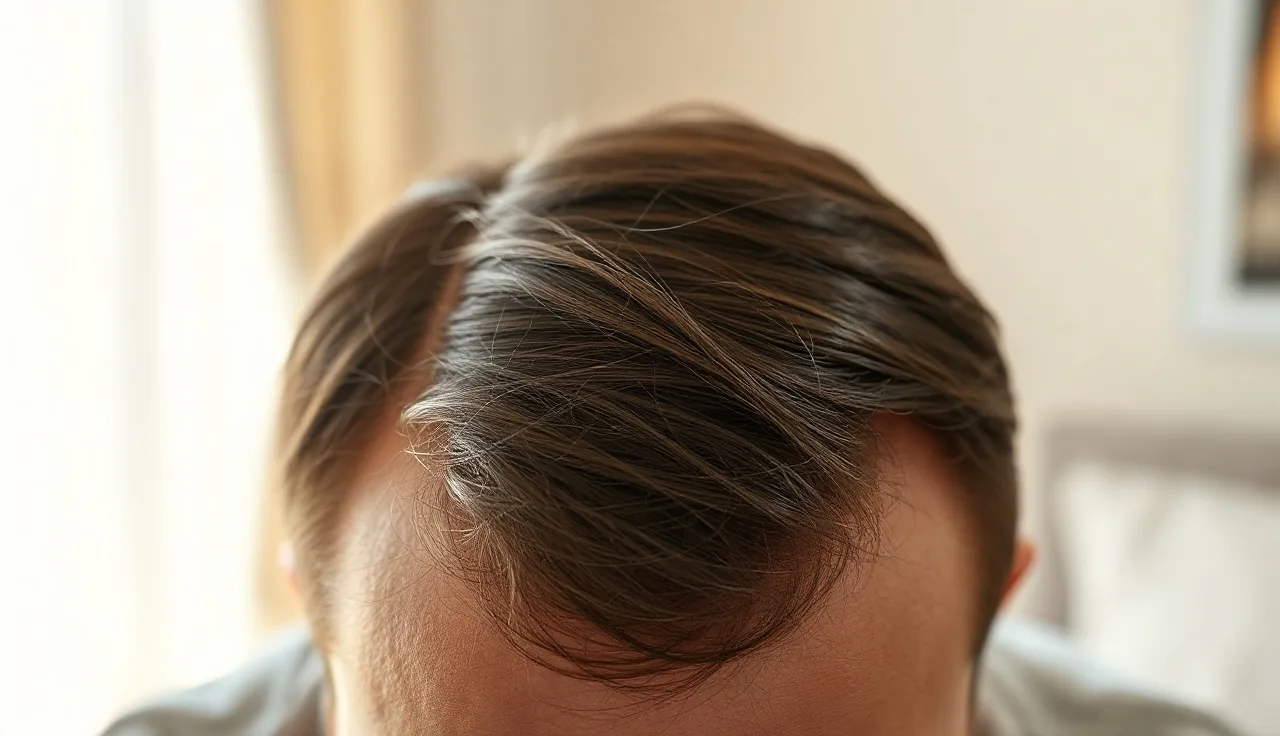
TL;DR: Anagen effluvium is sudden, heavy shedding from a direct attack on hairs that are actively growing, most often from chemotherapy. Telogen effluvium is slower diffuse shedding that happens when a stressor pushes large numbers of follicles into the resting phase. Both reverse in most people. Their causes, timelines, and treatments are nothing alike.
What is anagen effluvium and what causes it?
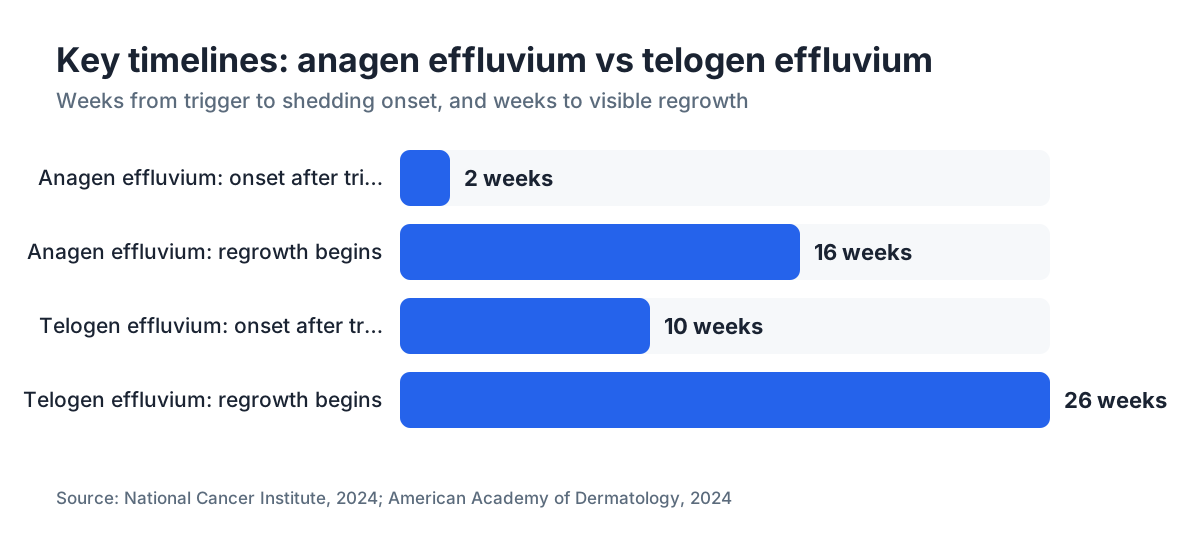
Anagen effluvium is the sudden loss of hair that is still in its active growth phase (the anagen phase). Roughly 85 to 90% of your scalp hairs sit in anagen at any one time [1]. So when something hits that phase directly, the damage lands fast and it lands hard.
Chemotherapy causes most of it. Cytotoxic drugs go after rapidly dividing cells, and hair matrix cells divide faster than almost any other cell in the body [2]. Within one to three weeks of starting certain regimens, some patients lose up to 90% of their scalp hair. Radiation to the head works the same way. Rarer triggers include thallium or arsenic poisoning, high-dose cyclophosphamide, and some targeted cancer drugs.
The hair doesn't thin gradually. It snaps at a narrowed, weakened point on the shaft (a "pencil-point" or tapered fracture), leaving short stubs on the scalp. Under a dermatoscope this looks nothing like the miniaturized hairs of androgenetic alopecia or the dystrophic anagen hairs of alopecia areata.
Remove the cause and the follicle itself is usually still there. Regrowth starts within three to six months [2]. The first hairs back sometimes come in a different texture or color before settling back to baseline.
What is telogen effluvium and what causes it?
Telogen effluvium (TE) is diffuse shedding that starts when a stressor shoves a big batch of growing follicles into telogen, the resting phase, ahead of schedule. Nothing gets destroyed. The follicles just go dormant early. Two to four months later they all enter the shedding phase (exogen) at once, and suddenly your pillow, your shower drain, and your brush are covered in hair.
The two-to-four-month lag is the tell. A woman who had a baby, major surgery, or a serious illness in February usually notices the shed in April or May. The gap is wide enough that most people never connect the two.
Common triggers include [3]:
- Childbirth (postpartum TE is the most recognized form)
- Significant weight loss or crash dieting, especially protein restriction
- Major surgery or physiological shock
- High fever or severe systemic illness (COVID-19 set off a wave of reported cases)
- Hypothyroidism or hyperthyroidism
- Iron deficiency
- Chronic psychological stress
- Stopping oral contraceptives
Acute TE usually clears on its own within six to nine months once the trigger is gone [3]. Chronic TE, meaning shedding past six months, is murkier and may run on several overlapping triggers at once. On its own it rarely turns permanent. But it can pull the curtain back on androgenetic alopecia in people who were genetically headed there anyway.
For the full TE picture, see our guide to telogen effluvium.
How do the two conditions compare side by side?
Here are the differences laid out. One read of this table beats a page of prose.
| Feature | Anagen Effluvium | Telogen Effluvium |
|---|---|---|
| Hair cycle phase affected | Anagen (active growth) | Telogen (resting) |
| Speed of onset | Days to 1-3 weeks after trigger | 2-4 months after trigger |
| Typical hair loss amount | Up to 80-90% of scalp hair [2] | Rarely more than 50% [3] |
| Shed hair appearance | Tapered/broken shaft, no bulb | Club-shaped white bulb present |
| Most common cause | Chemotherapy, radiation | Physiological stress, nutritional deficiency |
| Scalp appearance | Often visibly near-bald | Diffuse thinning, part widens |
| Permanent? | Rarely (depends on dose/duration) | Almost never permanent [3] |
| Typical regrowth timeline | 3-6 months post-trigger [2] | 6-9 months post-trigger [3] |
| Diagnosis | Clinical + trichoscopy | Clinical + pull test + bloodwork |
One practical note on the pull test. It helps with TE (five or more hairs from a single gentle tug counts as positive) but it tells you little in anagen effluvium, where you can see and feel the breakage without any test. A dermatologist may still run a trichogram or trichoscopy either way to confirm which phase the shed hairs came from.
How can you tell which one you have?
Ask yourself one question. Did the shedding start within days or weeks of something, or did it start two to four months after something? That single answer sorts most cases.
Anagen effluvium almost always has an obvious cause staring back at you. If you're on chemotherapy and your hair is gone two weeks later, that's not a puzzle. The catch is that a few targeted therapies and lesser-known drugs cause a milder anagen effluvium that can pass for TE at first.
Telogen effluvium is where people get lost, because the lag makes the cause feel disconnected from the shed. Blood tests are part of the workup. A complete blood count, ferritin (more useful than hemoglobin, since ferritin drops first), thyroid-stimulating hormone, and a basic metabolic panel catch most reversible systemic triggers [4]. The American Academy of Dermatology points to ferritin as the single most useful lab in a diffuse shedding workup [4].
Want an objective baseline before you book a dermatologist? The free AI hair scan at MyHairline can flag diffuse thinning patterns and give you something to track against over time.
A scalp biopsy is rarely needed for either one, but it can settle things when the exam and bloodwork leave the diagnosis open. In anagen effluvium the pathology shows dystrophic anagen hairs. In TE it shows a raised telogen-to-anagen ratio (normal runs about 10 to 15% telogen; TE pushes it to 25% or higher) [1].
Mixed cases happen. Chemotherapy can set off both: the drugs cause anagen effluvium directly, and as a physiological stressor they can shove resting follicles into telogen early on top of that.
Does anagen effluvium cause permanent hair loss?
Usually no. The follicle bulb tends to survive, so regrowth kicks in once the toxic insult ends [2]. Visible regrowth runs three to six months after chemotherapy finishes. Full density takes longer, sometimes a year.
Permanent damage does happen when radiation doses to the scalp run high (roughly above 45 Gy, though the threshold shifts with fractionation and individual sensitivity) [5]. At those doses the follicular stem cell reservoir in the bulge region can be wiped out for good. Some older alkylating agents at very high doses, busulfan in bone marrow transplant conditioning regimens in particular, carry a real risk of permanent alopecia too [5].
Scalp cooling (scalp hypothermia) cuts blood flow to the follicles during infusion and, in randomized trials, meaningfully reduces hair loss for certain regimens. The FDA cleared the Paxman and DigniCap systems for this use [6]. It doesn't work for every chemotherapy drug, and oncologists follow specific protocols on when it fits.
Worried about permanent loss after a toxic exposure? A dermoscopy exam at the six-month mark after treatment is a reasonable checkpoint. Absent follicular openings on dermoscopy point to fibrosis and a poor outlook for regrowth.
Does telogen effluvium cause permanent hair loss?
On its own, acute TE almost never turns permanent. The follicles are intact. They just rested early. Once the trigger resolves, they cycle back into growth [3].
The wrinkle is genetics. In someone with inherited sensitivity to dihydrotestosterone (DHT), ongoing TE can feel like it keeps getting worse, because it's running on top of androgenetic alopecia (AGA) that was coming anyway. This is sometimes called "TE unmasking AGA." The TE reverses. The AGA doesn't, not without treatment.
Chronic TE past six months raises more questions. A 2001 paper in the Journal of the American Academy of Dermatology found chronic TE almost entirely in women aged 30 to 60, with a prognosis that stays generally good but less predictable than acute TE [7].
When TE turns out to be sitting on early AGA, the treatment conversation changes. Options like minoxidil for men or finasteride come into play, not to fix the TE, but to slow the loss pattern the TE is speeding up. Our what causes hair loss guide goes deeper on how TE and AGA feed into each other.
How is anagen effluvium treated?
The main move is removing or finishing the causative agent when you can. For chemotherapy patients that usually means waiting out the treatment course. For toxic exposure (thallium, arsenic), it means finding and cutting off the source right away.
Beyond that:
Scalp cooling during infusion has the most evidence behind it for preventing chemo-related anagen effluvium. A 2017 randomized trial in JAMA reported that scalp cooling cut hair loss to a clinically meaningful degree in patients getting chemotherapy for early-stage breast cancer [6]. The trial enrolled 182 patients; 50.5% of the scalp-cooling group had less than 50% hair loss versus 0% in the control group.
Topical minoxidil is sometimes used after chemotherapy to speed regrowth, though the evidence comes mostly from small studies and the FDA hasn't approved it for this. Read up on minoxidil side effects before you consider it.
Psychological support matters more than the phrase suggests. Sudden near-total hair loss during cancer treatment hits quality of life hard. The American Cancer Society treats proactive counseling and wig fitting as part of care, not an afterthought.
For radiation-induced permanent alopecia, hair transplant surgery is the only realistic path back in the affected areas, assuming the donor sites were spared. Look for a hair restoration surgeon with specific experience in radiation alopecia.
How is telogen effluvium treated?
Step one is finding and fixing the trigger. Sounds obvious. It's also where most people burn months. Get ferritin above 40 ng/mL (some dermatologists push for above 70 ng/mL, though the exact threshold for hair health is still argued [4]), normalize thyroid function, get protein intake back up, and treat the underlying illness. When the trigger is genuinely corrected, the hair almost always returns.
Iron supplementation, when a deficiency is confirmed, is one of the best-supported moves you can make. There's no good trial evidence for taking iron when your levels are already fine.
For nutritional causes, the diet fix matters more than any pill. That said, if you want to check whether specific nutrients are dragging on your hair, our overview of hair loss supplements covers what has real evidence and what's mostly marketing.
Topical minoxidil can shorten the shed and support regrowth, and many dermatologists prescribe it in TE, especially with concurrent AGA or when the shedding is heavy. The FDA has approved over-the-counter 2% and 5% topical minoxidil for androgenetic alopecia; using it in TE is off-label but common in practice [8].
Platelet-rich plasma (PRP) injections show up in chronic TE too. The evidence is mixed. A 2019 systematic review in Dermatologic Surgery found PRP improved hair density across several studies but flagged that most trials were small and uncontrolled [9].
Patience is the hard part. Most patients see real improvement by six months, but getting back to pre-shed density can take a full year. The shed looks terrifying precisely because so many hairs go at once. Your total follicle count isn't down. You're watching a synchronized shed, not a permanent loss.
Can medications cause either type of effluvium?
Yes, and people miss it constantly. Dozens of medications carry a risk of drug-induced hair loss, and they can cause either anagen or telogen effluvium depending on how they work [10].
Drugs that classically cause anagen effluvium include cytotoxic chemotherapy agents (doxorubicin, cyclophosphamide, docetaxel), high-dose colchicine, and thallium-containing compounds.
Drugs more likely to cause telogen effluvium include:
- Beta-blockers (propranolol, metoprolol)
- Retinoids (isotretinoin, acitretin)
- Anticoagulants (heparin, warfarin)
- Anticonvulsants (valproic acid, carbamazepine)
- Lithium
- Hormonal contraceptives (especially on discontinuation)
- ACE inhibitors
Here's a twist: finasteride itself gets listed as a possible cause of telogen effluvium in some patients over the first few months, because the hormonal shift can briefly push follicles into telogen before the drug's stabilizing effect kicks in. This "dread shed" is temporary for most people. The finasteride article breaks it down.
If you start or stop any medication and the shedding shows up two to four months later, put drug-induced TE on your list. The FDA maintains a drug labeling database where you can check whether hair loss is a listed adverse effect for a specific drug [10].
What about hair loss after COVID-19, is that anagen or telogen effluvium?
Almost always telogen effluvium, not anagen effluvium. COVID-19 is a systemic physiological stressor: high fever, severe illness, real metabolic disruption. Those are textbook TE triggers.
A 2021 study in The Lancet found hair loss was one of the most commonly reported symptoms among COVID-19 survivors at six months post-infection, affecting roughly 22% of hospitalized patients [11]. The timing, typically two to four months after the acute illness, matches TE exactly.
The good news: the prognosis tracks standard acute TE, with most people seeing spontaneous resolution within six to twelve months of recovery. The bad news: post-COVID TE can hit hard, sometimes taking more than half of apparent density, which is frightening to live through even when it's temporary.
To track whether post-COVID shedding is settling or still worsening, take a consistent monthly photo of your part width under the same lighting. That's the most practical monitoring tool you have. A part that widens over three months means the shed is still active. A stable or narrowing part means it's ending and regrowth is on the way.
When should you see a doctor for hair shedding?
Any shedding that's sudden, severe, or dragging past three months earns a dermatology visit. The pull test is a rough home screen: gently grasp 40 to 60 hairs between your fingers and pull with moderate traction. More than five or six hairs left in your hand counts as positive [4].
Go sooner if:
- You're on chemotherapy or have had radiation near your scalp
- You see patchy bald spots instead of diffuse thinning (that pattern points to alopecia areata, not effluvium)
- The hairline is receding in a defined pattern (more likely androgenetic alopecia; see the receding hairline guide)
- You have systemic symptoms: fatigue, cold intolerance, weight changes, joint pain
- The shedding comes with scalp pain, burning, or scarring
A board-certified dermatologist is the right person for this. In some regions trichologists see hair loss patients, but they can't order lab work or prescribe medication.
Want a faster first data point? The free AI scan at MyHairline can assess your scalp pattern and help you decide whether this is a call-this-week problem or a call-next-month one. It won't replace a clinical exam, but it hands you something concrete to bring to the appointment.
For the wider view across every hair loss type, the what causes hair loss guide is a good companion read.
Sources
- American Academy of Dermatology, hair biology and the hair growth cycle
- National Cancer Institute, Hair Loss (Alopecia) and Cancer Treatment
- American Academy of Dermatology, Hair loss types and telogen effluvium overview
- American Academy of Dermatology, Diagnosing and treating hair loss
- Lawenda BD et al., Permanent alopecia after cranial irradiation, Journal of Clinical Oncology, 2004
- Nangia J et al., Effect of a Scalp Cooling Device on Alopecia in Women Undergoing Chemotherapy for Breast Cancer, JAMA, 2017
- Whiting DA, Chronic telogen effluvium, Journal of the American Academy of Dermatology, 2001
- FDA, Drugs (minoxidil OTC monograph and labeling)
- FDA / NLM, DailyMed drug label database
- Huang C et al., 6-month consequences of COVID-19 in patients discharged from hospital, The Lancet, 2021