
TL;DR: Hair loss and thinning have many causes: androgenetic alopecia (genetics) is the most common, affecting around 50% of men by age 50 and 40% of women by their 70s. Minoxidil and finasteride are the only FDA-approved treatments for pattern hair loss. Most other causes, including stress, nutritional deficiency, and thyroid disease, are reversible once the root problem is treated.
What is hair loss and hair thinning, and what's the difference?
Hair loss and hair thinning are related but not the same thing. Thinning means individual strands are getting finer in diameter, or overall density is dropping, without necessarily producing obvious bald patches. Hair loss typically means visible shedding, receding, or outright bald spots. Both can happen at the same time, and both can have the same underlying cause.
The average scalp has around 100,000 hair follicles, and losing up to 100 hairs a day is considered normal [1]. The problem starts when shedding outpaces regrowth, or when follicles start producing thinner, shorter, and eventually unpigmented hairs before shutting down altogether. That progressive miniaturization is the hallmark of androgenetic alopecia, the most common type.
Which type you have matters enormously, because the treatments differ. Diffuse thinning across the whole scalp points toward something systemic: a thyroid issue, iron deficiency, or a recent stressor. Patterned recession at the temples or crown points toward genetics and hormones. A patchy bald spot that appeared suddenly is a different condition entirely (alopecia areata, an autoimmune disease). Getting this right before you spend money is step one.
What causes hair thinning and loss? The main types explained
The causes of hair thinning and loss fall into a few broad categories. Knowing which one you're dealing with changes the treatment path completely.
Androgenetic alopecia (pattern hair loss) This is genetics. In men, it typically follows the Norwood scale: a receding hairline, then thinning at the crown, then eventual confluence. In women, it usually presents as diffuse thinning over the top of the scalp while the frontal hairline stays mostly intact. The American Academy of Dermatology estimates that androgenetic alopecia affects about 80 million Americans [2]. The mechanism involves dihydrotestosterone (DHT), a metabolite of testosterone, binding to receptors in susceptible follicles and triggering miniaturization. See our full breakdown of what causes hair loss for the genetics.
Telogen effluvium This is the stress-shed. Physical or emotional stress, illness, crash dieting, surgery, or childbirth pushes a large number of follicles simultaneously into the telogen (resting/shedding) phase. You typically notice it two to three months after the trigger. It usually resolves on its own within six to nine months. Read more about the hair loss telogen cycle if you suspect this is your situation.
Nutritional deficiencies Iron deficiency is probably the most studied. A review in the Journal of the American Academy of Dermatology found that iron deficiency is common in women with hair loss, though whether it is a direct cause or a contributing factor is still debated [3]. Low ferritin (stored iron), plus deficiencies in zinc, vitamin D, and biotin, can all contribute to diffuse thinning.
Thyroid disorders Both hypothyroidism and hyperthyroidism can cause diffuse hair loss. The hair usually grows back after the thyroid condition is treated. A TSH blood test is standard when diffuse thinning presents without an obvious cause.
Alopecia areata This is an autoimmune condition where the immune system attacks hair follicles. It causes patchy, smooth bald spots, sometimes progressing to total scalp hair loss (alopecia totalis) or full body hair loss (alopecia universalis). Prevalence is roughly 2% of the population [4]. The FDA approved baricitinib (Olumiant) for severe alopecia areata in June 2022, the first systemic treatment approved specifically for the condition [5].
Medications and medical treatments Chemotherapy is the most dramatic example, but many common medications can cause hair thinning as a side effect, including some blood thinners, antidepressants, beta-blockers, and retinoids. This type is usually reversible after stopping the medication.
Traction and styling damage Tight hairstyles (braids, weaves, tight ponytails) can cause traction alopecia. It starts reversible, but prolonged traction can permanently destroy follicles at the hairline. It's the third most common cause of hair loss in women globally, per a 2016 JAAD review [6].
How common is hair loss, and who does it affect?
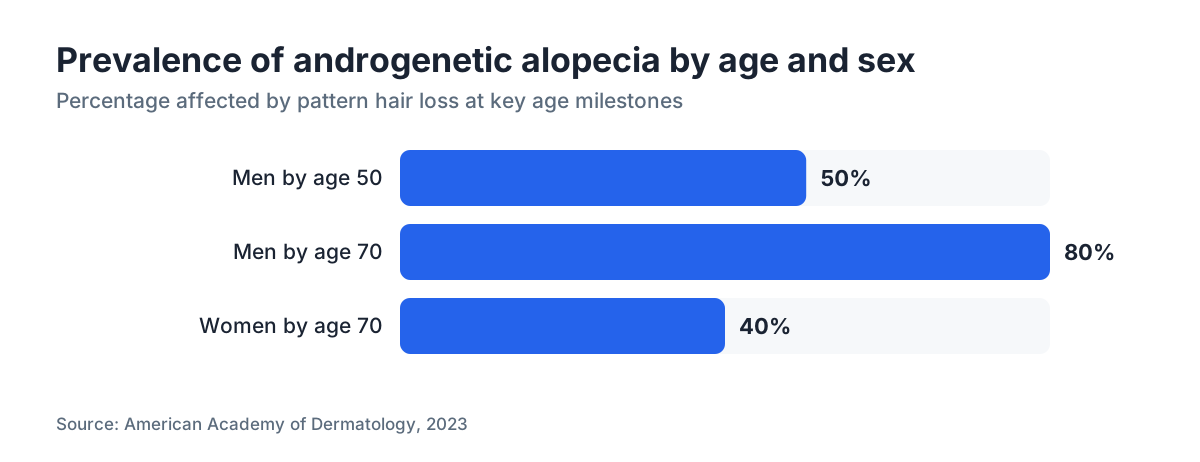
Hair loss is genuinely common, not a niche concern. Androgenetic alopecia affects approximately 50% of men by age 50 and up to 80% of men by age 70 [2]. In women, about 40% experience noticeable hair loss by age 70, and prevalence climbs after menopause when estrogen levels drop [2].
Telogen effluvium is probably under-counted, because many people go through it after illness or stress and never see a doctor. Post-COVID hair loss drew a lot of attention: a large 2021 study in The Lancet found that hair loss was reported by about 22% of hospitalized COVID-19 patients six months after discharge [7]. That's telogen effluvium triggered by severe illness, not permanent follicle damage.
Alopecia areata affects about 6.8 million people in the United States at any given time [4]. It can start at any age, including childhood.
What are the warning signs that hair thinning is getting worse?
Not every sign of hair loss is obvious. A few things worth watching:
More hair than usual on your pillow, in the shower drain, or on your brush. The 100-hairs-per-day average means you'd notice a real departure from your baseline. A widening part line, especially in women, is often the first visible sign of androgenetic alopecia. A hairline that has moved back at the temples, even slightly, is worth tracking. Scalp that's more visible under direct light than it used to be. Individual strands that feel finer or break more easily.
For a receding hairline specifically, many men don't catch it early because they're not looking from above. A top-down photo taken in consistent lighting every few months is more reliable than the bathroom mirror.
If shedding starts suddenly, if you find smooth circular bald patches, if there's scalp pain or burning, or if you're losing eyebrows and eyelashes alongside scalp hair, see a dermatologist. Those patterns suggest something beyond common pattern hair loss and need a diagnosis, not a trip to the drugstore.
How do doctors diagnose the cause of hair loss?
A dermatologist or trichologist usually starts with a thorough history: when it started, how fast it's progressing, any recent stressors or illnesses, medications, family history, and menstrual or hormonal history in women. Then a scalp exam, sometimes with a dermatoscope (a magnifying tool that lets them see the scalp and follicle openings up close).
Blood work is often ordered, particularly a complete blood count, ferritin, thyroid-stimulating hormone (TSH), and sometimes sex hormones (testosterone, DHEA-S, free androgen index) if hormonal causes are suspected. Vitamin D and zinc are sometimes checked too.
A pull test is simple and quick: about 60 hairs near the scalp are gripped between thumb and forefinger and pulled gently. Pulling out more than 6 hairs is considered positive and suggests active shedding. A scalp biopsy is occasionally done when the diagnosis is unclear, particularly to tell scarring from non-scarring alopecia.
At-home AI tools can help you track changes over time and get a sense of where your hairline sits on common classification scales before a dermatologist visit. MyHairline's free AI scan (/scan) analyzes photos to identify your Norwood or Ludwig stage and flag patterns worth discussing with a doctor, though it's a starting point, not a diagnosis.
What treatments actually work for hair loss?
This is where most articles lose credibility by listing every supplement ever mentioned in a press release. Here's what has real evidence.
Minoxidil (Rogaine) Minoxidil is FDA-approved for hair loss. The 5% topical foam is approved for men; the 2% topical solution is approved for women, though dermatologists regularly use higher concentrations off-label in women [8]. It works by prolonging the anagen (growth) phase and possibly by vasodilation around the follicle. It doesn't block DHT, so it doesn't address the root hormonal cause of androgenetic alopecia. That means it needs to be used indefinitely: stop, and most of what you gained is gone within months. Oral minoxidil at low doses (0.25 to 5 mg/day) has grown in use as an off-label option with some convenience advantages. See the breakdown of minoxidil for men and a full look at oral minoxidil for the details. Before starting, read the minoxidil side effects piece.
Finasteride (Propecia) Finasteride is a 5-alpha-reductase inhibitor that blocks the conversion of testosterone to DHT. It's FDA-approved for men at 1 mg/day for androgenetic alopecia and has strong evidence. A 2-year trial published in JAAD found that 83% of finasteride-treated men had no further hair loss compared to 28% in the placebo group, and 66% showed visible regrowth [9]. It is not FDA-approved for women of childbearing potential due to teratogenicity risk. Combining the two is common and has more supporting data than either alone. See finasteride and minoxidil for the combined approach.
Platelet-rich plasma (PRP) Growing evidence, but still inconsistent. A 2019 meta-analysis in Dermatologic Surgery found significant improvement in hair density with PRP versus controls, but noted that trial quality was low and protocols varied enormously [10]. It's not FDA-approved as a hair loss treatment (it's FDA-regulated as a procedure). A course of three to four sessions typically costs $1,500 to $3,500.
Hair transplant surgery A permanent option for pattern hair loss, but it redistributes existing hair rather than creating new follicles. It doesn't stop ongoing loss in untreated areas. FUE (follicular unit extraction) is now more common than the older strip method. Costs run from about $4,000 to $15,000+ depending on extent. See hair transplant and hair transplant expenses for real cost breakdowns.
Low-level laser therapy (LLLT) FDA-cleared devices (helmets and combs) exist for hair growth stimulation. The evidence is modest. A 2014 randomized controlled trial in the American Journal of Clinical Dermatology found statistically significant improvement in hair density with a laser comb compared to a sham device, but the effect sizes were small [10]. It works best as an add-on.
Supplements Most are overhyped. Biotin is probably the most marketed, but the evidence for biotin supplementation growing hair in people who aren't deficient is basically absent. Nutrafol and Viviscal have some proprietary trial data, but those trials are industry-funded and small. Read hair loss supplements for an honest ranking. The honest position: if you have a documented deficiency (iron, vitamin D, zinc), correcting it helps. Taking supplements in the absence of a deficiency is largely a waste of money.
For alopecia areata specifically Baricitinib (Olumiant, FDA-approved June 2022 for severe cases) and ritlecitinib (Litfulo, FDA-approved June 2023) are the current standard for moderate-to-severe alopecia areata in adults and adolescents respectively [5]. Topical and intralesional corticosteroids remain first-line for limited patchy disease.
How to prevent hair thinning and loss before it gets worse
Prevention is mostly about removing known contributors and starting effective treatment early. Once follicles miniaturize to the point of no return, you're in maintenance or restoration territory, not prevention.
For people with androgenetic alopecia, early treatment with finasteride (men) or minoxidil (men and women) slows progression significantly. The earlier you start, the more you're preserving. Wait until you have obvious bald patches and you've already lost ground that might not come back.
Avoiding traction helps. If you wear tight braids, high ponytails, or weaves regularly, varying styles and giving the hairline rest lowers the cumulative risk of traction alopecia. This is preventable damage.
Managing nutritional status, particularly iron and ferritin in women, is a real lever. Women who are vegetarian or vegan, have heavy periods, or eat calorie-restricted diets face a higher risk of iron deficiency-related shedding.
Be skeptical of crash diets. Rapid calorie restriction is a well-documented trigger for telogen effluvium. Losing more than about 1.5 to 2 lbs per week raises the risk of a shed event.
DHT-blocking shampoos (ketoconazole-based) have some modest evidence as an add-on. A 1998 study in the journal Dermatology found that 1% ketoconazole shampoo improved hair density in men with pattern hair loss compared to placebo, though the effect was smaller than finasteride [11]. They're not a standalone fix, but they're cheap and low-risk.
One more thing worth flagging: does creatine cause hair loss? It's a real question with a nuanced answer. One small study found elevated DHT levels after creatine loading. The data is thin and hasn't been replicated well, but if you have a strong family history of hair loss and are loading creatine aggressively, it's worth knowing about.
Is hair thinning in women different from hair loss in men?
Yes, in important ways. The pattern differs, the hormonal drivers differ, and the treatment options differ.
Men with androgenetic alopecia typically see a receding frontal hairline and crown thinning that can progress to complete baldness. Women with female pattern hair loss (FPHL) almost always keep the frontal hairline and instead see a widening part and diffuse thinning over the crown. The Ludwig classification (Grades I, II, and III) describes this pattern the way the Norwood scale describes men's.
The hormonal picture in women is more complicated. DHT is still involved, but estrogen normally gives follicles some protection. This is why menopause is such a common trigger: falling estrogen tips the balance toward androgen-driven miniaturization. Polycystic ovary syndrome (PCOS), with its elevated androgen levels, is another big cause in younger women.
On treatment, finasteride is not FDA-approved for premenopausal women because it can cause feminization of a male fetus if taken during pregnancy. Many dermatologists prescribe it off-label to postmenopausal women. Spironolactone, an anti-androgen, is used off-label for FPHL in women and has decent observational evidence. Minoxidil is approved for women and remains the first-line option.
Diffuse thinning in women is also more likely to have a systemic cause (thyroid, iron, hormonal) than in men, which is why blood work matters more before jumping to DHT-blocking treatments.
What's a realistic timeline for hair loss treatments to show results?
The number one source of disappointment with hair loss treatments is expecting results too fast.
Minoxidil: most guidelines suggest giving it a minimum of four to six months before you judge it. Some people shed more for the first two months of use (called dread shed or minoxidil shedding), which is normal and represents follicles cycling into new growth rather than the treatment failing. Peak results usually show at 12 months. An FDA review of the original minoxidil studies noted that 40% of men using 5% topical minoxidil had moderate-to-dense hair regrowth at 16 weeks [8].
Finasteride: similar timeline. Most studies measure outcomes at 12 and 24 months. The 1998 registration trial showed hair count improvements visible at 6 months but continuing through 24 months [9].
Hair transplant: transplanted grafts shed in the first two to six weeks, then regrow. Most patients see meaningful new growth at six months and final results at 12 to 18 months.
Telogen effluvium: once the trigger clears, shedding typically slows within three months and most regrowth is complete within six to nine months, though full recovery can take up to 18 months.
| Treatment | First signs of effect | Full results | FDA status |
|---|---|---|---|
| Topical minoxidil | 4-6 months | 12 months | Approved |
| Oral minoxidil (off-label) | 3-6 months | 12 months | Off-label |
| Finasteride (men) | 6 months | 12-24 months | Approved |
| Hair transplant | 6 months (regrowth) | 12-18 months | N/A (surgery) |
| PRP (3-4 sessions) | 3-6 months | 6-12 months | Not approved |
| LLLT devices | 4-6 months | 12 months | FDA-cleared |
When should you see a dermatologist about hair loss?
See a dermatologist if: your shedding accelerated suddenly in a way you can't explain; you have smooth, patchy bald areas; your scalp is painful, itchy, or inflamed; you're losing eyelashes, eyebrows, or body hair alongside scalp hair; you've tried a proven treatment for six or more months with no benefit; or you're a woman under 40 with significant thinning (because a treatable hormonal cause is more likely and worth finding).
If your pattern is a slow, gradual recession at the temples and crown with a clear family history, you don't necessarily need a dermatologist before starting minoxidil, which is available over the counter. But a dermatologist can confirm the type, rule out other causes, and write a finasteride prescription if that's the next step.
A board-certified dermatologist with a sub-specialty interest in hair is ideal. The American Academy of Dermatology's Find a Dermatologist tool (aad.org) lets you filter by specialty. Trichologists (hair and scalp specialists) are a real option, though their certification and scope varies by country.
MyHairline's free AI scan (/scan) can give you a snapshot of your current hair pattern and Norwood or Ludwig stage before the appointment, which makes for a more efficient conversation with your doctor.
What doesn't work for hair loss? Common myths and money wasters
The hair loss supplement market is worth billions, and most of it is speculation.
Biotin mega-doses: unless you have a documented biotin deficiency (rare), no clinical trial evidence shows that high-dose biotin grows hair. It will, though, interfere with certain lab tests including thyroid and cardiac troponin assays, which the FDA warned about in 2019 [12]. That's a real safety issue if you're on biotin and having bloodwork done.
Derma-rollers as a monotherapy: microneedling has some evidence as an add-on to minoxidil (one small 2013 RCT in the International Journal of Trichology found the combo outperformed minoxidil alone [13]), but derma-rolling by itself, without an active treatment, doesn't have strong standalone evidence.
Most shampoos marketed as "volumizing" or "hair growth" shampoos: they contain nothing proven to stimulate hair growth. They clean your hair. Some contain ketoconazole (which has modest real evidence) or caffeine (interesting lab data, very thin clinical data).
Hair loss vitamins with 30 ingredients: the evidence for most individual ingredients is weak, and combining 30 weak ingredients doesn't multiply the effect. Save the money for minoxidil.
Scalp massage machines, vibrating combs, and most "electromagnetic" devices without FDA clearance: no credible evidence.
Can hair loss be permanent? What determines reversibility?
Some hair loss is reversible; some is not. The key variable is whether the follicle itself has been permanently destroyed.
Androgenetic alopecia is technically progressive but not permanently destructive in the early stages. Miniaturized follicles can often be revived with effective treatment. But follicles that have fully shut down and been replaced by fibrotic scar tissue (which happens in late-stage pattern hair loss) cannot be regrown with medications. This is why starting treatment earlier matters.
Scarring alopecias (lichen planopilaris, frontal fibrosing alopecia, central centrifugal cicatricial alopecia) are a category where the follicle is destroyed by inflammation and replaced with scar tissue. These are irreversible by definition. Treatment is about stopping progression, not restoring what's gone.
Telogen effluvium is almost always reversible, provided the trigger clears and no permanent damage has been done.
Traction alopecia starts reversible, but years of persistent traction at the hairline can scar follicles permanently. The margin between reversible and permanent traction alopecia isn't always predictable.
Alopecia areata is unpredictable. Many people regrow hair spontaneously, but long-standing or extensive disease is less likely to fully reverse. The newer JAK inhibitors (baricitinib, ritlecitinib) have shown real efficacy in trials, with ritlecitinib producing 50% or more scalp coverage in about 23% of patients at 24 weeks in the ALLEGRO trial [5].
Sources
- American Academy of Dermatology (AAD), Hair loss: Overview
- American Academy of Dermatology (AAD), Hair loss: Who gets and causes
- Trost LB et al. The diagnosis and treatment of iron deficiency and its potential relationship to hair loss. JAAD 2006
- National Alopecia Areata Foundation, About alopecia areata
- U.S. Food and Drug Administration, FDA approves first oral treatment for alopecia areata
- Khumalo NP et al. Traction alopecia: how to translate study data to counseling. JAAD 2016
- Huang C et al. 6-month consequences of COVID-19 in patients discharged from hospital: a cohort study. The Lancet, 2021
- U.S. Food and Drug Administration, Minoxidil topical solution prescribing information (FDA label)
- Kaufman KD et al. Finasteride in the treatment of men with androgenetic alopecia. JAAD 1998
- Gupta AK et al. and Jimenez JJ et al., meta-analysis and RCT of PRP and low-level laser therapy for hair loss
- Piérard-Franchimont C et al. Ketoconazole shampoo: effect of long-term use in androgenic alopecia. Dermatology 1998
- U.S. Food and Drug Administration, FDA Safety Communication: The FDA warns that biotin may interfere with lab tests, 2019
- Dhurat R et al. A randomized evaluator blinded study of effect of microneedling in androgenetic alopecia. International Journal of Trichology 2013