

TL;DR: Women can absolutely have a receding hairline. The most common cause is female-pattern hair loss (FPHL), driven partly by DHT sensitivity, but traction alopecia, frontal fibrosing alopecia, and hormonal shifts also cause frontal recession in women. Treatments including topical minoxidil and, in some cases, finasteride have real clinical evidence. Early action matters more than anything else.
Can a woman have a receding hairline?
Yes. Fully, definitively yes. The idea that receding hairlines are a male problem is wrong, and it keeps women from getting help early when treatment works best.
The American Academy of Dermatology estimates that over 50% of women will experience noticeable hair loss in their lifetime [1]. A meaningful portion of that involves the front hairline, either a gradual widening and thinning at the temples or a more dramatic retreat of the entire frontal zone. It looks different from the classic male Norwood pattern, but it's real and it's common.
The confusion comes from two things. First, female hair loss usually starts with diffuse thinning across the crown rather than a sharp receding temple, so it's less dramatic early on. Second, women are better at hiding it with styling, and doctors have historically been slower to investigate. Neither of those things means it isn't happening.
If you're a woman looking at your hairline in the mirror and wondering whether it's moved, this article covers what's actually going on, how to figure out which type you have, and what the clinical evidence says about treatment.
What causes a receding hairline in women?
There are four main causes, and they're not interchangeable. Getting the right diagnosis changes what treatment actually helps.
Female-pattern hair loss (FPHL / androgenetic alopecia)
This is the most common cause. FPHL affects an estimated 21 million women in the United States [2]. It's driven by a genetic sensitivity to androgens, particularly dihydrotestosterone (DHT), which progressively shrinks hair follicles over years. In women, it tends to show as a widening part and thinning at the crown, but frontal hairline recession is also part of the picture, especially as it advances. A family history of thinning on either side of the family raises your risk substantially. See what causes hair loss for a full breakdown of the biology.
Frontal fibrosing alopecia (FFA)
FFA is an inflammatory scarring condition that specifically attacks the frontal hairline. It causes a band of recession across the front and temples, often accompanied by eyebrow and body hair loss. Unlike FPHL, FFA destroys follicles permanently. A 2020 review in the Journal of the American Academy of Dermatology noted that FFA incidence has risen sharply since the 1990s, though the reason isn't fully understood [3]. This one absolutely needs a dermatologist and a biopsy to confirm, because treating it like FPHL will waste time you don't have.
Traction alopecia
This is purely mechanical. Years of tight ponytails, braids, weaves, or extensions pull follicles away from the scalp repeatedly until they stop producing hair. The recession follows the exact pattern of the tension, usually the temples and hairline edge. Caught early, it can reverse if you change your styling habits. Caught late, the damage can be permanent. Receding hairline covers the staging of traction-related recession in detail.
Hormonal shifts
Postpartum shedding (telogen effluvium), menopause-related estrogen decline, thyroid dysfunction, and polycystic ovary syndrome (PCOS) can all accelerate hairline thinning. These are often temporary or treatable at the hormonal root, which is why blood work matters before you spend money on anything.
How is female hairline recession different from male pattern baldness?
The pattern matters because it tells you where the follicles are most vulnerable and whether they're likely to respond to the same drugs men use.
In men, hairline recession follows the Norwood scale, starting at the temples and often meeting a bald crown to leave the classic horseshoe. In women with FPHL, the Ludwig scale is more useful: it captures a Christmas-tree widening of the part with retained frontal hairline in early stages, progressing to visible scalp at the crown. But a subset of women, those with higher androgen activity, do show more male-pattern frontal recession, particularly after menopause.
| Feature | Male pattern (AGA) | Female pattern (FPHL) | Frontal fibrosing (FFA) |
|---|---|---|---|
| Primary zone | Temples, crown | Crown, part line | Front hairline band |
| Speed | Gradual over decades | Gradual, often accelerates at menopause | Can be faster, more unpredictable |
| Follicle survival | Shrinks, not always dead | Shrinks, not always dead | Destroyed (scarring) |
| Reversible? | Partially with treatment | Partially with treatment | No, can only halt progression |
| Biopsy needed? | Usually not | Usually not | Yes |
The difference between a living-but-shrunken follicle and a scarred-out one determines whether any hair loss treatment can work. That's why seeing a board-certified dermatologist before buying anything online is genuinely worth it.
What do the early signs of hairline recession look like in women?
Most women notice something is wrong before they can articulate what. Early signs include:
A part that looks wider in photos than you remember. A ponytail that feels noticeably thinner even though your overall hair length hasn't changed. Temples that look more hollow or transparent in certain lighting. Finding more hairs on your pillow, in the shower drain, or on your brush, though note that losing up to 100 hairs per day is normal and shedding alone doesn't confirm pattern loss [1].
For frontal fibrosing alopecia specifically, watch for a pale, slightly shiny band of scalp at your hairline, loss of the small fine "baby hairs" that usually frame the face, and eyebrow thinning happening at the same time as hairline retreat.
For traction alopecia, the clue is location: recession that lines up exactly with where tension is applied, often worse at the temples with a visible "fringe" of shorter, fragile hairs at the affected edge.
The honest advice here is to take photos in the same lighting regularly if you're worried. Hair loss is slow and human memory is unreliable. Photos are not.
Which treatments actually work for a receding hairline in women?
Here's where most articles get vague. The evidence base is smaller for women than for men, but it's not empty.
Minoxidil (topical)
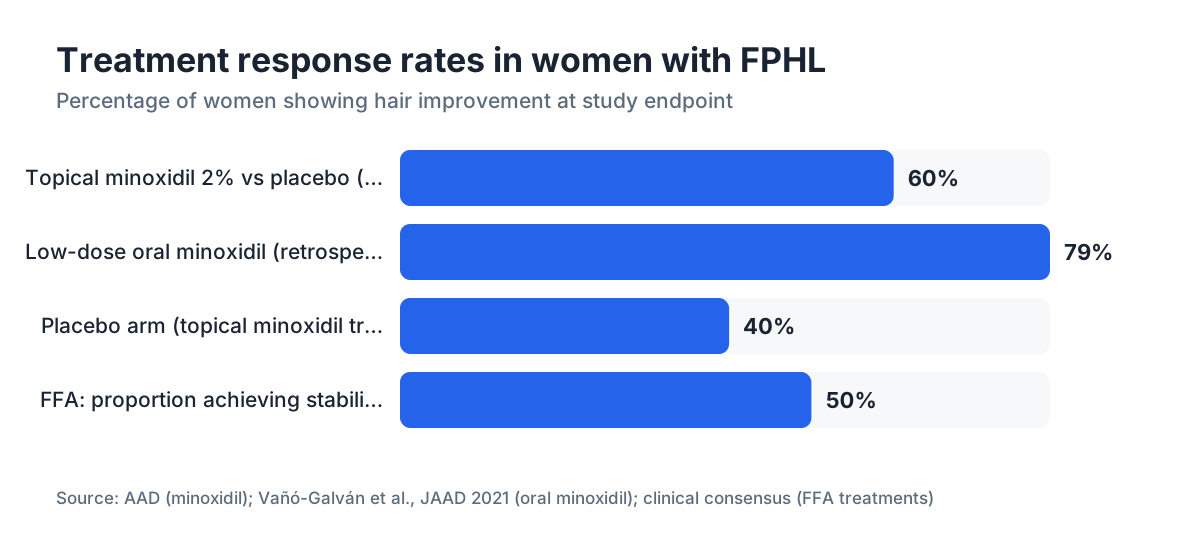
This is the first-line recommendation from the AAD for FPHL [1]. The FDA approved 2% topical minoxidil for women in 1991. A widely cited trial published in the Journal of the American Academy of Dermatology found that women using 2% minoxidil twice daily had significantly more hair regrowth at 32 weeks compared to placebo [4]. The 5% foam is not FDA-labeled for women but is widely used off-label, and some dermatologists prefer it for better efficacy. It does not cure the underlying condition: stopping it reverses the gains within months. Be aware of minoxidil side effects before starting, including facial hair growth, which is more of a concern for women using 5% than 2%.
Oral minoxidil (low-dose)
Low-dose oral minoxidil (0.25 to 1.25 mg daily for women) has gained real ground in dermatology over the past five years. A 2021 retrospective study in the Journal of the American Academy of Dermatology of 100 women with FPHL found that 79% showed improvement on low-dose oral minoxidil [5]. It's prescribed off-label, requires a physician, and has its own side-effect profile including fluid retention and rare cardiac effects at higher doses. More on this at oral minoxidil.
Finasteride and spironolactone
Finasteride blocks DHT production and is approved by the FDA for male-pattern baldness, not for women. But it's used off-label in postmenopausal women with FPHL, with some evidence of benefit [6]. It's contraindicated in women who are or could become pregnant due to risk of fetal genital abnormalities. Spironolactone, an anti-androgen blood pressure drug, is commonly prescribed off-label for FPHL in premenopausal women. Neither has the same depth of trial data in women that minoxidil does, but both are real options worth discussing with a dermatologist. See finasteride for the full mechanism and risk profile.
For FFA specifically
Once FFA is confirmed by biopsy, the goal shifts from regrowth to halting further loss. Treatments include topical or injected corticosteroids, hydroxychloroquine, and low-dose oral retinoids. None of these regrow already-destroyed follicle tissue.
Hair transplant
For women with stable FPHL or traction alopecia with areas of permanent loss, hair transplant surgery can restore the hairline. The key word is stable: transplanting into an active inflammatory process (like untreated FFA) or into a zone that's still actively miniaturizing often fails. Costs in the US typically run $4,000 to $15,000 depending on graft count and clinic [7].
DHT blockers and supplements
Saw palmetto, biotin, and various hair loss supplements are heavily marketed to women. The honest picture: biotin deficiency is real but rare, and supplementing above baseline does nothing for non-deficient people [8]. Saw palmetto has weak evidence and no large controlled trials in women. These are fine if a physician confirms a deficiency, but they're not a substitute for proven treatments.
What does a dermatologist actually do to diagnose hairline recession in women?
A good dermatologist visit for hair loss is more than a quick look and a prescription. Here's what the workup should include.
A detailed history covering timeline, family history, recent illness, medications, hormonal history, and styling habits. Blood work to rule out secondary causes: thyroid function (TSH, free T4), ferritin (low iron is a common aggravating factor), complete blood count, and sometimes androgen levels (free testosterone, DHEA-S) if PCOS is suspected.
A dermoscopy exam, where a handheld tool magnifies the scalp to assess follicle miniaturization patterns and look for FFA-specific findings like peripilar casts.
A scalp biopsy if FFA is on the table. This is a minor in-office procedure and is the only definitive way to distinguish scarring from non-scarring alopecia.
If you don't have easy access to a dermatologist, a starting point is uploading photos to get a baseline read on your pattern. MyHairline's free AI scan (/scan) can help you understand what you're looking at before your appointment, so you go in informed rather than overwhelmed.
What a dermatologist cannot do is reverse scarring, regrow follicles that have been dead for years, or guarantee results from any treatment. Anyone promising otherwise is selling something.
Does menopause cause hairline recession in women?
Yes, and more commonly than most people realize. Estrogen partially counteracts the effect of androgens on hair follicles. When estrogen drops during perimenopause and menopause, that protective effect weakens, and DHT has more influence on follicles that were already genetically sensitive.
The result is often an acceleration of FPHL that was previously subclinical. A woman who had a slightly widening part in her 40s may notice much more visible frontal thinning in her 50s. Postmenopausal women are also more likely to show a more male-like frontal recession pattern than premenopausal women with FPHL.
Hormone replacement therapy (HRT) sometimes slows this process, though the evidence for HRT specifically treating hair loss is limited and its use is governed by a broader risk-benefit conversation with a physician. The American Hair Loss Association notes that estrogen-containing contraceptives and HRT may help some women, but results vary significantly [9].
Separately, the early postpartum period causes a dramatic but temporary shed (telogen effluvium) that can make the hairline look receded. This is not true recession: it's a synchronized shed of hairs that paused during pregnancy. Most women see regrowth by 6 to 12 months postpartum without treatment.
Can traction alopecia be reversed, and how long does it take?
If the damage is caught early, yes. If it's gone on for years and the follicles have scarred, no.
The timeline matters a lot here. Traction alopecia goes through phases. In early stages, you see thinning and breakage at the tension points with follicles still intact. Stop the traction, and regrowth can begin within weeks to months. In later stages, repeated trauma causes permanent fibrosis of the follicle. A dermatologist can assess this with dermoscopy.
The practical steps: stop tight styles immediately, avoid heat and chemical processing on the affected area, and give it a minimum of three to six months of gentler styling before judging whether regrowth is happening. Topical minoxidil can support regrowth in early-stage traction alopecia, though the controlled evidence base is thin. For women with established permanent hairline loss from traction, a hair transplant to the frontal zone is an option once the styling habits that caused the damage are changed permanently.
One hard truth: many women have both traction alopecia and underlying FPHL, which makes the hair more vulnerable to traction damage and the recovery slower. Treating one without addressing the other misses half the problem.
Are there hairstyles or products that make hairline recession worse?
Several, and some of them are marketed as solutions.
High-tension styles including tight buns, high ponytails, cornrows, certain weave installations, and permanent hair extensions all create chronic mechanical stress on the frontal hairline. The American Academy of Dermatology has published guidance on traction alopecia prevention, specifically naming tight braids and extensions as risk factors [10].
Dry shampoo used in excess can clog follicles and create scalp inflammation, though it's not a primary driver of structural recession. Aggressive brushing on wet, fragile hair around the hairline snaps strands that are already miniaturized. Heat styling repeatedly on the same sections stresses the shaft and makes breakage look like recession.
Products that genuinely don't make things worse or may help include gentle, sulfate-free shampoos that keep the scalp clean without stripping, scalp-applied minoxidil (when appropriate), and low-manipulation protective styles that don't pull the hairline. Caffeine shampoos are popular but the evidence for them doing anything meaningful for recession is weak.
The most honest answer on products: nothing topical aside from minoxidil has enough controlled evidence to recommend it confidently for frontal recession.
How long does it take to see results from treatment for women?
Slower than most people expect. This is one of the main reasons women abandon treatment too early.
With topical minoxidil, the AAD says most patients need at least 6 months of consistent use before meaningful regrowth is visible [1]. Some see initial shedding in the first 4 to 8 weeks, which is normal and reflects the hair cycle resetting, but it's alarming if you don't know to expect it.
Oral minoxidil tends to show results slightly faster for some women, with visible improvement often noted at 3 to 6 months in the studies [5]. Spironolactone and off-label finasteride are even slower, with full effect often taking 12 months or more.
For traction alopecia with intact follicles, regrowth from styling changes alone can start within 3 months, but significant cosmetic improvement often takes 6 to 12 months.
For FFA, "results" means slowing or stopping the march of the hairline, not regrowth. That's a harder thing to measure and requires a longer observation window.
The pattern across all treatments: consistent use over at least 6 months before evaluating whether something is working, 12 months before calling it a failure. Stopping early and restarting is the most common way women lose ground they'd actually gained.
When should a woman see a doctor about her hairline?
Sooner than feels necessary, honestly.
The biology of follicle miniaturization means that follicles which are shrinking but still alive can be rescued, while follicles that have been fully destroyed or scarred cannot. That window is finite and invisible from the outside. By the time a receding hairline looks dramatically different in photos, some of that loss may already be permanent.
Specific triggers to make an appointment soon rather than later: recession that happened over months rather than years, recession accompanied by scalp redness, tenderness, or itching, loss of eyebrow or body hair at the same time as hairline retreat (this pattern is FFA until proven otherwise), hairline changes starting before age 30, any systemic symptoms like fatigue, weight changes, or irregular periods alongside hair loss.
A general practitioner can order basic blood work and rule out thyroid and iron issues. A board-certified dermatologist with a hair specialty is the right person for pattern diagnosis, dermoscopy, and biopsy when needed. The AAD has a find-a-dermatologist tool at their website [1].
Before your appointment, document your hairline with photos taken in consistent lighting. Note when you first noticed changes, any medications you take, recent major stressors or illnesses, and your family history on both sides. That information makes the appointment significantly more productive. If you want a preliminary read before seeing a doctor, MyHairline's free AI hair analysis (/scan) gives you a structured way to document and understand your pattern.
Sources
- American Hair Loss Association, Women's Hair Loss
- Vañó-Galván S et al., Journal of the American Academy of Dermatology, 2020, Frontal Fibrosing Alopecia review
- DeVillez RL et al., Journal of the American Academy of Dermatology, 1994, Topical 2% minoxidil in women
- Vañó-Galván S et al., Journal of the American Academy of Dermatology, 2021, Low-dose oral minoxidil in female patients
- FDA Drug Label: Propecia (finasteride 1 mg), FDA prescribing information
- International Society of Hair Restoration Surgery, Practice Census Survey
- National Institutes of Health Office of Dietary Supplements, Biotin Fact Sheet
- American Hair Loss Association, Women's Hair Loss Treatments
- American Academy of Dermatology, Traction Alopecia Prevention
- FDA, Minoxidil (Rogaine) for Women, Drug Approval History