
TL;DR: Alopecia areata is an autoimmune condition that attacks hair follicles, causing patchy or total scalp hair loss. First-line treatment is intralesional corticosteroid injections for adults with limited patches. The FDA approved baricitinib (Olumiant) for severe cases in 2022. No treatment is a cure, but 50-80% of people with limited disease regrow hair spontaneously within a year.
What is alopecia areata and why does it affect the scalp?
Alopecia areata is an autoimmune disease. Your immune system mistakes hair follicles for foreign invaders and mounts an attack, shrinking them into a resting state without destroying them permanently. That last part matters because it means follicles are still alive and regrowth is genuinely possible.
The scalp is the most common site, but the condition can affect any hair-bearing skin including eyebrows, eyelashes, and the beard area. It shows up as smooth, round or oval patches of hair loss, usually without redness, scaling, or scarring [1]. That absence of scarring is actually hopeful news: unlike conditions such as lichen planopilaris, alopecia areata almost never permanently destroys a follicle.
About 2% of the global population develops it at some point in their life, making it one of the most common autoimmune diseases worldwide [2]. It does not discriminate by sex or race, and it can appear at any age, including childhood. Understanding what causes hair loss in general helps frame why alopecia areata is distinct from androgenetic alopecia or telogen effluvium: it is not driven by hormones like DHT, and DHT blockers like finasteride have no meaningful role here.
Severity varies enormously. Some people have a single coin-sized patch that fills back in on its own. Others progress to alopecia totalis (complete scalp loss) or alopecia universalis (loss of all body hair). Where you fall on that spectrum drives which treatments make sense.
How is alopecia areata diagnosed?
Diagnosis is mostly clinical. A dermatologist looks at the pattern of loss, pulls gently on hairs at the patch border (a positive pull test shows easily detached, tapered 'exclamation mark' hairs), and checks for nail pitting, which appears in roughly 10-20% of alopecia areata patients [2]. No single blood test confirms it.
Dermoscopy helps. Under magnification a dermatologist can see yellow dots (empty follicle openings), black dots (broken hairs), and the characteristic exclamation mark hairs, which together point strongly to alopecia areata rather than tinea capitis (fungal infection) or telogen effluvium.
A scalp biopsy is sometimes ordered when the picture is unclear. The classic finding is a 'swarm of bees' pattern: lymphocytes clustering around the lower follicle bulb [1]. Thyroid antibodies and a complete blood count are reasonable baseline labs since autoimmune thyroid disease co-occurs at higher rates in alopecia areata patients, though thyroid treatment does not reliably improve the hair loss [2].
What are the first-line scalp treatments for alopecia areata?
For adults with patches covering less than 50% of the scalp, intralesional corticosteroid injections are the standard starting point according to American Academy of Dermatology (AAD) guidelines [1]. The most common agent is triamcinolone acetonide, injected directly into the scalp skin at the patch margins every 4-6 weeks. Response rates in limited disease are reported at 60-67% in clinical series [3]. The injections are uncomfortable but tolerable; the main local risk is skin atrophy (a slight depression in the skin) that usually resolves.
Topical corticosteroids are an option when injections are not feasible, particularly for children, large surface areas, or patient preference. High-potency agents like clobetasol propionate 0.05% foam or solution are used under occlusion or as scalp applications. The evidence is weaker than for injections: a 2023 Cochrane review on topical interventions for alopecia areata found limited high-quality trial data, though high-potency steroids showed meaningful hair regrowth versus placebo in a subset of studies [4].
Systemic corticosteroids (oral prednisone or prednisolone) can prompt rapid regrowth during a flare, but hair almost always falls out again when the course ends, and the side effect profile of long-term systemic steroids is too harmful to justify ongoing use. Dermatologists generally reserve them for a short bridge while a longer-term treatment takes effect.
Minoxidil is not a primary treatment for alopecia areata the way it is for androgenetic alopecia, but the AAD notes it may be used as an adjunct to other therapies to support regrowth [1]. If you are curious about how minoxidil works in general, see minoxidil for men and note that the mechanism (prolonging anagen) is separate from the immune issue driving alopecia areata.
What did the FDA approve for severe alopecia areata, and does it work?
In June 2022 the FDA approved baricitinib (Olumiant, 2 mg and 4 mg oral tablets) for adults with severe alopecia areata, defined as 50% or more scalp hair loss [5]. This was the first FDA approval specifically for alopecia areata. Ritlecitinib (Litfulo, 50 mg oral capsules) followed in June 2023, approved for adults and adolescents age 12 and older [6].
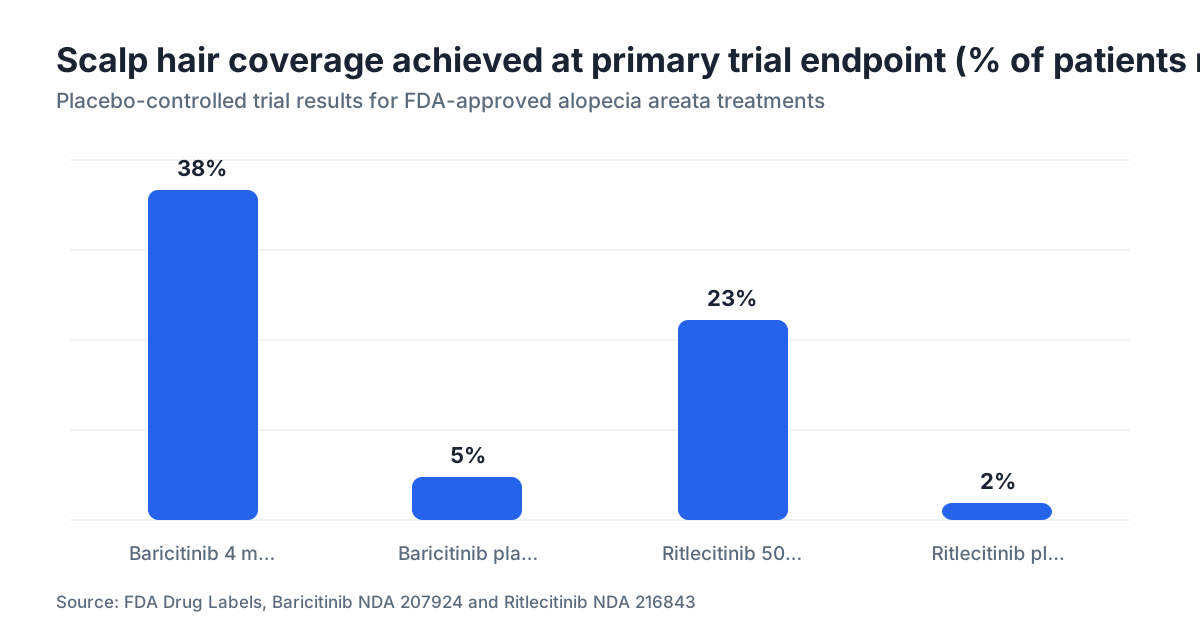
Both are JAK inhibitors. They block Janus kinase enzymes that are part of the signaling cascade driving the autoimmune attack on follicles. The main BRAVE-AA trials for baricitinib found that 35-40% of patients on 4 mg reached a SALT score of 20 or below (meaning 80% or more scalp coverage) at 36 weeks, compared with about 5% on placebo [5]. For ritlecitinib, the ALLEGRO trial found roughly 23% of patients on 50 mg achieved 80% or more coverage at 24 weeks versus about 2% on placebo [6].
Those numbers sound modest but represent a real shift for a disease that had no approved systemic option before 2022. The FDA label for baricitinib states the drug "is indicated for the treatment of adults with severe alopecia areata" [5]. Ritlecitinib's label extends that to patients 12 years and older, which is significant for alopecia areata child treatment since the condition is common in pediatric patients.
Side effects are real and include infection risk (including serious infections), elevated cholesterol, and a boxed warning about thrombosis, major cardiovascular events, and malignancy shared with the JAK inhibitor class. These are not drugs to start without a detailed risk-benefit conversation with a dermatologist.
Tofacitinib is a third JAK inhibitor used off-label for alopecia areata. Small case series and open-label trials showed regrowth in 77% of patients with moderate-to-severe disease, but no large randomized trial has been completed for alopecia areata specifically [3].
What is contact immunotherapy and when is it used?
Contact immunotherapy (also called topical immunotherapy or DPCP therapy) is one of the most effective treatments for extensive alopecia areata, yet almost no one outside the dermatology world has heard of it. The idea is counterintuitive: you deliberately create an allergic contact dermatitis on the scalp using a sensitizing chemical, usually diphencyprone (DPCP) or squaric acid dibutylester (SADBE), to distract or modulate the immune attack on follicles.
A dermatologist first sensitizes the patient with a high concentration of DPCP on a small area, then applies progressively lower concentrations weekly to the bald scalp. The goal is a mild, controlled itch and redness. Published response rates vary widely (32-85%) depending on how response is defined and the severity of the starting disease [3]. It takes 3-6 months to see meaningful regrowth, and maintenance is usually needed.
DPCP is not FDA-approved, it is compounded by specialized pharmacies and administered only in clinic. That makes access inconsistent. But for patients with extensive disease who cannot or will not use JAK inhibitors, and who have not responded to injections, it remains a reasonable option at an academic dermatology center.
How is alopecia areata treated in children?
Alopecia areata child treatment is genuinely harder. Children account for a significant share of cases, and the disease is often more extensive and persistent when it starts in childhood. The psychosocial impact, particularly at school age, is real and should factor into how aggressively treatment is pursued.
For kids with limited patches, topical corticosteroids and topical minoxidil (2% or 5% solution) are the starting options because they avoid the systemic side effect burden [1]. Intralesional injections can be used in cooperative older children but are poorly tolerated in young kids.
Ritlecitinib (Litfulo) is the only FDA-approved systemic option for patients 12 and older, which at least gives adolescents with severe disease an evidence-based choice [6]. Below age 12, systemic use of any JAK inhibitor is off-label and managed case-by-case at specialist centers.
Contact immunotherapy with DPCP has been used in children in some centers, and published case series report reasonable tolerability, though again this is off-label and center-dependent. The AAD notes that in children with extensive disease, a multidisciplinary approach involving dermatology, psychology, and sometimes school counseling is warranted [1].
How do topical treatments like minoxidil and anthralin fit in?
Topical minoxidil does not treat the autoimmune cause, but it can support regrowth when the immune attack is partially controlled. The AAD guidelines list it as a reasonable adjunct, particularly for patients using topical or intralesional steroids [1]. It is inexpensive, widely available, and has a well-understood side effect profile. If you want a full picture of minoxidil side effects, those apply here the same as in androgenetic alopecia: scalp irritation, initial shedding, and in some patients temporary increased facial hair.
Anthralin (dithranol), a tar derivative, has been used as monotherapy and in combination with other agents for decades. Applied as a short-contact treatment (washed off after 20-60 minutes), it causes mild irritation that may shift local immune activity. A small open study reported regrowth in about 25% of patients [3], which is modest but useful for mild-to-moderate cases in patients who want to avoid steroids.
Phototherapy (PUVA or narrowband UVB) is another adjunct. Narrowband UVB is better tolerated than PUVA and can be used for extensive scalp disease. Evidence is mixed and responses tend to be partial; relapse rates are high after stopping [1].
How long does alopecia areata scalp treatment take to work?
Patience is genuinely required. Intralesional steroids typically show visible regrowth 4-8 weeks after the first injection, with assessments at each 4-6 week injection visit. If there is no response after 3-4 injection sessions, the treatment is usually reconsidered.
Topical treatments (steroids, minoxidil, anthralin) work slower. Most clinicians expect a 3-6 month trial before concluding they are not working. JAK inhibitors also take time: the baricitinib BRAVE-AA trials assessed the primary endpoint at 36 weeks, and meaningful regrowth often starts appearing at 12-16 weeks but continues building through week 36 and beyond [5].
Contact immunotherapy is the slowest, with most centers describing a 6-12 month course before a full response is assessable. One realistic framing: the faster the hair came out, the faster it tends to come back, though this is observational and not a guarantee.
Relapse after stopping any treatment is common. For JAK inhibitors, patients who stopped baricitinib in the trials lost a significant portion of regrown hair within 6 months [5]. This is a chronic disease management situation, not a one-and-done course.
What does alopecia areata scalp treatment cost?
Costs vary enormously depending on treatment type and insurance coverage.
Intralesional corticosteroid injections typically cost $100-$300 per session out of pocket, though most insurance plans cover them as a standard dermatology procedure with a copay. If you need injections every 4-6 weeks, the annual out-of-pocket burden adds up.
Baricitinib (Olumiant 4 mg) carries a list price of roughly $18,000-$20,000 per year in the US [7]. Ritlecitinib (Litfulo) has a similar range. Manufacturer patient assistance programs exist and insurance coverage has been expanding since the FDA approvals, but coverage is not uniform and prior authorization is standard. For patients who do qualify for coverage, the copay assistance programs can bring monthly costs to under $50.
Off-label tofacitinib, which has more generic competition as of 2025, is cheaper than baricitinib or ritlecitinib but still expensive and not covered for this indication by most plans.
Topical options are the most affordable: over-the-counter minoxidil 5% solution or foam runs $20-$40 per month. Prescription topical steroids are $10-$60 per month with insurance. DPCP is compounded and typically $50-$150 per session, rarely covered by insurance.
| Treatment | Estimated annual US cost (out-of-pocket) | FDA approved for AA? |
|---|---|---|
| Intralesional triamcinolone | $600-$2,400 (8-12 sessions) | Off-label but standard of care |
| Topical clobetasol 0.05% | $120-$720 | Off-label |
| Topical minoxidil 5% | $240-$480 | Off-label adjunct |
| Baricitinib 4 mg (Olumiant) | $18,000-$20,000 list price | Yes (adults, severe AA) |
| Ritlecitinib 50 mg (Litfulo) | $18,000-$22,000 list price | Yes (12+, severe AA) |
| DPCP contact immunotherapy | $1,500-$5,000 | No (compounded, off-label) |
These are approximate list or cash-pay estimates and change with manufacturer pricing and insurance contracts.
Is alopecia areata scalp treatment different from androgenetic hair loss treatment?
Completely different mechanisms, completely different treatments. Androgenetic alopecia (male or female pattern baldness) is driven by dihydrotestosterone (DHT) gradually miniaturizing follicles over years. Finasteride and dutasteride work by blocking DHT production. Minoxidil extends the growth phase of follicles. A hair transplant physically moves DHT-resistant follicles to thinning areas.
None of those approaches address the autoimmune attack driving alopecia areata. Finasteride has no role in alopecia areata treatment [1]. A hair transplant into active alopecia areata patches typically fails because the immune attack destroys the transplanted follicles just as readily as the native ones. Some surgeons perform transplants only after a patient has been in remission for several years, and even then recurrence risk is real.
The crossover is minoxidil used as an adjunct, and even there, the mechanism is supportive rather than disease-modifying. If you've been told you have pattern hair loss and your patches are smooth and round rather than diffuse thinning at the temples and crown, it is worth getting a second opinion. The distinction between what causes hair loss in androgenetic versus autoimmune forms matters because a year on finasteride and minoxidil will not move the needle on alopecia areata.
If your loss pattern is diffuse (all-over thinning after a major stressor), telogen effluvium is another condition worth ruling out before assuming alopecia areata or androgenetic alopecia.
What do clinical guidelines actually recommend, step by step?
The AAD published its alopecia areata clinical practice guideline in 2023 [1]. The core recommendations, stripped of medical jargon:
For adults with less than 50% scalp involvement: start with intralesional triamcinolone acetonide every 4-6 weeks. Add topical minoxidil or high-potency topical steroids as adjuncts. If no response after 3-4 months, reassess extent and consider escalating.
For adults with 50% or more scalp involvement: consider JAK inhibitors (baricitinib or ritlecitinib) as the first systemic option. Contact immunotherapy with DPCP is an alternative at experienced centers. Systemic steroids are a short-term bridge only.
For children under 12: topical steroids and minoxidil first. Intralesional injections in older cooperative children. No approved systemic option; off-label decisions made case-by-case with specialist guidance.
For children 12 and older: ritlecitinib is now approved and is the preferred systemic option for severe disease.
The guidelines emphasize that spontaneous remission occurs in a meaningful proportion of patients with limited disease, which legitimately affects how aggressively to treat a new, small patch. Watchful waiting with emotional support is a real recommendation, not a cop-out, for someone with a single patch under 50% involvement who just noticed it [1].
If you want a quick read on where your own hair loss pattern fits before your dermatology appointment, the free AI scan at MyHairline can help characterize the pattern, though a dermatologist is needed to actually diagnose alopecia areata.
What emerging treatments are in the pipeline?
The JAK inhibitor story is not finished. Deuruxolitinib (CTP-543) and povorcitinib are in late-phase trials for alopecia areata as of 2025-2026, with data suggesting response rates potentially higher than current approvals [8]. Both are more selective JAK inhibitors, which may mean a narrower side effect profile, though that is not confirmed yet.
PRP (platelet-rich plasma) injections into the scalp have been studied in small trials for alopecia areata. A 2021 meta-analysis found some signal of benefit versus placebo, but study quality was low and effect sizes were modest [9]. PRP is not in any major guideline as a recommended treatment.
IL-2 at low doses is being explored because regulatory T-cells (which help suppress autoimmune attacks) depend on IL-2 signaling. Very early phase work has shown some regrowth in small patient groups, but this is years away from clinical use if it works.
For now the honest answer is: we have better treatments than we did in 2021, the JAK inhibitors represent a real advance for severe disease, and more options are likely coming within 2-3 years.
If you are also evaluating your baseline hair density changes or trying to track whether a treatment is working, tools like the MyHairline AI scan can photograph and compare scalp coverage over time, which is easier to interpret than trying to count hairs in a mirror.
One thing that will not help: hair loss supplements marketed for general hair growth have no evidence of benefit in alopecia areata specifically. The cause is immune, not nutritional, unless you have a true deficiency (low ferritin or vitamin D) that you confirm with bloodwork.
What can you do at home while waiting for treatment to work?
Scalp care between treatment visits matters more than most people realize. Avoid tight hairstyles, heat tools, and harsh chemical treatments on areas that still have hair, since mechanical stress can worsen shedding. A gentle, fragrance-free shampoo reduces irritation, which matters especially if you are using topical steroids or anthralin that already sensitize the scalp.
Sun protection on bald patches is worth taking seriously. The scalp that has lost hair has no natural UV protection, and repeated sunburn on bald patches causes discomfort and potentially worsens inflammation. A light sunscreen or a hat covers this.
On the mental health side: alopecia areata has a measurable impact on anxiety and depression, and this is not trivial. The National Alopecia Areata Foundation (NAAF) runs support groups and a peer-to-peer network [10]. A study published in JAMA Dermatology found that patients with alopecia areata had significantly higher rates of anxiety and depression than matched controls [11]. Naming that and addressing it directly, whether through counseling, support groups, or working with a therapist who understands chronic illness, is part of treatment even if it does not regrow hair.
For scalp coverage in the meantime, medical-grade wigs and hair systems have improved substantially. NAAF maintains resources on insurance coverage for hairpieces, which some states require insurers to cover for alopecia areata specifically, though laws vary by state [10].
Sources
- American Academy of Dermatology, Alopecia Areata Clinical Practice Guidelines 2023
- National Institute of Arthritis and Musculoskeletal and Skin Diseases (NIAMS), Alopecia Areata
- Strazzulla LC et al., 'Alopecia areata: Disease characteristics, clinical evaluation, and new perspectives on pathogenesis,' Journal of the American Academy of Dermatology, 2018
- Cochrane Database of Systematic Reviews, 'Interventions for alopecia areata,' 2023
- FDA Drug Label, Baricitinib (Olumiant), NDA 207924
- FDA Drug Label, Ritlecitinib (Litfulo), NDA 216843
- GoodRx, Baricitinib (Olumiant) pricing data
- ClinicalTrials.gov, deuruxolitinib (CTP-543) Phase 3 trials for alopecia areata
- Cochrane Database of Systematic Reviews, platelet-rich plasma for alopecia areata evidence
- National Alopecia Areata Foundation (NAAF)
- Huang KP et al., 'Psychiatric comorbidities in patients with alopecia areata,' JAMA Dermatology, 2019