
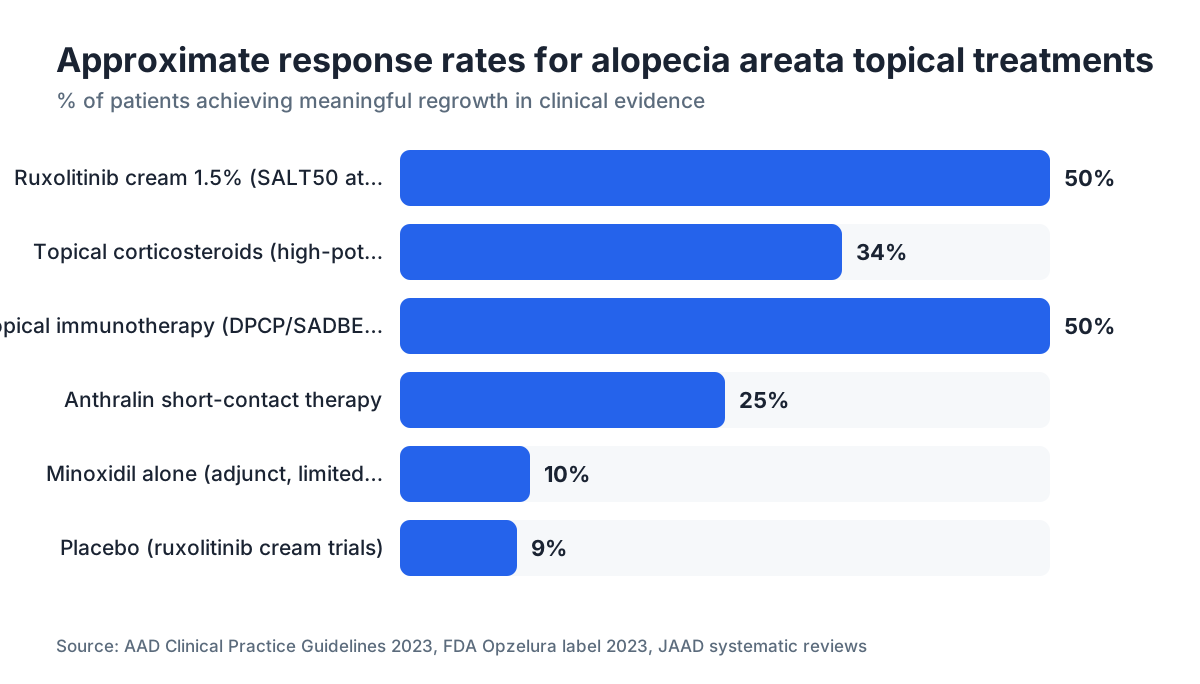
TL;DR: No cream cures alopecia areata, but several produce real regrowth. High-potency corticosteroid creams are the standard first-line topical. Ruxolitinib cream (Opzelura) became the first FDA-approved topical JAK inhibitor for alopecia areata in 2023. Response rates run from about 34% for topical steroids in patchy disease to roughly 50% in the ruxolitinib trials at 24 weeks.
What is alopecia areata and why do topical treatments matter?
Alopecia areata is an autoimmune condition. Your immune system, specifically T-cells, attacks hair follicles and drives them into a prolonged resting phase. Hair falls out in patches, sometimes progressing to total scalp loss (alopecia totalis) or loss of all body hair (alopecia universalis). The follicles themselves are not destroyed, which is why regrowth is possible in many cases [7].
Topical treatments matter for a simple reason. They let you concentrate drug where the problem is without loading the whole body with immunosuppressants. For mild-to-moderate patchy disease, a well-chosen cream or ointment applied directly to affected scalp can suppress the local immune attack enough to let follicles recover. The what causes hair loss mechanisms differ sharply from androgenetic alopecia or telogen effluvium, so treatments that work for those conditions generally do nothing here.
About 2% of people worldwide develop alopecia areata at some point in their lifetime [8]. In the United States, roughly 6.8 million people are affected, and about 300,000 new cases are diagnosed each year [1]. That makes it the second most common form of nonscarring hair loss after androgenetic alopecia. Here is the trap: most marketing around "alopecia treatment cream" is aimed at pattern baldness, not the autoimmune form. Read labels carefully.
Which creams and topicals are approved or widely used for alopecia areata?
Here is the honest landscape as of 2025. Only one topical carries formal FDA approval for alopecia areata. Everything else is off-label.
| Treatment | FDA-approved for AA? | Form | Typical response rate |
|---|---|---|---|
| Ruxolitinib cream 1.5% (Opzelura) | Yes (2023, mild-to-moderate) | Cream | ~50% SALT50 in trials [2] |
| Corticosteroid creams/ointments | No (off-label, decades of use) | Cream/ointment | 25-60% for patchy AA [3] |
| Anthralin (dithranol) | No (off-label) | Cream | ~25% in small studies [10] |
| Topical minoxidil | No (off-label, adjunct) | Solution/foam | Modest adjunct benefit [4] |
| Topical immunotherapy (DPCP, SADBE) | No (off-label, clinic-applied) | Solution | 40-60% in observational data [11] |
Ruxolitinib cream is the only topical with formal FDA approval specifically for alopecia areata. Off-label does not mean useless. It means the clinical trial bar has not been cleared for that exact indication, usually because these older agents predate the modern trial infrastructure.
How do corticosteroid creams work for alopecia areata?
Corticosteroids quiet the local T-cell attack on your follicles. Applied topically, they cut production of the cytokines (particularly interferon-gamma) that drive that attack, which gives follicles a window to resume the anagen growth phase.
Strength matters a lot. Over-the-counter hydrocortisone 1% is not strong enough to meaningfully treat alopecia areata. Dermatologists reach for mid-to-high-potency formulations, and clobetasol propionate 0.05% is among the most commonly prescribed for scalp patches. A systematic review in the Journal of the American Academy of Dermatology found that topical steroids produced complete or near-complete regrowth in roughly 34% of patients with patchy disease, with higher-potency agents outperforming weaker ones [3].
Two practical limits shape how these get used. They work far better on small, localized patches than on extensive disease. And long-term daily use on the same skin causes atrophy (skin thinning) and can suppress the adrenal axis when applied over large areas. Most dermatologists cycle them: use for four to eight weeks, take a break, reassess. If your patches are not responding after three months of consistent use, that is a signal to change approach rather than pile on more cream.
What is ruxolitinib cream and how well does it work?
Ruxolitinib cream 1.5% (brand name Opzelura, made by Incyte) got FDA approval in July 2023 for mild-to-moderate alopecia areata in patients 12 years and older [2]. It is a Janus kinase (JAK) inhibitor that blocks the JAK1/JAK2 signaling pathway T-cells use to attack follicles.
The approval rests on two randomized controlled trials, TRuE-AA1 and TRuE-AA2. In those trials, about 50% of patients applying ruxolitinib cream twice daily for 24 weeks reached at least 50% improvement on the SALT (Severity of Alopecia Tool) score, compared to around 9% of placebo patients [2]. That gap is real.
The FDA label carries a black box warning common to the whole JAK inhibitor class: increased risk of serious infections, malignancy, major cardiovascular events, thrombosis, and death, drawn mostly from oral JAK inhibitor data in rheumatoid arthritis patients. The agency notes the topical form produces much lower systemic absorption than oral routes, but the warning stays. Incyte's label tells patients to avoid open skin, limit the application area, and skip occlusive dressings unless a doctor directs it [2].
Cost is the other catch. Opzelura lists at roughly $2,000 to $3,000 per tube at US retail without insurance [9]. Manufacturer patient assistance programs exist. A dermatologist prescribes it. It is not available over the counter.
Can topical minoxidil help with alopecia areata?
Minoxidil is not approved for alopecia areata, and it does nothing about the autoimmune cause. Some dermatologists still add it because it prolongs the anagen growth phase and may help newly regrown follicles hold the growth cycle once another agent suppresses the immune attack.
A small randomized trial in the Journal of the American Academy of Dermatology found that combining minoxidil 5% solution with anthralin produced better regrowth than either agent alone in patchy alopecia areata [4]. Some dermatologists still use that combination today, off-label for this purpose.
Used alone, minoxidil rarely produces visible regrowth in alopecia areata because the immune attack keeps going. Think of it as opening a drain while the tap runs. It earns its place as a supportive layer once an immune-suppressing agent is doing the primary work. If you are considering minoxidil for men for pattern baldness and also have patchy AA, tell your dermatologist you are using it. Read up on minoxidil side effects before starting.
What is anthralin cream and is it worth trying?
Anthralin (also called dithranol) is a synthetic tar-like compound. You apply it, leave it on for a set time, then wash it off, and the low-grade skin irritation it causes appears to reset the immune environment around the follicle. Nobody fully understands the mechanism, but the irritation may work like topical immunotherapy, distracting or redirecting the T-cell attack.
It is not glamorous. Anthralin stains skin and clothing a brownish-purple, and most protocols call for short-contact therapy: apply for 20 to 60 minutes, then rinse. Response rates in older observational studies run from about 20% to 29% for complete or near-complete regrowth in patchy disease [10]. Modern data is thin because this approach predates the current trial infrastructure.
Anthralin is cheap, and compounded formulations are available at most compounding pharmacies. That is its main argument. It fits patients who cannot afford corticosteroids or do not respond to them, and for whom JAK inhibitors are out of reach. It is not a first-line pick, but the AAD's 2023 clinical practice guidelines list it as an acceptable off-label option [5].
What does topical immunotherapy involve, and is it a cream?
Topical immunotherapy is worth understanding even though it is not a cream you apply at home. A clinician paints agents like diphenylcyclopropenone (DPCP) or squaric acid dibutyl ester (SADBE) onto the scalp to induce a controlled allergic contact dermatitis. The goal is to shift the immune response away from attacking follicles.
The AAD guidelines cite around 40-60% partial or complete response in extensive alopecia areata, which competes with some systemic treatments [11]. The catch is the logistics. Treatment means clinic visits every two to four weeks, the skin sensitization can be uncomfortable, and it is only available at centers with experience applying it. You cannot do this yourself.
Why know about it? Patients sometimes ask a dermatologist to "just prescribe a cream" with no idea this option exists for more extensive disease.
Are there any over-the-counter creams that genuinely help alopecia areata?
Honestly? Very few. The OTC shelf is packed with products marketed with phrases like "stimulates regrowth" or "supports follicle health," none of them tested specifically in alopecia areata patients.
Hydrocortisone 1% cream is the only OTC option with even a theoretical mechanistic rationale, and the evidence that 1% hydrocortisone produces meaningful regrowth in AA is essentially nonexistent. Prescription-strength steroids beat it substantially [3].
Some OTC products lean on saw palmetto, biotin, or castor oil. Hair loss supplements and botanicals have their place, but no randomized trial data supports any of them specifically for alopecia areata. Biotin deficiency can cause shedding through a completely different mechanism, and correcting a real deficiency helps, but dosing biotin when you are not deficient does nothing for an autoimmune attack on follicles.
Buying OTC creams for alopecia areata? Be skeptical. That money buys a better result as a dermatologist appointment.
How does a dermatologist decide which topical to prescribe?
The real-world decision tree follows disease extent and patient age. The AAD's 2023 clinical guidelines on alopecia areata, published in the Journal of the American Academy of Dermatology, lay out the framework [5].
For patchy AA affecting less than 50% of the scalp, high-potency topical corticosteroids are the first-line topical option for both adults and children. Intralesional corticosteroid injections are also first-line for adults with patchy disease, and they often beat creams for localized patches.
For mild-to-moderate AA in patients 12 and older who have not responded well to steroids, ruxolitinib cream is now a viable option given its FDA approval. For more extensive or refractory disease, oral JAK inhibitors (baricitinib, ritlecitinib) enter the picture [6].
Age shapes the steroid choice. Clobetasol and other high-potency steroids get used more cautiously in younger children because of absorption and growth-axis concerns. Ruxolitinib cream is approved for ages 12 and up, not younger.
One clear move stands out. If you have sat on a patchy bald spot for months without seeing a dermatologist, book the visit. Untreated extensive AA tends to be harder to reverse than early patchy disease.
How long does it take for alopecia areata cream treatments to work?
Patience is genuinely required. Most topical treatments need at least eight to twelve weeks of consistent use before you can judge whether they are working. Regrowth usually starts as fine, sometimes unpigmented vellus hairs before full terminal hair returns.
In the ruxolitinib cream trials, the 50% response rate was measured at 24 weeks (six months) of twice-daily application [2]. Corticosteroid studies typically assess at eight to sixteen weeks. Anthralin studies have used windows of 12 to 24 weeks.
Spontaneous remission also happens, especially in the first year of patchy disease. The AAD notes that roughly 50% of patients with limited patchy disease recover on their own within one year [5]. That makes any single person's treatment response hard to read. If your patches fill in after two months of cream, it might be the cream, or the disease might have resolved on its own. That is exactly why placebo-controlled trials matter.
A practical timeline: start treatment, reassess at 12 weeks, and consider escalating or switching strategy at 16 to 20 weeks if you see no signs of regrowth. Do not abandon a treatment after three weeks.
What are the side effects of corticosteroid and JAK inhibitor creams?
Corticosteroid creams on the scalp can cause skin atrophy with prolonged daily use. On scalp skin this shows up less than on facial skin, but it can bring follicular prominence, easy bruising of nearby skin, and, over very large application areas, measurable suppression of cortisol production. Most of these effects reverse once you stop or cycle the cream.
Ruxolitinib cream carries the FDA black box warning for the JAK inhibitor class, covering serious infections, major adverse cardiovascular events, thrombosis, and malignancy [2]. The agency's position is that these risks come from oral JAK inhibitors at much higher systemic exposures than topical application produces, but the class label still applies. In the TRuE-AA trials, the reported cream side effects were mostly mild: application site reactions, headache, and acne at the application site.
For both drug classes, the benefit-to-risk math looks reasonable for the labeled populations when a dermatologist prescribes and monitors. It gets murkier in patients with preexisting conditions that raise cardiovascular or infection risk. Have those conversations directly with your prescriber, not based on a blog article.
Is there a difference between alopecia areata and other hair loss types that affects cream choice?
Yes, and this distinction trips people up constantly. Alopecia areata is autoimmune. Androgenetic alopecia (male and female pattern hair loss) is hormonal. Telogen effluvium is stress- or nutrient-driven shedding. Different mechanisms, different target tissue, and treatments that barely overlap.
Finasteride and DHT blockers work for androgenetic alopecia because they cut dihydrotestosterone's effect on genetically sensitive follicles. They do nothing for an autoimmune attack. The reverse holds too: corticosteroid creams built for AA will not touch a receding hairline driven by DHT. If you have a receding hairline and also develop a round smooth patch of hair loss, those may be two separate conditions needing two separate approaches.
A few patients have both conditions at once, which muddies the picture further. A proper diagnosis from a board-certified dermatologist (sometimes including a scalp biopsy for unclear cases) is genuinely irreplaceable here. Spending $60 a month on the wrong cream for twelve months is expensive and demoralizing. Get the diagnosis first. It saves money and time.
If you are unsure where your hair loss fits, a free AI hair analysis at MyHairline can help you see your pattern more clearly before your dermatologist visit, though it is no substitute for clinical diagnosis of an autoimmune condition.
What should I realistically expect: can a cream cure alopecia areata?
No topical cream cures alopecia areata. No systemic treatment does either, as of 2025. What the best treatments do is suppress the autoimmune attack long enough for follicles to regrow hair. Stop treatment, and the attack often comes back. That is why many patients with moderate-to-severe disease end up on maintenance regimens.
The disease itself is unpredictable. Spontaneous remission happens. So does relapse after remission. Some patients have one episode of patchy loss that never returns. Others cycle through loss and regrowth for decades. Extensive disease (more than 50% of the scalp) carries a worse prognosis for spontaneous recovery and is harder to treat with topicals alone.
The honest framing: the goal of an alopecia areata cream is disease management and longer regrowth periods, not elimination of the underlying condition. The FDA approved ruxolitinib cream with that understanding baked in. A responsible dermatologist will tell you the same, and the clinical trial data back that picture.
For patients whose AA is hurting their quality of life, newer oral JAK inhibitors have shown higher response rates in extensive disease [6]. A hair transplant is generally not recommended for active alopecia areata, because the immune attack can hit transplanted follicles too.
Sources
- National Alopecia Areata Foundation, Disease Overview
- FDA, Opzelura (ruxolitinib) Prescribing Information and Approval
- Olsen EA et al., Journal of the American Academy of Dermatology, 2004; updated systematic review data
- Fiedler-Weiss VC, Journal of the American Academy of Dermatology, 1987; and subsequent trial combining minoxidil with anthralin
- American Academy of Dermatology, Clinical Practice Guidelines for Alopecia Areata, 2023
- King B et al., New England Journal of Medicine, 2022 (baricitinib trials)
- NIH National Institute of Arthritis and Musculoskeletal and Skin Diseases, Alopecia Areata Overview
- MedlinePlus (NIH National Library of Medicine), Alopecia Areata
- Incyte Corporation, Opzelura Patient Information and Prescribing Label
- Shapiro J, Wiseman M, Lui H, Journal of the American Academy of Dermatology, 2000 (anthralin review)
- Strazzulla LC et al., Journal of the American Academy of Dermatology, 2018 (topical immunotherapy review)