
TL;DR: Alopecia areata is an autoimmune disease where the immune system attacks hair follicles. Treatments range from corticosteroid injections for patchy cases to FDA-approved JAK inhibitors (baricitinib, ritlecitinib) for severe or total hair loss. No treatment is a cure; regrowth rates and relapse risk vary significantly by disease extent and duration.
What is autoimmune alopecia and how is it different from other hair loss?
Alopecia areata is not the same thing as the thinning most people picture when they hear "hair loss." It has nothing to do with DHT, genetics driving a receding hairline, or hormonal changes. It's an autoimmune disease: your own T-cells mistakenly target hair follicles, triggering inflammation that pushes follicles out of their growth phase. The follicles themselves are not destroyed, which is why spontaneous regrowth and treatment-driven regrowth are both possible, sometimes years after the hair disappeared.
The condition comes in a spectrum. Patchy alopecia areata means one or more coin-shaped bald spots, usually on the scalp. Alopecia totalis means complete scalp hair loss. Alopecia universalis means complete loss of all body hair, including eyebrows, eyelashes, and beard. The distinction matters enormously for treatment, because the drugs that work reasonably well for small patchy disease often fail almost completely in totalis or universalis.
About 2% of people will develop alopecia areata at some point in their lifetime, making it one of the most common autoimmune diseases globally [1]. Unlike telogen effluvium, where a systemic stress sheds hair diffusely and regrowth is largely predictable, alopecia areata follows no reliable timetable. Some people have a single episode and never see it again. Others cycle through partial regrowth and relapse for decades.
If you're not certain which type of hair loss you're dealing with, understanding what causes hair loss is a useful starting point before pursuing autoimmune-specific treatments.
What are the FDA-approved treatments for alopecia areata?
Two oral drugs now carry a specific FDA approval for alopecia areata, and both arrived in the last three years. For most of the twentieth century, there were zero. That changed fast in the early 2020s.
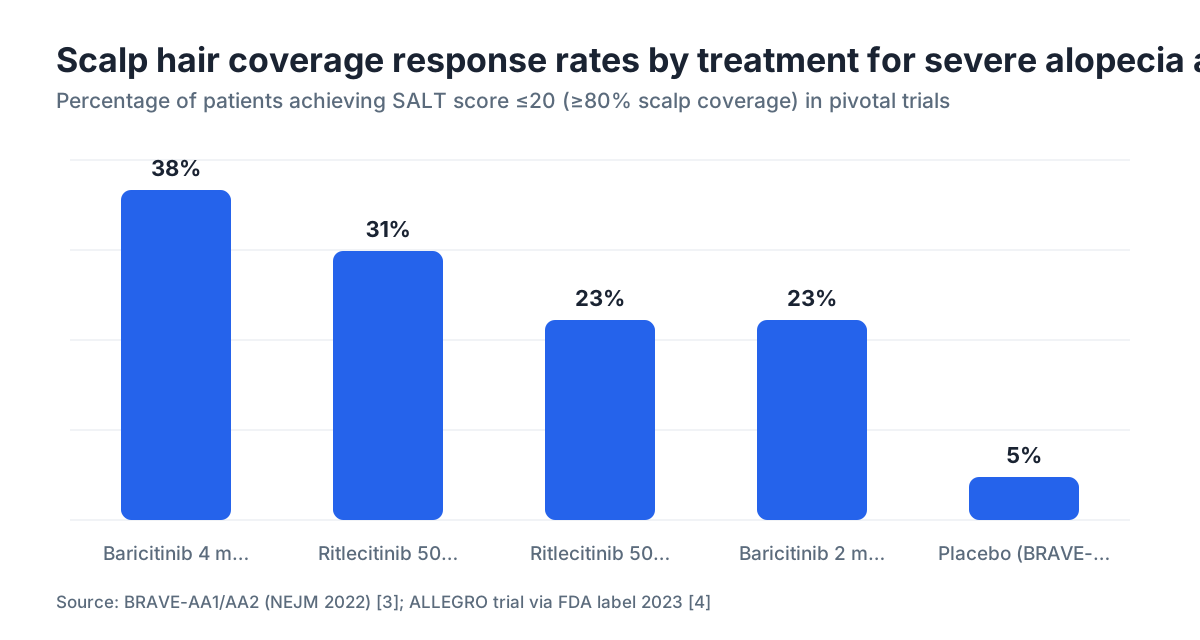
Baricitinib (Olumiant) was approved by the FDA in June 2022 for adults with severe alopecia areata, defined as 50% or more scalp hair loss [2]. It's an oral JAK1/JAK2 inhibitor taken once daily. In the BRAVE-AA1 and BRAVE-AA2 trials, about 35-40% of patients on the 4 mg dose achieved a SALT score of 20 or below (meaning 80% or more scalp coverage) after 36 weeks, compared to roughly 5% on placebo [3]. Those are real numbers from the published trial data, and they represent a genuine shift in what's achievable for severe disease.
Ritlecitinib (Litfulo) was approved by the FDA in June 2023, this time for patients aged 12 and older, making it the first approval covering adolescents [4]. It's a JAK3/TEC-family kinase inhibitor, 50 mg orally once daily. In the ALLEGRO phase 2b/3 trial, 23% of patients on 50 mg achieved 80%+ scalp coverage at week 24, rising to around 31% by week 48 [4]. The adolescent data from the same trial supported the broader age label.
These are the only two drugs with a specific FDA approval for alopecia areata as of mid-2025. Everything else used in clinical practice is off-label.
| Treatment | FDA approval | Population | Key response rate |
|---|---|---|---|
| Baricitinib 4 mg (Olumiant) | June 2022 | Adults, severe AA | ~35-40% achieving SALT ≤20 at wk 36 [3] |
| Ritlecitinib 50 mg (Litfulo) | June 2023 | Age ≥12, severe AA | ~23-31% achieving SALT ≤20 at wk 24-48 [4] |
| Corticosteroid injections | Off-label | Patchy AA | ~60-65% local response in limited disease [5] |
| Topical minoxidil | Off-label | Adjunct use | Modest adjunct; no standalone trial data in AA |
| Diphencyprone (DPCP) | Off-label | Extensive AA | ~40-50% partial response; highly variable [5] |
How do JAK inhibitors work for autoimmune hair loss?
JAK inhibitors block the Janus kinase signaling pathway, which immune cells use to communicate and coordinate inflammatory attacks. In alopecia areata, the relevant signals include interferon-gamma and interleukins that activate cytotoxic T-cells to surround and attack the follicle. Blocking JAK1, JAK2, or JAK3 (depending on the drug) interrupts that signaling chain and reduces the follicle-level inflammation enough for the hair to resume growing.
The mechanism was partly worked out because researchers noticed something odd. Patients taking JAK inhibitors for rheumatoid arthritis or other conditions were unexpectedly regrowing hair. That clinical observation drove formal trials. A Columbia University dermatology group published early proof-of-concept work in Nature Medicine in 2014, showing oral ruxolitinib (a JAK1/2 inhibitor) produced meaningful regrowth in patients with longstanding alopecia universalis [6]. That paper opened the modern treatment era.
One thing to understand clearly: JAK inhibitors suppress rather than cure the autoimmune process. When patients stop the medication, relapse rates are high, often within months. In the BRAVE-AA trials, most patients who discontinued baricitinib after achieving response lost a significant portion of their regrowth within the following year [3]. That means you're likely looking at long-term, possibly indefinite treatment if the drug is working. That reality has to factor into any cost-benefit thinking.
What are the risks and side effects of JAK inhibitors for alopecia?
The FDA requires a boxed warning on baricitinib (and other JAK inhibitors used for inflammatory conditions) covering serious infections, malignancy, major cardiovascular events, thrombosis, and mortality [2]. These risks were primarily identified in rheumatoid arthritis populations, who are generally older and carry more baseline cardiovascular and infection risk than the average alopecia areata patient. The absolute risk in otherwise healthy young adults with alopecia areata is almost certainly lower, but it is not zero, and the FDA label applies regardless.
More common side effects seen in the alopecia trials include upper respiratory infections, acne, headache, elevated creatine phosphokinase, and urinary tract infections. Acne was notably frequent with ritlecitinib, appearing in roughly 8-10% of trial participants [4].
Dermatologists who prescribe these drugs typically screen for latent tuberculosis, check baseline lipids and blood counts, and monitor labs periodically during treatment. If you have a history of blood clots, active serious infections, or certain cancers, JAK inhibitors are generally contraindicated or require very careful specialist review.
Ritlecitinib's label for adolescents carries the same boxed warning. Parents and patients under 18 should have a frank conversation with a board-certified dermatologist about what the trial data does and doesn't tell us about long-term safety in younger patients, because the follow-up periods in published trials are still relatively short.
What off-label treatments do dermatologists actually use?
Intralesional corticosteroid injections are the workhorse for patchy alopecia areata, and they've been standard practice for decades. Triamcinolone acetonide, injected directly into affected scalp areas every four to six weeks, produces localized regrowth in around 60-65% of people with limited patchy disease [5]. The American Academy of Dermatology supports this as a first-line option for patches covering less than 50% of the scalp [5]. Side effects are mostly local: skin atrophy, hypopigmentation, and temporary discomfort. It does nothing for totalis or universalis.
Topical corticosteroids (potent formulations like clobetasol propionate) are sometimes used, especially in children or people who can't tolerate injections, but the evidence for scalp AA is weaker than for injections. Systemic oral corticosteroids can suppress the autoimmune attack acutely and sometimes open a regrowth window, but because of the well-known risks of long-term systemic steroid use (bone loss, metabolic effects, adrenal suppression), most dermatologists use them only for short-burst protocols or to bridge a patient to another therapy.
Contact immunotherapy with diphencyprone (DPCP) or squaric acid dibutyl ester (SADBE) works through a different mechanism. The dermatologist applies these chemicals to deliberately cause a mild allergic dermatitis, which somehow shifts the immune environment around the follicle away from the alopecia-driving T-cell pattern. It's time-intensive, requires specialist administration, and response rates in extensive disease hover around 40-50% partial response, with full response less common [5]. But it's one of the few options historically available for patients who failed steroids and didn't have access to JAK inhibitors.
Topical minoxidil is sometimes added as an adjunct to other treatments. The evidence for minoxidil as a standalone for alopecia areata is weak; it's not an immunomodulator and won't address the root cause. But it may help stimulate follicles once the inflammation is controlled. If you're curious about the broader profile of minoxidil in hair loss, the minoxidil side effects article covers what to watch for.
Anthralin, a topical agent applied and washed off, has modest older evidence and is occasionally used in children. Oral minoxidil at low doses (0.625 mg to 2.5 mg) is drawing interest as an adjunct based on its use in other hair loss conditions; see oral minoxidil for more on that.
Cyclosporine and methotrexate are systemic immunosuppressants occasionally used for extensive disease that has failed other options, but their side effect profiles are significant and neither has strong trial data specifically in alopecia areata.
Who is a candidate for JAK inhibitor therapy?
Both current FDA approvals are limited to severe alopecia areata, which the labels define as 50% or more scalp hair loss (SALT score of 50 or higher). If you have one or two small patches, a dermatologist is not going to recommend baricitinib or ritlecitinib. The risk-benefit math simply doesn't support systemic immunosuppression for limited disease that might resolve on its own or respond to injections.
Age is a factor. Baricitinib is approved for adults only (18 and over). Ritlecitinib is approved for age 12 and over. Children under 12 with severe alopecia areata still have no approved option, which remains a real clinical gap.
Disease duration matters for predicting response. The trial data suggest that patients with shorter disease duration tend to respond better to JAK inhibitors. Patients who have had alopecia universalis for a decade or more have lower response rates, though meaningful responses can still occur. There's no absolute cutoff, but a decade-long history of complete hair loss should lower expectations realistically.
Insurance coverage is a live issue. Baricitinib and ritlecitinib are expensive branded drugs. Eli Lilly's list price for baricitinib has been reported around $2,900 to $3,200 per month, and ritlecitinib sits in a similar range [7]. Coverage decisions vary by payer, and prior authorization typically requires documented SALT scores and failure of at least one prior treatment. Patient assistance programs exist through both manufacturers.
Is there a role for biologic treatments or other newer therapies?
JAK inhibitors are the current wave, but research is moving. Dupilumab (Dupixent), the IL-4/IL-13 blocking biologic approved for atopic dermatitis, has drawn interest after case reports and a small trial suggested it might help alopecia areata patients who also have atopic comorbidities. The mechanism makes biological sense: in patients with both conditions, the underlying immune skew may be similar. Larger trials are underway, but as of mid-2025 there is no FDA approval or strong phase 3 evidence for dupilumab in alopecia areata specifically.
Other JAK inhibitors are in trials. Deuruxolitinib (formerly CTP-543) completed a phase 3 program (THRIVE-AA1 and THRIVE-AA2) with results published in 2023 showing about 33% of patients achieving SALT ≤20 at week 24 on the 8 mg twice-daily dose. Its regulatory status should be verified with current FDA databases before anyone cites it as approved.
Platelet-rich plasma (PRP) injections have been studied in small trials for alopecia areata, some with promising results, but the evidence base is too thin and too heterogeneous to recommend it confidently. The AAD does not endorse it as a standard-of-care option.
Hair transplants are not appropriate for alopecia areata. The autoimmune attack will target transplanted follicles just as it targeted the original ones. Unlike androgenetic alopecia, where a hair transplant can produce lasting results because the donor follicles are genetically resistant to DHT, alopecia areata has no such safe donor zone.
How long does treatment take before you see regrowth?
Patience is the non-negotiable part of this. Corticosteroid injections can produce visible regrowth in treated patches within six to eight weeks, but multiple sessions spaced four to six weeks apart are usually needed to see sustained results.
With JAK inhibitors, the timelines are longer. The BRAVE-AA trials used 36 weeks as the primary endpoint, and baricitinib's labeling reflects that. Some patients see early soft regrowth (vellus hair) at eight to twelve weeks, transitioning to terminal hair over the following months. Others don't see meaningful results until week 24 or later. Dermatologists typically give JAK inhibitors at least six months before calling them a failure.
Ritlecitinib trial data showed continued response improvement from week 24 to week 48, which suggests some patients who look like partial responders at six months become stronger responders given more time.
One honest caveat: the people who achieve the clearest responses in trials are not always representative of the full range of patients in a real clinic. Trial exclusion criteria often rule out patients with the most complex histories. Real-world response rates, while still being counted, tend to run modestly lower than trial rates.
If you want a baseline read on where your hair loss stands before starting any treatment, the free AI scan at MyHairline can help you document your pattern and severity over time, which is genuinely useful for tracking treatment response.
What does treatment for autoimmune alopecia cost without insurance?
This is where things get uncomfortable. The FDA-approved JAK inhibitors are not cheap.
Baricitinib (Olumiant) at the 4 mg dose used for alopecia has a reported list price in the range of $2,900 to $3,200 per month in the United States, which works out to roughly $35,000 to $38,000 per year [7]. Ritlecitinib (Litfulo) is priced comparably. These are list prices; patients with commercial insurance may pay far less through manufacturer copay programs, and Medicaid coverage varies by state.
For patients without insurance or with plans that deny coverage, out-of-pocket costs at these list prices put long-term treatment out of reach for most people. Both Eli Lilly and Pfizer run patient assistance programs; the application burden and eligibility criteria are real obstacles but worth pursuing.
Off-label options are far cheaper. Triamcinolone injections at a dermatologist's office typically cost $50 to $150 per session out of pocket, and topical clobetasol is inexpensive as a generic. Contact immunotherapy with DPCP is priced variably by clinic but is generally accessible. The catch is that these cheaper options don't work for severe or extensive disease the way JAK inhibitors do.
| Treatment option | Approximate monthly cost (US, no insurance) |
|---|---|
| Baricitinib 4 mg | ~$2,900-$3,200 list price [7] |
| Ritlecitinib 50 mg | ~$2,800-$3,100 list price |
| Corticosteroid injections (triamcinolone) | ~$50-$150 per session |
| Topical clobetasol (generic) | ~$20-$50 per tube |
| DPCP contact immunotherapy | Variable; typically clinic-applied, $50-$200/session |
Can alopecia areata go away on its own without treatment?
Yes, and this is clinically important information. Spontaneous remission happens, particularly in limited patchy alopecia areata. Studies suggest that roughly 50% of people with a single small patch of alopecia areata regrow within one year [5]. That number drops sharply with more extensive disease: alopecia totalis and universalis have lower spontaneous remission rates, often below 10%.
This creates a genuine dilemma for patients with limited disease. If half of people with small patches regrow on their own, the decision to pursue aggressive treatment means weighing the side effect profile and cost against a coin-flip natural history. Watchful waiting is a legitimate option, especially for a first episode of limited patchy disease in a young person with no family history of progression to extensive disease.
Certain features predict a worse prognosis: onset before puberty, ophiasis pattern (hair loss following the scalp margin), nail changes (pitting, trachyonychia), a family history of alopecia areata, or the presence of other autoimmune diseases like thyroid disease or vitiligo. If those features are present, most dermatologists take a more proactive approach.
Long-standing alopecia totalis or universalis, meaning years or decades without hair, is the hardest to treat. Follicles can enter a prolonged dormancy in that context, and even effective immunosuppression may not coax them back after very long intervals. That's a hard clinical reality that deserves direct communication between patients and their doctors.
How is autoimmune alopecia diagnosed?
Diagnosis is usually clinical, meaning a dermatologist examines the pattern and characteristics of hair loss, and that's often enough. The classic presentation is well-defined, smooth, round or oval patches of complete hair loss without scarring. The "exclamation point" hairs at patch margins (short, broken hairs that are narrower at the base than the tip) are a hallmark sign under dermoscopy.
A scalp biopsy is sometimes done to confirm diagnosis in atypical presentations or when scarring alopecia needs to be ruled out. Histology in alopecia areata shows a peribulbar lymphocytic infiltrate described as a "swarm of bees" pattern around anagen follicles, which is distinctive.
Blood tests aren't needed to diagnose alopecia areata itself, but dermatologists often check thyroid function (TSH, free T4), antinuclear antibody (ANA), and sometimes a complete blood count given the association between alopecia areata and other autoimmune conditions. Thyroid autoimmunity coexists in roughly 8-28% of alopecia areata patients, depending on the study [10].
Before any treatment decision, be confident the diagnosis is correct. Tinea capitis (fungal infection), trichotillomania, secondary syphilis, and certain types of scarring alopecia can mimic the patchy appearance of alopecia areata. Getting that right matters because the treatments are completely different.
Does autoimmune alopecia affect mental health, and should that factor into treatment decisions?
Bluntly: yes, and probably more than most clinical guidelines acknowledge. Hair loss from alopecia areata, especially extensive or total loss, has well-documented links to anxiety, depression, and social withdrawal. A 2019 systematic review in the Journal of the American Academy of Dermatology found that patients with alopecia areata had significantly higher rates of anxiety disorders (odds ratio approximately 2.1) and depression compared to controls [8].
This matters for treatment decisions in two ways. First, the psychological burden of severe alopecia areata is itself an argument for pursuing effective treatment even when the medical urgency isn't obvious. Quality of life is a legitimate clinical consideration. Second, patients considering JAK inhibitors should know that the boxed warning for these drugs includes attention to serious psychiatric events in some contexts, though this is less prominent than the cardiovascular and infection concerns.
Dermatology guidelines are slowly folding mental health screening into alopecia areata management. If you're experiencing significant distress around hair loss, mentioning it explicitly to your dermatologist isn't weakness; it's clinically relevant information that can shape treatment recommendations.
The MyHairline free AI scan is one way to get a clearer picture of your current hair loss pattern, which some people find helpful as a concrete starting point when they're feeling overwhelmed and uncertain about what they're actually dealing with.
How is autoimmune alopecia different from androgenetic alopecia, and does that change treatment?
Androgenetic alopecia (male and female pattern hair loss) is driven by DHT sensitivity in genetically predisposed follicles, not by autoimmune attack. The treatments are entirely different mechanisms for entirely different problems. Finasteride blocks DHT production and has no meaningful role in alopecia areata. Minoxidil works by prolonging anagen and is at best an adjunct in alopecia areata, not a primary treatment. Finasteride and DHT blockers are simply the wrong tools for an autoimmune condition.
The pattern of hair loss usually tells them apart. Androgenetic alopecia follows predictable templates (Norwood scale for men, Ludwig scale for women) and progresses gradually from the hairline and crown. Alopecia areata produces discrete patches anywhere on the scalp, often with rapid onset, and the scalp skin within the patches looks completely normal.
Some people have both at once. A man might have Norwood 3 androgenetic thinning and then develop alopecia areata on top of it. In that case, treatment has to address both separately: a JAK inhibitor for the autoimmune component, and potentially a DHT blocker or minoxidil for the androgenetic component, with the dermatologist coordinating the approach.
If you're sorting out which type of hair loss you have, reading about what causes hair loss and the differences between pattern loss and inflammatory causes is time well spent before picking a treatment path.
Sources
- National Institute of Arthritis and Musculoskeletal and Skin Diseases (NIAMS) - Alopecia Areata
- FDA - Olumiant (baricitinib) Prescribing Information and Approval
- King B et al., BRAVE-AA1 and BRAVE-AA2 trials, New England Journal of Medicine, 2022
- FDA - Litfulo (ritlecitinib) Prescribing Information and Approval
- American Academy of Dermatology - Alopecia Areata: Diagnosis and Treatment Guidelines
- Xing L et al., Alopecia areata is driven by cytotoxic T lymphocytes and is reversed by JAK inhibition, Nature Medicine, 2014
- Eli Lilly - Olumiant Patient Support and Pricing Information
- Huang KP et al., Psychiatric Comorbidities in Alopecia Areata: A Systematic Review, Journal of the American Academy of Dermatology, 2019
- Pratt CH et al., Alopecia areata, Nature Reviews Disease Primers, 2017