

TL;DR: One small Iranian RCT found topical garlic gel sped up hair regrowth when added to betamethasone cream in alopecia areata patients. Garlic alone is not a proven treatment, and the evidence is thin. It's low-risk as an adjunct but should not replace corticosteroids, JAK inhibitors, or other clinician-recommended therapies.
What is alopecia areata and why does treatment matter so much?
Alopecia areata is an autoimmune disease where the immune system attacks hair follicles, producing smooth, round patches of hair loss on the scalp, face, or body. It affects roughly 2 percent of people at some point in their lives, according to the National Institute of Arthritis and Musculoskeletal and Skin Diseases [1]. That sounds small until it's your scalp.
The follicles themselves survive. They're not destroyed, just switched off. That's good news, because it means regrowth is biologically possible even after years of hair loss. The bad news is that the immune trigger is hard to shut down, relapse rates are high, and no treatment is a guaranteed fix for everyone.
Severity ranges enormously. Patchy alopecia areata involves one or a few coin-sized bald spots. Alopecia totalis means complete scalp hair loss. Alopecia universalis means every hair on the body is gone. Most people fall into the patchy category, and about 50 percent of those recover on their own within a year even without treatment [1].
Why do treatments vary so wildly? The immunology is complicated and the disease is unpredictable. What works brilliantly for one person does almost nothing for another. That reality is why patients search for every possible option, including things like garlic, which has a surprisingly real (if limited) evidence trail.
If you're unsure what kind of hair loss you're dealing with, understanding what causes hair loss first is a useful starting point. Alopecia areata can get confused with telogen effluvium, which has a completely different cause and treatment path.
Does garlic actually work for alopecia areata, or is this folk medicine?
It's not pure folk medicine, but it's not proven medicine either. The honest answer sits in the middle.
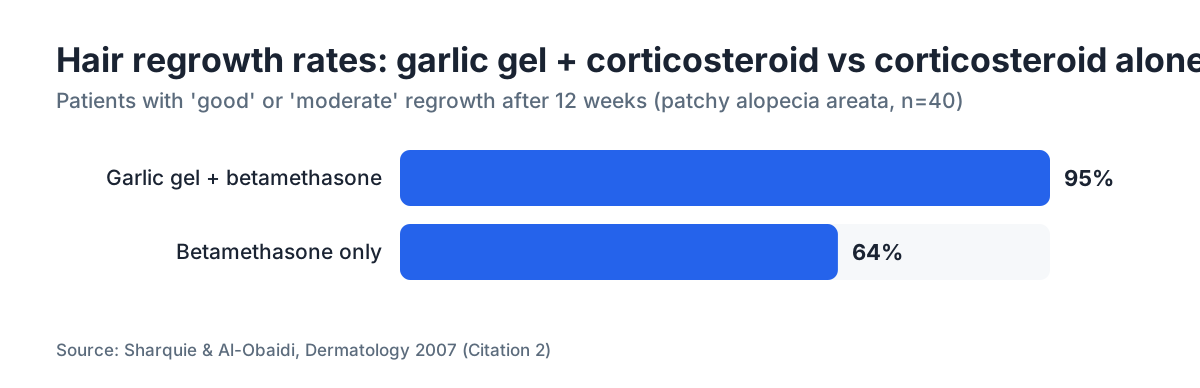
The most-cited study is a randomized controlled trial published in the journal Dermatology in 2007 by Sharquie and Al-Obaidi [2]. They enrolled 40 patients with patchy alopecia areata and split them into two groups. One group applied betamethasone valerate cream (a potent topical corticosteroid) to their patches. The other group applied the same corticosteroid plus a garlic gel. After three months, 95 percent of the garlic-plus-betamethasone group showed "good" or "moderate" hair regrowth compared with 64 percent in the betamethasone-only group. The difference was statistically significant.
That's genuinely interesting. It's also a 40-person trial from nearly two decades ago that has not been replicated at scale. The authors proposed that garlic's active sulfur compound, allicin, may suppress local inflammatory cytokines and have a mild irritant effect that stimulates follicle activity, similar to how contact sensitizers like diphenylcyclopropenone (DPCP) work in specialist clinics.
Allicin is real pharmacology. It's not wishful thinking. Garlic has documented antimicrobial, anti-inflammatory, and antioxidant properties studied in other contexts [3]. Whether those properties are strong enough, at the concentrations you can get from a topical gel, to shift the autoimmune attack on hair follicles, that part still isn't clear.
Here's the honest read. One decent-for-its-size trial says garlic gel as an add-on to corticosteroids probably helps. Zero trials say garlic alone is enough. Anyone telling you garlic is a cure is overstating what the data shows.
How was garlic gel used in the clinical trial, and how would you replicate it?
The Sharquie and Al-Obaidi trial used a standardized garlic gel (5% garlic extract) applied to alopecia patches twice daily alongside 0.1% betamethasone valerate cream [2]. Patients applied the gel first, let it absorb, then applied the corticosteroid on top. They did this for 12 weeks.
You can't buy that exact gel at a pharmacy. The closest consumer options are garlic oil (pressed from cloves and sold in health food stores) or fresh-crushed garlic diluted in a carrier oil like jojoba or coconut oil. The problem with fresh garlic is that allicin is unstable, and concentration swings a lot depending on how the garlic is prepared and how long it's been sitting.
If you want to try this based on the published protocol, a reasonable approach is to:
- Use a small amount of garlic-infused oil (not undiluted raw garlic juice, which is concentrated enough to burn some skin types).
- Apply to the affected patch only, not the whole scalp.
- Leave on for 30 to 60 minutes, then wash off.
- Follow with your prescribed corticosteroid cream if a dermatologist has given you one.
- Do a patch test on your inner arm for 48 hours first to check for contact dermatitis.
Do not put raw garlic directly on the scalp without dilution. Allicin at high concentrations is a skin irritant. There are documented cases of garlic burns and contact dermatitis from undiluted application [3].
One more thing. The trial's garlic group was still using betamethasone. The added benefit was on top of a real prescription drug. If you try garlic without any corticosteroid and expect the same results, you're not replicating what the study tested.
What are the risks of using garlic on your scalp?
The main risks are skin irritation and contact dermatitis. Garlic contains diallyl disulfide and allicin, both potent irritants at high concentrations. Applying raw crushed garlic directly to skin for extended periods has caused chemical burns in multiple case reports [3].
Signs of trouble include redness, blistering, burning that doesn't settle within a few minutes of application, or new hair loss at the application site (from follicle damage, ironically). If any of those happen, stop immediately and rinse thoroughly.
Allergic contact dermatitis to garlic is also documented, separate from simple irritation. It involves an immune response that develops after repeated exposure. Patch testing before use is worth the small hassle.
Garlic's strong odor is a real-world barrier too. People who work in offices or have close social contact during the day usually find this treatment impractical unless they apply it overnight with a shower cap and wash it out in the morning.
For most people using a diluted garlic oil for 30 to 60 minutes a few times a week, the risk is low. It climbs if you use undiluted garlic juice, apply it to broken or inflamed skin, or leave it on for hours at a time.
How does garlic compare to proven alopecia areata treatments?
Be realistic about where garlic sits in the treatment hierarchy.
The FDA approved baricitinib (Olumiant) for severe alopecia areata in June 2022, followed by ritlecitinib (Litfulo) in June 2023. These JAK inhibitors are the first systemic drugs approved specifically for this condition. In the registration trial for baricitinib, 35 to 38 percent of patients with severe AA reached at least 80 percent scalp coverage after 36 weeks, compared to roughly 5 percent on placebo [4]. These are prescription drugs with real side effect profiles, but they represent genuine medical progress.
For mild to moderate patchy alopecia areata, dermatologists most often use intralesional corticosteroid injections (triamcinolone acetonide) as first-line treatment. The American Academy of Dermatology recommends intralesional triamcinolone at concentrations of 2.5 to 10 mg/mL every 4 to 6 weeks for patchy scalp disease [5]. Response rates in practice run around 60 to 75 percent for the patchy form.
Topical corticosteroids (like betamethasone, the drug used alongside garlic in the trial) are second-line because they're less effective than injections for established patches but easier to self-administer.
Minoxidil, usually discussed for androgenetic alopecia (the genetic thinning type), gets used off-label in AA, mostly to nudge regrowth after immunosuppressive treatment has quieted the autoimmune attack. If you want the mechanism, minoxidil for men covers it in detail, though the evidence for AA specifically is weaker than for pattern baldness.
Here's the comparison in one table:
| Treatment | Evidence level for AA | Typical response (patchy AA) | Prescription required? |
|---|---|---|---|
| Intralesional triamcinolone | Strong (AAD guideline) | 60-75% [5] | Yes |
| Baricitinib (JAK inhibitor) | FDA-approved (severe AA) | 35-38% achieve 80% coverage [4] | Yes |
| Topical betamethasone | Moderate | 64% in RCT [2] | Yes (Rx strength) |
| Garlic gel + betamethasone | One small RCT | 95% in one 40-person trial [2] | No (but uses Rx base) |
| Garlic alone | Anecdotal only | Unknown | No |
| Minoxidil (off-label) | Limited | Variable | OTC available |
Garlic as an adjunct scores surprisingly well in that one trial, but the evidence is thin next to established treatments. The 95 percent figure comes from a very small sample and has not been replicated. Treat it as suggestive, not settled.
Are there other natural or alternative treatments with real evidence?
A few, though "real evidence" is a high bar and most natural options don't clear it.
Onion juice is the natural treatment with the most interesting evidence. A 2002 study in the Journal of Dermatology by Sharquie and Al-Obaidi (the same lead author as the garlic trial) found that crude onion juice applied twice daily produced regrowth in 87 percent of 23 patients with patchy AA after 8 weeks, while tap water produced regrowth in 13 percent [6]. The proposed mechanism is similar to garlic: sulfur compounds and mild irritation. The sample is small and unreplicated at scale, but onion juice and garlic sit in the same chemical family for this reason.
Aromatherapy with essential oils (thyme, rosemary, lavender, cedarwood) was studied in a 1998 Scottish RCT of 86 patients. The essential oil group showed statistically more improvement than the carrier-oil-only group (44% versus 15%) [7]. Rosemary oil has picked up interest since a 2015 comparison trial found it performed about as well as 2% minoxidil for androgenetic alopecia after 6 months, though that was a different condition [7].
None of these carry the evidence base of prescription treatments. They're low-risk add-ons that some patients find helpful, not replacements for medical care.
If you suspect your hair loss has a nutritional component, our piece on hair loss supplements goes through what has reasonable evidence and what's mostly marketing.
What should you actually do if you have alopecia areata?
See a dermatologist. That's not a throwaway line. Alopecia areata is an autoimmune disease, and telling it apart from tinea capitis, trichotillomania, or androgenetic alopecia requires a clinical exam and sometimes a scalp biopsy. Getting the diagnosis right matters because the treatments are completely different.
For mild patchy AA, many dermatologists start with intralesional triamcinolone injections every 4 to 6 weeks. It's uncomfortable but effective, with decades of use behind it [5]. If results are coming, you'll see them within 6 to 8 weeks of the first injection cycle.
If your disease is extensive (more than 50 percent scalp hair loss) or moving fast, the conversation shifts toward systemic therapy. JAK inhibitors are now the standard of care for severe AA after the FDA approvals of baricitinib and ritlecitinib [4][9]. These are expensive drugs, often $2,000 or more per month before insurance, and they come with monitoring requirements for blood counts and lipids.
Garlic gel is a reasonable low-risk thing to try alongside whatever your dermatologist prescribes, specifically as an add-on, applied to patches before your corticosteroid cream. It is not a reason to delay a proper diagnosis or to stop a prescription therapy that's working.
If you're in Nashville or the surrounding Tennessee area and looking for specialist care, academic medical centers like Vanderbilt University Medical Center have dermatology departments with physicians who manage autoimmune hair loss. Treatment in Nashville follows the same evidence-based protocols as anywhere else in the country. The AAD guidelines are the national standard [5].
For a broad picture of your hair and scalp before a dermatology appointment, the free AI scan at MyHairline gives you a quick initial read on your hair loss pattern, which can be useful to share with your doctor.
Can garlic regrow hair in severe alopecia areata (totalis or universalis)?
Almost certainly not on its own. The Sharquie and Al-Obaidi trial enrolled patients with patchy alopecia areata, not totalis or universalis [2]. Patchy AA has the highest spontaneous remission rate and responds best to focal treatments. The immunological environment is very different in extensive disease.
In alopecia totalis and universalis, the autoimmune attack is systemic and the follicle's immune privilege has collapsed. Focal topical treatments, whether garlic or corticosteroid cream, don't have the reach to address that. This is exactly why JAK inhibitors, which act systemically to suppress the cytokine pathways driving the attack, were a real step forward for patients with severe disease [4].
The FDA's prescribing information for baricitinib indicates it for adults with severe alopecia areata, defined in the approval by a Severity of Alopecia Tool (SALT) score of 50 or greater, meaning at least 50 percent scalp hair loss [4]. Garlic gel is nowhere in that conversation.
If you or someone you know has totalis or universalis, the conversation needs to be with a dermatologist who specializes in hair loss, preferably one with experience using JAK inhibitors, and sooner rather than later. Early treatment of extensive disease has better outcomes.
How long does garlic treatment take to show results in alopecia areata?
The 2007 trial ran for 12 weeks (three months) [2]. The garlic-plus-betamethasone group started showing visible regrowth faster than the betamethasone-only group, with differences appearing by week 8 in the trial's assessment.
For topical treatments in alopecia areata generally, eight to twelve weeks is the standard window before drawing conclusions about whether something is working. Hair follicles in AA are arrested, and even after the immune attack settles, regrowth takes weeks because the follicle has to complete an entire growth cycle.
Expect fine, vellus (colorless) hairs first. Terminal (pigmented) regrowth usually takes longer, and sometimes the first regrowth comes in white before pigmentation returns. Both are normal signs of recovery.
If you see zero change after 12 weeks of consistent use alongside a prescription treatment, that's a signal to revisit the plan with your dermatologist rather than push on indefinitely. Some patches in AA are simply refractory to topical approaches.
Is there any research on garlic's anti-inflammatory mechanism that supports its use?
Yes, though most of it is laboratory research rather than clinical trials in hair loss specifically.
Allicin, the organosulfur compound released when garlic is crushed, has documented inhibitory effects on pro-inflammatory cytokines including TNF-alpha and interleukins in cell-culture and animal studies [3]. Alopecia areata is driven in large part by a T-helper-1 inflammatory response around the follicle, with IFN-gamma as a key cytokine [1][10]. Whether allicin's anti-inflammatory effects are potent enough, at topically achievable concentrations, to suppress that specific pathway has not been shown in a properly controlled human trial.
Garlic also inhibits certain Th17 pathways in laboratory settings, which is interesting because Th17 involvement shows up in alopecia areata pathology [3]. That's speculative extrapolation, not proven mechanism in this disease.
The irritant effect is probably more relevant clinically. Mild contact irritation is a feature, not a bug, in some AA treatments. Anthralin (dithranol) is a licensed irritant treatment for AA that works partly by changing the immune environment around the follicle through controlled irritation. Garlic may produce a milder version of the same effect. That's a plausible biological rationale for the 2007 trial's findings, even if it hasn't been formally proven.
What does the AAD recommend for alopecia areata, and where does garlic fit?
The American Academy of Dermatology guidelines for alopecia areata, updated in recent years to reflect the JAK inhibitor approvals, recommend a stepped approach based on disease severity [5].
For limited patchy disease (less than 50 percent scalp involvement), first-line recommendations are intralesional corticosteroids, high-potency topical corticosteroids, and contact immunotherapy (DPCP or squaric acid dibutyl ester) for more persistent cases. Minoxidil is listed as an option to promote regrowth after immunosuppressive therapy has quieted the attack.
For extensive disease (50 percent or more), systemic options including oral corticosteroids, methotrexate, and now JAK inhibitors are recommended [4][5].
Garlic does not appear in the AAD guidelines. That's not a scandal. The evidence is a single small trial, and the guideline process requires more than that. The AAD guidelines don't explicitly say "don't use garlic" either. For mild patchy disease, garlic as an add-on to guideline-recommended treatment is unlikely to harm and might help. As a replacement for guideline-recommended treatment, it isn't supported.
The Academy's guidance also stresses patient counseling around the natural history of alopecia areata, because roughly 50 percent of patchy cases remit on their own within a year [1]. That spontaneous remission rate is exactly why anecdotal reports of "garlic cured my alopecia" are nearly impossible to evaluate. You can't tell whether garlic worked or time worked.
Should people with alopecia areata also think about androgenetic hair loss treatments?
Sometimes, yes. Alopecia areata and androgenetic alopecia (male or female pattern hair loss driven by DHT sensitivity) can coexist in the same person. They have different mechanisms but the scalp can be dealing with both at once.
If a dermatologist confirms you have both conditions, the treatment plans can overlap. Minoxidil applied to areas of androgenetic thinning is separate from treating AA patches. DHT blockers like finasteride address the hormonal driver of pattern baldness but have no established effect on the autoimmune mechanism of AA.
For anyone dealing with a mix of patterned thinning and patchy loss, understanding finasteride and minoxidil as a combination is worth reading, but only after getting clarity on which type of hair loss you actually have. Treating AA with finasteride would be aiming at the wrong target entirely.
MyHairline's free AI scan can help you spot patterns in your hair loss before your dermatology visit, giving you and your doctor a clearer starting picture.
For completeness: hair transplants are not appropriate for active alopecia areata. The autoimmune disease can attack transplanted follicles just as it attacks native ones. Hair transplant surgery is reserved for stable androgenetic alopecia where follicle loss is permanent and the disease is not active.
Sources
- National Institute of Arthritis and Musculoskeletal and Skin Diseases (NIAMS), Alopecia Areata overview
- Sharquie KE, Al-Obaidi HK. Garlic gel in the treatment of alopecia areata. Dermatology. 2007
- Bayan L, Koulivand PH, Gorji A. Garlic: a review of potential therapeutic effects. Avicenna J Phytomed. 2014;4(1):1-14. PMC3874089
- U.S. Food and Drug Administration, Olumiant (baricitinib) prescribing information and 2022 approval for severe alopecia areata
- American Academy of Dermatology, Alopecia areata clinical guidance and Find-a-Dermatologist
- Sharquie KE, Al-Obaidi HK. Onion juice (Allium cepa L.), a new topical treatment for alopecia areata. J Dermatol. 2002;29(6):343-346. PMID 12126069
- Hay IC, Jamieson M, Ormerod AD. Randomized trial of aromatherapy: successful treatment for alopecia areata. Arch Dermatol. 1998;134(11):1349-1352. PMID 9828873
- National Library of Medicine, ClinicalTrials.gov alopecia areata studies registry
- U.S. Food and Drug Administration, Litfulo (ritlecitinib) prescribing information and 2023 approval for alopecia areata
- NIAMS, Alopecia Areata: Diagnosis, treatment and steps to take