
TL;DR: Alopecia areata in children is an autoimmune condition where the immune system attacks hair follicles. Corticosteroid injections or topical steroids are the usual first step. For severe or widespread loss, JAK inhibitors are now FDA-approved for adolescents 12 and older. Spontaneous regrowth happens in many mild cases, but extensive alopecia totalis or universalis is harder to reverse. No treatment works for every child.
What is alopecia areata and how common is it in children?
Alopecia areata is an autoimmune disease where the body's own immune cells attack hair follicles, pushing them into a prolonged resting phase. The follicle itself stays alive, which is why regrowth remains possible even after years of hair loss. That's the hopeful part. The frustrating part is that the immune attack can restart without warning.
About 2% of people will develop alopecia areata at some point in their lifetime, and roughly half of all cases begin before age 20 [1]. A large registry study published in the Journal of the American Academy of Dermatology found that children under 10 represent a meaningful share of new diagnoses, with onset peaking in the second decade of life [2]. Boys and girls are affected about equally.
The disease falls into several patterns. Patchy alopecia areata is one or a few round, smooth bald spots on the scalp. Alopecia totalis means complete scalp hair loss. Alopecia universalis means loss of all body hair including eyebrows and eyelashes. Children can present with any of these, though the patchy type is most common. Ophiasis is a particularly stubborn band-like pattern running along the sides and back of the scalp.
One thing parents often want to know right away: alopecia areata is not contagious, it is not caused by poor nutrition or hygiene, and it is not a sign of a more dangerous underlying illness in most cases. It does associate with other autoimmune conditions, especially thyroid disease, so a pediatric dermatologist will often screen for those.
Understanding what causes hair loss more broadly helps put alopecia areata in context, because the mechanism here is very different from hormonal hair loss or telogen effluvium.
What are the symptoms of alopecia areata in children?
The most obvious sign is one or more smooth, round or oval patches of missing hair, usually on the scalp. The skin in the patch looks normal, not scaly or inflamed, which is different from ringworm. You might also see what dermatologists call "exclamation mark hairs" at the patch border: short, broken hairs that are thinner at the base than at the tip. Those are a reliable sign the patch is actively expanding.
Nail changes appear in roughly 10 to 66% of children with alopecia areata depending on the study [2]. Fine pitting, ridging, or a sandpaper texture to the nails is common. In severe cases the nails become brittle or develop a rough, opaque surface called trachyonychia.
Itching or a burning sensation sometimes precedes new patches, though many children notice nothing. Eyebrows and eyelashes can be affected independently of scalp involvement.
The visible nature of this disease hits children hard. Studies consistently show elevated rates of anxiety and depression in pediatric alopecia areata patients compared to peers, and that emotional burden is a legitimate reason to treat even when the medical risk is low [3]. A dermatologist who dismisses the psychological weight is missing something important.
Spontaneous regrowth within one year occurs in about 50% of children with limited patchy disease [1]. That's real hope, and it shapes treatment decisions significantly. But children with more than 50% scalp involvement, ophiasis, or alopecia totalis have substantially lower odds of full spontaneous recovery.
How do doctors diagnose alopecia areata in a child?
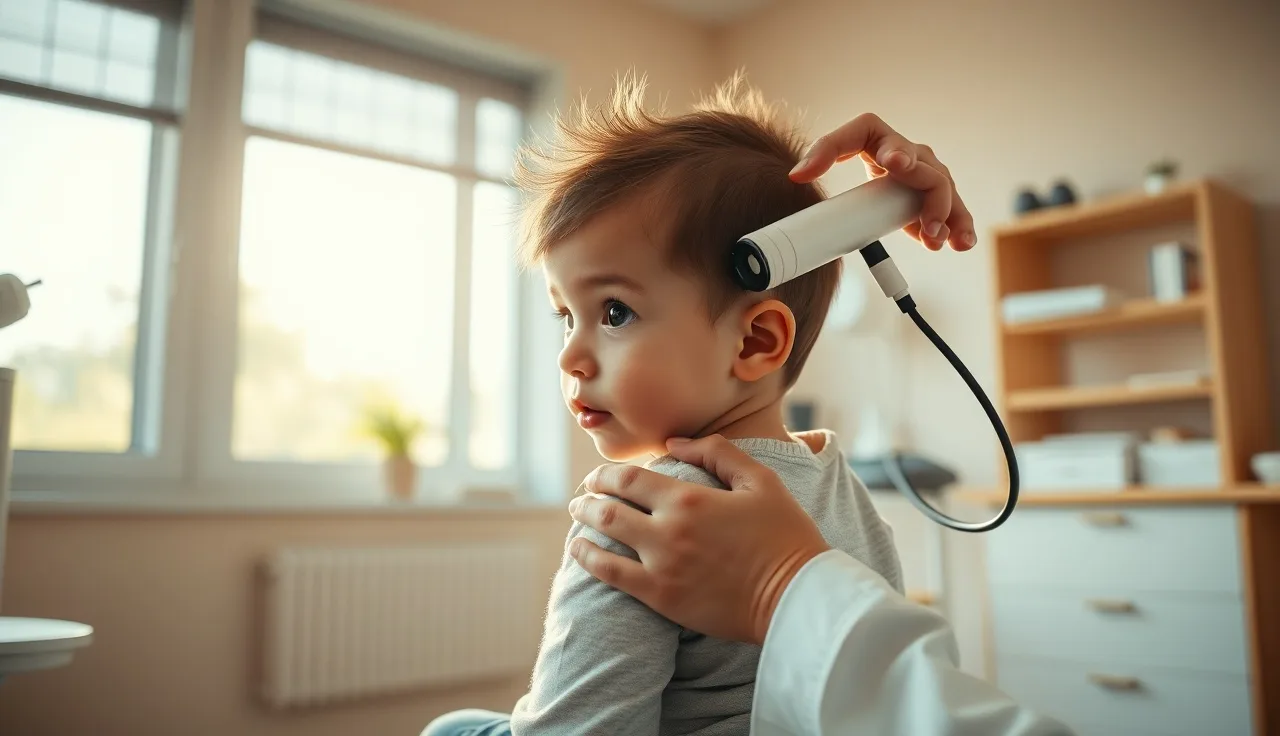
Diagnosis is usually clinical, meaning a trained dermatologist can identify it by looking at the scalp and the pattern of hair loss. A dermoscopy exam, where a handheld magnifying device shows the scalp's surface in detail, can confirm exclamation mark hairs and yellow dots at follicle openings, both hallmarks of active disease.
Skin biopsy is rarely needed in straightforward cases but becomes helpful when the diagnosis is uncertain. The biopsy in active alopecia areata shows a characteristic "swarm of bees" appearance: a dense cluster of lymphocytes surrounding the hair follicle bulb.
Blood work is not required to diagnose alopecia areata, but most pediatric dermatologists will check thyroid function (TSH and free T4) and screen for other autoimmune markers, since alopecia areata co-occurs with thyroid disease in about 8 to 28% of cases depending on the population studied [2]. A trichoscopy or hair pull test can also help quantify active shedding.
Parents sometimes bring children in having already searched the internet and convinced themselves the child has tinea capitis (scalp ringworm), trichotillomania (compulsive hair pulling), or androgenetic alopecia. The smooth, non-itchy patch with normal skin texture, plus nail findings, points away from all of those and toward alopecia areata. A pediatric dermatologist will sort through the differential in one visit.
What are the first-line treatments for mild to moderate childhood alopecia areata?
For most children with limited patchy disease, the first treatment tried is a topical or intralesional corticosteroid. These suppress the localized immune attack on the follicle long enough for hair to regrow.
Intralesional corticosteroid injections, usually triamcinolone acetonide at 5 to 10 mg/mL, are the standard first move in adults and in older cooperative children [1]. The injections go directly into the patch every 4 to 6 weeks. Regrowth often starts appearing within 4 to 8 weeks of the first round. The problem for young children is that the injections are painful and require the child to hold still. Most pediatric dermatologists won't use this approach routinely in children under 10 to 12 years old.
Topical corticosteroids are the practical alternative for younger children. High-potency preparations like clobetasol propionate 0.05% ointment or betamethasone dipropionate are applied daily to the patches. Response is slower than with injections, often 3 months before meaningful regrowth is visible. The risk of skin thinning or atrophy is real with prolonged use, so dermatologists typically cycle patients on and off these agents.
Topical minoxidil (2% or 5% solution or foam) is sometimes added alongside corticosteroids to stimulate follicle activity. Minoxidil is not an immunosuppressive agent, so it does not address the underlying cause, but it can help existing follicles come out of the resting phase faster. You can read more about how the drug works and its known downsides in our guide on minoxidil side effects. Minoxidil is not FDA-approved specifically for alopecia areata in children, so this is an off-label use.
Anthralin (dithranol) cream, applied as a short-contact irritant therapy, is another older option used in children. It works by creating low-grade skin irritation that modulates local immunity. It's messy, stains everything brown, and requires careful technique, but it avoids systemic exposure, which matters in pediatric patients.
For all these first-line treatments, the honest expectation is partial response in many children and full regrowth in some, but outcomes become less predictable when disease is extensive.
Are JAK inhibitors approved for children with alopecia areata?
Yes, and this is the biggest shift in treatment in decades. The FDA approved baricitinib (Olumiant) for adults with severe alopecia areata in June 2022 [4]. Then in July 2023, the FDA approved ritlecitinib (Litfulo) for patients aged 12 and older with severe alopecia areata, making it the first JAK inhibitor approval that explicitly covers adolescents [5].
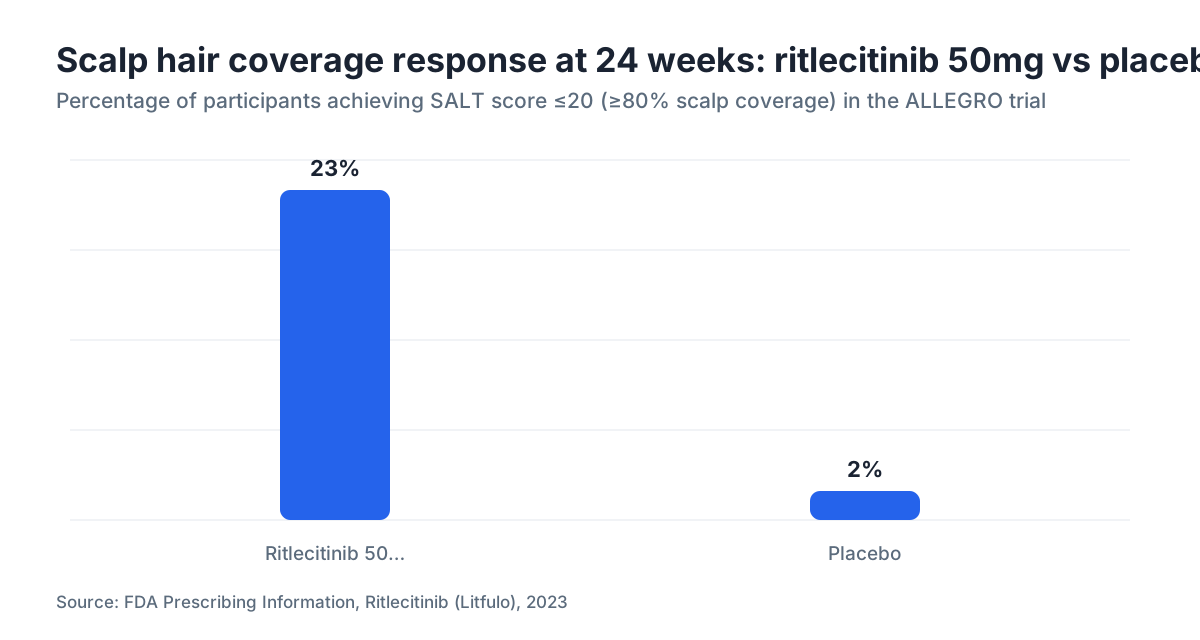
Ritlecitinib is an oral once-daily pill. In the main trial (ALLEGRO), about 23% of adolescent and adult participants taking 50 mg daily reached a SALT score of 20 or less (meaning at least 80% scalp hair coverage) at week 24, compared to roughly 2% on placebo [5]. That is a real, meaningful effect for a population with severe disease. Not everyone responds, and responses that do occur typically take 6 to 9 months to fully develop.
JAK inhibitors work by blocking the JAK-STAT signaling pathway that inflammatory cytokines use to drive the immune attack on follicles. The FDA label for ritlecitinib carries a boxed warning, the most serious category, covering risks of serious infections, malignancy, and cardiovascular events. The agency states: "Serious and sometimes fatal infections due to bacterial, mycobacterial, invasive fungal, viral, and other opportunistic pathogens have been reported" in patients taking JAK inhibitors [5]. These risks need an honest conversation between the family and the dermatologist before starting.
For children under 12, JAK inhibitors remain off-label. Upadacitinib and tofacitinib have been used off-label in severe pediatric cases, with case reports and small series showing meaningful regrowth in some children, but no large controlled trial in this age group exists as of mid-2025.
The cost of JAK inhibitors is significant: ritlecitinib lists around $48,000 per year before insurance. Manufacturer patient assistance programs exist, and insurance coverage is growing now that the indication is FDA-approved, but access is not uniform.
What other systemic treatments are used in severe pediatric alopecia areata?
Before JAK inhibitors, systemic (whole-body) treatments for severe childhood alopecia areata were used reluctantly because the side effect burden is real and the evidence for efficacy was modest.
Systemic corticosteroids, typically oral prednisolone or prednisone, can produce rapid regrowth in some children but the hair usually falls out again once the steroid is stopped. Long-term use causes growth suppression, weight gain, bone density loss, and other serious problems. Most pediatric dermatologists now use systemic steroids only as a short bridge or for acute, rapidly progressing disease.
Methotrexate, a folate antagonist that broadly suppresses the immune system, has been used in combination with low-dose oral corticosteroids in children with severe disease. A French cohort study found response rates of about 33 to 57% with methotrexate-based regimens in pediatric alopecia totalis and universalis, though relapse after stopping treatment was common [6]. It requires regular blood monitoring for liver toxicity.
Cyclosporine has been used in similar severe cases, again with modest response rates and significant kidney and blood pressure risks that limit long-term use.
Contact immunotherapy with diphenylcyclopropenone (DPCP) or squaric acid dibutyl ester (SADBE) is a different approach: a chemical is applied to the scalp to deliberately provoke an allergic reaction, which appears to redirect the immune response away from the follicle. Response rates in some series run 30 to 70%, but results vary widely. It requires specialized preparation and is used only in research or specialty dermatology centers [1].
The arrival of FDA-approved JAK inhibitors has changed how most pediatric dermatologists sequence these older systemic options. DPCP still has a role, particularly in centers with experience using it and in children under 12 where JAK inhibitors aren't labeled.
How long does treatment take and what does regrowth look like?
Expect a slow process. Most parents and children find the timeline the hardest part.
With intralesional corticosteroid injections, regrowth often starts within 4 to 8 weeks of the first session but full coverage of a patch takes several more months of repeat injections. Topical steroids take longer, often 3 to 6 months before you see convincing regrowth.
With ritlecitinib in the ALLEGRO trial, the median time to first response in responders was around 24 weeks, roughly 6 months [5]. Some patients kept improving through 48 weeks. This is not a quick fix.
Regrowth often comes in fine, white or lightly pigmented vellus hairs first. Those hairs usually transition to thicker, pigmented terminal hairs over the following weeks to months. Seeing fine white fuzz is a positive sign even if it does not look like much yet.
Relapse after stopping treatment is a genuine concern with every approach, JAK inhibitors included. The autoimmune disease doesn't go away with any current treatment. Maintenance dosing strategies are being studied but no firm consensus exists yet.
Tracking progress systematically matters. The SALT score (Severity of Alopecia Tool) is the standard measure: it quantifies the percentage of scalp hair loss. A SALT score of 100 is complete scalp hair loss; a score of 0 is no loss. Dermatologists use this at each visit to document whether a treatment is working, which removes some of the guesswork from a process that otherwise feels subjective.
Photographing the scalp under consistent lighting at home between appointments gives parents and clinicians a more objective picture than memory alone.
What does the evidence say about psychological support for children with alopecia areata?
Treating only the scalp while ignoring the emotional impact is incomplete medicine. Full stop.
Research consistently shows that children with alopecia areata have higher rates of anxiety, depression, and social withdrawal than healthy peers, with some studies finding clinically significant anxiety in 40% or more of affected children [3]. School-age children are especially vulnerable because teasing and social comparison are intense at that age.
Cognitive behavioral therapy (CBT) has the strongest evidence among psychological interventions for chronic dermatological conditions in children. A referral to a child psychologist or therapist experienced in chronic illness is worth pursuing alongside dermatological treatment, not as a last resort.
Support groups, both in person and online, matter too. The National Alopecia Areata Foundation (NAAF) runs family conferences and maintains resources specifically for children and teenagers [10]. Connecting families with others facing the same diagnosis reduces isolation and often helps parents feel less helpless.
School intervention is underused. Dermatologists can write letters to schools explaining the condition and recommending that staff address teasing. Some families provide age-appropriate classroom education so peers understand the child is not contagious and the hair loss is not the child's fault.
For adolescents, cosmetic options like wigs, scalp micropigmentation, and eyebrow makeup improve quality of life and sense of control while medical treatment has time to work. These are not giving up. They are managing the present.
Are there treatments parents should avoid or be skeptical of?
Yes. And this is where spending a lot of money without evidence becomes a real risk.
Biotin supplements are marketed heavily for hair loss. There is no controlled evidence that biotin supplementation produces regrowth in alopecia areata. The FDA has also warned that high biotin intake interferes with thyroid and cardiac lab tests, which matters especially in a population already being screened for thyroid disease [7]. You can read more about hair loss supplements generally to understand where evidence exists and where it does not.
Essential oils, onion juice, garlic rubs, and similar topical remedies appear in countless forums. One small study of onion juice showed some benefit, but the control group was tap water, the sample size was tiny, and it has not been replicated in a rigorous trial. Spending money and effort on these is unlikely to help and delays seeking care that has actual evidence behind it.
PRP (platelet-rich plasma) therapy is used off-label for alopecia areata. Some small studies suggest benefit, but no large randomized controlled trial in pediatric patients exists as of mid-2025. It is not unreasonable to discuss with a dermatologist, but it should not replace established first-line treatment.
Hair transplants are not appropriate for alopecia areata. Because the underlying autoimmune disease remains active, transplanted follicles are subject to the same immune attack as native follicles. Hair transplant surgery is reserved for permanent, stable hair loss, not autoimmune disease.
Finasteride and DHT blockers have no mechanism relevant to alopecia areata. Alopecia areata is not androgenetic and is not driven by DHT. Finasteride or DHT blocker approaches belong in a completely different disease context.
How do treatment decisions change based on the child's age and disease severity?
Age and disease extent are the two biggest variables in deciding what to recommend.
| Patient group | Preferred first-line options | Second-line or adjunct |
|---|---|---|
| Child under 10, limited patches | Topical steroids, topical minoxidil | Anthralin, watchful waiting |
| Child 10-12, moderate disease | Topical steroids, intralesional steroids if cooperative | DPCP at specialty center |
| Adolescent 12+, severe (SALT >50) | Ritlecitinib (FDA-approved), baricitinib | Methotrexate, DPCP |
| Any age, rapidly progressing | Short-course systemic steroid as bridge, then step up | Refer to pediatric dermatology |
For limited disease in young children, watchful waiting with topical treatment is genuinely reasonable, because spontaneous remission rates are meaningful. The calculus changes when disease exceeds 50% of scalp or when it is affecting the child's mental health significantly.
Severity of psychological impact should be treated as a clinical variable, not a soft consideration. A child with 20% scalp involvement who is refusing to go to school has more urgency in treatment escalation than a child with 30% involvement who is coping well.
There is no one-size answer. A good pediatric dermatologist is not running through a fixed algorithm. They are weighing efficacy, safety, the child's ability to cooperate with a treatment, the family's capacity to administer it consistently, and how the disease is moving over time.
What monitoring does a child on alopecia areata treatment need?
Monitoring requirements depend heavily on the treatment being used.
For topical corticosteroids, the main concern is skin atrophy at application sites and suppression of the body's own cortisol production with very potent agents used over large surface areas for extended periods. A dermatologist will look at the treated skin at each visit and may recommend periodic breaks.
For systemic corticosteroids, blood pressure, blood glucose, weight, and growth charts need regular tracking. Even short courses can affect bone density.
For methotrexate, liver function tests and a complete blood count every 4 to 8 weeks during dose escalation, then every 8 to 12 weeks at stable dosing, are standard. Folic acid supplementation is given alongside it to reduce side effects.
For ritlecitinib and other JAK inhibitors, the FDA label specifies laboratory testing before starting and periodically during treatment, including CBC, lipid levels, liver enzymes, and a tuberculosis screen [5]. Because of the boxed warning around infections, children should be up to date on vaccinations before starting. Live vaccines should not be given while on a JAK inhibitor.
At every visit, SALT scoring documents whether the treatment is working. If there is no improvement after an adequate trial period, typically 3 to 6 months for topical agents or 6 to 9 months for oral JAK inhibitors, switching or adding another agent is the right call rather than continuing a failing approach indefinitely.
If you are tracking a child's progression and want a baseline documented, the free AI hair analysis tool at MyHairline (/scan) can give a structured starting point to share with a dermatologist, though it does not replace clinical diagnosis.
What is the long-term outlook for a child with alopecia areata?
Honest answer: it varies enormously, and anyone who gives you a confident prognosis for an individual child without knowing their full picture is overpromising.
For children with one or two small patches and no other risk factors, the outlook is genuinely good. Spontaneous regrowth within 12 months happens in roughly 50% of those with limited disease, and most who respond to treatment keep some benefit [1]. Many have one or a few episodes and never develop severe disease.
The prognostic factors that predict a harder course include: onset before age 5, ophiasis pattern, family history of alopecia areata, presence of other autoimmune conditions, nail involvement, and extensive disease from the start. Children with alopecia totalis or universalis have a significantly lower probability of complete regrowth, and most dermatologists will tell families that honestly rather than overpromise.
Even with ritlecitinib, the current best systemic option for adolescents, fewer than a quarter of trial participants reached 80% or more scalp coverage at 24 weeks. Treatment can help substantially even if it does not restore every hair.
The disease can wax and wane across a lifetime. A child who recovers fully can have a relapse years later, triggered by illness, stress, or nothing identifiable. Living with that unpredictability is part of managing alopecia areata, which is another reason psychological support belongs alongside medical treatment.
Research into alopecia areata has accelerated dramatically since 2015. New JAK inhibitors, biologics targeting specific cytokines, and combination strategies are in clinical trials. The pipeline looks more promising now than at any prior point. Staying connected to a pediatric dermatologist who follows the literature means a child can access new options as they become available.
For families doing their own research, the MyHairline AI scan (/scan) can help categorize what kind of hair loss a child appears to have before the first dermatology appointment, though all findings should be reviewed by a physician.
Sources
- American Academy of Dermatology, Alopecia Areata: Diagnosis and Treatment
- Olsen EA et al., Journal of the American Academy of Dermatology, Alopecia Areata Investigational Assessment Guidelines
- Bilgic O et al., Pediatric Dermatology, Psychiatric comorbidities in pediatric alopecia areata
- FDA Drug Approvals, Baricitinib (Olumiant) for alopecia areata, June 2022
- FDA Drug Approvals and Prescribing Information, Ritlecitinib (Litfulo), July 2023
- Royer M et al., Annals of Dermatology and Venereology, Methotrexate in childhood alopecia totalis and universalis
- FDA Safety Communication, Biotin interference with laboratory tests
- National Institutes of Health, MedlinePlus, Alopecia Areata
- ClinicalTrials.gov, NIH National Library of Medicine
- National Alopecia Areata Foundation (NAAF), Patient Resources
- Xing L et al., Nature Medicine, JAK-STAT signaling pathway in alopecia areata and ruxolitinib reversal of hair loss
- AAD Clinical Guidelines, Alopecia Areata 2023 Update