

TL;DR: The only home treatment with strong clinical evidence for female hair loss is topical minoxidil 2%, which the FDA approved for women in 1991. A few others (rosemary oil, scalp massage, and correcting iron or vitamin D deficiency) have modest data. Most popular remedies have no controlled trials at all. None cure hair loss; they slow it or partly reverse it.
Why do women lose hair, and does the cause change what home treatment works?
The cause changes everything. Female hair loss is not one condition, so a remedy that helps one type does nothing for another. The most common type is female pattern hair loss (androgenetic alopecia), which affects roughly 40% of women by age 50 [1]. Telogen effluvium is temporary shedding triggered by stress, illness, childbirth, or a crash diet. Alopecia areata is autoimmune. Iron-deficiency anemia, thyroid disorders, and polycystic ovary syndrome all trigger shedding as a side effect of something else.
If you are shedding from iron deficiency, fixing your ferritin is the treatment. No scalp oil touches that. If you have androgenetic alopecia, you need something that either blocks androgens or stimulates follicles directly. Home remedies fit some causes and completely miss others.
Start by figuring out which type you have before you spend a dollar. A board-certified dermatologist can usually tell from a pull test, a scalp exam, and basic bloodwork. The American Academy of Dermatology recommends this workup before starting any treatment [2]. For a faster first look, the free AI hair scan at MyHairline can help you spot your pattern and flag whether you need a professional evaluation.
More on the root causes lives in our overview of what causes hair loss and in the piece on temporary shedding, telogen effluvium.
What is the single most effective female hair loss treatment you can do at home?
Topical minoxidil. That is the answer, and nothing else comes close.
The FDA approved 2% topical minoxidil specifically for women with androgenetic alopecia in 1991 [3]. It is the only over-the-counter treatment carrying that designation. The 5% foam gets used off-label in women too (the label says men, but dermatologists routinely recommend it at lower frequency, usually once daily instead of twice). A 48-week randomized controlled trial in the Journal of the American Academy of Dermatology found 2% minoxidil produced statistically significant increases in total hair count over placebo in women [4].
Minoxidil widens the blood vessels around follicles and stretches out the anagen (growth) phase. It does not block DHT. It will not regrow hair that vanished years ago. It holds onto what you still have and thickens it a little.
Here is the catch: you use it forever. Stop, and any regrowth sheds within a few months. That is not a minoxidil quirk. Every treatment that works for pattern hair loss works only while you keep using it.
Side effects worth knowing before you start: an initial shed in the first four to eight weeks (normal, follicles cycling), scalp irritation, and rarely unwanted facial hair if the liquid drips down. The foam has less alcohol and less drip. See our full breakdown of minoxidil side effects before you commit.
Does rosemary oil actually work for female hair loss?
It might, and the evidence is thin but real, which puts rosemary oil ahead of nearly every other herbal remedy.
A 2015 randomized controlled trial in Skinmed compared rosemary oil to 2% minoxidil over six months in people with androgenetic alopecia. Both groups showed similar hair count increases at six months, and rosemary oil caused less scalp itching [5]. The sample was small (100 participants) and there was no placebo group, which matters a lot. No larger follow-up trial has been published as of mid-2026.
How it might work: rosemary's active compound, carnosic acid, appears to stimulate nerve growth factor and improve scalp circulation. The exact mechanism in humans is not confirmed.
To try it, the study protocol used rosemary oil diluted in a carrier oil, massaged into the scalp twice daily for six months. Never apply undiluted essential oils to your scalp. Common carriers are jojoba (lightweight, non-comedogenic) or coconut oil. A 2% dilution is roughly four drops per teaspoon of carrier.
Expect nothing dramatic. At best, rosemary oil is a low-risk option that may slow loss a little. At worst, your scalp smells nice and nothing else happens.
Can scalp massage actually regrow hair?
One small study found a real effect, so this deserves a look even though the evidence is preliminary. A 2016 Japanese study in ePlasty had nine healthy men do standardized scalp massage for four minutes a day for 24 weeks. Hair thickness (not count) increased significantly, and the researchers suggested mechanical stretching stimulates dermal papilla cells [6]. The study was tiny, used healthy men rather than women with hair loss, and measured thickness instead of regrowth. Nobody has repeated it at scale.
The case for doing it anyway: it improves blood flow, it costs nothing, and it stacks well with minoxidil (massaging after you apply may help absorption). Four minutes a day. The risk is basically zero as long as you skip the aggressive scratching.
Electric scalp massagers sell well, but no clinical data shows they beat your own fingers. Skip them unless you just like the feeling.
Which nutritional deficiencies cause female hair loss, and how do you fix them at home?
Iron is the big one for women. Low ferritin is strongly linked to telogen effluvium and possibly to androgenetic alopecia in women, though the exact cutoff is argued over. Most dermatologists aim for serum ferritin above 40 ng/mL for hair health, and you will see thresholds anywhere from 30 to 70 ng/mL across papers [7]. Fix a genuine deficiency through diet or supplementation (with a doctor guiding the dose) and shedding often drops sharply within three to six months.
Vitamin D deficiency has been tied to alopecia areata and telogen effluvium in observational studies, though causation is unproven [12]. Zinc deficiency can cause hair loss and is easy to supplement, but too much zinc (above 40 mg a day) can itself cause hair loss by blocking copper absorption [12]. Biotin deficiency is real but rare. Most people eating a varied diet have plenty of biotin, and there is no good evidence that biotin pills help anyone with normal levels [8].
Get bloodwork before you buy a single supplement. Iron, ferritin, vitamin D, TSH (thyroid), and a complete blood count make a useful starting panel. Treating a real deficiency is one of the highest-return things you can do for your hair. Supplementing nutrients you already have enough of is mostly expensive urine.
For a wider look at supplements that hold up, see our guide on hair loss supplements.
How does evidence compare across popular female hair loss home remedies?
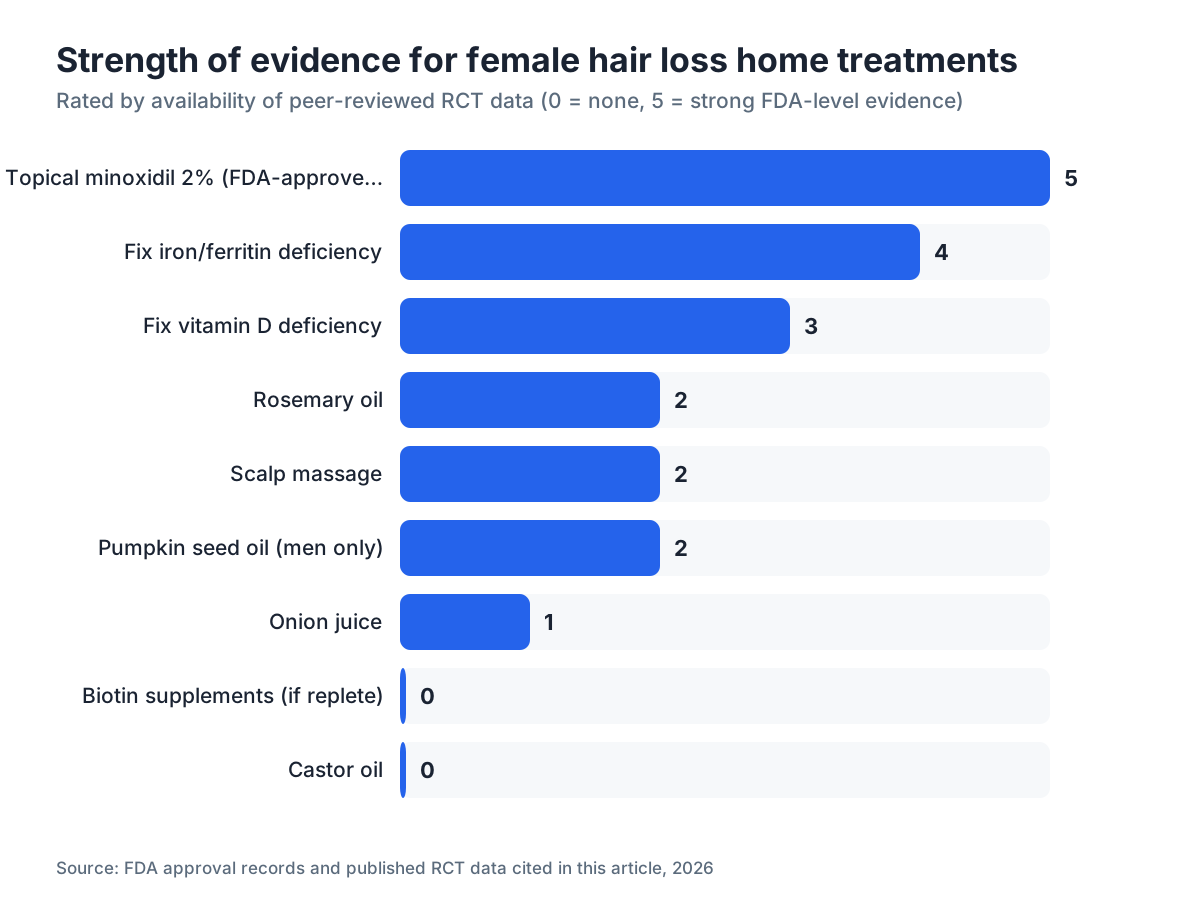
Here is an honest comparison across the options people ask about most. The evidence tiers reflect what actually exists in peer-reviewed literature as of mid-2026.
| Treatment | Evidence tier | Mechanism | Notes |
|---|---|---|---|
| Topical minoxidil 2% | Strong (FDA-approved RCT data) | Vasodilation, prolongs anagen | Must use indefinitely; OTC |
| Rosemary oil | Weak (1 small RCT) | Possible nerve growth factor stimulation | No placebo arm; low risk |
| Scalp massage | Very weak (1 tiny study, healthy men) | Mechanical follicle stimulation | Free; stacks with minoxidil |
| Fix iron/ferritin deficiency | Strong for telogen effluvium | Removes a root cause | Only works if you are deficient |
| Fix vitamin D deficiency | Moderate (observational) | Unclear | Only works if you are deficient |
| Onion juice | Very weak (1 small unblinded study) | Possibly sulfur or antimicrobial | Smells; hard to stay compliant |
| Castor oil | Anecdotal only | No plausible mechanism established | No clinical data |
| Biotin supplements | No evidence unless deficient | Cofactor in keratin synthesis | Deficiency is rare |
| Pumpkin seed oil | 1 small RCT (men only) | Possible 5-alpha reductase inhibition | Not studied in women |
The gap between topical minoxidil and everything under it is wide. Every row below minoxidil is either low-quality evidence or no evidence at all. That does not make those options dangerous. It means you should not swap them in for minoxidil if you have androgenetic alopecia.
Are there any natural DHT blockers women can use at home?
DHT (dihydrotestosterone) drives androgenetic alopecia by shrinking follicles in genetically susceptible scalps. In men, finasteride and dutasteride block DHT hard. Women are a different story.
Finasteride is not FDA-approved for women and is contraindicated in women who are or may become pregnant, because of the risk of feminizing a male fetus [9]. Some dermatologists prescribe it off-label to post-menopausal women, but it is a prescription drug, not a home remedy. Read more about finasteride if you want to understand whether it fits your situation.
Natural compounds with mild 5-alpha reductase activity include saw palmetto, pumpkin seed oil, and green tea extract (EGCG). The evidence in women is close to nothing. The one solid pumpkin seed oil RCT was in men only [10]. Saw palmetto has a handful of small studies, again mostly in men, with mixed results.
Spironolactone, an antiandrogen, gets prescribed off-label for premenopausal women with androgenetic alopecia. It is not a home remedy either. It needs a prescription and monitoring.
If you want the full picture of DHT blockers, that article covers both prescription options and what the herbal alternatives actually show in trials.
How long does it take to see results from home hair loss treatments?
Minoxidil is slow. Most people hit peak results at 12 months of steady use. The first four to eight weeks often bring more shedding, which scares people into quitting. That early shed is existing hairs cycling out as new growth pushes in. It means the product is working, not failing.
Hair grows roughly 0.35 mm a day, about half an inch a month [11]. Even if a treatment wakes up dormant follicles, you will not see those hairs at the surface for weeks. Density improvements become visible around four to six months. Photos in consistent lighting are the most reliable way to track change, because you will never notice gradual improvement in the bathroom mirror.
For nutritional corrections, shedding often slows within three months of fixing a deficiency, but regrowth takes six to twelve.
For rosemary oil, the single published trial used six months as its endpoint. Treat that as the minimum fair trial.
Do not judge any hair loss treatment before six months. Quitting early because you see nothing yet is the most common mistake people make.
What home habits make female hair loss worse?
Tight hairstyles (braids, ponytails, and extensions worn day after day) cause traction alopecia, a mechanical loss that starts reversible and turns permanent if the tension keeps up for years [2]. It is entirely preventable and almost universally ignored until real damage shows.
Heat styling does not cause follicle-level hair loss, but it causes breakage, which reads as thinning. High heat (above 365 degrees Fahrenheit) breaks down the protein structure of the hair shaft. Dryers, flat irons, and curling wands on their hottest settings pile up damage that makes existing thinning look far worse.
Crash dieting and very low calorie intake reliably trigger telogen effluvium. The follicle is one of the most metabolically demanding structures in the body. Cut calories hard and your body pulls resources away from non-essential tissue. Hair is non-essential. The shedding usually starts two to four months after the restriction and can run for months. If you have searched this, our article on does creatine cause hair loss covers how exercise and diet supplements cross paths with shedding.
High psychological stress raises cortisol, which can push follicles into their resting phase. The mechanism is real, but stress advice is genuinely hard to act on. The one useful thing to know: if a high-stress event landed six to nine months before your shedding started, that timeline fits telogen effluvium, and the shedding will likely settle on its own.
When should a woman stop relying on home remedies and see a dermatologist?
Go immediately if any of these apply: you are losing hair in patches (possible alopecia areata, which needs a completely different treatment), your hairline is receding at the temples (may point to frontal fibrosing alopecia, which can scar permanently if untreated), or you have real scalp inflammation, scaling, or pain.
For diffuse shedding or slow thinning, a reasonable plan is simple: get basic bloodwork, start 2% minoxidil if you have no contraindications, and give it six months. No improvement after six months of consistent use? That is your cue to see a board-certified dermatologist (look for FAAD credentials, or a fellowship-trained hair specialist). A dermatologist can perform a scalp biopsy, the definitive tool for telling one type of hair loss from another.
Platelet-rich plasma (PRP) therapy, prescription-strength treatments, and low-level laser therapy all sit well beyond what you can do at home, and a dermatologist can offer them. For women weighing more aggressive options, our hair transplant piece lays out the criteria, costs, and realistic outcomes.
MyHairline's free AI scan is one way to get an initial read on your pattern and urgency before you book an appointment.
What is the best routine combining home remedies for female hair loss?
Want the strongest evidence-based home routine? Here is how to stack it.
First, deal with root causes. Get bloodwork. If ferritin is below 40, fix iron. If vitamin D is below 30 ng/mL, supplement. These do not grow hair directly. They clear obstacles so the rest of your routine can work.
Second, start topical minoxidil 2% once or twice daily (follow the label). This is your anchor. Everything else is a side dish.
Third, add four minutes of scalp massage after you apply minoxidil. It costs nothing, the mechanical stimulation idea is at least plausible, and massaging spreads the minoxidil more evenly across your scalp.
Fourth, if you want rosemary oil in the mix, use it on your minoxidil-off days, or wait 30 minutes after the minoxidil dries. Piling oils on at once can dilute minoxidil and cut absorption.
Fifth, strip out the habits that hurt: loosen your hairstyles, cut back on heat styling, and eat enough protein (roughly 0.8 grams per kilogram of body weight as a floor, more if you train hard).
The honest ceiling on all of this: for significant androgenetic alopecia, home remedies maintain and slightly improve. They will not match what prescription options like oral minoxidil or spironolactone deliver. See our article on oral minoxidil for that route, and the combination piece on finasteride and minoxidil if you are looking at what a dermatologist might offer.
Sources
- American Academy of Dermatology, Hair Loss in Women
- American Academy of Dermatology, Hairstyles That Pull Can Lead to Hair Loss
- FDA, Drugs@FDA database, Rogaine 2% for Women label
- DeVillez RL et al., Journal of the American Academy of Dermatology, 1994, Androgenetic alopecia in the female: treatment with 2% topical minoxidil solution
- Panahi Y et al., Skinmed, 2015, Rosemary oil vs minoxidil 2% for the treatment of androgenetic alopecia
- Koyama T et al., ePlasty, 2016, Standardized Scalp Massage Results in Increased Hair Thickness
- Rushton DH, Clinical and Experimental Dermatology, 2002, Nutritional factors and hair loss
- National Institutes of Health Office of Dietary Supplements, Biotin Fact Sheet
- FDA, Propecia (finasteride) label, contraindications in women of childbearing potential
- Cho YH et al., Evidence-Based Complementary and Alternative Medicine, 2014, Pumpkin seed oil for hair growth in men
- Loussouarn G et al., International Journal of Cosmetic Science, 2005, Human hair growth rate
- Almohanna HM et al., Dermatology and Therapy, 2019, The Role of Vitamins and Minerals in Hair Loss