TL;DR: Finasteride is FDA-approved only for men but is prescribed off-label to women for hair loss, mostly postmenopausal women with androgenetic alopecia. Trials show modest to moderate regrowth at 1 to 2.5 mg daily. It is absolutely contraindicated in women who are pregnant or could become pregnant because it causes genital abnormalities in a male fetus. Side effects in women differ from men and get underreported.
What is finasteride and how does it work for hair loss?
Finasteride is a 5-alpha reductase inhibitor. It blocks the enzyme that converts testosterone into dihydrotestosterone (DHT), the androgen most responsible for shrinking hair follicles in people with androgenetic alopecia. Less DHT means follicles stay in the growth phase longer and shed less. That is the whole mechanism, and it works the same way in men and women.
The FDA approved finasteride at 1 mg (brand name Propecia) for male-pattern hair loss in 1997 and at 5 mg (Proscar) for benign prostatic hyperplasia in men in 1992 [1][8]. Neither approval covers women. When a dermatologist prescribes it to a female patient, that is off-label use. It is legal and common in medicine, but it means the prescriber is working from trial data rather than a labeled indication.
Want the fuller picture on how DHT drives follicle miniaturization? The dht blocker article covers the mechanism in more depth. And if you are still piecing together why your hair is thinning, what causes hair loss is the place to start before you decide whether finasteride is even the right category of treatment for you.
Is finasteride approved for women by the FDA?
No. The FDA has not approved finasteride for any use in women. The labeling for both Propecia (1 mg) and Proscar (5 mg) states the drug is "for use in men only" [1]. The label also carries a specific contraindication: finasteride must not be used by women who are pregnant or may become pregnant, because it can cause abnormalities of the external genitalia of a male fetus.
Off-label prescribing is legal and routine, though. Dermatologists and gynecologists prescribe finasteride to women, mostly postmenopausal women, based on a growing set of trial data. The American Academy of Dermatology guidelines on female-pattern hair loss list finasteride as an option for postmenopausal women, noting that evidence supports its use in this group even without an FDA indication [2].
The distinction has a practical edge. Insurance rarely covers off-label drugs, so most women pay out of pocket. Generic finasteride 1 mg runs roughly $15 to $40 a month without insurance, depending on the pharmacy and dose. That is the real cost most women face.
Does finasteride actually work for female hair loss?
Here is the honest answer. It helps a meaningful share of women, postmenopausal women most of all, but the evidence base is thinner than it is for men.
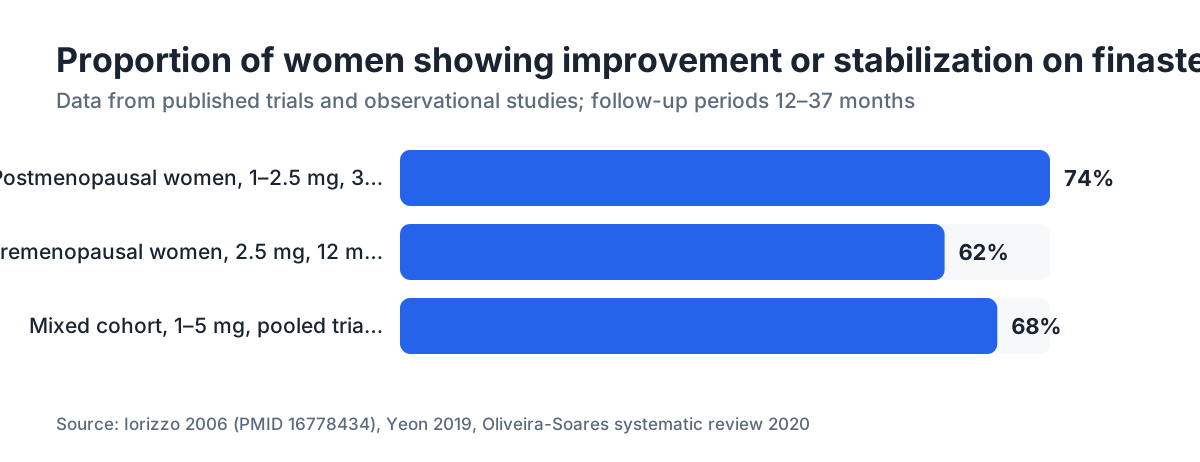
A randomized controlled trial in the Journal of the American Academy of Dermatology followed postmenopausal women with androgenetic alopecia over 12 months. Women taking 1 mg finasteride daily showed significantly greater increases in total hair count than placebo [3]. A separate open-label study using 2.5 mg daily found that roughly 62% of premenopausal women on strict contraception improved or stabilized after one year [4].
A 2020 systematic review in the Journal of Dermatological Treatment pooled data from multiple trials. It concluded that finasteride at 1 mg to 5 mg per day produced statistically significant improvements in hair density in women with androgenetic alopecia, with higher doses trending toward modestly better outcomes [5].
What does "improvement" mean in practice? Usually stabilization plus partial regrowth, not full restoration. Fewer hairs in the shower drain. A part that widens slower. Some regrowth at the hairline and crown. Complete reversal is rare, and finasteride will not regrow hair from follicles that have already miniaturized and scarred over.
If your loss includes frontal recession, see how that fits the bigger picture on the receding hairline page. And if you want the combined approach many dermatologists use, finasteride and minoxidil covers why those two get paired.
What dose of finasteride do doctors prescribe to women?
There is no FDA-labeled dose for women, so practice varies. Most prescribers use 1 mg or 2.5 mg daily for hair loss. Some go to 5 mg daily for cases that did not respond at lower doses, though that is less common.
The case for 2.5 mg over 1 mg comes from a few head-to-head comparisons showing modestly greater DHT suppression without a matching jump in side effects. Nobody has run a large, well-powered trial pitting 1 mg against 2.5 mg in women specifically, so the choice is partly a judgment call. Many dermatologists start at 1 mg and step up only if there is no response after 12 months.
Results come slow. Most women see no meaningful change before 6 months, and peak effect usually lands around 12 to 18 months of consistent daily use. Stop the drug and the benefit reverses within 6 to 12 months as DHT levels normalize and miniaturization resumes.
For context, finasteride covers dosing in men, which helps explain why women's dosing gets handled differently.
What are the side effects of finasteride in women?
Finasteride side effects in women are not the same as in men, and the published safety data in women is genuinely thinner. Here is what the evidence and clinical practice show.
Reported side effects in women:
Sexual side effects happen in women too. Decreased libido and reduced vaginal lubrication are the most commonly reported, affecting somewhere between 5% and 15% of women in observational studies, though the rate swings widely depending on how carefully the study asked [4][5]. These are underreported because many trials relied on spontaneous adverse event reporting instead of validated questionnaires.
Mood changes, including low mood and emotional blunting, have been reported. The same post-finasteride syndrome controversy that runs through men's data applies here, though female-specific long-term data is thin.
Menstrual irregularities show up anecdotally and in small case series. Causation versus coincidence is hard to pin down in reproductive-age women.
Liver enzyme elevations are rare but documented with 5-alpha reductase inhibitors.
Headache and dizziness appear in a small share of women in trial data.
Breast tenderness has been reported, though rates are low.
The teratogenicity risk is the non-negotiable one. Finasteride is a Category X drug in pregnancy. Even handling crushed tablets is listed as a risk in the FDA label, because the drug absorbs through skin [1]. Any woman with any chance of becoming pregnant should not take finasteride. Full stop. Most prescribers require documented contraception or confirmed menopause first.
For how minoxidil's side effect profile compares, since it is the usual first-line alternative, see minoxidil side effects.
How do finasteride side effects in women compare to men?
The profiles overlap but differ in ways that matter. The table below lays out the key differences based on trial and label data.
| Side effect | Men | Women (postmenopausal) | Women (premenopausal) |
|---|---|---|---|
| Sexual dysfunction | ~2 to 4% in trials; higher in real-world reports | 5 to 15% (libido, lubrication) | Similar; compounded by hormonal variability |
| Gynecomastia | Rare (~0.4%) | N/A | N/A |
| Mood/depression | Reported; debated | Reported; undercharacterized | Undercharacterized |
| Teratogenicity | N/A | N/A (postmenopausal) | Absolute contraindication |
| PSA suppression | Clinically significant (reduces PSA ~50%) | N/A | N/A |
| Menstrual changes | N/A | N/A | Reported anecdotally |
The sexual side effect burden in women may be clinically underappreciated. A 2020 review in the Journal of Dermatological Treatment noted that most female-focused finasteride trials used spontaneous reporting rather than validated sexual function questionnaires, which likely undercounts problems [5]. That is an honest limit of the data.
Men carry their own complex side effect picture. For that full breakdown, the finasteride overview covers the post-finasteride syndrome debate and what the long-term data shows.
How can you reduce the side effects of finasteride?
Knowing how to cut side effects matters, because many women quit within the first year over effects they were not warned about.
Start low and go slow. Beginning at 1 mg rather than 2.5 mg gives you a baseline to judge tolerability before you increase. Some women alternate days at first, though daily dosing is what the trial data supports.
Time the dose the same way every day. Consistent timing smooths out peak-and-trough swings. Some practitioners suggest taking it at night so any mild dizziness or mood effects happen during sleep.
Give it at least 3 months before you judge tolerability. Some side effects, mild headaches especially, ease off as your body adjusts over the first 6 to 12 weeks.
Report sexual side effects early. If decreased libido or vaginal dryness is hurting your quality of life, tell your prescriber at the 3-month mark, not after a year. A dose reduction or a switch to compounded topical finasteride, which has lower systemic absorption, may help. A 2022 study found topical finasteride reduced systemic DHT suppression compared to oral dosing while still working at the scalp [6], which matters for women sensitive to systemic effects.
Monitor labs if your prescriber recommends it. Some dermatologists check liver function and hormone levels at baseline and 6 months, especially in premenopausal women.
Do not stop and restart over and over. Cycling on and off does not prevent side effects, and it does prevent you from ever learning whether the drug is working.
Who is a good candidate for finasteride, and who should avoid it?
Postmenopausal women with confirmed androgenetic alopecia are the clearest candidates. The teratogenicity risk is gone, the hormonal swings of the menstrual cycle are gone, and the evidence of benefit in this group is the most consistent.
Premenopausal women with androgenetic alopecia can be candidates if they use reliable contraception (the prescribing dermatologist should document this) and have had hyperandrogenism evaluated and addressed. Some women with polycystic ovary syndrome-related hair loss and elevated androgens respond well, though spironolactone often wins here because it has a longer track record in women of reproductive age.
Women who should not take finasteride:
- Anyone pregnant or planning pregnancy in the foreseeable future.
- Anyone unwilling or unable to use reliable contraception.
- Women with active liver disease (finasteride is metabolized in the liver).
- Women whose loss pattern points to something other than androgenetic alopecia (alopecia areata, telogen effluvium, scarring alopecias). Finasteride does nothing for those. See telogen effluvium if diffuse shedding with normal density is your pattern, because that is a different problem entirely.
Diagnosis matters here. A dermatologist should examine your scalp, likely run a trichoscopy or pull test, and sometimes order blood work (ferritin, thyroid, androgens) before landing on androgenetic alopecia. Treating the wrong type of hair loss with finasteride wastes time and hands you side effects for no benefit.
Not sure whether your pattern fits androgenetic alopecia? MyHairline's free AI scan at myhairline.ai/scan can help you characterize it before a dermatology appointment, which makes that conversation shorter and sharper.
How does finasteride compare to other hair loss treatments for women?
Women have fewer FDA-approved options than men for androgenetic alopecia. Here is the practical comparison.
Minoxidil (topical and oral): The only FDA-approved topical treatment for female-pattern hair loss (2% and 5% solutions), and a 2017 meta-analysis rated it the strongest evidence base among female-pattern treatments [1][10]. Lower barrier to use, no teratogenicity concern at topical doses, works by a different mechanism (prolonging anagen, improving follicle blood supply). Many dermatologists start here before finasteride. Oral minoxidil at 0.25 to 2.5 mg is used off-label and covered on the oral minoxidil page.
Spironolactone: An anti-androgen prescribed often to premenopausal women with androgenetic alopecia or PCOS-related loss. Also off-label for hair loss, also contraindicated in pregnancy. Probably the most common off-label hair loss drug for reproductive-age women in the US, partly because many gynecologists and endocrinologists are comfortable with it.
Combination finasteride + minoxidil: Several studies show additive benefit. If you are getting only a partial response on one drug, adding the other is a reasonable next step most dermatologists would consider.
Hair transplant: A surgical option for women with stable androgenetic alopecia and enough donor density. Not first line, but worth understanding as a longer-term consideration. The hair transplant article covers who is and is not a good candidate.
Supplements and topicals: Hair loss supplements is worth reading because the evidence for most is weak. A few (biotin for biotin deficiency, iron for iron-deficient women) have real data behind them.
What does the research actually show about long-term use?
Long-term data in women is sparse next to men. The best male data runs 5 to 10 years, with consistent benefit and side effect rates staying fairly stable. For women, most published trials run 12 months, with a handful reaching 24 to 36 months.
A 2019 retrospective study of 84 postmenopausal women using finasteride 1 mg or 2.5 mg for a mean of 3.1 years found that 74% maintained or improved hair density at last follow-up, with no new safety signals beyond what showed up in year one [7]. Encouraging, but the sample is small and the study was retrospective.
What is fairly well established: benefit is maintenance-dependent. Stopping finasteride after 2 years of good response does not buy you 2 years of protected growth going forward. DHT levels normalize within weeks of stopping, and miniaturization resumes. Most women who respond and tolerate it stay on it indefinitely.
Nobody has good data on what happens to women who take finasteride for 10-plus years. The closest signal comes from men, where there is no consistent evidence of cumulative harm beyond the known side effects. The female-specific long-term picture is genuinely unknown.
What should you tell your doctor before starting finasteride?
Go in with your full picture. Tell your doctor:
Your contraceptive status and whether you are pre- or postmenopausal. This is the single most important piece of information for safe prescribing.
Any medications you take that could interact. Finasteride is metabolized by CYP3A4 enzymes, so strong inhibitors or inducers of that pathway can shift drug levels, though clinically significant interactions are uncommon at 1 to 2.5 mg doses.
Your liver history. If you have had liver disease, your prescriber may want baseline liver function tests before you start.
Your sexual function at baseline. Documenting it before you start makes any change interpretable. This one is easy to skip and worth insisting on, because female sexual complaints on finasteride get underreported partly because no baseline was ever set.
Any personal or family history of depression. The literature has an unresolved debate about finasteride and mood. The FDA added a label update in 2012 noting depression and decreased libido as adverse effects, so a baseline mental health picture is prudent [1].
Your hair loss pattern and any prior evaluations. A dermatologist can confirm whether your pattern is androgenetic and whether finasteride is the right category of treatment at all. Bring photos going back as far as you have them, since pattern progression is clinically useful.
Sources
- FDA, Propecia (finasteride) Prescribing Information
- American Academy of Dermatology, Guidelines of Care for Androgenetic Alopecia
- Price VH et al., Journal of the American Academy of Dermatology, 2000
- Iorizzo M et al., Dermatology, 2006
- Oliveira-Soares R et al., Journal of Dermatological Treatment, 2020 systematic review
- Piraccini BM et al., Journal of the European Academy of Dermatology and Venereology, 2022
- Yeon JI et al., Journal of Korean Medical Science, 2019
- FDA, Drug Approvals and Databases, Orange Book
- National Library of Medicine, MedlinePlus, Finasteride
- Adil A, Godwin M, Journal of the American Academy of Dermatology, 2017 meta-analysis