TL;DR: Finasteride spray is a topical version of the DHT-blocker finasteride you apply to the scalp instead of swallowing. Early trials show it suppresses DHT at the follicle while keeping blood levels of the drug far lower than the pill, which likely means fewer systemic side effects. No standalone topical version has FDA approval yet, so most sprays come from compounding pharmacies.
What is finasteride spray and how is it different from the pill?
Finasteride is a 5-alpha reductase inhibitor. It blocks the enzyme that converts testosterone into dihydrotestosterone (DHT), the hormone that shrinks follicles in genetically susceptible people [1]. The oral 1 mg pill (Propecia) has been FDA-approved for male pattern hair loss since 1997 and is one of only two FDA-approved medical treatments for androgenetic alopecia [2].
The spray applies finasteride dissolved in a carrier solution straight to the scalp. The idea is simple. If the problem sits at the follicle, maybe you don't need the drug circulating through your whole body. You get DHT suppression where it matters and, in theory, skip most of the systemic exposure that drives side effects.
Most finasteride sprays sold today are compounded, meaning a licensed compounding pharmacy mixes the formula to a prescriber's spec. Concentrations usually run between 0.1% and 0.25% finasteride in an ethanol or propylene glycol base, though formulas vary widely because there's no single approved standard. A few drug companies have run trials on proprietary topical finasteride products, and one (finasteride 0.25% topical solution) has been approved in some European markets, but as of mid-2026 no topical finasteride product has standalone FDA approval in the United States [2].
This matters for anyone buying it. A compounded finasteride spray hasn't gone through the same efficacy and safety review the oral pill has. That doesn't make it dangerous. It does mean the data are thinner and you're leaning harder on the prescriber's judgment and the pharmacy's quality controls.
How does topical finasteride actually work on the scalp?
Applied to the scalp, finasteride has to cross the skin barrier and reach the dermal papilla cells in the follicle, where 5-alpha reductase type II sits [1]. The carrier vehicle (usually ethanol, isopropyl alcohol, or propylene glycol) helps the drug get through the stratum corneum. Once it's inside the follicle, it inhibits the enzyme and local DHT production drops.
The real question is how much of the drug slips into the bloodstream. Oral finasteride at 1 mg suppresses systemic DHT by roughly 60-70% [3]. Scalp DHT suppression with the pill is high too, but total body DHT drops at the same time, which touches every other tissue.
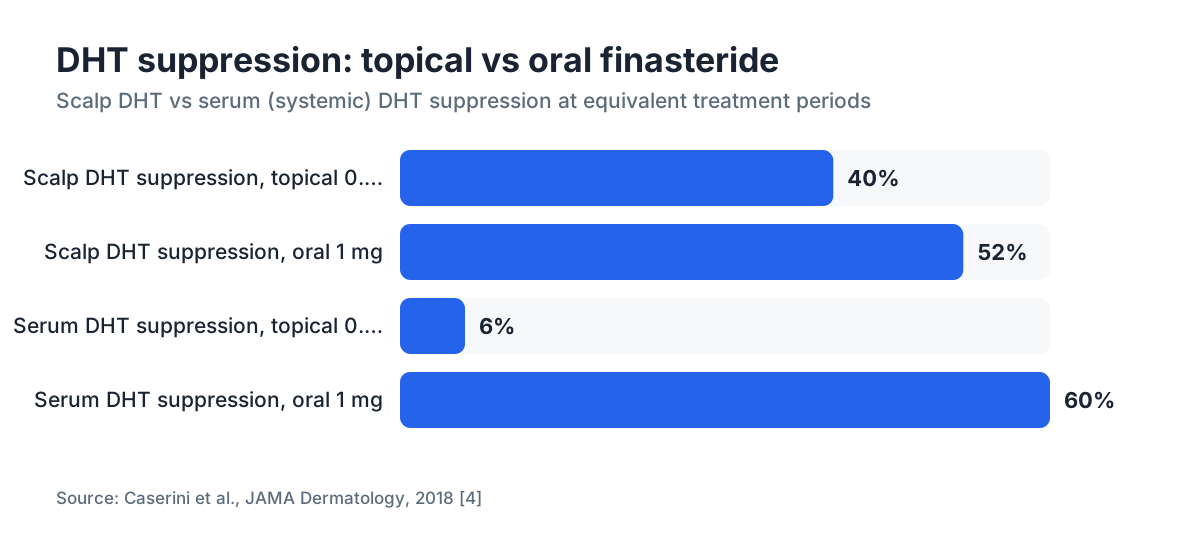
Topical application flips that ratio. A 2018 study in JAMA Dermatology compared 0.25% topical finasteride solution to 1 mg oral finasteride in men with androgenetic alopecia. The topical group hit scalp DHT suppression of about 40% versus 52% for the oral group, but serum DHT suppression was only about 6% with topical versus 60% with oral [4]. In plain terms: the spray still meaningfully knocks down DHT at the follicle, but nearly all of the DHT in the rest of your body stays intact.
That's the whole pharmacological case for the spray. You trade a modest drop in scalp-level efficacy for a huge drop in systemic drug exposure. Whether that trade is worth it depends on why you're looking at topical in the first place, which we'll get to.
For background on how DHT drives follicle miniaturization, see our explainer on DHT blockers.
Does topical finasteride actually grow hair?
Yes. The evidence says it works, though it's nowhere near as deep as the decades of trial data behind the oral pill.
The JAMA Dermatology trial above found that topical 0.25% finasteride produced a statistically significant rise in total hair count over 24 weeks, with results close to (though slightly below) the oral 1 mg group [4]. A 2019 randomized controlled trial in the Journal of the American Academy of Dermatology looked at a 0.5% topical finasteride solution and found meaningful hair density gains at 12 months, though the study was small (around 45 participants per arm) and the authors said larger confirmatory trials are needed [5].
The honest read: topical finasteride almost certainly works. The mechanism holds up, the scalp DHT suppression is real, and the early results are positive. But the oral pill carries more than 25 years of large-scale trial data, and the spray does not. If your only goal is the most proven efficacy possible, the pill still wins on evidence.
Results take time with any finasteride formulation. Most dermatologists won't call a treatment a win or a loss before 12 months, because the hair growth cycle is slow. Expect modest improvement at 6 months and more meaningful change at 12, assuming the drug is working for you. That timeline is the same whether you use the spray or the pill.
For a fuller look at what the evidence says about finasteride, including long-term data, that article covers it.
Does finasteride spray have fewer side effects than the pill?
This is the question most people are really asking. The answer: probably, but the data are still thin.
Oral finasteride's most talked-about side effects are sexual: lower libido, erectile dysfunction, reduced ejaculate volume. Propecia's prescribing information lists these in roughly 2-4% of men in clinical trials, with similar rates in placebo groups, though post-marketing reports and some observational studies suggest real-world rates may run higher [3]. There's also a small risk of breast tenderness or enlargement.
The case for fewer side effects with topical is direct. If serum DHT suppression is around 6% instead of 60% [4], there's far less systemic hormonal disruption. Most researchers think the sexual side effects of oral finasteride come from DHT suppression in tissues outside the scalp, so much lower systemic exposure should mean much lower side effect rates.
The trial data point that way. The 2018 JAMA Dermatology study reported no significant sexual adverse events in the topical group over 24 weeks [4]. But 24 weeks in a small trial doesn't settle anything. Some side effects from the oral drug show up after months or years, and the topical trials haven't run long enough to catch that.
Persistent post-finasteride syndrome (PFS) is a reported condition where some men describe ongoing sexual or neurological symptoms even after stopping the oral drug. Whether it can happen with topical formulations at low systemic exposure is genuinely unknown. There's no good data on this. The Post-Finasteride Syndrome Foundation has documented hundreds of cases tied to the oral drug, but topical-specific data don't exist yet [6].
So: topical finasteride spray is likely safer on the systemic side than the pill. But "likely" is doing real work in that sentence. If you had side effects on oral finasteride and want to keep chasing DHT suppression, the topical route is a reasonable conversation to have with a dermatologist. If you've never tried finasteride and your main worry is side effects, many clinicians now start with topical as a lower-risk entry point.
Who is a good candidate for finasteride spray?
Men who've had side effects on oral finasteride are the clearest candidates. If libido changes or erectile issues showed up on the pill and cleared when you stopped, the spray gives you a way to keep pursuing DHT suppression at a fraction of the systemic exposure.
Men who are nervous about starting finasteride but need DHT blockade to slow their loss are the next reasonable group. The lower systemic profile can make the risk-benefit math easier to accept.
Women are a different case. Finasteride isn't FDA-approved for women's hair loss, and women of childbearing potential face real risks from finasteride exposure during pregnancy, specifically feminization of a male fetus [3]. Some dermatologists do prescribe oral or topical finasteride off-label to postmenopausal women with androgenetic alopecia, but that takes careful clinical judgment and isn't standard practice. A woman researching this should start with a board-certified dermatologist, not a compounding pharmacy's website.
People with Norwood 5-7 hair loss who've already lost a large share of their follicles are unlikely to see dramatic results from any drug, topical or oral. At that stage, a hair transplant consultation makes more sense as the primary conversation, with finasteride as a maintenance tool after the procedure.
For how loss severity shapes treatment choices, see our guide on receding hairline stages and options.
How do you use finasteride spray correctly?
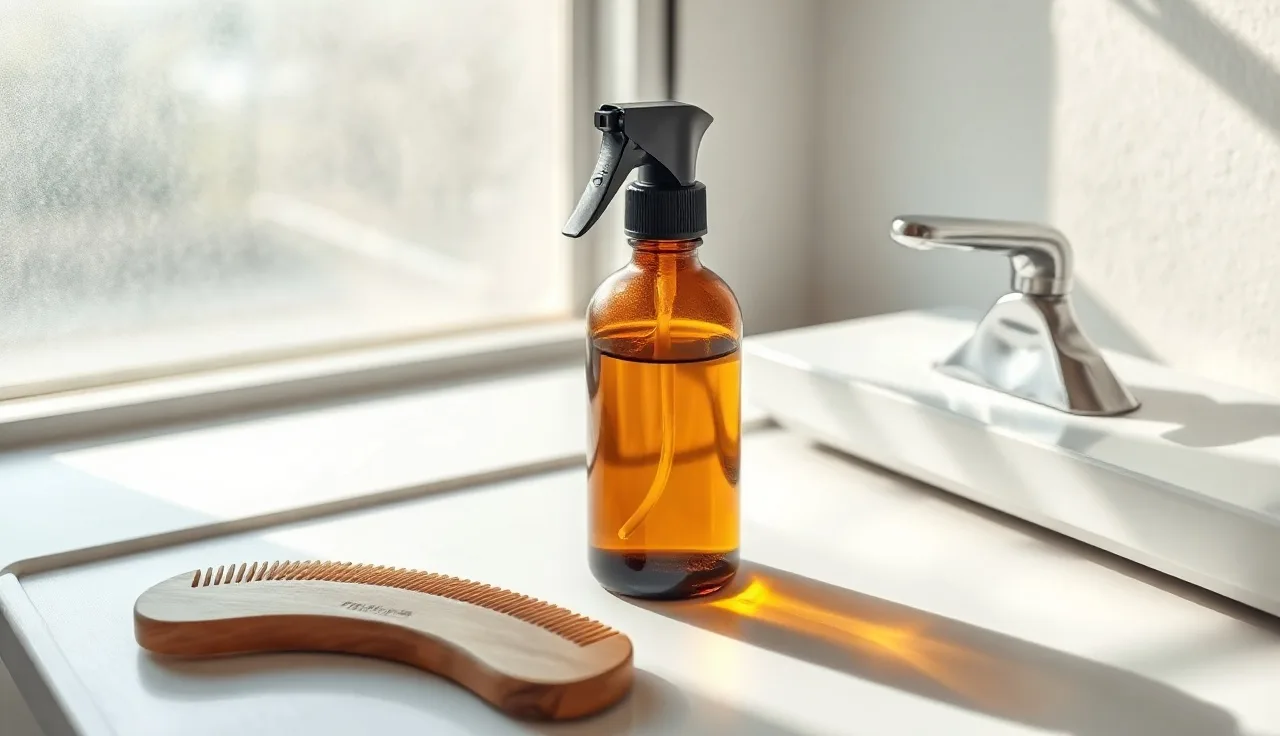
Most compounded finasteride sprays come in a pump bottle that delivers a fixed dose per spray, typically 0.1 mg to 0.5 mg per pump depending on concentration and spray volume. A common regimen is 1-2 pumps to the affected scalp areas once a day.
Technique matters more than people think. Part your hair to expose the scalp, spray directly onto the skin (not the hair shaft), and massage it in gently. Let it dry before any styling products. Washing right after application rinses the drug off before it absorbs, so most protocols say apply to a dry scalp and wait at least 4 hours before washing.
Wash your hands after. Finasteride absorbs through skin contact, and the teratogenic risk for pregnant women or women who might become pregnant is real [3]. This isn't a drug to be careless with around a pregnant partner.
Consistency is the whole game. Missing a dose here and there won't wreck your results, but stopping entirely for a few months lets DHT recover and hair loss restart. That's true of the oral pill too, and it's one of the most important things to grasp before starting either form: you're committing to ongoing treatment, not a finite course.
If you're also using minoxidil, applying the two together is common and often works better than either alone. They work through different mechanisms and there's no known interaction. Some compounding pharmacies offer a single combined formula, which cuts a step but also cuts flexibility if one component causes trouble.
How much does finasteride spray cost and where do you get it?
Here's where it gets more complicated than the oral pill.
Generic oral finasteride 1 mg is cheap. GoodRx prices for a 30-day supply typically run $10-$25 at major pharmacies [9], one of the most affordable medications in hair loss.
Compounded topical finasteride costs more. Prices from US compounding pharmacies typically run $40 to $90 a month depending on concentration, bottle size, and whether the pharmacy adds minoxidil or other agents. Some telehealth platforms offer compounded spray in the $30-$60 per month range, often bundled with a prescription consultation fee.
You need a prescription for finasteride in any form in the United States. Some telehealth platforms make that easy. You fill out a health questionnaire, a licensed provider reviews it, and if it's appropriate they send a prescription to a compounding pharmacy that ships to your door. Hims, Keeps, and similar platforms run this model, though prices and formulas vary. Compare two or three before you commit.
Insurance almost never covers compounded finasteride, and coverage for even the branded oral version is spotty. Budget for out-of-pocket costs.
Quality of compounded spray varies pharmacy to pharmacy. The FDA has flagged quality control problems at some compounders in general (not finasteride-specific), and state boards of pharmacy oversee these facilities with uneven rigor [7]. If you go the compounding route, ask whether the pharmacy is PCAB-accredited (Pharmacy Compounding Accreditation Board), which signals a higher standard of quality verification [10].
If you're early in your research and want to know where you stand before spending money, the free AI hair scan at MyHairline can help you pin down your loss pattern and stage.
How does finasteride spray compare to oral finasteride and other treatments?
Here's an honest comparison of the main options.
| Treatment | FDA Approved | Proven Efficacy | Systemic DHT Suppression | Typical Monthly Cost |
|---|---|---|---|---|
| Oral finasteride 1 mg | Yes (1997, men) | Strong (25+ years data) | ~60-70% [3] | $10-$25 |
| Topical finasteride spray | No (compounded) | Moderate (limited trials) | ~6% [4] | $40-$90 |
| Minoxidil topical 2%/5% | Yes (men, women) | Strong | None (different mechanism) | $10-$30 |
| Oral minoxidil 2.5-5 mg | Off-label | Growing evidence | None | $10-$40 |
| Hair transplant (FUE) | Surgical, not drug | Permanent for moved hair | None | $4,000-$15,000 total |
The table shows why the pill stays the default first-line pick for most clinicians. It's cheaper, better proven, and FDA-approved. The spray's edge is systemic safety, and that edge is real but not yet nailed down with numbers.
Pairing topical finasteride with topical or oral minoxidil is a growing approach in dermatology practices for patients who want to dodge oral finasteride's systemic effects while attacking hair loss from two angles. The finasteride and minoxidil article covers the evidence on combining these drugs in detail.
What do dermatologists actually say about prescribing finasteride spray?
Dermatologists disagree on this more than you'd expect for a drug with a well-understood mechanism.
Many board-certified dermatologists who focus on hair loss have moved toward offering topical finasteride, especially for patients anxious about systemic side effects or who had problems on the oral form. The American Academy of Dermatology's hair loss information discusses finasteride mainly in its oral form, and the AAD hasn't issued formal guidance specific to topical formulations as of mid-2026 [8].
Some dermatologists are skeptical of topical, not over safety but over absorption consistency. Scalp thickness, sebum levels, and application technique all change how much drug gets through, and a patient has no easy way to know if they're hitting therapeutic levels. With the pill, you swallow a known dose and the pharmacokinetics are predictable.
Others are enthusiastic adopters, especially for younger patients who face decades of treatment and are understandably wary of taking a hormone-affecting drug systemically that long.
A reasonable way to think about it: if a hair-focused dermatologist has reviewed your case and recommends topical finasteride, the reasoning is sound. If a telehealth platform is selling you a compounded spray without a thorough medical history review, ask more questions.
For people still trying to figure out what's driving their hair loss before committing to any drug, the what causes hair loss overview is a good place to start.
Are there any risks or warnings specific to topical finasteride?
Beyond the risks it shares with the pill (teratogenicity, possible sexual side effects at lower probability), a few risks are specific to or more prominent with the topical form.
Skin irritation is the most common complaint. Ethanol-based sprays can dry out or irritate the scalp, especially in people with sensitive skin or conditions like seborrheic dermatitis. If you're already dealing with scalp inflammation, an alcohol-heavy spray may make it worse. Propylene glycol carriers cause contact dermatitis in a small share of people [11].
Inconsistent dosing is a real concern with compounded products. Unlike the fixed, pharmaceutical-grade 1 mg tablet, a compounded spray can vary in concentration batch to batch depending on the pharmacy's controls. This isn't hypothetical. FDA inspections of compounding pharmacies have documented potency and sterility failures across different drug categories [7].
Secondary exposure deserves real attention. If the spray goes on and then someone else (a pregnant partner especially) touches the treated area or the spray itself, finasteride can absorb. The FDA label for oral finasteride explicitly warns that women who are pregnant or may become pregnant should not handle crushed or broken tablets because of absorption risk [3]. The same principle applies to the liquid form, arguably more so.
Long-term safety data simply don't exist yet for topical finasteride. The pill has decades of post-marketing surveillance. The spray has a handful of trials running under two years. Most dermatologists believe the low systemic exposure makes it safer, and that's a reasonable inference. It's still an inference.
Can you make finasteride spray at home or buy it without a prescription?
No. And this one is worth being blunt about.
Finasteride is a prescription-only drug in the United States [2]. Buying raw finasteride powder and mixing your own spray means sourcing an unverified chemical from a non-pharmaceutical supplier, mixing it without proper equipment or quality controls, and using a prescription drug with no medical supervision. None of that is legal or safe.
There are websites, mostly operating outside US jurisdiction, that sell finasteride without a prescription. The FDA has warned repeatedly about buying prescription drugs from unverified online sources, citing counterfeit products, wrong doses, and contamination [7]. The savings aren't worth the risk, especially for a drug that affects hormones and carries real side effects if misused.
The legitimate path is a prescription from a licensed provider, either in person at a dermatology practice or through a properly run telehealth platform that includes a real clinical review, then a fill at an FDA-registered pharmacy or PCAB-accredited compounding pharmacy [10].
If cost is the barrier, generic oral finasteride at $10-$25 a month [9] is genuinely affordable and has the stronger evidence base. The spray isn't a budget option. It's a clinical option for people with specific reasons to avoid systemic exposure.
What should you do if you're considering finasteride spray?
Start with a dermatologist, ideally one who sees hair loss patients regularly. Bring photos of your loss progression if you have them, be honest about any sexual health concerns, and ask directly whether topical finasteride fits your situation.
If you're not sure how far along your hair loss is, a baseline assessment helps. Tracking your hairline and density over time is how you know whether any treatment is working, and starting that record before you begin gives you a real comparison point. MyHairline's free AI scan at myhairline.ai/scan can give you an initial read on your loss pattern before your appointment.
If you've already tried oral finasteride without side effect issues and it's working, there's probably no reason to switch. The spray's main benefit is lower systemic exposure, and if that exposure hasn't caused you problems, you'd be taking on higher cost and less proven efficacy for no clear gain.
If you've had side effects on the oral drug, or you're starting fresh and want to keep systemic exposure low from the start, topical finasteride is a clinically reasonable choice backed by real (if limited) evidence. Get it from a licensed prescriber and a quality compounding pharmacy, apply it consistently, and give it at least 12 months before you judge results.
Hair loss medicine moves slowly. The spray isn't a shortcut. It's a variation on a proven mechanism with a different risk profile. For a lot of people, that's exactly what they need.
Sources
- StatPearls / NCBI Bookshelf: Finasteride
- FDA Drug Approvals and Databases
- DailyMed (NIH): Finasteride prescribing information
- Caserini M et al., JAMA Dermatology 2018: Topical vs oral finasteride pharmacokinetics
- Piraccini BM et al., Journal of the American Academy of Dermatology 2019: Topical finasteride for androgenetic alopecia
- Post-Finasteride Syndrome Foundation
- FDA: Compounding and Buying Medicine Online
- American Academy of Dermatology: Hair Loss Diagnosis and Treatment
- GoodRx: Finasteride pricing data
- Pharmacy Compounding Accreditation Board (PCAB)
- Rossi A et al., International Journal of Dermatology 2016: Topical finasteride review