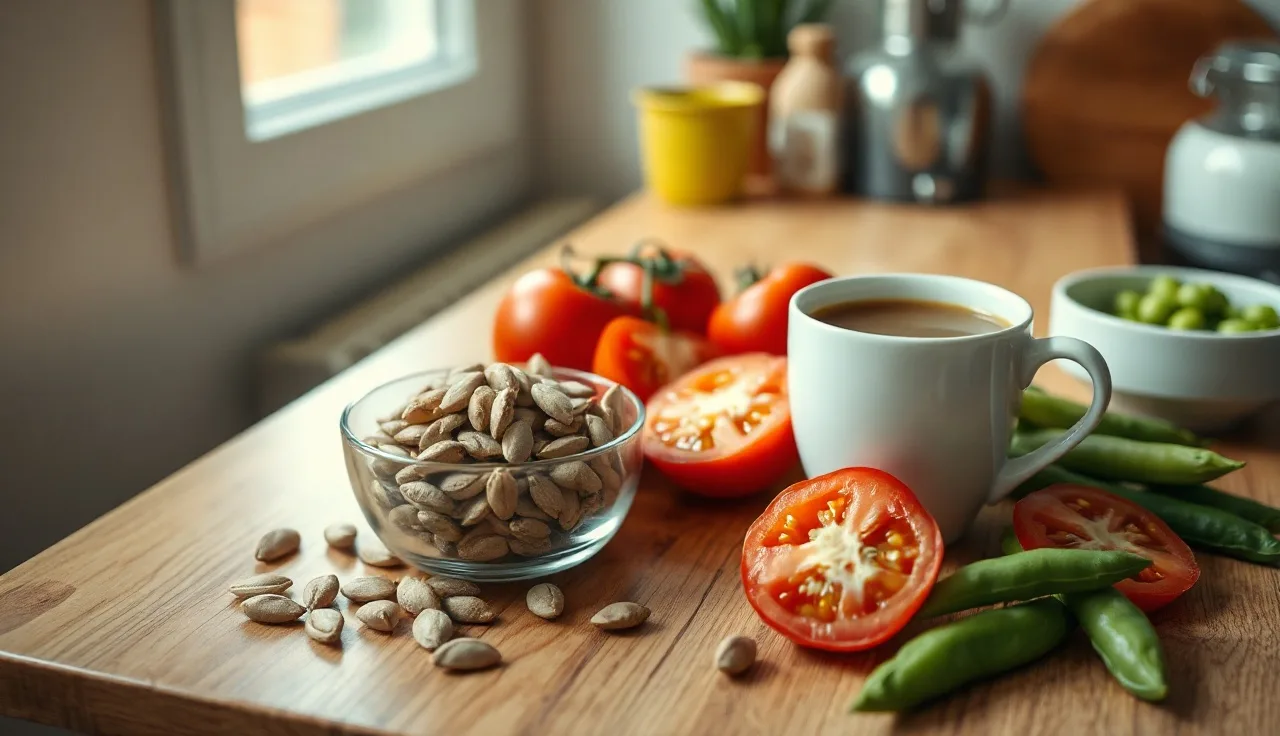
TL;DR: Several foods contain compounds that weakly inhibit 5-alpha reductase, the enzyme that converts testosterone into DHT. Green tea, pumpkin seeds, lycopene-rich tomatoes, and soy isoflavones have the best human evidence. None rival finasteride's roughly 70% DHT reduction, but dietary changes carry no prescription risk and can complement proven treatments.
What is DHT and why does it shrink hair follicles?
DHT stands for dihydrotestosterone. It's made when an enzyme called 5-alpha reductase (5-AR) grabs testosterone and converts it. The result binds to androgen receptors in scalp follicles far more powerfully than testosterone itself does, and in people with a genetic sensitivity to androgens, that binding slowly miniaturizes follicles until they stop producing visible hair.
This process, androgenetic alopecia, is the most common cause of hair loss in both men and women. It affects roughly 50% of men by age 50 and up to 40% of women at some point in their lives [1]. The Norwood scale maps how it progresses in men; women tend to lose density across the top rather than receding at the temples. Either way, DHT is the main driver.
The enzyme 5-alpha reductase comes in two main types: type 1 is mostly in sebaceous glands and the liver, type 2 is concentrated in the hair follicle. Most pharmaceutical DHT blockers, like finasteride, work by inhibiting type 2. Some foods appear to hit the same target, just far less aggressively.
If you want the full picture on what triggers hair loss beyond DHT, the what causes hair loss article covers genetics, stress, hormones, and nutrition deficiencies in one place. And if you're already looking at what stronger options exist beyond diet, dht blocker breaks down the whole category.
How strong can dietary DHT blocking actually be?
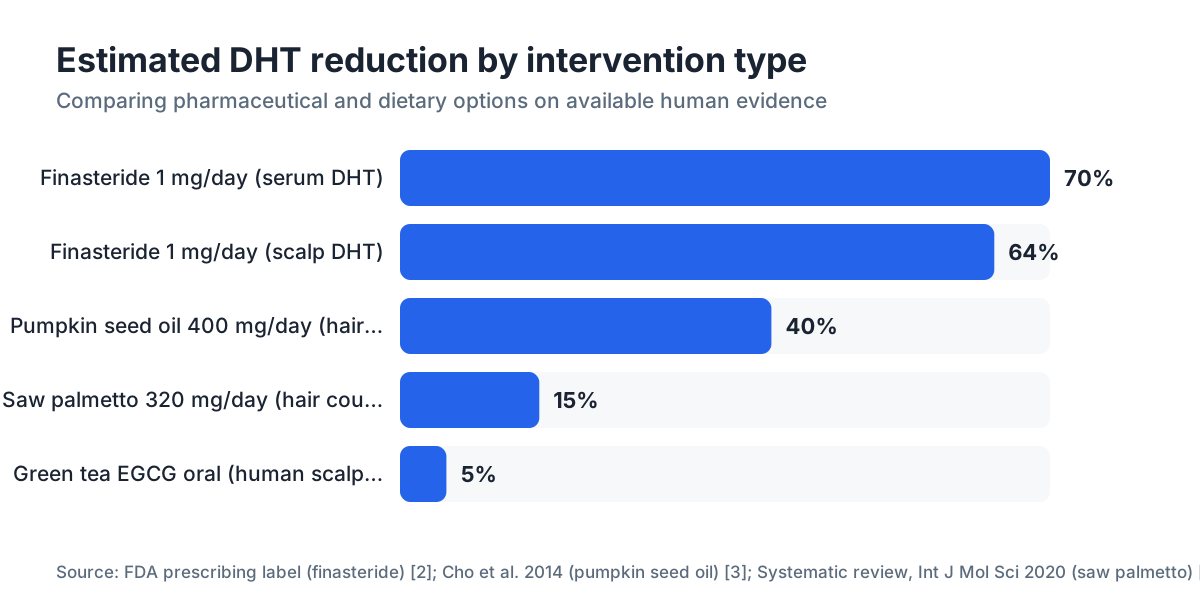
Let's be honest about effect sizes before we go food by food. Finasteride 1 mg daily lowers serum DHT by roughly 70% and scalp DHT by roughly 64% in clinical trials [2]. That's a big number from controlled studies, and it's the benchmark every food gets measured against.
Food-based 5-AR inhibition is modest by comparison. The best human trial on pumpkin seed oil, a 2014 randomized controlled trial published in Evidence-Based Complementary and Alternative Medicine, found that 400 mg of pumpkin seed oil daily for 24 weeks increased hair count by 40% compared to placebo in men with androgenetic alopecia [3]. That's a real number. But it comes from one trial with 76 participants, and it measured hair count rather than directly measuring serum DHT reduction.
Green tea's active compound EGCG has shown 5-AR inhibition in cell cultures and animal studies, but human scalp-level DHT data is sparse. Soy isoflavones show modest DHT suppression in some human trials, particularly in postmenopausal women, but the effect swings a lot across populations.
Nobody has good dose-response data that translates specific food servings into specific percentage DHT reductions. The closest thing to a systematic look is in vitro enzyme-inhibition research, which tells you a compound can block 5-AR but not by how much in a living person eating a normal diet. Keep that caveat in mind throughout this article.
Which foods have the most evidence for blocking DHT?
Here are the eight best-studied food sources, ranked roughly by quality of human evidence.
| Food / Compound | Active Compound | Evidence Level | Practical Serving |
|---|---|---|---|
| Pumpkin seed oil | Phytosterols, delta-7-sterols | 1 RCT in humans | 1 tbsp oil or ~30 g seeds daily |
| Green tea | EGCG (epigallocatechin gallate) | In vitro + animal, limited human | 3-4 cups brewed daily |
| Saw palmetto (food form) | Fatty acids, phytosterols | Multiple small RCTs | Berry extract; not easily eaten as food |
| Lycopene (tomatoes) | Lycopene | In vitro + some human endocrine data | 1/2 cup cooked tomatoes daily |
| Soy foods | Genistein, daidzein | Mixed human trials | 1-2 servings/day |
| Flaxseed | Lignans, omega-3s | Limited human data | 2 tbsp ground daily |
| Spearmint tea | Rosmarinic acid, menthol | Small human RCT for androgens | 2 cups daily |
| Reishi mushroom | Ganoderic acids | In vitro; no human hair trials | Supplement form mainly |
Pumpkin seed oil is the standout because it has an actual randomized controlled trial behind it. The 2014 Cho et al. study randomized 76 men to 400 mg pumpkin seed oil or placebo and found the treatment group had significantly more hair after 24 weeks [3]. The mechanism is thought to involve delta-7-sterols inhibiting 5-alpha reductase, but the trial didn't measure serum DHT directly.
Green tea / EGCG shows consistent 5-AR inhibition in cell and animal models. A study in the Journal of Nutrition found that tea catechins inhibited 5-AR activity in prostate cells, and some dermatology researchers have extrapolated that to scalp follicles [4]. Whether you can drink enough green tea to move the needle on scalp DHT stays genuinely unknown.
Lycopene from cooked tomatoes and tomato paste inhibits 5-AR in several in vitro studies originally done for prostate cancer research. Cooking tomatoes concentrates the lycopene and makes it more bioavailable, so tomato sauce or paste beats a raw tomato on this metric.
Soy isoflavones (genistein and daidzein) weakly inhibit 5-AR type 2 and also act as mild estrogen receptor agonists, which adds a hormonal layer. Research reviewed by the European Food Safety Authority found soy protein lowered DHT in postmenopausal women in trials [5]. Effects in men are smaller and more contested. Concerns about soy and male hormones are mostly overstated at dietary amounts, but extremely high supplement doses are not well studied.
Spearmint is a smaller story but a real one. A 2010 randomized trial in Phytotherapy Research found that two cups of spearmint tea daily for 30 days significantly reduced free testosterone in women with polycystic ovary syndrome [6]. Lower free testosterone means less substrate for DHT conversion. The study was in women with elevated androgens, so it may not carry over to men.
Can a high-protein or low-glycemic diet affect DHT levels?
Diet moves DHT through more pathways than just 5-AR inhibition. Total calorie intake, insulin sensitivity, and the ratio of macronutrients all shape androgen metabolism.
High glycemic index diets spike insulin, and insulin raises levels of insulin-like growth factor 1 (IGF-1), which in turn increases androgen production including DHT. A 2007 randomized trial in The American Journal of Clinical Nutrition found that a low-glycemic-load diet reduced androgens in men with acne, a condition driven by the same androgen pathways as hair loss [7]. The effect wasn't enormous but it was measurable.
Caloric restriction and weight loss in overweight men consistently lower free testosterone and DHT, partly because fat tissue contains aromatase, which converts androgens to estrogens, and partly because lower insulin reduces androgen production. Losing weight won't cure androgenetic alopecia, but it does shift the hormonal environment.
Zinc deficiency is worth flagging here too. Zinc is a natural cofactor that modulates 5-AR activity. Studies in men with alopecia have found lower zinc levels than in controls [8]. Foods rich in zinc, like oysters, beef, and pumpkin seeds (again), may help correct a deficiency, though supplementing zinc beyond normal levels hasn't shown hair regrowth benefit.
The overall picture: eating in a way that keeps insulin steady, maintains healthy body weight, and avoids micronutrient gaps (zinc, iron, vitamin D) creates a hormonal environment that's less friendly to rapid DHT-driven follicle miniaturization. It's not a treatment. It's a supporting condition.
What does the research say about green tea and hair loss specifically?
Green tea gets a lot of attention in hair loss circles, and it partly earns it. EGCG, its main catechin, is one of the more potent natural 5-AR inhibitors identified in laboratory studies. A frequently cited mouse study found that topical EGCG promoted hair growth by stimulating dermal papilla cells [9]. Oral consumption is a different story, because bioavailability after digestion drops substantially.
For human scalp benefit through drinking green tea, the evidence chain goes: EGCG in tea, absorbed in gut, travels in blood, reaches scalp follicle, exerts enough local 5-AR inhibition to matter. Each step has losses. Realistically, three to four cups a day of brewed green tea (not decaf, not heavily processed) gives you around 200 to 400 mg of EGCG, which is the range used in most supplement trials. Whether that amount, delivered orally, hits the scalp follicle at pharmacologically relevant concentrations is genuinely uncertain.
Green tea is not a risk-free drink at very high doses. The FDA has issued cautionary guidance on highly concentrated green tea extract supplements, noting rare cases of liver injury linked to doses far above normal dietary intake [10]. Drinking tea in normal amounts has no established safety concern.
Does soy cause hormonal problems in men who are worried about hair loss?
This question comes up constantly and deserves a direct answer. No, normal dietary soy consumption does not cause feminizing hormonal effects in men. The concern stems from the fact that soy isoflavones are phytoestrogens, compounds that can bind weakly to estrogen receptors. But weak binding is the key phrase.
Case reports of gynecomastia linked to soy involve quantities far above typical dietary exposure, like drinking several liters of soy milk daily or taking large isoflavone supplements. The European Food Safety Authority reviewed the evidence in 2015 and concluded that isoflavones from normal food consumption do not adversely affect male hormones at typical dietary levels [5].
For hair loss specifically, the mild anti-androgen effect of soy isoflavones is actually the direction you'd want, because it means slightly less DHT activity. The practical reality is that one to two daily servings of tofu, edamame, or soy milk probably nudge things in a slightly favorable direction for scalp DHT without meaningful estrogen-related risk.
If you're on finasteride or another pharmaceutical DHT blocker and also eating a lot of soy, there's no documented interaction to worry about. They work through different mechanisms.
Are there foods that increase DHT you should avoid?
Yes. Some foods consistently push DHT up.
Alcohol is the clearest one. Chronic alcohol consumption reduces the liver's clearance of androgen hormones and increases conversion of androgens to estrogens, but the net effect on DHT varies by person and intake level. Heavy drinking also causes telogen effluvium, a separate shedding pattern triggered by nutritional stress and inflammation.
Refined carbohydrates and high-sugar foods raise insulin and IGF-1, both of which amplify androgen production as noted above. This doesn't mean a single slice of bread does anything meaningful, but a consistently high-glycemic diet over months and years likely builds a higher-androgen hormonal environment.
Creatine supplementation has some evidence for raising DHT. A 2009 South African trial in the Clinical Journal of Sport Medicine found that college rugby players who loaded creatine for seven days saw DHT levels rise by 56% and the DHT-to-testosterone ratio rise by 36%, although testosterone itself didn't change significantly [11]. Whether this translates to faster hair loss in genetically susceptible people is debated. The does creatine cause hair loss article goes into the full nuance.
Saturated fat at very high levels may raise 5-AR activity according to some endocrine research, though the evidence in humans is weak. The cleaner connection is that high saturated fat intake tends to go with high overall calorie intake, which links back to insulin resistance and elevated androgens.
How do food-based DHT blockers compare to finasteride and minoxidil?
This is where honesty matters most.
Finasteride 1 mg reduces scalp DHT by roughly 64% and serum DHT by roughly 70% in controlled trials [2]. In the registration clinical trials, about 66% of men maintained hair count after two years compared to continued loss in the placebo group. It's a real drug with a real mechanism, real evidence, and real side effects including sexual dysfunction in a minority of users.
Minoxidil works through a completely different pathway, not DHT at all. It's a vasodilator that extends the anagen (growth) phase of the hair cycle. The minoxidil for men article covers how it works, what concentrations are approved, and realistic regrowth expectations.
Pumpkin seed oil, which has the strongest dietary evidence, produced a 40% improvement in hair count in one small trial [3]. That's meaningful but comes with major caveats: single study, small sample, hair count rather than DHT measurement, and no long-term data.
The practical framing: food-based DHT management is a reasonable thing to add to your life because the downsides are close to nil and some evidence supports modest benefit. It's not a substitute for proven treatments if your hair loss is progressing. Most people with significant androgenetic alopecia who want to hold their hairline will need something pharmaceutical, a combination like finasteride and minoxidil, or eventually a hair transplant.
If you want a clearer picture of where you are before deciding anything, the free AI scan at MyHairline (/scan) can analyze your hairline from a photo and estimate your Norwood stage, which helps you decide whether diet alone is a realistic strategy or whether you need to think about other options.
What's a practical daily diet that targets DHT naturally?
You don't need a complicated protocol. A diet built around the following patterns covers most of the food-based DHT angle without adding weird ingredients or spending money on exotic supplements.
Morning: Brewed green tea (2 cups), a breakfast with eggs or Greek yogurt (protein keeps blood sugar stable), and if you add ground flaxseed to oatmeal or yogurt, you get lignans on top.
Midday: A meal with cooked tomato-based sauce (lycopene), a palm-sized portion of a protein source, and a small serving of edamame or tofu a few times a week for isoflavones.
Evening: Pumpkin seeds as a snack (roughly 30 g gives you the phytosterol load), and spearmint tea in place of dessert coffee.
Overall patterns to keep: Low glycemic index carbohydrates, moderate total calories, adequate zinc from oysters or beef, adequate vitamin D (deficiency is common and linked to hair cycle disruption [8]), and limited alcohol.
Overall patterns to reduce: Refined sugar, very high saturated fat intake, and creatine if you're already noticing hairline changes and you're genetically susceptible.
This is not a treatment plan. It's a dietary environment that, on the current evidence, is less friendly to rapid DHT-driven hair follicle miniaturization than a typical Western diet high in refined carbs and processed foods. That distinction matters.
Do hair loss supplements use these same food compounds?
Many do, yes. Saw palmetto is the most common active ingredient in over-the-counter hair loss supplements, and its mechanism is the same as what we've been discussing: fatty acids and phytosterols that weakly inhibit 5-alpha reductase. A 2020 systematic review in the International Journal of Molecular Sciences found that saw palmetto at 200 to 320 mg daily showed modest benefit in several small trials, though the review noted high heterogeneity across studies and called for larger RCTs [12].
Biotin is the other ingredient plastered on nearly every hair supplement. The evidence for biotin in people without a diagnosed biotin deficiency is essentially nonexistent for hair loss prevention. The FDA has also warned that high biotin supplementation can interfere with certain blood tests, including thyroid and cardiac biomarker tests, which matters if you're being monitored for other conditions [10].
If you're considering a supplement, look for one that uses saw palmetto at 200 to 320 mg, ideally in a lipid-sterolic extract form, and doesn't rely mostly on biotin. And check whether it has any actual published trial data, more than ingredient-level mechanistic claims.
For people who've already tried supplements and found them insufficient, the next steps usually involve finasteride or minoxidil for men, both of which have far stronger evidence and FDA approval for androgenetic alopecia.
Is there anything worth avoiding because the risk outweighs the benefit?
A few things commonly marketed as DHT-blocking foods or supplements have real concerns attached.
Highly concentrated green tea extracts in supplement form have been linked to rare but serious liver toxicity. The FDA's dietary supplement guidance specifically flagged green tea extract as a known hepatotoxicity risk at high doses [10]. Brewed tea is fine. A capsule delivering 1,000 mg or more of EGCG per day is a different matter.
High-dose zinc supplementation (above 40 mg per day, the tolerable upper intake level set by the National Institutes of Health) can interfere with copper absorption and cause gastrointestinal problems [8]. Getting zinc from food rather than supplements sidesteps this.
Extremely high soy isoflavone supplements (not food) have uncertain long-term safety data in men, particularly for thyroid function at doses above 150 mg per day. Normal soy food consumption doesn't reach those levels.
The pattern is consistent: the food form of almost every DHT-blocking compound is safer than the concentrated supplement form, even when the supplement is slightly more potent. That's a reasonable guide for where to put your effort.
What's the realistic bottom line for someone losing hair right now?
Dietary DHT blocking is real, modest, and safe. It's not a substitute for proven treatments in people with meaningful, progressive hair loss. It's a reasonable background strategy for everyone.
If you're in early-stage androgenetic alopecia, perhaps a slight recession at the temples or thinning at the crown, combining a DHT-conscious diet with a pharmaceutical option is more likely to preserve your hair over five to ten years than diet alone. The receding hairline article can help you understand where your pattern might go.
If you're earlier than that, or simply trying to be proactive, the dietary changes here are low-cost, carry no medical risk at food amounts, and the worst outcome is you eat better and nothing happens to your hair. That's an acceptable trade.
MyHairline's free AI scan (/scan) is a reasonable first step if you want an objective baseline of where your hairline stands today before committing to any approach. It analyzes your photo and gives you a Norwood stage estimate, which frames the conversation around what level of intervention makes sense.
The honest summary: pumpkin seeds, green tea, cooked tomatoes, soy foods in moderation, and a low-glycemic diet are the best dietary moves on current evidence. No food will grow back hair you've already lost. But keeping DHT from doing more damage, through every lever available, is a reasonable and evidence-supported goal.
Sources
- American Academy of Dermatology, Hair Loss Overview
- U.S. FDA prescribing information for finasteride 1 mg (Propecia)
- Cho YH et al. Effect of pumpkin seed oil on hair growth in men with androgenetic alopecia. Evidence-Based Complementary and Alternative Medicine, 2014
- Liao S, Hiipakka RA. Selective inhibition of steroid 5-alpha-reductase by tea epicatechin esters. Journal of Nutrition / Biochem Biophys Res Commun, 1995
- European Food Safety Authority, Risk assessment for peri- and post-menopausal women taking food supplements containing isolated isoflavones, 2015
- Grant P. Spearmint herbal tea has significant anti-androgen effects in polycystic ovarian syndrome. Phytotherapy Research, 2010
- Smith RN et al. A low-glycemic-load diet improves symptoms in acne vulgaris. American Journal of Clinical Nutrition, 2007
- National Institutes of Health Office of Dietary Supplements, Zinc Fact Sheet for Health Professionals
- Kwon OS et al. Human hair growth enhancement in vitro by green tea epigallocatechin-3-gallate (EGCG). Phytomedicine, 2007
- U.S. FDA, Dietary Supplements guidance and safety communications (green tea extract hepatotoxicity; biotin interference with lab tests)
- van der Merwe J et al. Three weeks of creatine monohydrate supplementation affects DHT to testosterone ratio. Clinical Journal of Sport Medicine, 2009
- Evron E et al. Natural hair supplement review including saw palmetto. International Journal of Molecular Sciences, 2020
- Fortes C et al. Mediterranean diet and androgenetic alopecia. Archives of Dermatological Research, 2018